We sat down with @Samsara Senior Vice President for Sales Engineering Tim Nagy to talk about AI adoption in local government, and what the future of AI in cities could look like. Here's what he had to say.
https://t.co/cKjOqEI1rV
Samsara’s Q1 FY27 financial results are in. As we approach $2B in ARR, some of the world's largest operators are choosing our platform to scale through a defining infrastructure boom.
Read more about our Q1 results here: https://t.co/uHZcKB4k6X
We can't control gas prices. But we can build something that isolates how much of a driver's fuel burn is within their control. And so that's exactly what we did.
Fuel is often the largest operating cost for commercial fleets. At scale, even small efficiency gains can mean millions saved.
Last week we shipped our advanced driver efficiency ML model. It identifies the bottom 10% of drivers and gives fleet operators a targeted coaching list so they can act with confidence on what drivers can actually control.
Praveen Murugesan wrote about his key learnings: https://t.co/wxPKXIxUTC
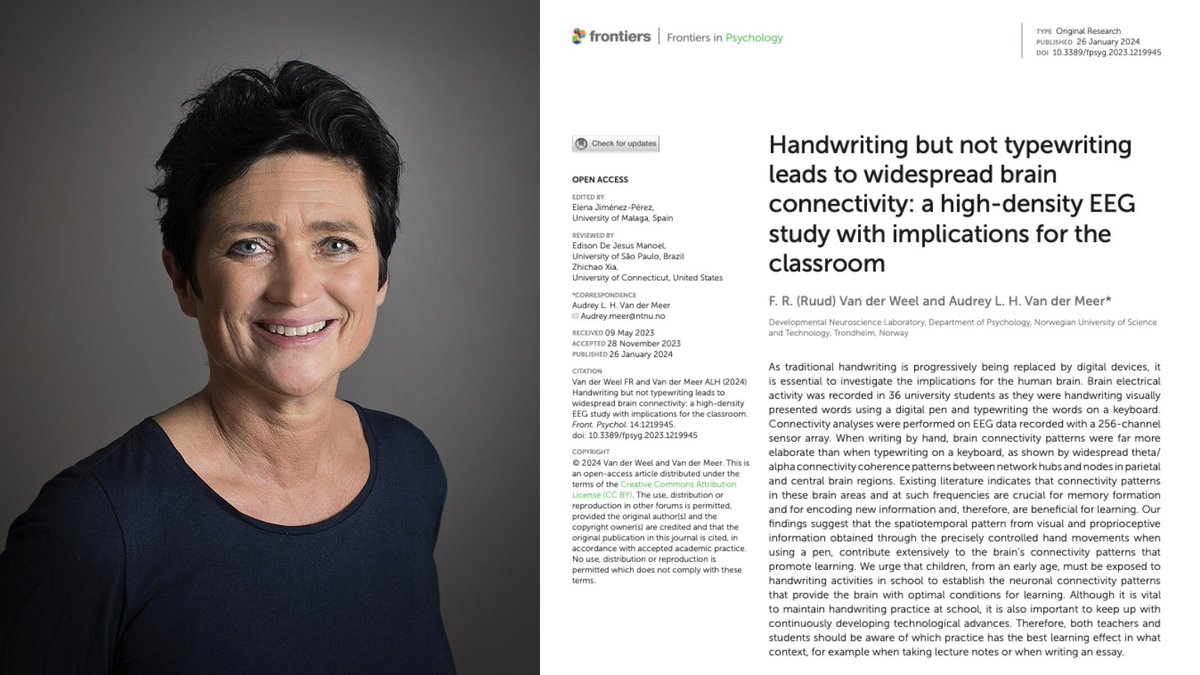
A Norwegian neuroscientist spent 20 years proving that the act of writing by hand changes the human brain in ways typing physically cannot, and almost nobody outside her field has read the paper.
Her name is Audrey van der Meer.
She runs a brain research lab in Trondheim, and the paper that closed the argument was published in 2024 in a journal called Frontiers in Psychology. The finding is brutal enough that it should have changed every classroom on Earth.
The experiment was simple. She recruited 36 university students and put each one in a cap with 256 sensors pressed against their scalp to record brain activity. Words flashed on a screen one at a time.
Sometimes the students wrote the word by hand on a touchscreen using a digital pen, and sometimes they typed the same word on a keyboard. Every neural response was recorded for the full five seconds the word stayed on screen.
Then her team looked at the part of the data most researchers had ignored for years, which is how different parts of the brain were communicating with each other during the task.
When the students wrote by hand, the brain lit up everywhere at once.
The regions responsible for memory, sensory integration, and the encoding of new information were all firing together in a coordinated pattern that spread across the entire cortex. The whole network was awake and connected.
When the same students typed the same word, that pattern collapsed almost completely.
Most of the brain went quiet, and the connections between regions that had been alive seconds earlier were nowhere to be found on the EEG.
Same word, same brain, same person, and two completely different neurological events.
The reason turned out to be something nobody had really paid attention to before her work. Writing by hand is not one motion but a sequence of thousands of tiny micro-movements coordinated with your eyes in real time, where each letter is a different shape that requires the brain to solve a slightly different spatial problem.
Your fingers, wrist, vision, and the parts of your brain that track position in space are all working together to produce one letter, then the next, then the next.
Typing throws all of that away. Every key on a keyboard requires the exact same finger motion regardless of which letter you are pressing, which means the brain has almost nothing to integrate and almost no problem to solve.
Van der Meer said it plainly in her interviews.
Pressing the same key with the same finger over and over does not stimulate the brain in any meaningful way, and she pointed out something that should scare every parent who handed their kid an iPad.
Children who learn to read and write on tablets often cannot tell letters like b and d apart, because they have never physically felt with their bodies what it takes to actually produce those letters on a page.
A decade before her, two researchers at Princeton ran the same fight using a completely different method and ended up at the same answer. Pam Mueller and Daniel Oppenheimer tested 327 students across three experiments, where half took notes on laptops with the internet disabled and half took notes by hand, before testing everyone on what they actually understood from the lectures they had watched.
The handwriting group won by a wide margin on every question that required real understanding rather than surface recall.
The reason was hiding in the transcripts of what the two groups had actually written down.
The laptop students typed almost word for word, capturing more total content but processing almost none of it as they went, while the handwriting students physically could not write fast enough to transcribe a lecture in real time, which forced them to listen carefully, decide what actually mattered, and put it in their own words on the page.
That single act of choosing what to keep was the learning itself, and the keyboard had quietly skipped the choosing and skipped the learning along with it.
Two studies. Two countries. Same answer.
Handwriting makes the brain work. Typing lets it coast.
Every note you have ever typed instead of written went into your brain through a thinner pipe. Every meeting, every book highlight, every idea you captured on your phone instead of on paper was processed at half depth.
You did not forget those things because your memory is bad. You forgot them because typing never woke the part of the brain that would have made them stick.
The fix is the thing your grandmother already knew.
Pick up a pen. Write the thing down. The slower road is the faster one.
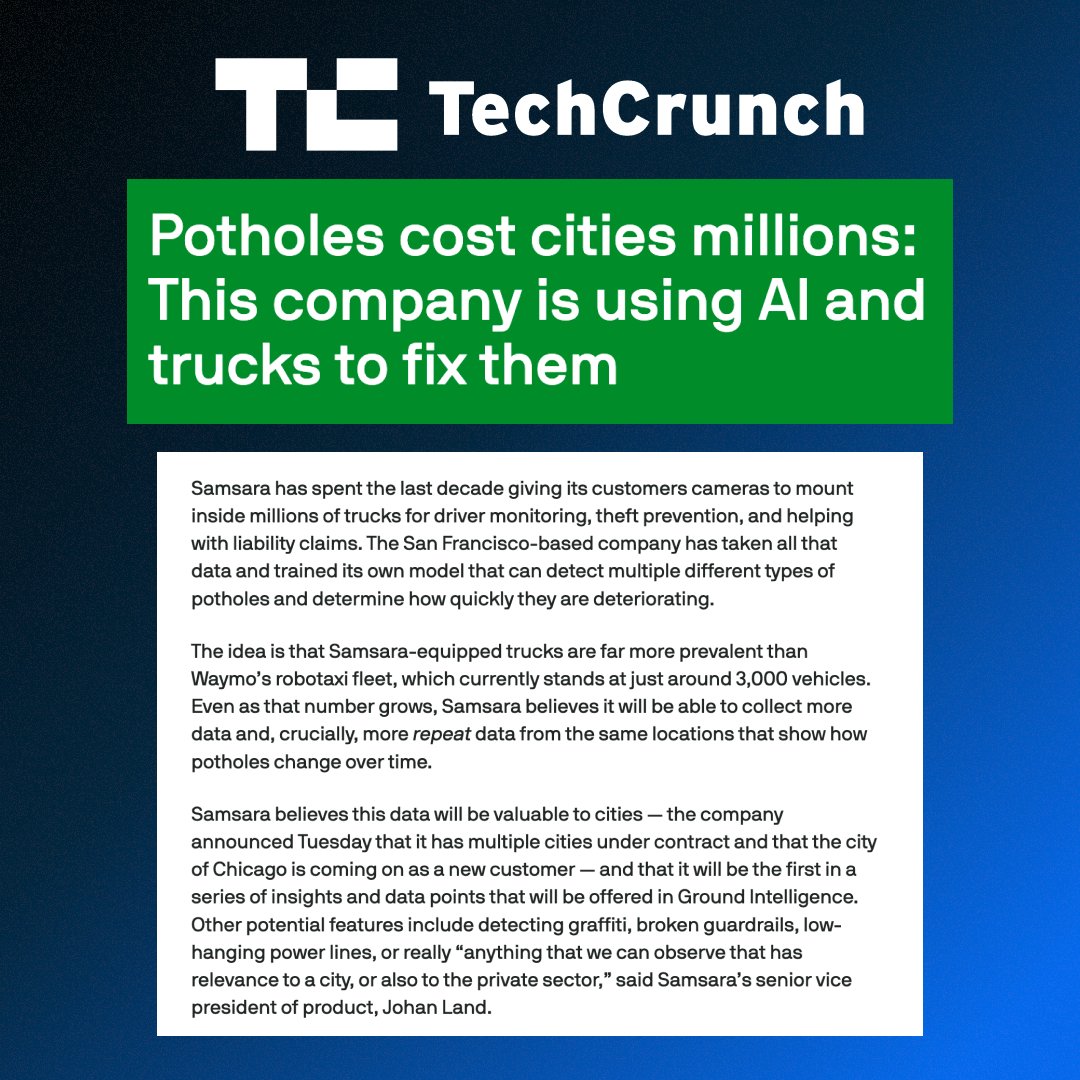
Millions of trucks. A decade of data. Samsara is turning fleet cameras into a revenue-generating AI model that detects potholes and tracks how fast they're deteriorating—and cities are already signing on. Via @kirstenkorosec for @TechCrunch: https://t.co/ttfWoaQbjw
Some miles just get logged. Others are earned.
The best drivers show up before the world wakes up. They put in every hour. And they take pride in the work. This summer, Samsara is celebrating them with the Driver Cup.
Eligible customers are automatically entered and scored on safety, HOS compliance, and fuel efficiency. The top 1% wins prizes up to $1,000.
Your drivers have been putting in the work. Let's give them the recognition they deserve.
Learn more: https://t.co/pt6CklvJgV
@ChadNauseam Monet had cataracts and his paintings during the time he lost his eyesight are super distinct —it’s a fascinating study because he painted the same scene time and time again. You can actually experience him losing his sight through his work.
The future of public sector operations is making headlines.
Cities and organizations are using AI and connected operations data to build safer, smarter communities.
Here’s a look at the momentum ⬇️
What a day at Go Beyond Public Sector! @ChicagosMayor welcomed leaders from cities, counties, and organizations across the country — all here to see how the latest in technology is shaping safer, more efficient communities. https://t.co/13BLKSZABm
Connected vehicles are becoming pothole sensors. @sokane1 in @TechCrunch on how Samsara's AI model detects road damage in real time and helps cities fix it faster. https://t.co/Gxx35T7hg9
Just announced at Go Beyond Public Sector: new AI-powered solutions to help the public sector build safer, smarter communities. Read more: https://t.co/L530UP4TjV
Samsara has been named a 2026 Compass Intelligence Award winner for Connected Solution Leadership: Asset Management. 🏆
We’re proud to be recognized for helping organizations gain real-time visibility into assets — of all sizes — to operate more efficiently.
In the 2010s, Apple used the App Store as outsourced R&D, converting top apps into native iOS functionality
Anthropic is poised to do the same thing to software. Except this time, companies are *paying* to hand Anthropic the literal instructions for how to build their products