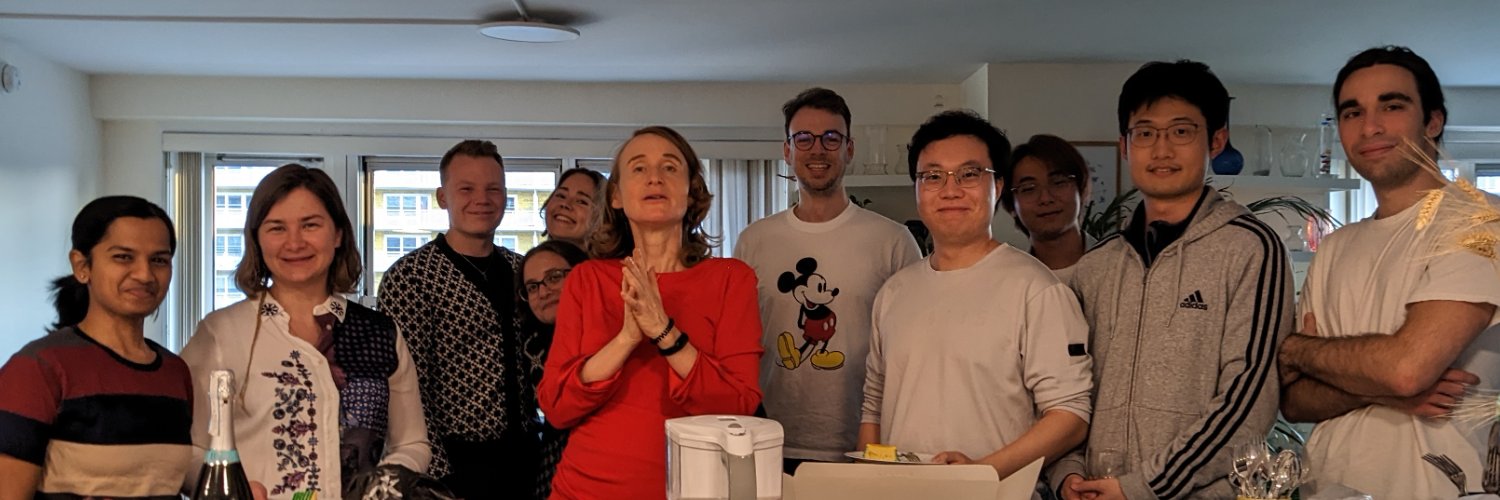
I am excited to share that I am joining @amilabs as Director of Research, Paris, working with @ylecun and an exceptional founding team.
Further progress in machine intelligence will require not only scaling foundation models and large-scale engineering, but also new ideas and breakthroughs.
This is what makes AmiLabs such a unique and exciting place to build. Its focus on world modeling — systems that can learn richer representations of the real world, reason, plan, and learn from interaction — is a long-term research direction I am deeply excited about.
I am particularly looking forward to working with extraordinary co-founders @sainingxie, @lxbrun, @michaelrabbat, @pascalefung, @mavenlin, @laurentsolly, and the amazingly talented AmiLabs team, to helping build the research organization and to the journey ahead.
We did it!
Thrilled to announce that with my team at FAIR Meta we released 25+ auto-formalized mathematics textbooks covering analysis, algebra, geometry, topology, combinatorics, probability, statistics, PDEs, number theory, and theoretical computer science - the largest such effort to date.
Our team at @AIatMeta is excited to announce ATLAS: one of the largest automated formalization efforts to date.
ATLAS contains Lean 4 formalizations of both statements and proofs from 25+ mathematics textbooks, spanning dozens of domains, for a total of 500k lines of code. We are also releasing a flexible formalization harness and a companion paper.
External contributions are welcome!
Joint work spearheaded by our amazing PhD student Ahmad Rammal (@Ahmad3Rammal), together with Niket Patel (@niketnpatel ), Fabian Gloeckle (@FabianGloeckle), Amaury Hayat (@Amaury_Hayat), Remi Munos (@MunosRemi), Julia Kempe (@KempeLab), Vivien Cabannes, and myself from @AIatMeta, @NYUDataScience , and Ecole des Ponts. This is an ongoing effort; more details in the thread below.
(1/9)
Math is starting to fall — so what's next? 🎙️
New episode of The Information Bottleneck is out!
We've all seen the recent wave of Erdős problems being solved by frontier models, and the question now is what it actually means for the future of mathematics, and for AI research more broadly.
We sit down with @KempeLab - Professor at NYU's Center for Data Science and researcher at Meta FAIR's Foundations of Reasoning team, to dig into exactly that.
Julia makes the case that math is the next Go. With formal verification and LLM agents that can propose, formalize, and check proofs at scale, a new industry of automated mathematical discovery is closer than most mathematicians believe.
We also get into:
→ Why physics is harder than math
→ Model collapse, synthetic data, and what's left to squeeze from the internet
→ Scaling limits, energy costs, and where academia still has the edge
→ How to advise PhD students when Claude can already do their first-year work
→ AI safety, agent security, and the Wild West of deployed agents
→ Why the Renaissance researcher is finally back
One of our favorite conversations yet.
Listen now 👇
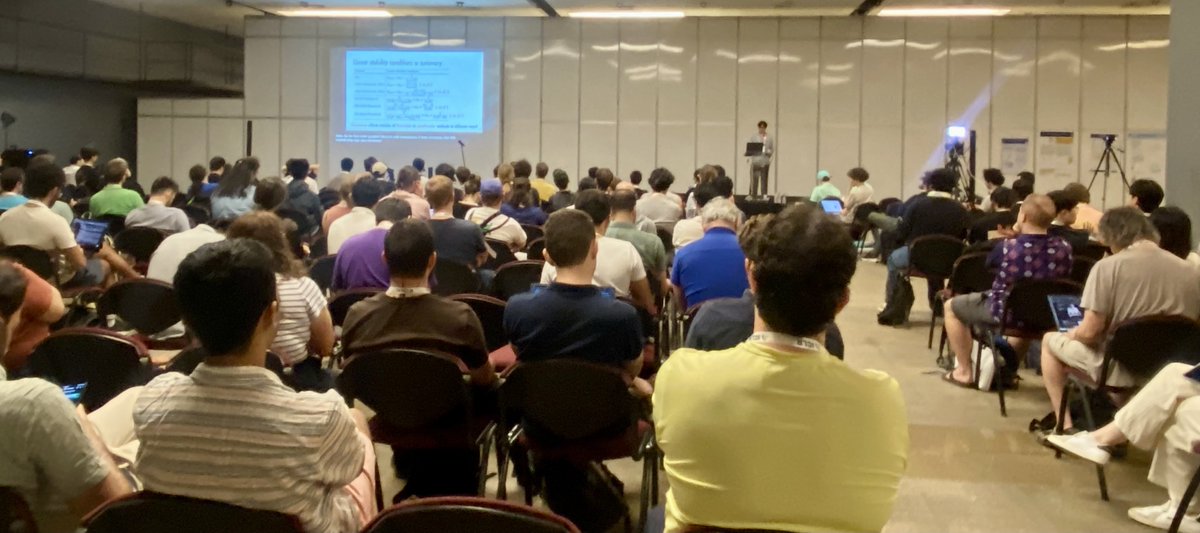
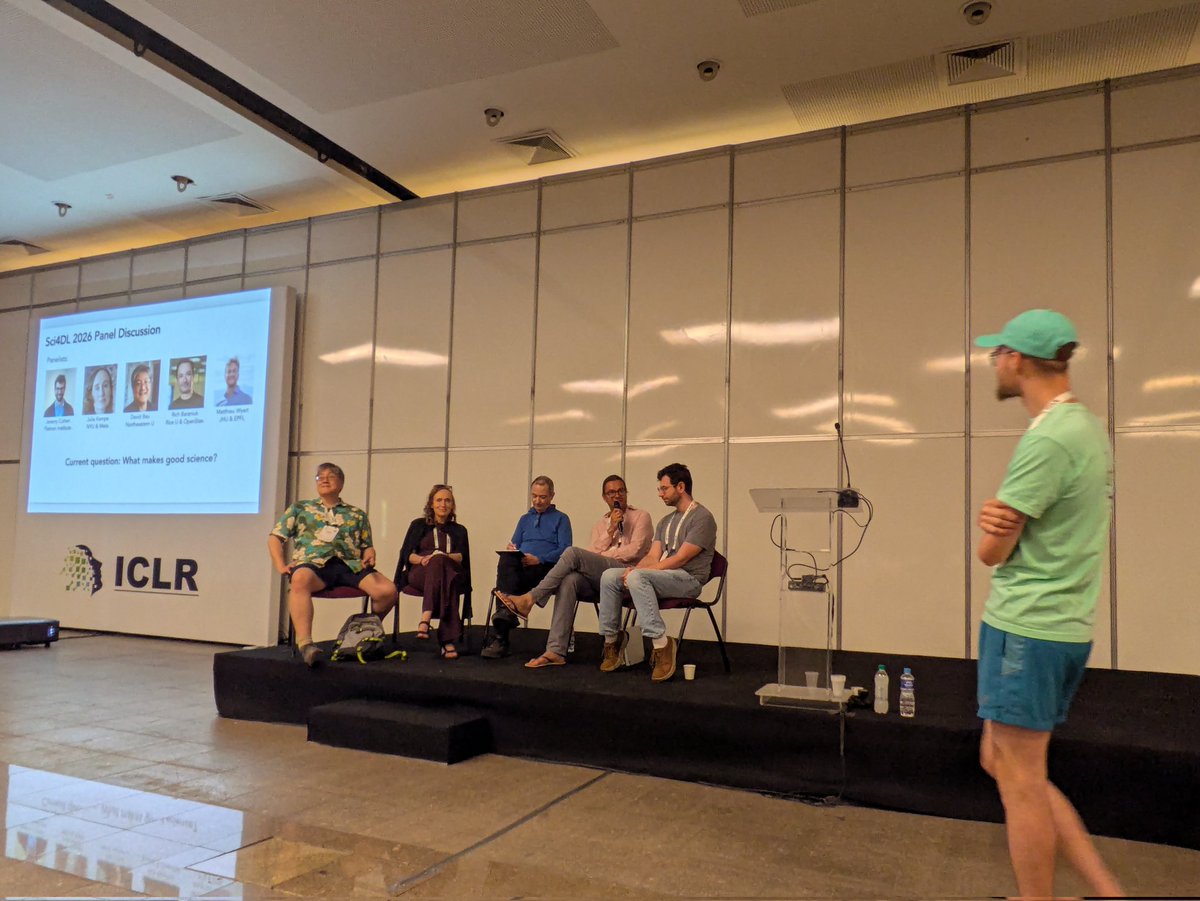
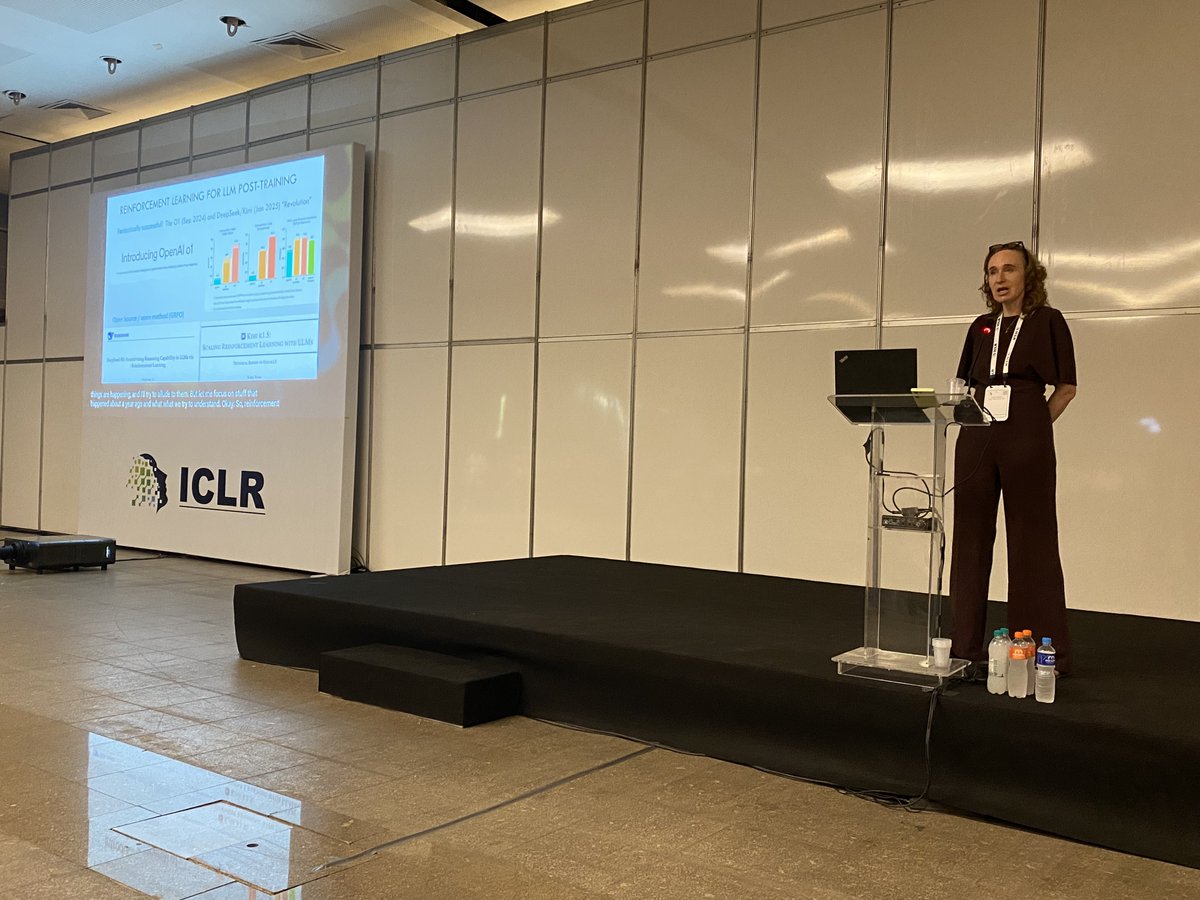
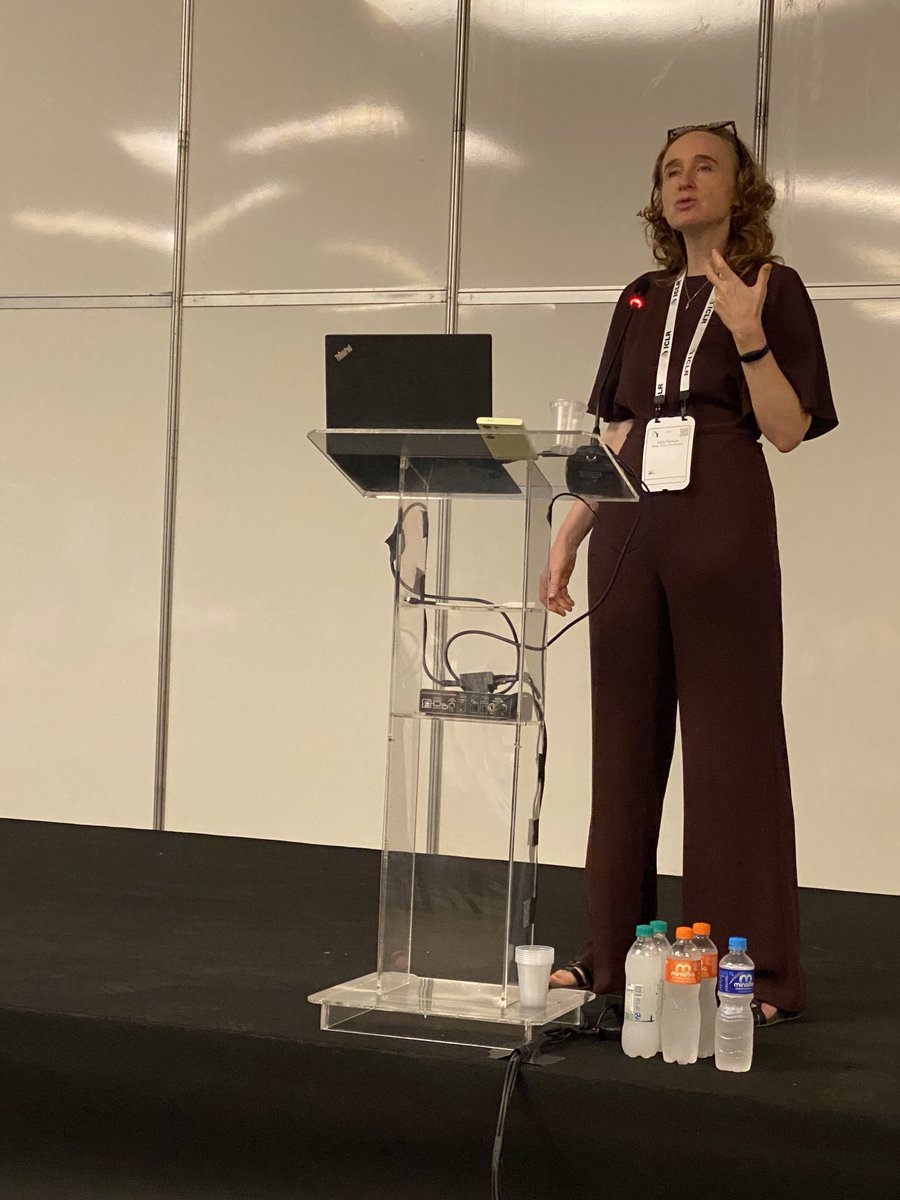
The 2nd Sci4DL (@scifordl) workshop at #ICLR2026 in Rio drew a packed room.
Organized by CDS PhD alumni @ZKadkhodaie & @LotfiSanae, CDS Instructor @FlorentinGuth, and CDS-associated Prof. Eero Simoncelli, with CDS Silver Prof. @KempeLab as a speaker.
https://t.co/fHl0urZa3D
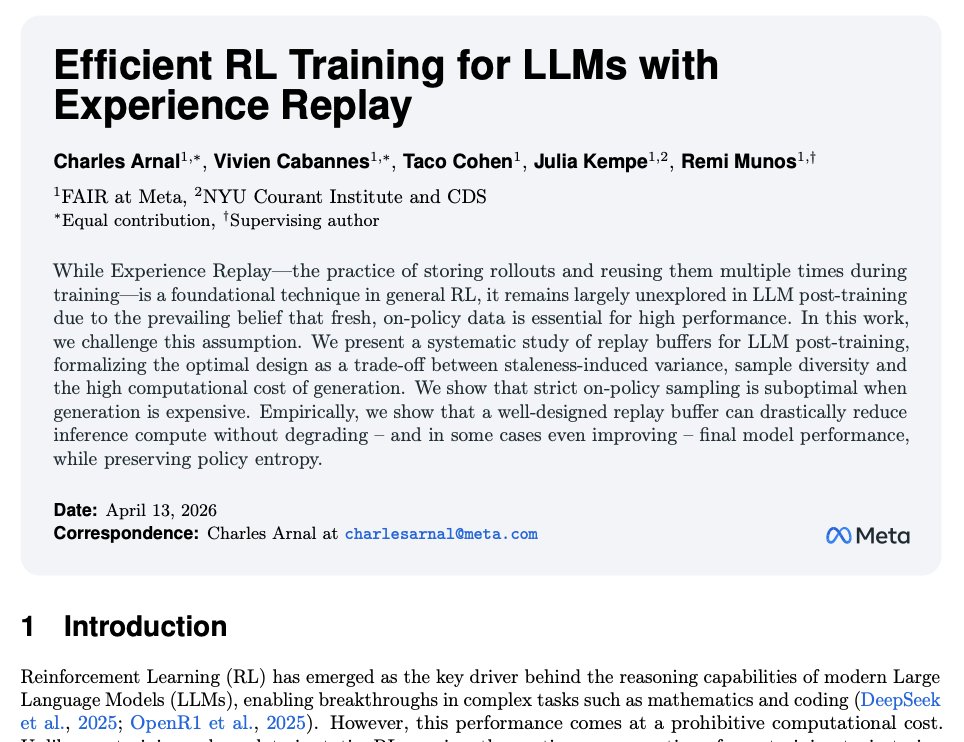
CDS Silver Prof @KempeLab working with @arnal_charles, @TacoCohen, Vivien Cabannes, and Remi Munos studied how LLMs can train more efficiently by reusing past experience instead of constantly generating new data.
Accepted to the ICML '26 conference.
https://t.co/51pnS12vgc
3/3 Scaling of foundation models & large-scale engineering continues, but further progress in machine intelligence will require new ideas & breakthroughs. I believe academia will continue to play a key role, particularly through published and opensource research. Exciting times!
1/3 My time at Meta FAIR will soon come to a close. I joined nearly two years ago full-time to help advance LLM reasoning.
It has been a remarkable journey working with and leading an exceptionally talented team.
2/3 I am deeply grateful for the opportunity to collaborate with so many amazing colleagues at FAIR and MSL @AIatMeta.
I also want to thank FAIR leadership, past and present, especially @ylecun, @jpineau1, @NailaMurray, David Lopez Paz, @rob_fergus for letting us explore.
For me the highlight of this year’s #ICLR2026 is the New Frontiers in Associative Memory workshop.
Memory is an essential part of human cognition, yet it is present only in rudimentary forms in modern AI networks. The workshop will tackle recent advances in artificial memory models and new ideas for the future developments in this space.
Amazing lineup of speakers including: Jay McClelland, Paul Liang, Xueyan Niu, and many others.
📍📅 Auditorium 201 C, Sunday April 26 9am-5pm.
👉 Additional info: https://t.co/OGr8hzeNWy
Join us tomorrow for the exciting conversations about Associative Memory!
@iclr_conf@KempeLab@RogerioFeris@HildeKuehne@Ben_Hoov@krizna_b@pliang279@JLMcCelland@p_ram_p@andre_t_martins@du_yilun@dlipshutz@meisamrr
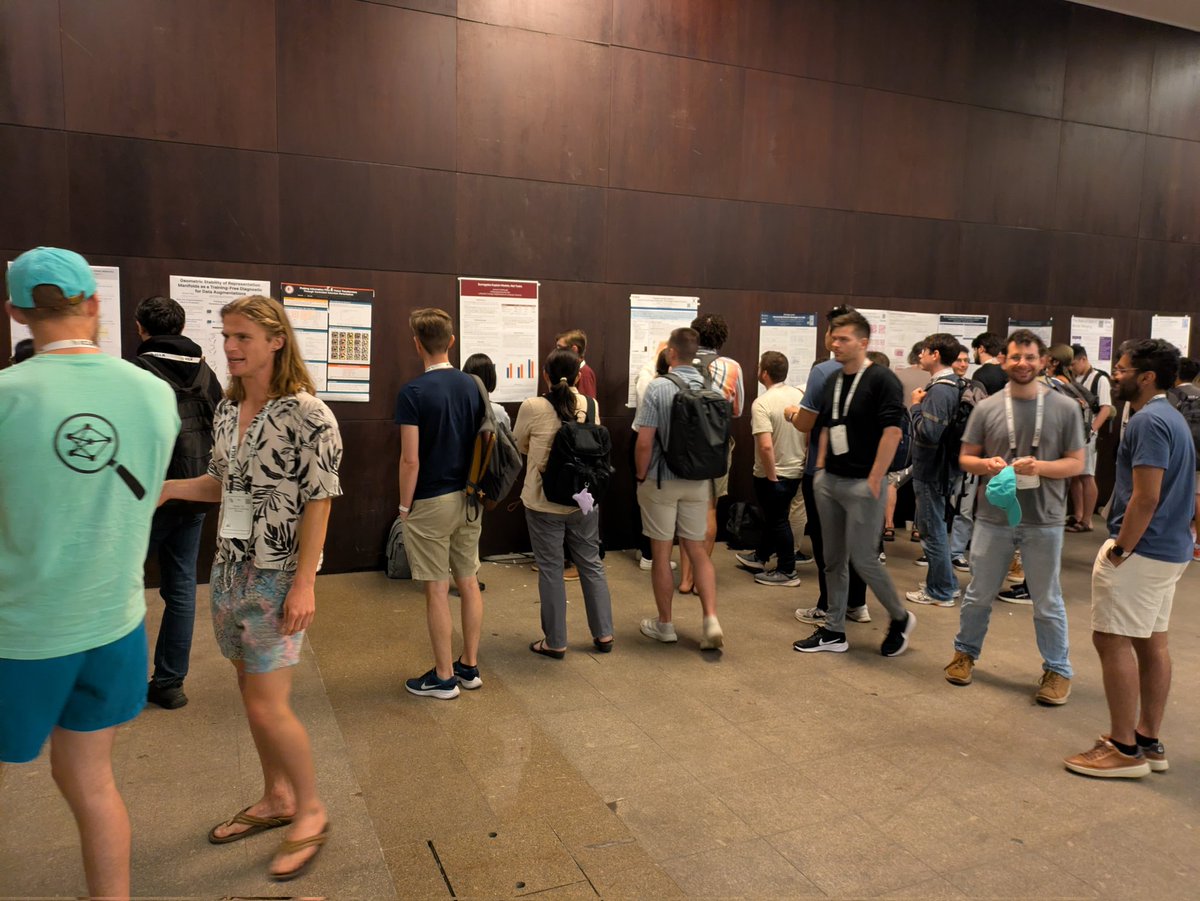
Heading to Rio for #ICLR2026 (there 24-27):
Giving a talk & on panel #Sci4DL workshop
Today's (Wed) poster on interpretability:
• From Concepts to Components: Concept-Agnostic Attention Module Discovery in Transformers Thu Apr 23, 10:30 AM-1:00 PM | P4-#4002
Excited to be at #ICLR2026 in Rio this week! Presenting “Soft Tokens, Hard Truths” Saturday 10.30am (Pavilion 3, P3-#1020). Feel free to DM me to chat about self-improvement, reasoning, code gen. I’m also on the job market for industry research positions.
love this replay buffer paper from Meta:
https://t.co/JysdD9gLIn
"methods like PPO or GRPO typically operate as on-policy as possible, meaning rollouts are generated, used for a single gradient update, and immediately discarded."
this is crazy and we shouldn't do this!
Efficient RL Training for LLMs with Experience Replay
"Empirically, we show that a well-designed replay buffer can drastically reduce inference compute without degrading – and in some cases even improving – final model performance, while preserving policy entropy."
(1/9) Experience replay can cut LLM RL training compute by up to ~40% (without hurting final accuracy—and sometimes improving it).
Paper: https://t.co/6YcAd6EBSy