America has a long history of public punishment, but one we thought we had left behind many years ago. Here’s a clip from @LynnNovick's upcoming series "Crime and Punishment in America," premiering Nov 16 on @PBS.
The last public execution in the US was in 1936. But for centuries before, Americans regularly gathered by the thousands to watch them. They were public spectacles, meant to teach a lesson about power. Here’s a clip from CRIME AND PUNISHMENT IN AMERICA, premiering Nov 16 on @PBS.
The last public execution in the US was in 1936. But for centuries before, Americans regularly gathered by the thousands to watch them. They were public spectacles, meant to teach a lesson about power. Here’s a clip from CRIME AND PUNISHMENT IN AMERICA, premiering Nov 16 on @PBS.
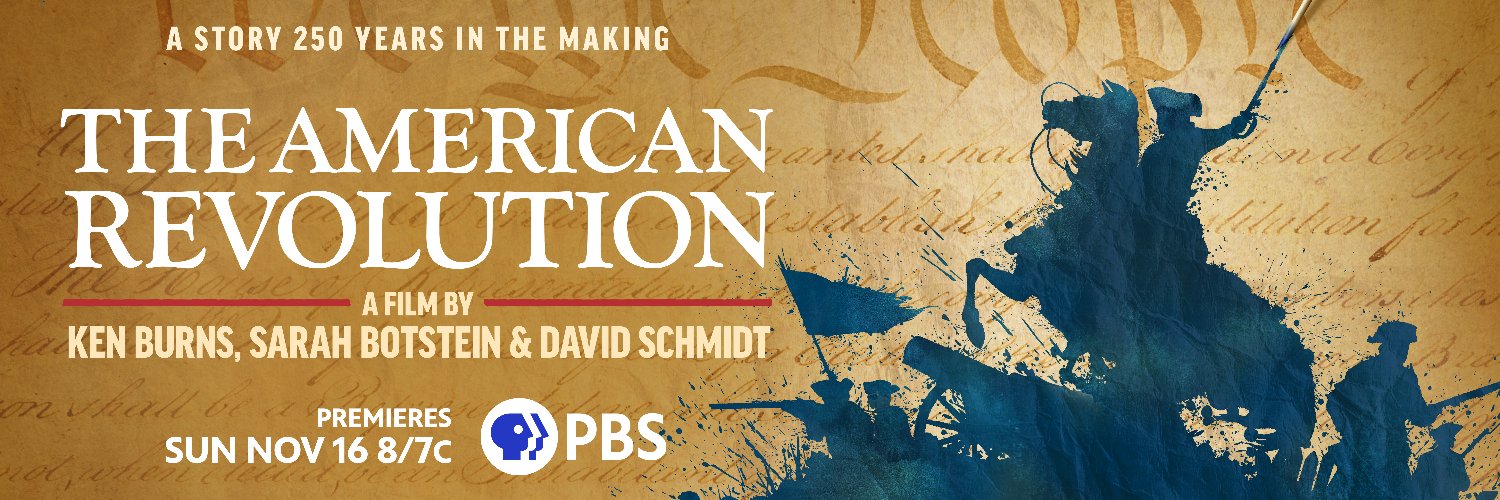
At Colgate University last week, President Obama recommended Ken Burns’s THE AMERICAN REVOLUTION as a “quick synopsis” for a course on democracy.
We agree.
ONCE UPON A TIME IN HARLEM is the best party I’ve ever been to and the well-deserved winner of this year’s @librarycongress Lavine/Ken Burns Prize for Film. Looking forward to recognizing the Greaves family in October. @BetterAngelsSoc Read more here: https://t.co/lWjmV7bkVs
Geoff Ward and I contributed a piece to the terrific @InPursuitUSA project on the American presidency. Optimism is a powerful force for leadership, especially in times of hardship.
There is much we can learn from President Roosevelt about how to lead, the power and impact of government, and what we can accomplish together as a people.
Geoffrey C. Ward and @KenBurns write about Franklin D. Roosevelt and the political force of durable optimism.
FDR entered office in 1933 with one in four Americans out of work, 9,000 banks failed, and public confidence collapsing.
He responded with the New Deal and a steady public voice that Eleanor Roosevelt said never once treated a problem as unsolvable, carrying the country through the Depression and most of World War II.
So much of America’s politics and culture revolves around crime and punishment. But the debates we’re having today — about prisons, criminality, victims and justice — are not new.
Here’s the trailer for CRIME AND PUNISHMENT IN AMERICA, a new film by my colleague @LynnNovick, coming to PBS November 16.
Lonnie Bunch is a great historian, public servant and a dear friend. He has devoted his career to helping us understand the full American story in all its complexity. Our country is better for his work, and I am deeply grateful for it.
Wishing him the very best and thankful that he will remain engaged with all things history.
https://t.co/gkfgSdxw73
Greatness may be the ability to tap into something that came before us and make it new - fresh and relevant and accessible to everyone. Gloria Steinem was great by every measure. To mark her passing, here’s the last clip from NOT FOR OURSELVES ALONE, a final word from Susan B. Anthony to her friend Elizabeth Cady Stanton, speaking across time to all of us, but especially Gloria.
One of twelve children raised in a cabin, Dolly Parton left home carrying nothing but songs to become the most beloved figure in American music. She wrote "I Will Always Love You" as a goodbye to Porter Wagoner. Today it belongs to all of us.
Ninety-nine years ago today, the Carter Family made their historic first recordings in Bristol, Tennessee. Music has never been the same. Watch the clip from COUNTRY MUSIC with Rosanne Cash and @martystuarthq.
Worth reading this @KarlRove piece on President McKinley, part of @InPursuitUSA. We can learn quite a bit about leadership and character from the look at Presidents and First Ladies.
Karl Rove (@KarlRove) writes about William McKinley and the political work of unifying a country that had spent three decades stuck in gridlock. McKinley entered a Gilded Age defined by contested elections, purged congressional seats, and unresolved Civil War divisions.
His response was to widen the coalition, meeting directly with Black political leaders, welcoming Confederate veterans to his front porch in Canton, and running ahead of past Republicans in Catholic and immigrant communities long treated as off-limits.
Documentary filmmaker @KenBurns reflects on Franklin Roosevelt’s leadership during historical challenges like the Great Depression and WWII in this short by @RetroReport, based on @InPursuitUSA, for @PBS.
To access free #America250 classroom resources for #CivicSeason, visit @RetroReport’s website today: https://t.co/zem5eeHxOT
America’s 250th is coming up, and it’s time for YOU 🫵🏾 to get a refresh on our nation’s history. 🙏🏾🙏🏾 🇺🇸 🇺🇸 #AmericanRevolutionPBS
Stream @KenBurns’ THE AMERICAN REVOLUTION on the @PBS app through 7/12‼️
The promise of America: Founding Fathers didn’t just make liberty a democratic claim — they expected we would continue their argument https://t.co/kF3AvCJnHx
I read the Declaration of Independence aloud to my family every Fourth of July.
Its words were written by imperfect men, but they remain central to understanding who we are and who we hope to become.