저는 서울에 살고 있습니다. 하지만 대부분의 소통은 텔레그램을 통해 러시아어로 이루어집니다. 안타깝게도 러시아 당국은 러시아 내 인터넷 접속을 차단하기 위해 온갖 노력을 다하고 있습니다. 따라서 더 이상 러시아어로 소통하거나 글을 주고받을 사람이 없습니다. 앞으로는 모든 글을 트위터에 영어와 한국어로 동시에 올리려고 합니다. 누군가 읽어주기�� 바라면서요. 감사합니다.
This is a good illustration of how the current situation differs from the (seemingly similar) 2018 local elections, which also ended in a landslide victory for the Democratic Party.
On average, Democratic Party candidates performed about six percentage points worse than they did in 2018 (still better than in 2022, though comparisons with that election are of limited value). And this decline was visible almost everywhere.
The situation is particularly poor in Gangwon Province and across the Chungcheong region, where Democratic support fell by roughly 10–15 percentage points. At the same time, conservatives have become far more consolidated. In 2018, several conservative parties and candidates competed against one another, whereas today there is usually only a single conservative candidate in each race.
As a result, the gap in many of these provinces is no longer 30–40 percentage points, but only between 2 and 9 points. These are extremely close races. For a Democratic Party riding a wave of post-election euphoria and backed by a president whose approval rating is approaching 60 percent, this is a surprisingly poor result—even if it still looks like a victory on paper.
There are only two major exceptions:
🟣 1. Jeju Province
The Democratic Party performed significantly better here than it did in 2018. The main reason is Won Hee-ryong. In 2018, after already serving two terms as the conservative governor of Jeju, he ran for re-election as an independent candidate. This time he was absent from the ballot.
Meanwhile, Democrats have firmly established themselves as the political champions of the memory of the 1948 Jeju Uprising. Some conservatives continue to argue that the uprising was a rebellion instigated by North Korea, a position that has become increasingly unpopular on the island. As a result, conservatives have struggled to maintain support in Jeju in recent years.
🟣 2. Daegu
The Democratic Party posted a modest gain and achieved a historically strong result of 45 percent—almost enough to win.
The reasons are several: a long-term strategy of expanding Democratic influence in the Yeongnam region; the personal influence of Kim Boo-kyum, the former prime minister under President Moon Jae-in, who has repeatedly run in the region and steadily increased his political weight there; a relatively weak conservative candidate; and gradual generational change. Younger urban voters are increasingly less likely to vote according to traditional regional loyalties—which, in Daegu, has historically meant voting conservative.
기자: Fedor Chernetskii
Disappointment in Victory
In terms of absolute numbers, today was an unequivocal victory for the Democratic Party. But if that is the case, why does the mood among Democratic supporters carry such a clear undertone of disappointment?
The answer is simple: expectations were not met.
These elections proved something that almost nobody believed possible — neither Democrats nor Conservatives.
Having faced a crisis comparable to that of 2018, the conservative party appeared destined to stand on the brink of collapse. And that collapse was anticipated not only by its opponents but also by many within the conservative camp itself. Why? Because many believed that electoral defeat would create an opportunity to dissolve the party, rebuild its leadership, redefine its purpose, and correct its mistakes. To shed the burden of the far right and conspiracy theorists, free itself from dependence on religious sects, and finally move beyond the ever-present spirit of pseudo-patriotism.
Instead, it turned out that all of these very sins are precisely what have allowed the Conservatives to avoid an otherwise inevitable collapse.
There will be no modernization. The election demonstrated that, in its current form, the party is capable not only of preserving itself but also of withstanding the most powerful attacks from a Democratic Party that is strong, energized, youthful, and ambitious.
These elections also showed that experienced and reasonable Conservatives (Oh Se-hoon and Han Dong-hoon being the two notable exceptions) are losing ground, while politicians who enjoy the support of a core electorate busy hunting for imaginary Chinese spies are the ones managing to hold their positions in battles that seemed unwinnable from the outset.
Did the Conservatives receive enough votes to restore parity with the Democrats? No.
But did they receive enough votes to abandon any serious discussion of modernization? Unfortunately, the answer appears to be yes.
And that means one thing:
Yoon Again is here to stay.
의사일정 1항 헌법개정안에 대해 국민의힘에서 무제한 토론을 신청했습니다. 이해할 수 없는 일입니다.
헌법개정안은 국민의힘이 표결에 참여하지 않으면 가든 부든 의결을 할 수가 없는 안건입니다. 그런데도 필리버스터를 하겠다는 것은 대체 무슨 이유입니까.
필리버스터는 본래 ���사결정권을 갖지 못한 소수파가 자신의 입장을 국민께 알리기 위한 제도입니다. 그런데 국민의힘은 의사결정권을 가지고 있습니다. 심지어 스스로 표결에 불참해 안건이 불성립된 상황에서 다시 필리버스터를 하겠다는 것은 제도의 취지를 벗어난 명백한 남용입니다.
어떻게든 39년 만의 개헌을 무산시키지 않기 위해 오늘 다시 본회의를 열었습니다. 민심을 직시하고 하루 더 깊이 생각해볼 시간을 드린 것인데 이렇게 필리버스터를 거는 것을 보면, 더 이상의 의사진행이 소용없겠다는 생각이 듭니다. 의장은 헌법개정안을 상정하지 않겠습니다.
오는 6월 3일 개헌 국민투표 시행을 위한 절차는 이제 오늘로써 중단됐습니다. 국민투표로 주권을 행사하기 위해 선거인단 등록에 참여한 재외국민 여러분과 관계기관에도 유감의 뜻을 전합니다.
매우 아쉽습니다. 정말 몹시 안타깝습니다. 개헌의 필요성과 시급성에 대한 국민적 요구가 분명하고, 쟁점이 없어 여야 간에도 얼마든지 합의가 가능한, 사실상 내용적 반대가 전혀 없는 개헌안을 놓고도 개헌의 문을 열지 못했습니다.
정략과 억지 주장을 끌어들여 39년 만의 개헌을 무산시킨 국민의힘에 강력한 유감을 표하지 않을 수 없습니다. 이번 개헌안은 ��부 다 국민의힘이 국민들께 약속했던 내용입니다. 작년 5.18에는 당 공식 입장으로 헌법 전문 수록을 적극 추진하겠다고까지 했습니다. 12.3 비상계엄을 반성한다고도 했고, 국가균형발전은 말할 것도 없습니다.
졸속 개헌이라는 지적은 사실과 다릅니다. 의장은 2024년 제76주년 제헌절 경축사에서 개헌을 공식 제안한 이후, 그해 11월 국민미래개헌자문위원회를 구성해 논의를 시작했습니다. 국민의힘도 그 구성에 참여해 함께 논의했습니다. 이후에도 숱하게 제안했지만 그때마다 응답하지 않은 것이 국민의힘입니다.
불법 계엄을 반성한다, 반대한다고 한 소리는 다 어디로 간 것입니까. 불법 계엄 봉쇄 개헌까지 필리버스터를 걸면서 이러고도 ‘내란당’이라는 세간의 인식과 비판에서 벗어날 수 있다고 생각하는 것인지, 묻지 않을 수 없습니다. 부끄럽고 두렵게 여기길 바랍니다.
다수당이자 여당인 민주당에도 한 말씀 드립니다. 개헌은 정부의 1호 국정과제이기도 하고, 특히 이번 개헌안은 민주당의 역사와 정체성 속에서도 각별한 의미가 있었다고 생각합니다. 국민의힘을 적극적으로 설득하면서 개헌 추진과정에서 리더십을 발휘해주기를 바라는 의견도 적잖았습니다. 이후의 개헌 논의를 위해서도 이 점을 잘 새겨주기를 바랍니다.
1987년 이후의 시대 변화를 담아내지 못하는 현행 헌법은 반드시 개정되어야 합니다. 비록 이번 기회는 놓쳤지만, 출발선은 좀 더 가까워졌습니다. 헌법 불합치 결정 후 근 12년 만에 국민투표법을 개정해 개헌의 절차적 걸림돌을 해소했고, 전부 아니면 전무였던 전면개헌 방식 대신 합의되는 만큼씩 매듭을 지어가는 단계적 개헌에 공감대도 형성됐습니다.
이번 결과로 ‘역시 개헌은 안 되는 일’이라는 인식이 더 굳어져서는 안 됩니다. 그 책임은 이제 다시 국회가 져야 합니다. 그간 의장이 수차례에 걸쳐 요청했지만 불발되었던 ��헌특위를 후반기에는 반드시 구성해야 합니다. 어제 국민의힘도 이야기했습니다. 개헌 반대, 개헌 ���산의 책임 모면용이 아니길 바랍니다. 이번에는 국민의힘이 반드시 약속을 지킬 것을 촉구합니다.
오늘 의사일정으로 공지된 다른 50개 법안에 대해서도 모두 무제한 토론이 신청되어 있습니다. 여야 합의로 본회의에 올라온 민생법안들입니다. 법안이 통과되기만을 간절히 바라며 기다리고 있는 국민들은 안중에도 없는 것입니까.
합의되지 않은 안건이라는 이유도 가당치 않습니다. 본회의 안건을 정하는 권한이 교섭단체에 있는 것도 아닙니다. 법사위를 통과한 법안들을 특별한 사유도 없이 선별적으로 본회의에 올리고 처리를 미루려는 이유를 납득할 수 없습니다. 법안 하나하나가 모두 국민들께 필요하고 소중합니다. 무엇을 근거로, 어떤 권한을 가지고 이건 하고 저건 말고를 정하는 것입니까.
개헌안 재표결이 이유라면 더욱 말이 안 됩니다. 표결에 불참해 투표를 불성립시킨 것도 모자라 합의한 민생법안까지 볼모로 잡겠다고 하니, 대체 무엇을 하자는 것인지 모르겠습니다. 지켜보는 국민들도 이해하기 어려울 것입니다.
필리버스터로 의결을 지연시킬 수는 있지만 의결 자체를 막을 수는 없습니다. 지연되는 만큼 국민들�� 불편, 국민들의 피해만 커질 뿐입니다. 합의된 민생법안에 대한 필리버스터는 국민에게 몽니를 부리는 것이나 다름없습니다. 국민들의 삶에 필요한 법을 멈춰 세우는 것은 협상이 아니라 민생을 인질로 잡는 것입니다. 이런 필리버스터는 정치가 아니라 민생 인질극이라는 비판을 받아도 할 말이 없습니다.
22대 국회 전반기가 얼마 남지 않은 시점입니다. 법사위를 통과한 법안들까지는 마무리를 짓자는 것이 의장의 판단이었습니다. 필요한 법안을 제때제때 처리해야 국민들 불편이 줄어든다는 상식적인 국회 운영에도 어깃장을 놓는 이 상황이 정말로 참담합니다.
의장은 국민과 국회, 어디에도 아무 이득이 없는 이 무책임한 관성을 용인하지 않겠습니다. 법안을 상정하지 않겠습니다. 오늘 회의는 이것으로 마치겠습니다. 산회를 선포합니다.
[단독]고종 ‘을사늑약 저지’ 美에 친서 121년만에 워싱턴서 발견
고종이 을사늑약 저지를 위해 호머 헐버트 박사(1863∼1949)를 통해 보냈던 친서 원본을 최근 확인
해당 친서는 헐버트 박사 회고록 등을 통해 내용은 알려졌으나 실물이 드러난 건 처음
헐버트 박사는 1905년 11월 중순 워싱턴에 도착했지만 백악관과 국무부의 냉대를 받았다. 일본이 밀사 파견 사실을 미리 알고 ‘만나주지 말라’며 미 정부에 사전 작업을 한 탓이다. 박사는 을사늑약 체결(11월 17일) 뒤인 11월 25일에야 국무장관과 면담하며 친서를 전달할 수 있었다.
우리나라의 독립을 위해 헌신한 외국인들과 나라를 팔아먹은 매국노들이 동시대에 살았다는 아이러니.
더 웃긴건 그 매국노들의 후손들이 현재 떵떵거리며 매우 잘 살고 있다는 좃같음.
https://t.co/IjnDsVXfyF
Green Agenda: From Words to Action
Speaking about the influence of Korean youth organizations. This year, the winner of the Goldman Prize is a Korean activist and one of the faces of the youth organization 청소년기후행동 (Youth 4 Climate Action), Borim Kim | 김보림. Before her, the last Korean to receive the award was back in 1995 — Yul Choi | 최열.
Yul Choi also began his path in the student movement. In the 1970s, he took part in student protests and opposed the Yushin Constitution | 유신헌법 (the dictatorial regime of Park Chung-hee), for which he was arrested under Emergency Decree No. 9 and sentenced to six years in prison, of which he served just over two. After his release, he joined the democratic youth movement and, by the early 1980s, became actively engaged in environmental issues. Even at that time, he was already a well-known figure, and various political parties reportedly offered him the chance to run for office around ten times — each time he refused. Instead, he devoted his entire career to something else: building institutions, alliances, committees, organizations, and movements dedicated to environmental protection in his country. For this, he was recognized as the first Korean to make a significant contribution to protecting the environment on a global scale.
So who is Borim Kim in comparison?
She began her activism in 2018, when she was in her early twenties. Together with friends, she founded the youth organization 청소년기후행동 (Youth Climate Action). They started with simple things: pickets, their own media, school strikes — the usual “for everything good, against everything bad.” But their ambitions quickly grew, and they became increasingly frustrated with being dismissed as just school students without a concrete vision for the future. In 2020, the group filed what became the first youth-led constitutional climate lawsuit in Asia against the government’s climate policy. Their point was simple: the government had come up with a plan that looked great economically, but by all measures violated environmental standards and, as a result, infringed upon the constitutional rights of future generations. Put simply, the youth organization managed to prove that years of rhetoric about environmental protection had been just that — rhetoric. No one had seriously checked implementation, and when it was finally examined, nothing matched the promises. They ultimately won the case by August 29, 2024 — which is what led to Borim Kim receiving the award.
What does this mean in practice for the country?
In 2021, the government adopted the Framework Act on Carbon Neutrality and Green Growth | 탄소중립·녹색성장 기본법. Its core idea is that the country must achieve carbon neutrality by 2050. But Borim Kim and her colleagues demonstrated in court that the law was largely performative — lacking real guarantees and a concrete plan. The former president effectively used it as a polished framework to reorganize major business interests, while shifting the long-term consequences onto future generations. The Constitutional Court required the legislature to revise the law by February 2026; only partial amendments were made, and the broader overhaul was not completed in time. That said, work on the issue is ongoing. Everything now points toward the law being rewritten in a way that will obligate the government to ensure that Korea advances toward carbon neutrality at a pace exceeding global trends — not just in words, but by granting stakeholders the ability to monitor all key indicators.
As a Russian journalist, it is obvious to me that convincing the public of the value of such initiatives is крайне difficult. The negative image of Greta Thunberg remains deeply ingrained. But I personally see it differently. Over the past five years, youth organizations in Korea have become part of the political system. Words have turned into concrete decisions — and those decisions will lead to fundamental transformations. And that is undoubtedly a good thing. As for Korean youth — and Borim Kim in particular — they can only be congratulated on their international recognition!
오픈AI의 챗GPT가 한컴오피스 '한글'에서 사���되는 대표 문서 형식 HWP와 HWPX 파일을 지원한다고 17일 밝혔다.
국내 사용자들은 별도로 파일을 변환하지 않고 챗GPT에 한글 문서를 업로드해 내용을 확인할 수 있다.
등록 2026-04-17 15:06
https://t.co/fiRujAfZkD
The Share of Youth in Government Committees Increased from 10% to 20%
As of Tuesday, important legislative changes have come into effect requiring government committees at all levels to double the minimum threshold for youth participation. This applies to ministries and local self-government bodies.
What is a committee?
There are two types of committees: administrative and advisory. An advisory committee is a group of experts and advisors convened for a specific task, serving in a consulting role at the preliminary stage. An administrative committee is a body of specialists whose purpose is to oversee the implementation process by the government and its contractors at the practical stage.
From the perspective of political hierarchy, committees represent the lowest tier. Participation in a committee is in fact open to almost any citizen without prior political experience. It is sufficient to demonstrate competence in a given field and join a team responsible for quality control of a particular policy task. Participation in such committees is often the first step into politics. Since 2020, Article 20 of the Enforcement Decree of the Framework Act on Youth | 청년기본법 시행령 has made youth participation in such committees mandatory. From that same year, the quota was set at 10%. As of this week, that quota has been increased to 20%.
At the same time, there are committees and policy areas (such as youth policy, for example) where this percentage is even higher. However, we will not go that deep, as these are specific cases.
The bill has a clear author and lobbyist: the country’s Prime Minister, Kim Min-seok | 김민석. At present, there are about 3,000 committees operating within local governments, 227 of which belong to the central government. In practice, this means the law will, by its mandatory nature, trigger reshuffles across all committees nationwide just ahead of the upcoming elections—which, frankly, is quite convenient. Of course, the committees themselves are not directly tied to elections, but considering that Kim Min-seok is closely aligned with the president, and that the Democrats are expected to defeat the Conservatives by a ratio of 1 to 15 (more of a meme, but currently being widely circulated), this could allow not only control over elected positions but also alignment of committees in accordance with the law.
In general, it is a positive development—there will be twice as many young people (청춘 — aged 19 to 34) involved in politics.
The Democrats have nominated women for one-third of their candidates in the upcoming Busan elections. The Conservatives — not a single one.
We continue to observe the pre-election strategies of political forces and the role of women within them in South Korea. The situation in Busan is particularly illustrative: Democrats and Conservatives are approaching the elections with noticeably different candidate selection strategies. While the Conservatives rely on established figures — primarily incumbent district heads and experienced male politicians — the Democrats, on the contrary, are actively including women among their candidates: at present, at least 6 out of 16 nominations for district and county heads have been allocated to women.
Busan consists of 15 administrative districts (구) and 1 county (군): 중구, 서구, 동구, 영도구, 부산진구, 동래구, 남구, 북구, 해운대구, 사하구, 금정구, 강서구, 연제구, 수영구, 사상구 и 기장군
Conservatives
Initially, two women entered the Conservative primaries: 🔴 Yoo Soon-hee | 유순희 in 동구 and 🔴 Lee Hye-young | 이���영 in 북구. Yoo Soon-hee (56) is a former editor-in-chief of the Busan women’s newspaper https://t.co/ffZSiOKRIV and previously served as co-chair of the election committee for the Conservatives during the 21st parliamentary elections (2020) and the 20th presidential election (2022). Lee Hye-young (53) is a private attorney with no prior political experience. However, neither of them was ultimately allowed by the party to run in the election. Under normal circumstances, this might not have drawn much attention, but when the Democratic Party, in contrast, nominates six women at once, questions inevitably arise. Moreover, Yoo Soon-hee immediately filed a lawsuit against her own party and stated:
“There were no primaries. Candidates were selected behind closed doors, bypassing the law, and I was not even allowed to enter the race despite having submitted all the required documents. Candidates were appointed from Seoul from the top down, ignoring local politics.”
Instead of Yoo Soon-hee, 🔴 Kang Cheol-ho | 강철호, Chair of the Steering Committee of the Busan City Council, was appointed from Seoul to run in Dong-gu without primaries. Instead of Lee Hye-young, the incumbent head of Buk-gu, 🔴 Oh Tae-won | 오태원, will run for another term.
Democrats
Three women were nominated as the sole applicants in their respective races:
🔵 Seo Eun-suk (서은숙, 59) in 부산진구
Her entire political career has been built in this district, and she previously served as its head from 2018 to 2022.
🔵 Jung Myung-hee (정명희, 60) in 북구
Similarly, she served as the head of her district from 2018 to 2022.
🔵 Woo Sung-bin (우성빈, 54) in 기장군
A local politician who has not yet served as district head but has experience as a lawmaker and as a secretary to the Speaker of the National Assembly.
Three more women won their nominations through competitive primaries:
🔵 Kang Hee-eun (강희은, 35) in 중구
The youngest among the candidates, already with experience as a member of the local council focusing on youth policy.
🔵 Kim Jin (김진, 61) in 수영구
A journalist who entered politics amid support for Moon Jae-in, with 8 years of experience as a local council member.
🔵 Kim Kyung-ji (김경지, 60) in 금정구
A lawyer, this is her second attempt to enter politics after an unsuccessful run in 2024.
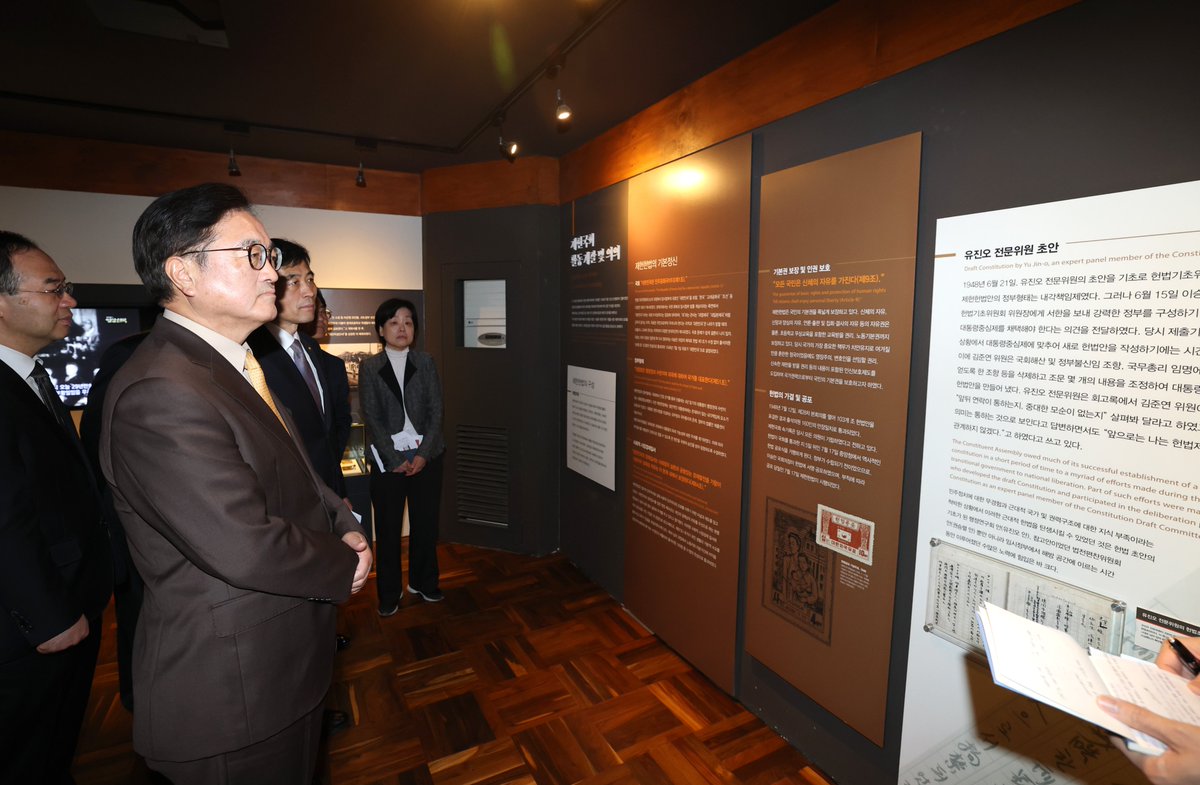
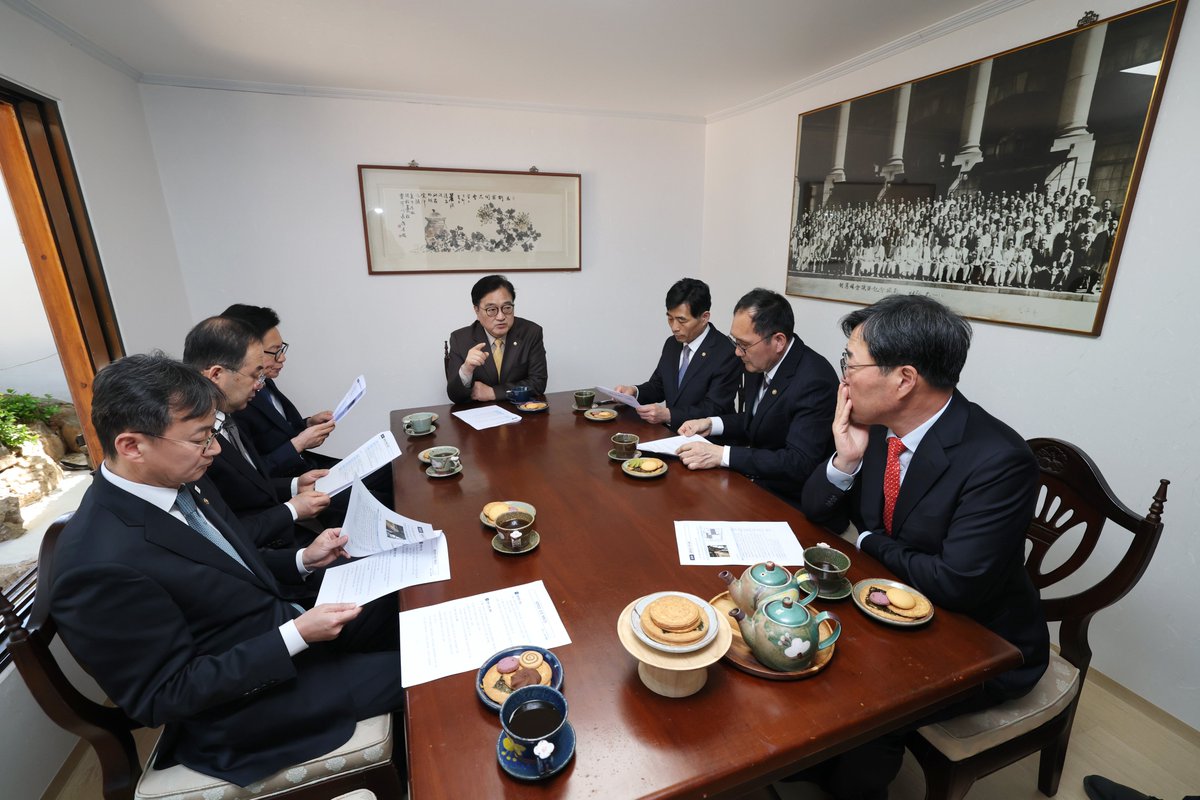
<보수공사를 마친 제헌회관에 다녀왔습니다>
종로구 통의동에 자리한 제헌회관이, 작년 말부터 시작된 보수공사를 마쳤습니다. 오는 5월 정식 재개관을 앞두고, 새단장을 마친 현장을 미리 살펴보고자 월요일 오전부터 다녀왔습니다.
제헌회관은 대한민국 최초의 민주 선거로 선출된 제헌국회의원들의 모임인 ‘제헌동지회’가 사용하던 역사적인 공간입니다. 지난 1983년 청���동에서 이곳 통의동으로 이전했고, 지난 2016년부터는 제헌국회의 역사와 가치를 전하는 전시 공간으로 단장하여 국민들을 맞이해왔으나, 오랜 세월을 거치는 동안 많이 낡게 되었습니다.
이에 지난해부터 꼭 필요한 보수공사를 거쳐 마침내 새로운 모습으로 국민 여러분께 다시 선보이게 된 것입니다.
총 세 개로 구성된 전시실은 제헌국회의 출범부터 정부 수립, 입법 활동, 실제 제헌의원들의 유품까지 민주주의의 시작을 알린 그 시대의 숨결을 생생히 간직하고 있습니다.
특히 전시실 한 켠에 적힌 제헌헌법 전문을 읽으니, 최근 개헌을 위해 여야 제 정당과 함께 뜻을 모아 공동발의한 '대한민국 헌법 개정안'이 떠오릅니다. 내용과 모습은 달라졌을지라도, 헌법은 어떤 상황에서도 국민의 뜻을 중심으로, 국민의 삶에 길을 내는 역할을 해야한다는 사실에는 변함이 없을 것입니다.
지난 24년도의 비상계엄 사태 이후, 많은 국민들께서 헌법의 가치와 의회 민주주의의 중요성을 몸소 깨달은 만큼, 우리 민주주의의 뿌리와도 같은 제헌국회를 기억하는 이 공간이 더욱 뜻깊게 다가옵니다.
제헌회관은 이제 더 넓게, 더 오래 국민 여러분과 만납니다. 5월부터 다시 문을 여는 제헌회관은, 운영 시간을 확대하여 매주 화요일부터 금요일까지(오전 10시~오후 6시) 국민 누구나 자유롭게 방문하실 수 있도록 문을 활짝 열어둘 예정입니다.
더욱 따뜻해질 5월의 봄날, 국민들께서 이곳 통의동 제헌회관을 꼭 한 번 들러 대한민국 민주주의의 시작을 보다 가까이에서 기억하고 체험해보시기 바랍니다.
I’m a bit surprised, but it seems that for some reason the post-COVID shake-up still hasn’t settled down. Every single one of my photos, year after year, inevitably leads to the same question: why am I wearing a mask.
Here’s my answer: for the same reasons I wear pants.
It’s clothing. In some places people go naked, in others they wear hats, and I simply can’t imagine breathing city air without a mask. It’s just uncomfortable out of habit. I feel equally positive about both nudists and fashionistas, and it never occurs to me to chase people around the internet lecturing them about the dangers of wearing gloves. Seriously, wear whatever you like.
And please stop bothering me with questions about the mask :)
No, I’m not trying to protect myself from germs
And I’m not hiding from people’s looks
This is just how I dress
A mask is an accessory.
And no, I haven’t suffocated in the past five years.
국방부장관입니다.
GOP 경계 관련 일부 소통의 오해가 있는 것 같아 ��시 설명드립니다.
□ 인구절벽기, 경계작전 효율화·과학화는
선택이 아닌 필수입니다.
국회에서 '시니어 경계병' 이야기까지 나올 정도로
병력 자원 급감은 임계점에 달한 상황입니다.
2025년 태어난 남아는 약 13만 가량입니다.
병력이 없습니다. 수십만 대군이 철책을 따라
줄지어 서던 과거의 방식은 물리적으로 불가능합니다.
경계 작전 또한 '질적전화'가 필요한 상황입니다.
인구 구조와 첨단 전력 등
시대가 변하고 있는데
우리는 왜 70년 묵은 경계방식을
고집해야 한다는 것입니까?
□ 주객전도를 바로잡아야 합니다.
경계작전 효율화와 과학화는
우리 육군의 숙원 중의 숙원이었습니다.
병력 대부분이 경계 근무에 묶여있고,
전방 경계 인력을 보충하기 위해
후방 페바부대 병력을 끌어다 쓰다 보니
정작 교육훈련과 임무숙달 등이 우선순위에서 밀리는
주객전도가 반복되고 있습니다.
이 구조를 바로잡는 것이야말로
부대 전투력을 강화는 길이라
현장 지휘관들과 작전통들이
입을 모아 말하고 있습니다.
□ 단계적으로 추진할 것입니다.
제가 기자 간담회에서 설명드린
GOP 경계병력 6천 명은,
단계별 작전성 검토를 거쳐
2040년께 계획 중인 목표치입니다.
마치 내일 병력이 줄어든다는 공포감으로
해석되는 것은 경계해야 합니다.
경계작전은 첨단화를 바탕으로,
��형 개념에서 지역 벨트 개념으로,
제대별 감시타격에서
대대 단위 통합감시와 ���소대 기동 타격을 중심으로
변모할 것입니다.
27년까지 과학화시스템의 성능개량,
시범운용 등 여건을 조성 단계를 거쳐,
1단계(~31년)와 2단계(~35년)를 거쳐
AI, 다족로봇, 드론 등 대폭 전력을 증강하여
미래 경계 체제로 전환해 나갈 것입니다.
□ 섣부른 정치화는 경계해야합니다.
마지막으로 당부드립니다.
경계병력을 절약하고 작전부대를 증강하자는 개념은
초당적 컨센서스를 공유한 사안입니다.
2009년 GOP 과학화,
윤석열 정부의 GP무인화 시범사업 등
정권에 관계없이 우리 군의 해법찾기는 계속 되었고,
보수 언론에서도 지속적으로 제기한 이슈이기도 합니다.
조국의 안보를 걱정하는 이라면,
대체로 큰 방향에 대해 이견이 없습니다.
각론에 대해 붓칠을 더할 수는 있어도,
그림 자체를 나무랄 수는 없습니다.
모처럼 전환의 물꼬�� 틔운 경계작전 개념이
섣부른 정치화로 인해 동력을 상실하는 것은 아닌지
심각한 문제의식을 갖고 있습니다.
'로봇이 전쟁하는 시대'가 오고 있습니다.
우리는 언어의 감옥에서 빠르게 벗어나야 합니다.
낡은 패러다임에 갇혀 소모적으로 시간을 보내기에
시대의 발전이 너무나도 빠릅니다.
현장의 장병을 지지해주시고
현장의 목소리에 귀기울여주시기 바랍니다.
감사합니다.




![yellowknife000's tweet photo. [단독]고종 ‘을사늑약 저지’ 美에 친서 121년만에 워싱턴서 발견
고종이 을사늑약 저지를 위해 호머 헐버트 박사(1863∼1949)를 통해 보냈던 친서 원본을 최근 확인
해당 친서는 헐버트 박사 회고록 등을 통해 내용은 알려졌으나 실물이 드러난 건 처음
헐버트 박사는 1905년 11월 중순 워싱턴에 도착했지만 백악관과 국무부의 냉대를 받았다. 일본이 밀사 파견 사실을 미리 알고 ‘만나주지 말라’며 미 정부에 사전 작업을 한 탓이다. 박사는 을사늑약 체결(11월 17일) 뒤인 11월 25일에야 국무장관과 면담하며 친서를 전달할 수 있었다.
우리나라의 독립을 위해 헌신한 외국인들과 나라를 팔아먹은 매국노들이 동시대에 살았다는 아이러니.
더 웃긴건 그 매국노들의 후손들이 현재 떵떵거리며 매우 잘 살고 있다는 좃같음.
https://t.co/IjnDsVXfyF](https://pbs.twimg.com/media/HHlldndacAARaEc.jpg)