Spam Valley is now available worldwide via Youtube. Please watch, share and bookmark for later. It's a show about class and belonging, about authenticity and gatekeeping - a show for anyone who feels excluded for not adhering to the unwritten rules of class.
Full film below📽️👇
Despite this the station has a stylish aesthetic that hints at the glamour of European train travel, particularly in the pops of red and considered lighting throughout.
Building #18 is Hlavní Nádraží, Prague’s central train station. Originally opened in 1871, the station has undergone many additions and reconstructions - namely the art nouveau entrance added in 1909 (see my last photo) and the brutalist expansion of 1979.
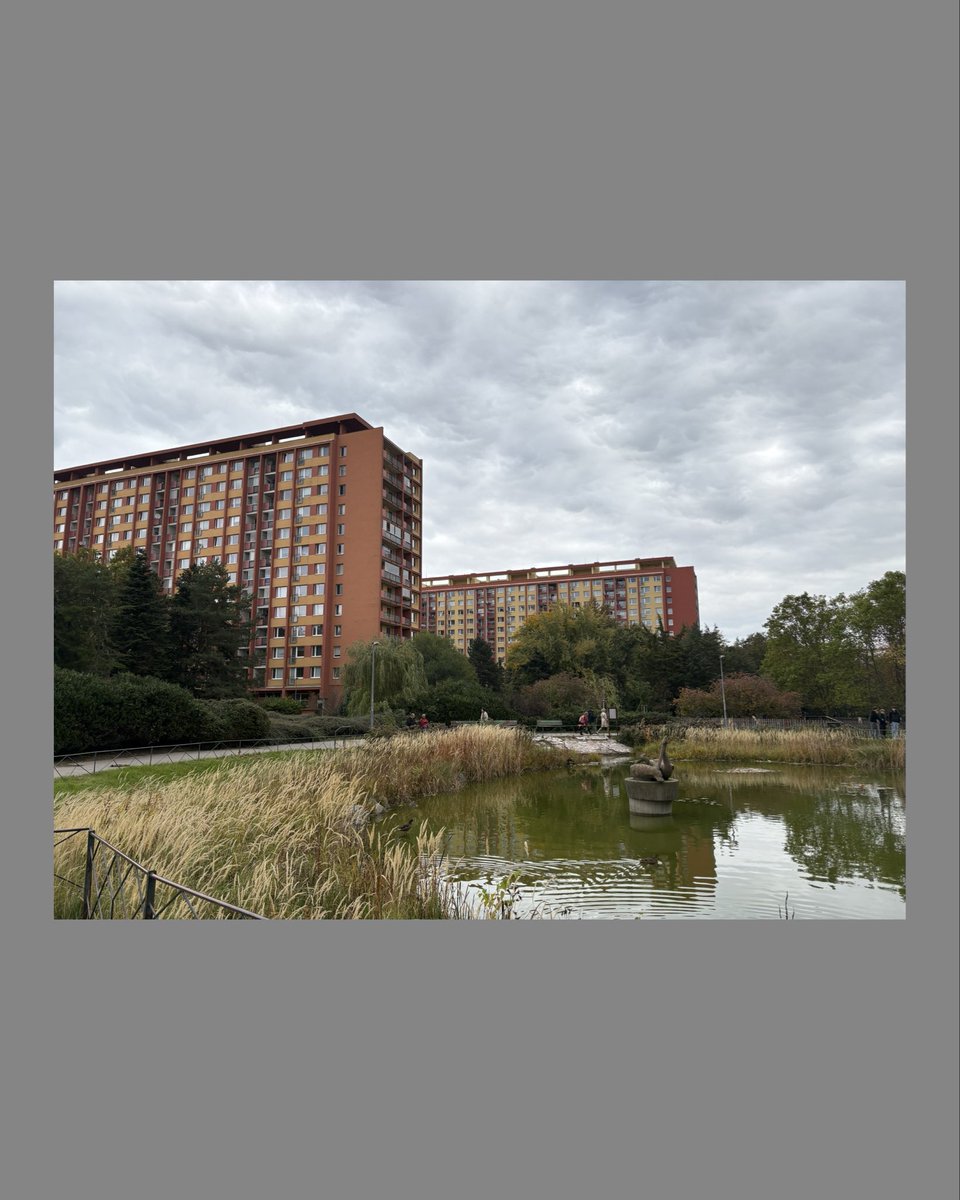
Often held up as the gold standard of sídlišté thanks to its built-in amenities and empathetic design that places green space at the centre of resident’s everyday lives. I loved the livability and strong community spirit carried through its tree-lined boulevard of dense slabs.
Building #17 is Sídlišté Ďáblice, one of the city’s most prized housing estates. Completed in 1975 it was designed to house close to 30,000 residents across its range of blocks.
I love the metronome and the way it sits in the park at Letna overlooking the city, reminding us all that time is always ticking and nothing lasts forever. Apparently it was only supposed to be temporary but proved too costly to take back down. I’m glad it stayed.
Building #16 isn’t a building but a work of art, the iconic Prague metronome. ‘Time Machine’ to give it its official name was installed in 1991 and is a 75-foot tall functioning metronome. The kinetic artwork has become part of the city’s landscape.
I was really taken with how dark and mysterious the building looked for its purpose. It could have just as easily been a nightclub or government agency. The tiles and bannisters all hinted at a very unified aesthetic, typical of the time.
Building #15 is Folimanka Sports Complex. Completed in 1979, the hall is home to various sports clubs and classes - from amateur judo practitioners to USK Praha, the city’s pro basketball team.
Both buildings sit in the shadow of the hulking Strahov stadium giving the whole area a really alien feel. If this was closer to town it’d be overrun by tourists but its location is largely hidden from view at river level, keeping it a brutalist secret at the top of Petrin hill.
Building #14 is the Strahov Tunnel Control Room and Ventilation Tower. Technically three structures but all connected and unified in function. Both designed by Jiří Trnka, the control centre opened in the 80s and the ventilation tower joined in the 90s.
When I first visited in 2009 one of my abiding memories was the art design of the A Line stations with their futuristic mounds hinting at some misplaced utopian present. It’s been fun to try to capture the different designs across the stations.
Building #13 isn’t a building at all, it’s the iconic A Line of the Prague Metro. First opened in 1978 and last expended in 2015, it’s a latitudinal spine connecting the city.
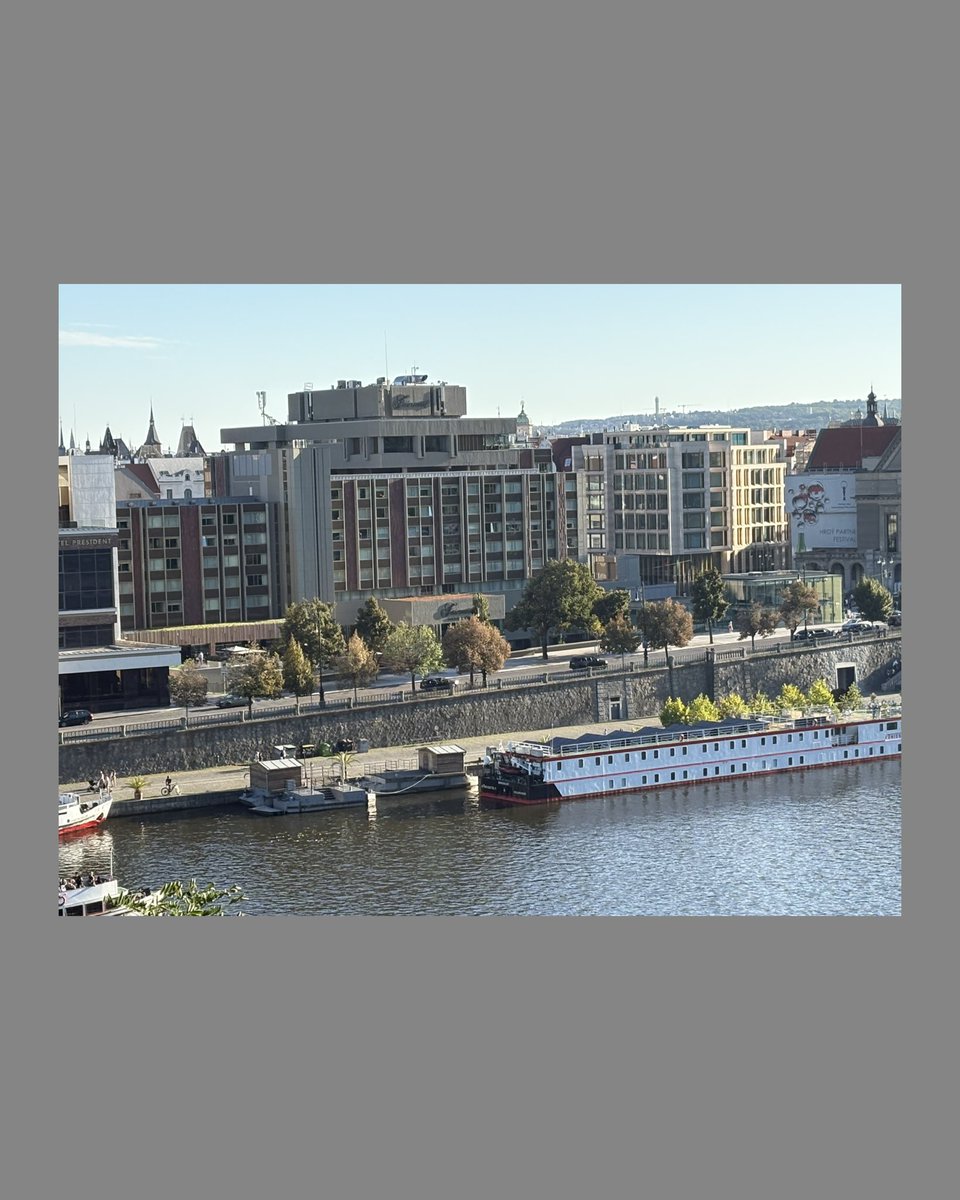
The utopian nature of the concrete feels very at odds with the exclusive nature of the hotel which houses a few swish restaurants and bars inside also. Maybe it’s my inherent class scepticism but its refurbishment seems to have shored up its snooty reputation.
Building #11 is Fairmont Golden Prague. Opened in 1974 the former Intercontinental hotel was the first international five star hotel in old Czechoslovakia. It reopened this year as the Fairmont Golden Prague after undergoing a major overhaul.
Somehow both dramatic and welcoming, I was struck by how suited it felt to its function. It seemed to be a place that centred the human aspect while still expressing itself through the varied materials and sculptural flourishes.
Building #10 is The Urology Clinic of the General University Hospital. Completed in 1976, it sits in the extended grounds of the hospital amongst buildings of a far more classical style and vintage.
It is also home to the ‘hall of shame’ where those caught with the incorrect ticket can plead their case and pay any fines accrued in person. A common occurrence for tourists if the google reviews for the building are to be believed.
Building #9 is the Central Dispatch Office of the Prague Public Transit Company. Completed in 1978, it is the control centre for Prague’s mammoth interlinking public transport system (imagine having one of those).