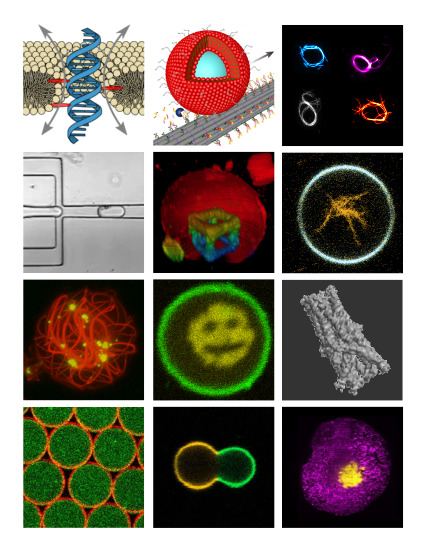
Professor @ZMBHh @UniHeidelberg. We engineer a synthetic model cell with lipid vesicles and DNA/RNA origami-based molecular hardware. [email protected]
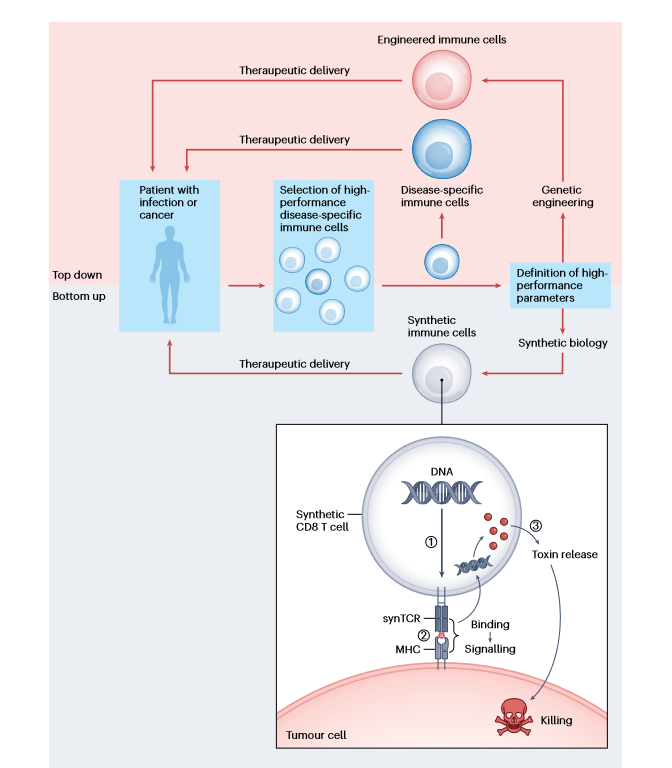
What happens when you apply design principles from bottom-up synthetic biology to immunology? In Heidelberg and together with @FrischknechtLab @platten_michael & Oliver Fackler we compiled the prospects of bottom-up synthetic immunology @NatureNano https://t.co/uRh8BpMksX
Excited to begin a new chapter as an Independent Junior Group Leader at the Institute of Biochemistry, @goetheuni Frankfurt!! My research group will focus on bottom-up synthetic immunology, optogenetics. Looking forward to exploring new ideas, collaborations, and discoveries!!!
Part of the postdoc work. Thank you so much @KGoepfrich for your support! Special thanks to @maiptran21 for doing a wonderful job. It’s time for celebration 🎉 🥳
Synetic Cell MC Doctoral Network PhD offer alert!📌 at @KGoepfrich group in Heidelberg!
If you are interested in RNA origami, synthetic cells, & membranes, contact Kerstin with a CV and a transcript of your records!
More info https://t.co/xjZCWEzme7
& https://t.co/oU29GpY7KE
It’s out!😃
2 years ago, I organized a workshop with @WebersGroup and @KGoepfrich on how to build Life.
We discussed with leading scientists by day and wrote up our discussions in the eves.
The "Roadmap Towards Synthetic Life" is now out in @Chem_CP
https://t.co/TOl659r92u
Thrilled to share our latest publication on DNA origami folding and functionalization! A fantastic collaboration with @KGoepfrich and @AnabelLostao teams. https://t.co/kn3aC1yJiU #DeDNAmers project 🧬@gsusdbl@INMAdivulga
How to achieve a high degree of functionalization on DNA origami in a cost-effective manner: https://t.co/xi7GWu1hi2 It's been great to work with Siliva Hernandez-Ainsa again - twelve years after we first published on DNA origami together!
Hi everyone, here's my conversation with Kerstin Göpfrich (@KGoepfrich), prof @UniHeidelberg & @mpi_mr_hd. Here we talk about engineering living systems in the lab, specifically, synthetic cells, DNA/RNA nanotechnology and laser printing of biomaterials. Enjoy the conversation.
links: https://t.co/xqvKgKyjjh
https://t.co/CvnITi4EWR
How come tension propagates super slowly in some cells (@ZS_biophys), but very fast in others? We suggest it's all about the intracellular pressure and the degree of membrane "crumpling" by the cytoskeleton! https://t.co/5b8Ey8cGg8 @DharanRaviv@avishai231@TheEliaLab
Door 17 of our advent calendar reveals a delicious treat!🧇 Yesterday, the Institute's Christmas party table offered a feast of self-made contributions, one of which were waffles branded by @KGoepfrich's research group, who bid us goodbye.👋 We wish them all the best! 😊
PhD alert! I have two ERC-funded PhD positions to uncover the chemical origins of life! Starting date: October 2025. *UK fees only*. Projects described here: https://t.co/5UmA9hhT5X
Email me if interested - deadline (PhD in Biochemistry, Uni of Cambridge): January 7th!
Spatio-Temporal Control of Morphogen Release in Organoids Using DNA Microbeads. #Retinal
By Cassian Afting, Tobias Walther, @KGoepfrich Kerstin Göpfrich, et al.
More Gastric Organoids Research Highlights: https://t.co/fkLveqY0Jm
Article Link: https://t.co/PKhqR50i4W
Kerstin Göpfrich Receives Funding for Innovative Cell Biology Research Project: Paul G. Allen Family Foundation allocates 1.5 million US dollars for project with colleagues in Austria and the United Kingdom https://t.co/6a3Fg8cBFd
🕚 Last chance to apply! Our application portal closes tonight, 1 December at 11:59 pm CET, for both our MSc to PhD Direct Track and Undergraduate Research Opportunities program. https://t.co/BKaGrNPcLe
Still time to apply to our fully funded doctoral program until December 1st 2024 to start next fall. Check out what our current students have to say here!👍🏻🙏👍🏻#passionforscience#maxplanckschools
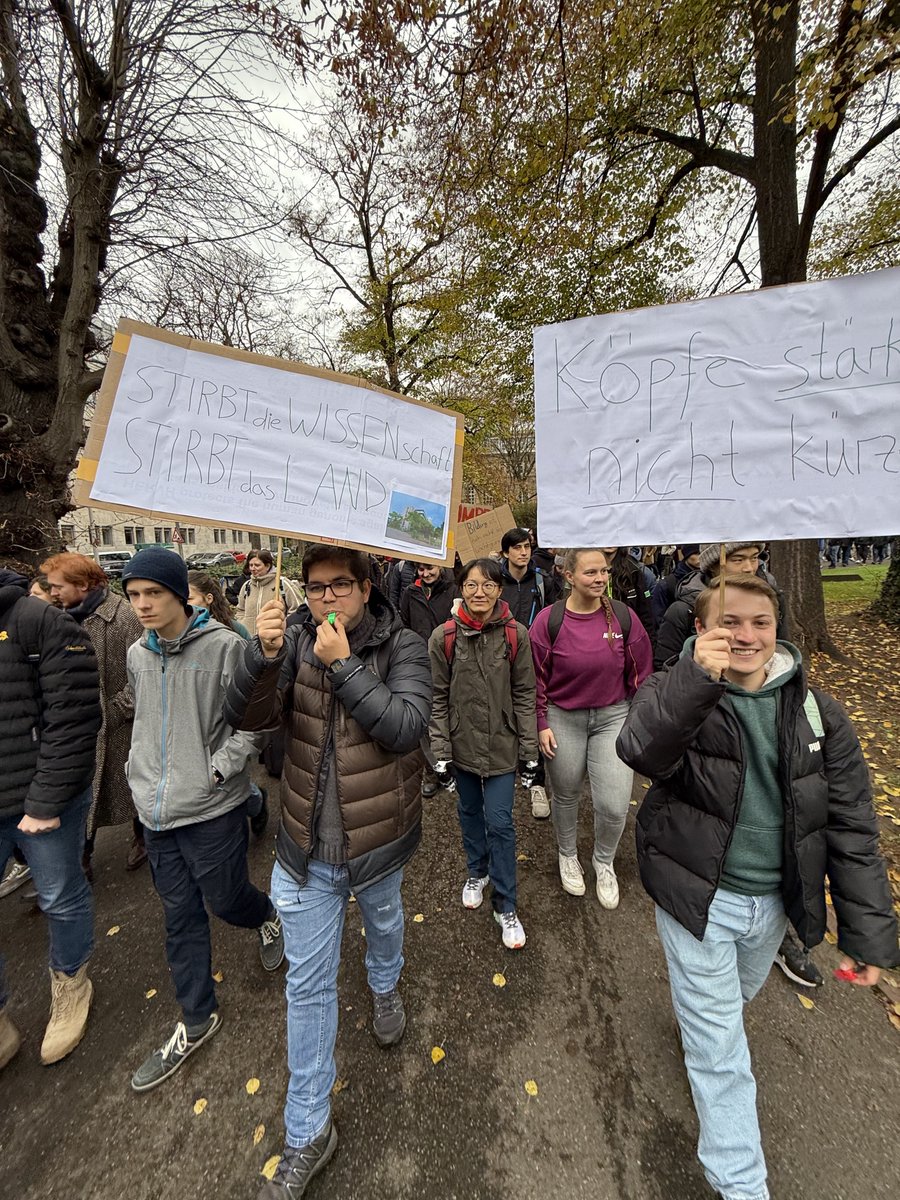
Students and scientists from ZMBH have joined today's rally in Stuttgart against the de facto decline of the basic funding of universities and for a revision of the State's 2026-2030 Higher Education Financing Agreement III
Synthetic genomes for synthetic cells: A large language model for the generation and interpretation of genomic sequences https://t.co/7cq5LSFDsZ I shared some thoughts with @Tagesspiegel (in German): https://t.co/QAcdrXVlIn
Excited to share it now in its final form in @NatureNano: our approach to decouple sensing from signal output to build modular and tunable DNA origami sensors with high FRET contrast: https://t.co/ycqfsfpSiN 💡🧬🔬