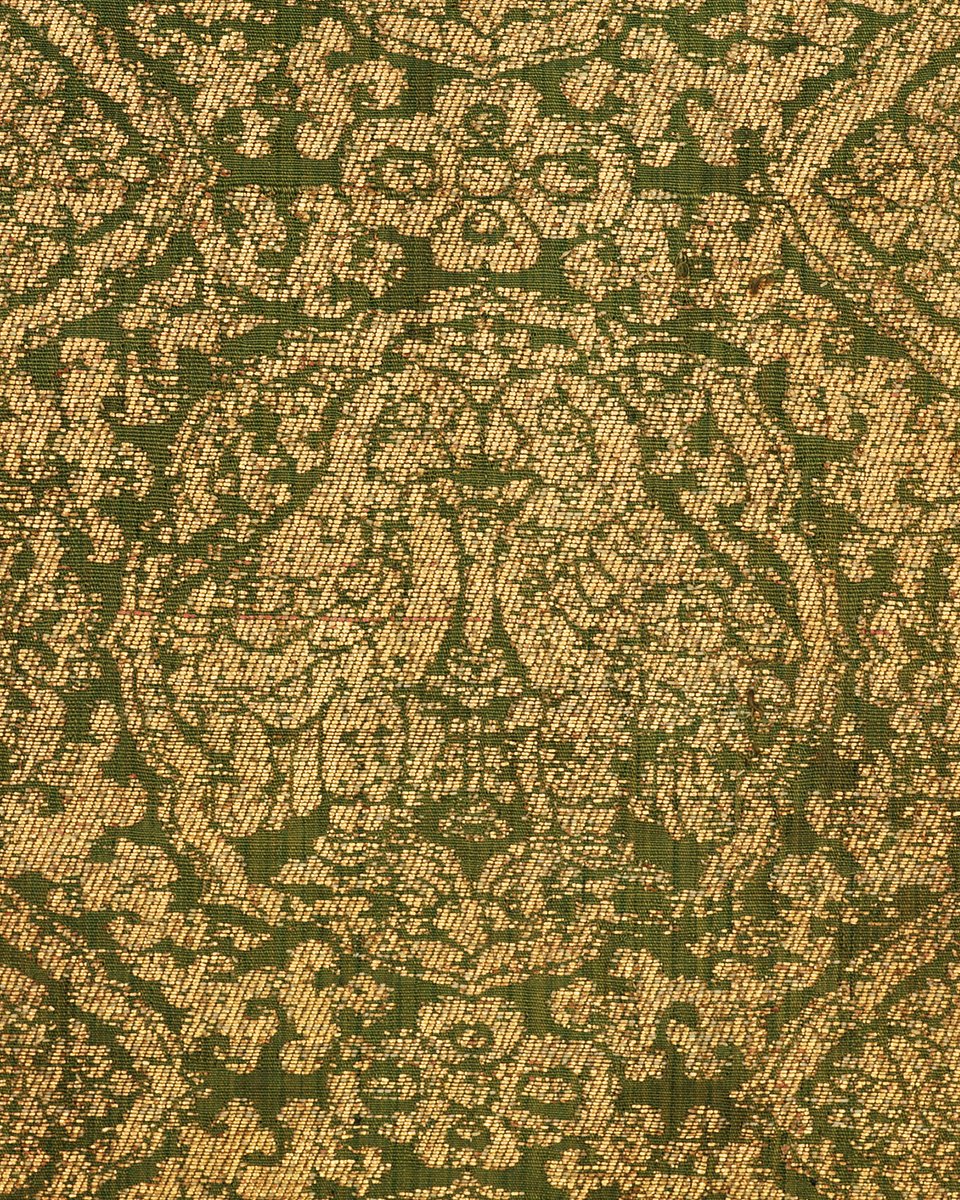
Today we’re sharing this #Textile with Confronted Parakeets from our Islamic Art Collection.
Dating to the 13th or early 14th-c AD and probably made in China, this silk textile is an example of the cultural exchange that took place across Asia during the Mongol period.
🎒✏️ #BackToSchool! We hope you’ve got your pencil case with you…
Dating to the third quarter of the 19th century, this papier-mâché pen box was made in Shiraz, Iran. Its cover and sliding compartment are decorated with intricate painted and varnished designs.
The feathers will be out this weekend. 🦚
As #NottingHillCarnival fills the streets with colour, movement and spectacular plumage, we’re turning to one of our own feathers from the Enamels of the World Collection.
Made in Japan, probably Nagoya, circa 1905–1910, this remarkable plique à jour enamel bowl features undulating peacock feathers, its design seemingly inspired by a circa 1900–01 box by French enameller Eugène Feuillâtre.
To mark Rabi al-Awwal, we're sharing this Talismanic Chart with a Hilyah from our Hajj and the Arts of Pilgrimage Collection — made in Istanbul in this very month, 1712. A written portrait of the Prophet, folded into an amulet for protection. Gold, ink, and devotion on paper. 🌙
#RabiAlAwwal
From our Islamic Arts Collection: this gardah (stencil), Iran, circa 1880–90. Made by folding a sheet of paper, drawing the design on one half, then pricking through both layers to create a perfectly symmetrical composition of inhabited scrolls, cloud bands, and lotus blossoms — transferable to any surface by pouncing. Its style closely echoes album covers made for Nasir al-Din Shah Qajar in 1881, and may be the work of the same hand.
#IslamicArt
This year's World Humanitarian Day theme calls for the protection of healthcare and honours those who have lost their lives delivering it. Centuries before modern medicine, objects like this one embodied the same conviction — that care for the sick is sacred, and that the act of healing carries its own kind of power.
It’s #WorldHumanitarianDay, and we’re sharing this Magic-medicinal bowl from our Islamic Art Collection. This bowl was crafted in 17th-c Golconda, India, from cast copper alloy inlaid with a black compound, and designed with one purpose: to heal.
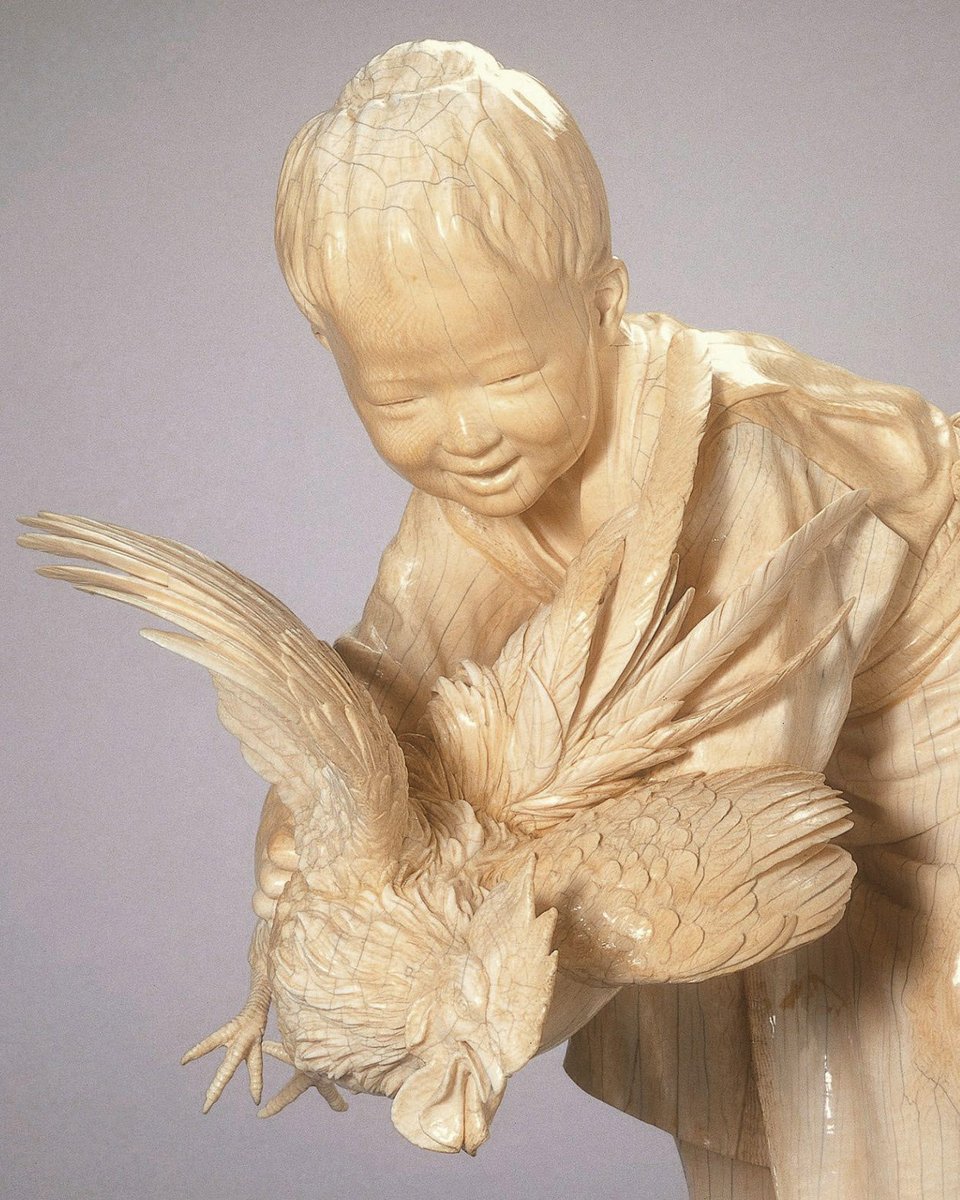
On #InternationalYouthDay, we’re celebrating young people across time with this remarkable Figure of Boy with Cockerel (Okimono) from our Japanese Art of the Meiji Period Collection.
Made in Japan circa 1910, this ivory carving showcases the extraordinary skill of Yoshida Homei, whose work found international success in the early 20th century.
Did you know?.... that Amanat Khan Shirazi received an elephant from the emperor for his work on the calligraphy of the Taj Mahal?
Amanat Khan was the master calligrapher behind the sweeping Qur'anic inscriptions that frame the Taj Mahal's great gateway and mausoleum. Born in Shiraz, Persia, he rose through the Mughal court under Jahangir and Shah Jahan, and was held in such esteem that he was the only artist permitted to sign his work on the monument, his signature can still be seen there today. Alongside the elephant, Shah Jahan also rewarded him with an increase in rank and title, a mark of just how highly calligraphy was prized in Mughal art and architecture.
This article featured on the front page of Wikipedia today.
Read more: https://t.co/2hH1b9VOhB
#khalilicollections
⛰️ #HappyMountainDay — 山の日 (Yama no Hi)! ⛰️
We’re celebrating with this magnificent earthenware Vase, made in Japan c.1890 and from our Japanese Art of the Meiji Period Collection.
Painted and gilded with scenes of mountains, rice farmers, fishermen, chrysanthemums and monkeys, it offers a glimpse into Japan’s landscapes and everyday life.
This richly illustrated manuscript was produced in Isfahan and is dated Friday, 27 Rabi‘ al-awwal 1011 (14 September 1602). The manuscript features a richly illuminated opening spread, chapter headings, and beautifully decorated intercolumnar spaces and corner pieces on some folios.
Happy #InternationalCatDay!
To celebrate, we’re turning our attention to a small detail in The envoy of Salm arrives at the court of Faridun, from the illustrated copy of the Shahnamah of Firdawsi where you’ll spot a cat, keeping company with a couple of lions.
It's #ManuscriptMonday! This single-volume Qur’an from our Islamic Art Collection was copied in Shiraz, Iran, in 1881 by Muhammad Shafi‘, the leading Persian calligrapher of the later 19th-C. The largest known 19th-C Persian Qur’an, it is a masterpiece of Qajar book arts, with calligraphy, illumination, and lacquer-painted covers.
A glimpse into 13th-century Iran.
This Cornice Tile, made in Kashan during the first half of the 13th-c, features a seated female figure beneath a cusped arch, with shimmering lustre decoration in cobalt blue and turquoise.
Related tiles are thought to have adorned Takht-i Sulayman, the Ilkhanid summer palace, where Persian tradition and Chinese-inspired motifs came together in remarkable new ways.
#CeramicArt
The three beakers are uniquely designed to stack neatly inside one another, helping to preserve their delicate decoration over the centuries. A fourth matching beaker, now in Kuwait, was once part of the original set.
☀️ It's hot out there! As temperatures rise this summer, we're reminding you to keep hydrated, with this Set of Stacking Beakers from our Islamic Art Collection.
#IslamicArt
Dating to the mid-13thC AD and made in Syria or Egypt, this remarkable set is crafted from yellowish blown glass, decorated with applied enamels and gilding. Their elegant form and decoration were so admired that similar beakers travelled to medieval Europe, where they were fitted with precious metal mounts and repurposed as liturgical vessels.
#KhaliliCollection
It’s #WorldChessDay, so we thought we’d share this folding games board with chess and backgammon from our Islamic Art Collection.
Dating from the 17th–18thC India, the board is crafted from wood and intricately inlaid with bone and ivory.
🇦🇷 Through to the #WorldCup Final! We couldn't resist celebrating Argentina’s achievement with this Unlined Kimono for a Woman (Hitoe) from our Japanese Kimono Collection, whose blues and whites echo the colours of the Argentinian flag.
Visit our website to find out more about our Japanese Kimono Collection
As Spain reaches the #WorldCup final, we thought we’d share this commemorative plaque from Toledo from our Spanish Damascene Collection.
Spanish damascening is one of the country's great artistic traditions, where gold and silver are inlaid into iron to create intricate decoration—a reminder that Spain's cultural heritage is every bit as remarkable as its football.
#Spain