Balochistan has been mentioned multiple times, hundreds of years before 1970. Intellectually dishonest Punjabis are trying to follow the policy of repeating a lie so many times that they might eventually think it has become the truth.
Guru Nanak is not the only founder of great religion with deep connection with present day Pakistan..Iranian Prophet Mani also visited present day Balochistan and converted its King of Turan. It is generally accepted by scholarship on Manichaeism..He also visited Sindh. #History
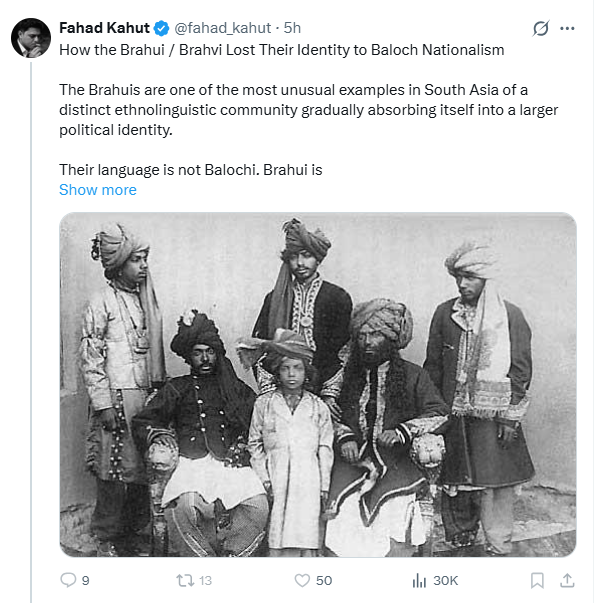
How the Brahui / Brahvi Lost Their Identity to Baloch Nationalism
The Brahuis are one of the most unusual examples in South Asia of a distinct ethnolinguistic community gradually absorbing itself into a larger political identity.
Their language is not Balochi. Brahui is Dravidian; Balochi is Iranian.
The two do not come from the same linguistic family. Encyclopaedia Iranica notes that there is no evidence of an early Brahui-Baloch association before their encounter in the Kalat highlands, probably around the 13th century or somewhat earlier.
It also records that, from at least the 16th century onward, Brahuis increasingly identified themselves as Baloch, often even describing themselves as Baloch to outsiders.
That is the fascinating part.
The Brahuis did not disappear. Their language survived. Their tribes survived. Their historical centre around Kalat survived. Yet over centuries, their political self-description increasingly became Baloch.
Even the Khanate of Kalat reflects this paradox. The ruling Ahmadzai clan was Brahui, yet the Khan styled himself Khan-e-Baloch, and Baluchi enjoyed prestige in the ruling household.
In other words, a political structure deeply rooted in Brahui power gradually operated under an increasingly Baloch political identity.
Genetics should not be used to erase the historical distinction either. Centuries of intermarriage, population movement and political integration naturally blur genetic boundaries.
Modern Brahuis may be genetically close to neighbouring Baloch populations, but that does not make their separate ethnolinguistic origin meaningless.
Their language, historical formation, tribal structure and early political identity remain distinct.
So the real story is not one of racial purity. It is one of identity formation.
A distinct community can gradually adopt another political identity so deeply that, generations later, the distinction itself starts to feel irrelevant.
That is why the Brahui case matters when discussing modern Baloch nationalism.
And here lies the modern paradox. The assimilation has become so deep that many Brahuis today proudly identify themselves politically as Baloch.
Brahui-speaking tribes are no longer peripheral to Baloch sub-nationalism; they are woven into its political and militant history.
Even Bashir Zeb, the current BLA leader, comes from the Muhammad Hasni tribal background, historically counted among the Brahui confederacy. Yet the organisation he leads does not seek a Brahui homeland. It seeks a so-called independent Baloch state.
But that contemporary identity should not erase the historical question:
How did a people with a separate language, separate ethnolinguistic history and their own political centre gradually stop insisting on being seen as separate?
The answer lies in centuries of intermarriage, bilingualism, political association, cultural prestige and shared geography. Identity was not imposed in a single moment. It was absorbed over generations.
And that should teach us something important about nationalism itself:
Ethnic identities are not fossils. They are constructed, expanded, absorbed, and redefined over time.
If that process continues unchecked, the danger is not that Brahuis physically disappear, but that Brahui identity itself becomes historically invisible. A people can survive demographically and still cease to exist as a distinct consciousness.
The real question is whether future generations will still inherit a Brahui identity of their own, or merely remember that their ancestors once had one.
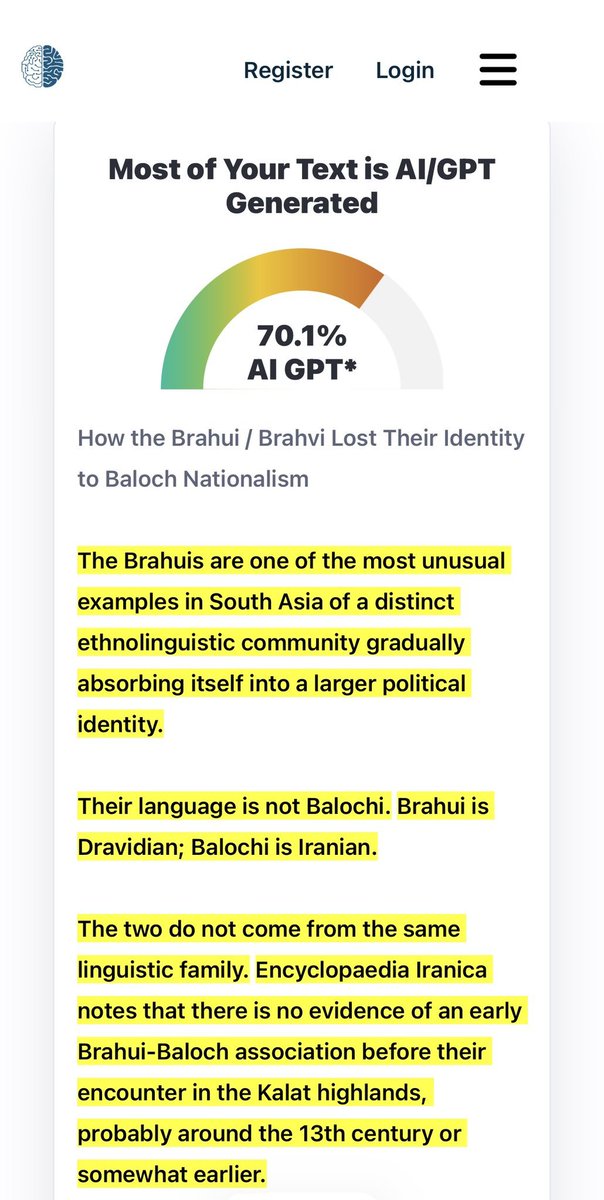
This historically illiterate Punjabi nationalist blocked me after getting dismantled by straight rebuttals. Bro was outsourcing his arguments to AI the entire time lol.
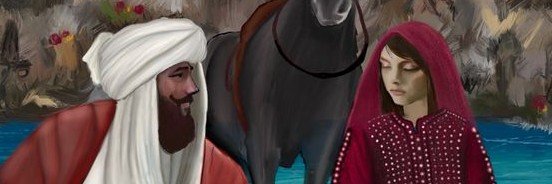
شعر باللغة البلوشية عن أحداث القرن الثامن عشر:رفض المير حاجي بن مير حسين تسليم قلعته المركزية لكريم خان زند.أُرسل رسولاً اسمه كرمشاه من لافيك (جاسك)إلى إبراهيم خان مجدوار بالرفض دارت معركة دامية بين قوات مير حاجي وقوات الزند بقيادة إبراهيم خان. فشل الغزو وانسحبت القوات الزندية.