NEWS: In a huge win, a federal appeals court has ruled that Pete Hegseth's removal of trans people from the military was "based on personal amicus and bias," and therefore, unconstitutional.
This ruling on the first day of Pride is poetic.
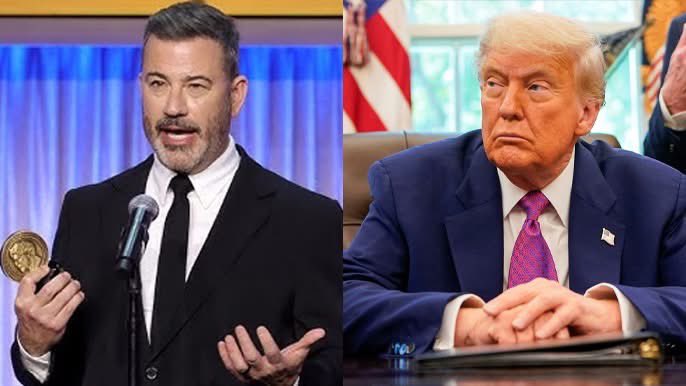
BREAKING: LOL! Jimmy Kimmel just won a Peabody Award and used his acceptance speech to laugh in Trump’s face.
Jimmy Kimmel won a Peabody Award last night. And he used his acceptance speech to deliver one of the most gloriously defiant moments in the history of American comedy.
Standing alongside journalists who exposed Trump administration immigration horrors and prison abuse, a teacher who took on Putin, and documentarians covering Vietnam War protests, Kimmel opened with characteristic self-deprecation:
"I've never felt dumber than I do right now, being on stage with this group of people who expose the horrors of ICE, prison abuse, and protests against the Vietnam War, a teacher who took on Putin. I called our president Fatty Shack. And Blob the Builder. And Liger Woods and the Hungry Hungry Hypocrite. Our fondling father, Mara Lardo. Nelson Tandela. And Nostra Dumbass. And somehow we got a Peabody out of that."
But then Kimmel got serious — and the room got quiet.
"Making jokes about the president in America shouldn't win you a prize," he said. "We have the right, guaranteed by the Constitution, to criticize and satirize our leaders. This is a right that many of us take for granted. It's one that I took for granted for the first 57 years of my life until September of last year when the FCC delivered a very unpleasant surprise."
Trump's FCC chief, Brendan Carr, launched an investigation into Kimmel last year as part of the administration's broader campaign to weaponize federal regulators against media critics, leading ABC/Disney to cancel Kimmel’s program, albeit temporarily. But Kimmel said what happened next surprised him even more than the attack itself.
"I watched as millions of people, even some from across the aisle, objected. They spoke up. They marched. They canceled their subscriptions to Star Wars because they refused to allow our freedoms to be bulldozed like the East Wing of the White House. You sent a message that we do care and that we will stand up and that we will not stand by when comedy and journalism and dissent are censored and regulated and criminalized."
He closed with a list of thank-yous that will live forever: "Thank you to Donald Trump, our commander-in-thief, Abriscam Lincoln, Orange Julius Caesar, Greedy McGolfy, Dopey McGropy, and Pumpkin McPornhumper. Thank you for inspiring us to fight for our freedom of speech."
The First Amendment is not negotiable. And apparently, neither is Jimmy Kimmel.
If you believe that Jimmy Kimmel absolutely deserved his Peabody award, please like and share this post everywhere!
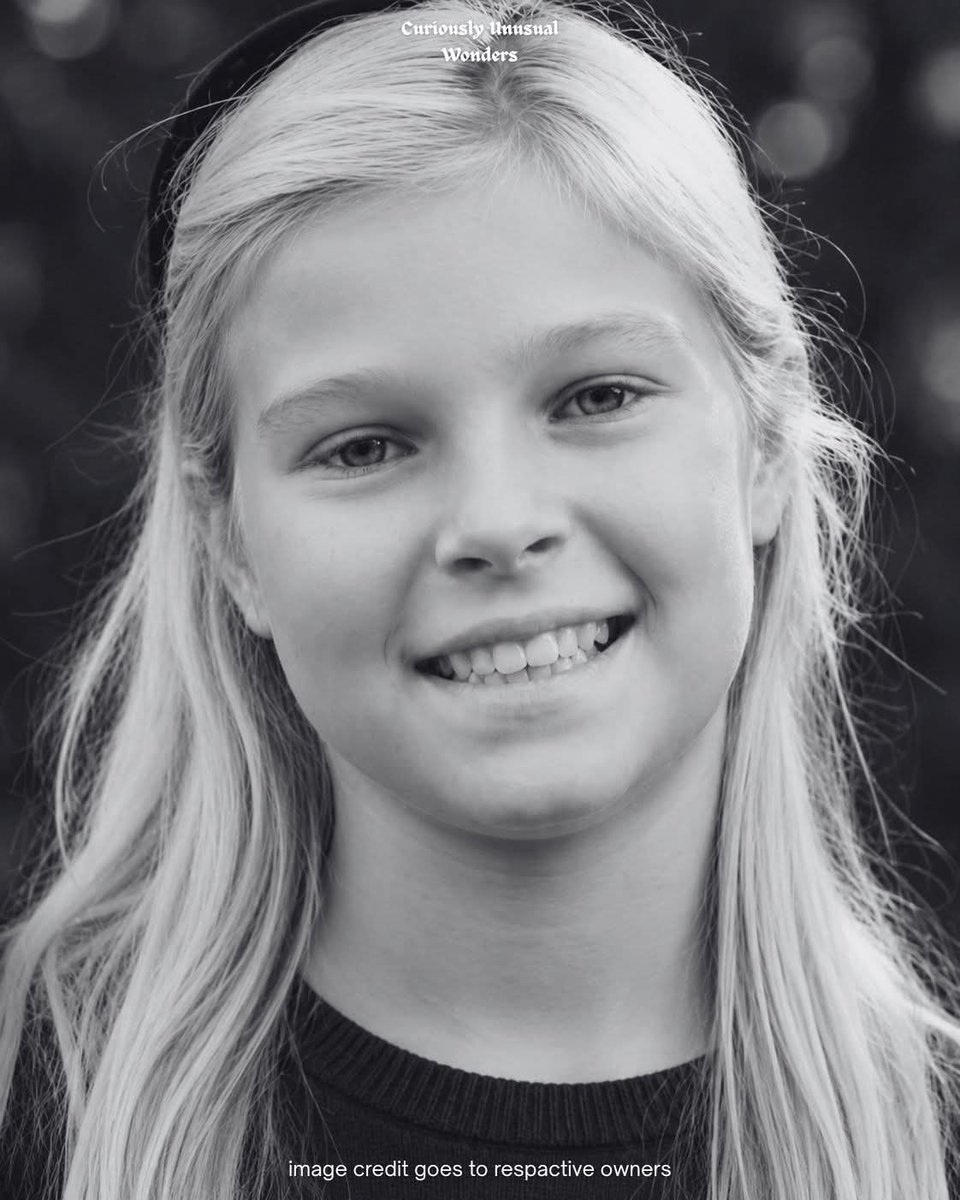
"A ten-year-old started screaming about a wave no one could see—and 100 people lived because her parents believed her.
December 26, 2004. Mai Khao Beach, Phuket, Thailand. Christmas holiday. Perfect weather. The Smith family walked along the sand on their first overseas vacation together.
Then Tilly noticed something wrong.
The water wasn't behaving normally. ""It wasn't calm and it wasn't going in and then out,"" she later recalled. ""It was just coming in and in and in.""
The sea had turned frothy—""like you get on a beer,"" she said. ""It was sort of sizzling.""
Any other ten-year-old might have thought it strange. Tilly knew exactly what it meant.
Two weeks earlier, her geography teacher Andrew Kearney had shown the class footage of the 1946 tsunami that devastated Hawaii. He taught them the warning signs: sea receding unusually far, frothy bubbling water, ocean behaving strangely.
Tilly was watching those exact warning signs unfold in front of her.
She started screaming at her parents. ""There's going to be a tsunami!""
They didn't believe her. They couldn't see any wave. The sky was clear. The beach was calm.
But Tilly wouldn't stop. She became more insistent, more frantic.
""I'm going,"" she finally said. ""I'm definitely going. There is definitely going to be a tsunami.""
Her father Colin heard the urgency in her voice. He decided to trust his daughter.
By coincidence, a Japanese man nearby overheard Tilly use the word ""tsunami."" He'd just heard news of an earthquake in Sumatra. ""I think your daughter's right,"" he said.
Colin alerted hotel staff. They began evacuating immediately.
Tilly's mother Penny was one of the last to leave. She had to sprint as the water began rushing in behind her. ""I ran,"" she recalled, ""and then I thought I was going to die.""
They made it to the second floor with seconds to spare.
Then the wave hit. Thirty feet tall.
Everything on the beach—beds, palm trees, debris—was swept into the pool and beyond. ""Even if you hadn't drowned,"" Penny later said, ""you would have been hit by something.""
The 2004 Indian Ocean tsunami killed over 230,000 people across 14 countries. Entire beaches in Phuket were wiped out.
But at Mai Khao Beach, not a single person died.
Because a ten-year-old girl paid attention in geography class.
Tilly was hailed as the ""Angel of the Beach."" She received awards, spoke at the United Nations, met Bill Clinton. Her story is now taught in schools worldwide.
Her father Colin still thinks about what could have happened. ""If she hadn't told us, we would have just kept on walking,"" he said. ""I'm convinced we would have died.""
Tilly still credits her teacher. ""If it wasn't for Mr. Kearney,"" she told the UN, ""I'd probably be dead and so would my family.""
Two weeks. One lesson. One hundred lives.
That's the power of education.
Aujourd’hui, j’étais à la banque, dans la file d’attente devant un distributeur.
Devant moi, un monsieur très âgé. Plus de quatre-vingts ans, sûrement.
Il tenait une enveloppe dans la main, un peu tremblante.
Quand ce fut son tour, je l’ai observé discrètement.
Il touchait l’écran, hésitait, revenait en arrière…
Je voyais bien qu’il ne comprenait pas.
L’écran, les boutons, les étapes… tout semblait trop rapide pour lui.
La file derrière commençait à s’impatienter.
Lui, il s’est retourné vers moi, avec un regard gêné mais digne,
et il m’a demandé, tout doucement :
« Vous pourriez m’aider… s’il vous plaît ? »
Je me suis avancée tout de suite.
Je lui ai expliqué calmement, étape par étape.
Sans jamais toucher son argent.
Par respect. Par pudeur. Par délicatesse.
Il voulait faire un dépôt.
Il a réussi, lentement, en se concentrant.
Quand l’opération s’est terminée, il avait l’air soulagé.
Comme un enfant fier d’avoir réussi.
Il m’a remerciée avec un sourire incroyable.
Et juste avant de partir, il a sorti un billet de 10 euros de sa poche
et a voulu me le donner.
J’ai refusé.
Il a insisté. Il m’a dit que c’était « pour le petit-déjeuner ».
Pour me remercier à sa manière.
J’ai décliné encore, doucement.
Et là, je suis repartie avec un nœud dans la gorge.
Parce que ce monsieur…
ce n’est pas un cas isolé.
Ils sont nombreux, nos parents, nos grands-parents,
perdus face à un monde devenu trop numérique, trop rapide, trop froid.
Perdus devant les écrans, les bornes, les applications, les mots de passe.
Ces gens ont construit le pays dans lequel on vit.
Ils ont travaillé toute leur vie.
Ils ont payé, cotisé, élevé des enfants, tenu des familles.
Et aujourd’hui, on les laisse seuls
face à des machines qui ne parlent pas,
dans des banques sans guichet,
dans des hôpitaux sans accueil,
dans des administrations sans humain.
On parle d’innovation, de progrès, de modernité…
Mais on oublie l’essentiel : l’humain.
S’arrêter cinq minutes pour aider quelqu’un,
ça ne coûte rien.
Mais pour eux, ça change tout.
Parfois je me demande :
est-ce qu’on avance vraiment…
ou est-ce qu’on devient juste plus rapides à oublier les autres ?
OK forget about what I said yesterday - THIS is the absolute worst picture of Trump ever taken. So for fuck’s sake, out of basic human decency, do not retweet it and accidentally expose more people to it. Fuckface would be devastated.
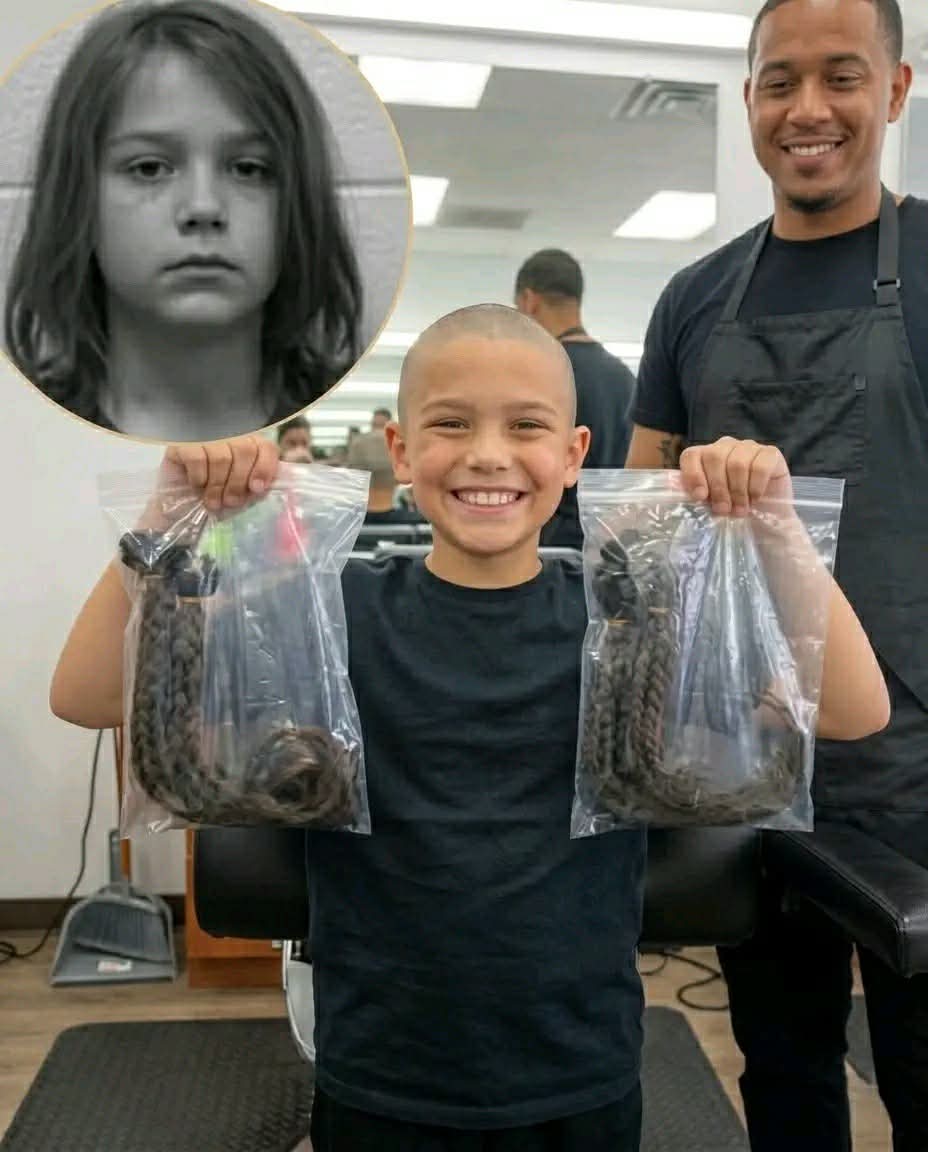
For two years, kids called him a girl. Yesterday, the whole barbershop was in tears.
Every single morning for two years, ten-year-old Christian walked into school with long hair — and every single morning, someone had something to say about it.
"You look like a girl." "Why won't you just cut it?" He heard it on the playground. He heard it in the lunch line. He heard it from kids who didn't know him — and sometimes from kids who did.
Christian never explained himself. He just kept going.
His mom watched him come home some days with that quiet kind of hurt on his face — the kind a kid carries when he's too proud to cry but too young to fully hide it. She asked him more than once if he was sure he wanted to keep going. Every time, he said yes.
He had a reason. He just wasn't ready to share it.
Yesterday, Christian walked into a barbershop and climbed into the chair. The stylist measured his hair. Twelve full inches — more than two years of growth, two years of teasing, two years of keeping the secret.
The scissors came out. The hair came off. And Christian carefully held the ponytail in his hands.
It was going to Wigs for Kids — a nonprofit that uses real donated hair to make wigs for children battling cancer and other serious illnesses. Children who have lost their own hair. Children who just want to feel like themselves again.
Somewhere in that barbershop, someone started crying. Then someone else. By the time Christian stood up from that chair — short-haired, beaming — there wasn't a dry eye in the place.
"I just wanted to help a kid who was going through something hard," he said, shrugging like it was nothing. "I didn't think it was that big a deal."
Christian, buddy — it was a very big deal.
While other kids were worrying about what people thought of them, this ten-year-old boy spent two years thinking about a child he'd never met. Tag someone who needs to see this. 💙
Orbán tried to rig his country’s political system ahead of a major election as well.
The Hungarian people mobilized, countered the abuse of power & took back control of their Republic in a landslide with massive turnout.
In 177 Days, the American people will do the same.
🇺🇸