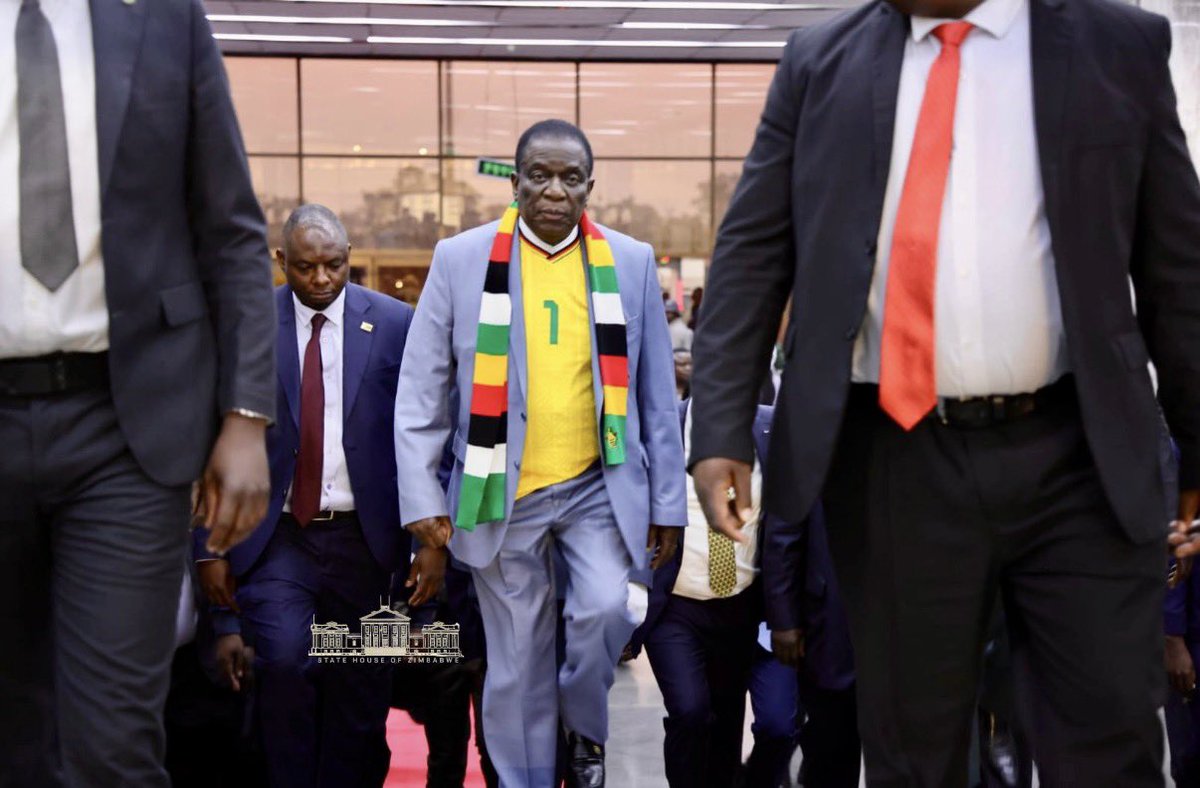
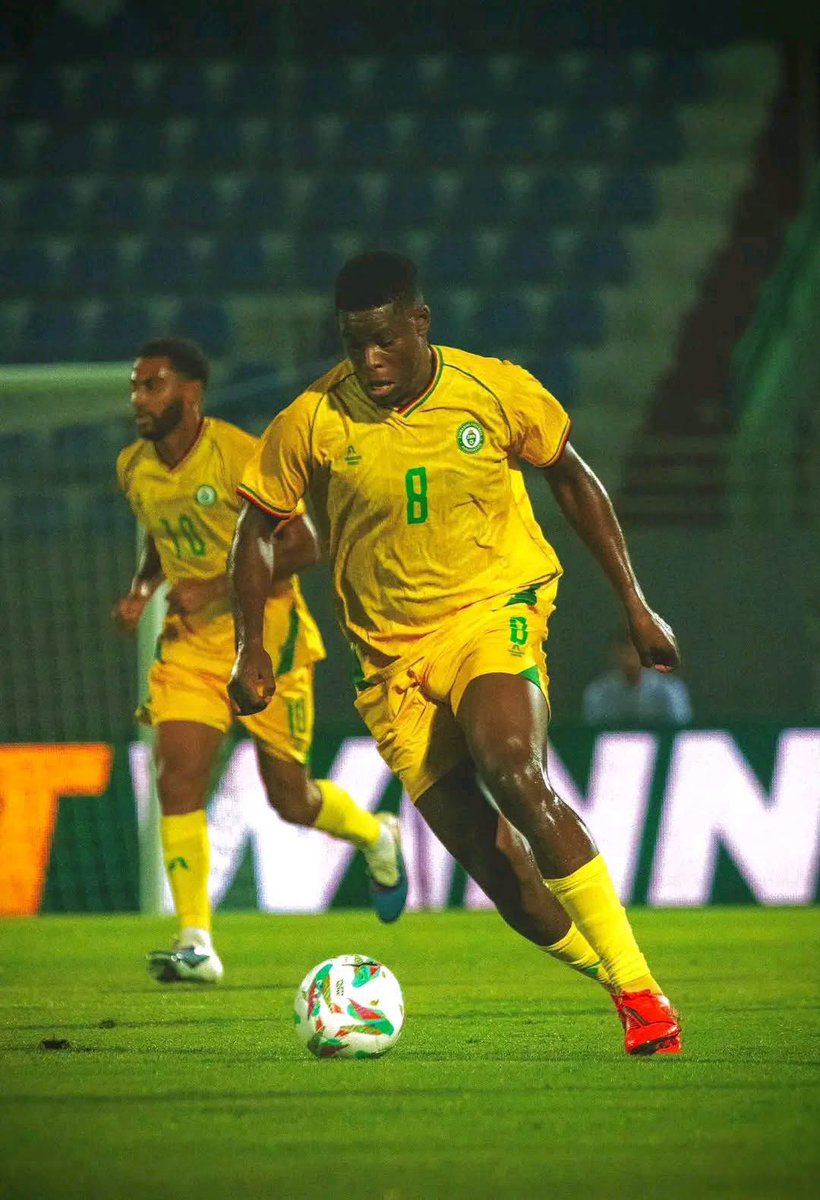
Today, I joined His Excellency President E.D. Mnangagwa and thousands of fellow Zimbabweans at the National Sports Stadium to watch the National Warriors battle against the DRC. Although the outcome was not what we had hoped for, the Warriors fought valiantly. We cannot win every match in life; sometimes we lose, but we draw valuable lessons from our losses.
When you hear Mnangagwa's bootlickers saying "Itai mari", this is what they mean. This is a goldpanning community in Penhalonga. With 90% unemployment, youths are living in abject poverty panning for a life. Guess where that gold end up with - Mnangagwa' runners like Dumbuzenene and Skat. This is what they have reduced our country to
Zimbabweans are gone and you still in that mkukhu and there is still crime in South Africa. Foreigners are gone, you still can not walk freely on your township streets
My World Cup Final prediction and bet!
Argentina to win 3-2 @1xBet_Eng
5 year ago some guy on the internet said so and that’s all I needed to hear! I’m going with him! Let’s go “some guy on the internet” BRING IT HOME BABY! @1xbeteng
Reverend Dr Kupa Mtata, convenor of Sungano yeVanhu/Ubumbano loMphakathi (The People’s Coalition), has defended the coalition’s campaign against Constitutional Amendment No. 3, arguing that the proposed changes cannot lawfully proceed without the direct consent of Zimbabweans through a referendum.
Speaking at the launch of the coalition—which brings together the Defend the Constitution Platform (DCP), Constitution Defence Forum (CDF), National Constitutional Assembly (NCA), Zimbabwe Congress of Trade Unions (ZCTU), Zimbabwe Constitution Movement (ZICOMO) and the War Veterans Pressure Group—Dr Mtata said the campaign was about defending the Constitution rather than supporting any political party.
“I am here as a churchman, not as a partisan politician,” he said. “This is about honouring the agreement we made together as a nation and ensuring that the Constitution remains supreme, not the ambitions of politicians.”
Dr Mtata argued that the Constitution is a covenant created collectively by Zimbabweans and that no individual or group has the authority to alter key provisions without the people’s genuine consent.
He accused the government of violating the Constitution in four fundamental ways.
First, he said there had been a procedural violation because citizens were not genuinely consulted on the proposed amendments. Instead of allowing open national debate, he said, the proposals were presented through state-controlled media as decisions that citizens were simply expected to accept, while opposing views were denied space.
“This is not consultation,” he said. “This is propaganda.”
Secondly, Mtata alleged that Parliament had been corrupted, claiming some legislators had abandoned the interests of their constituents for personal gain.
“When parliamentarians are bought like goods in a market, that is not leadership. That is corruption,” he said, arguing that MPs who ignore the wishes of those who elected them lose their moral legitimacy to represent the people.
His third concern was what he described as intimidation and harassment of citizens who opposed the Bill.
According to Mtata, individuals who criticised the proposed amendments had been threatened or intimidated, undermining freedom of expression and weakening democracy.
“When people are denied the right to express opinions that differ from those in power, that is not democracy. That is dictatorship,” he said.
Mtata argued that Constitutional Amendment No. 3 unlawfully bypasses the referendum requirement contained in Section 328 of the Constitution.
He said the Constitution expressly requires certain amendments to be approved directly by citizens through a referendum, particularly where changes affect the tenure or powers of those already in office.
“The people, not Parliament, not politicians—must decide through a referendum,” he said. “Those entrusted with power should not extend their stay in office without the direct permission of the people.”
Mtata concluded by urging Zimbabweans to defend the Constitution, insisting that the country’s founding law belongs to its citizens and cannot be changed without their freely given consent.
These protesters were given political cover by Jacob Zuma’s MK Party and March and March, which are effectively pursuing the same agenda. The MK Party explicitly declared that even Africans who are legally documented must leave South Africa. These protesters have simply acted on that message. They listened to their political leaders and went out to intimidate, harass and target Africans who are lawfully in the country.
This is exactly what is turning South Africa into a laughingstock in the eyes of the world. It hands ammunition to its critics, including countries such as Israel and political figures like Donald Trump, who point to scenes like these and argue that South Africa is descending into lawlessness.
If people claim they are protesting against illegal immigration but then use that protest to loot businesses, harass and intimidate Africans who are legally in South Africa, as has been reported in this news reports, then this has nothing to do with illegal immigration. It is xenophobia. It is Afrophobia. That is precisely what those terms mean.
It is deeply disturbing to watch South Africa take this dark turn, where black Africans are persecuted simply because they are African, even when they have the legal right to live and work in the country. This is not law enforcement. It is prejudice dressed up as activism.
We warned from the very beginning that this movement was being driven by hatred of black Africans, not by a genuine concern for the rule of law. We were insulted, mocked and dismissed. Today, those who doubted us need only look at what is happening. The evidence is now in plain sight.