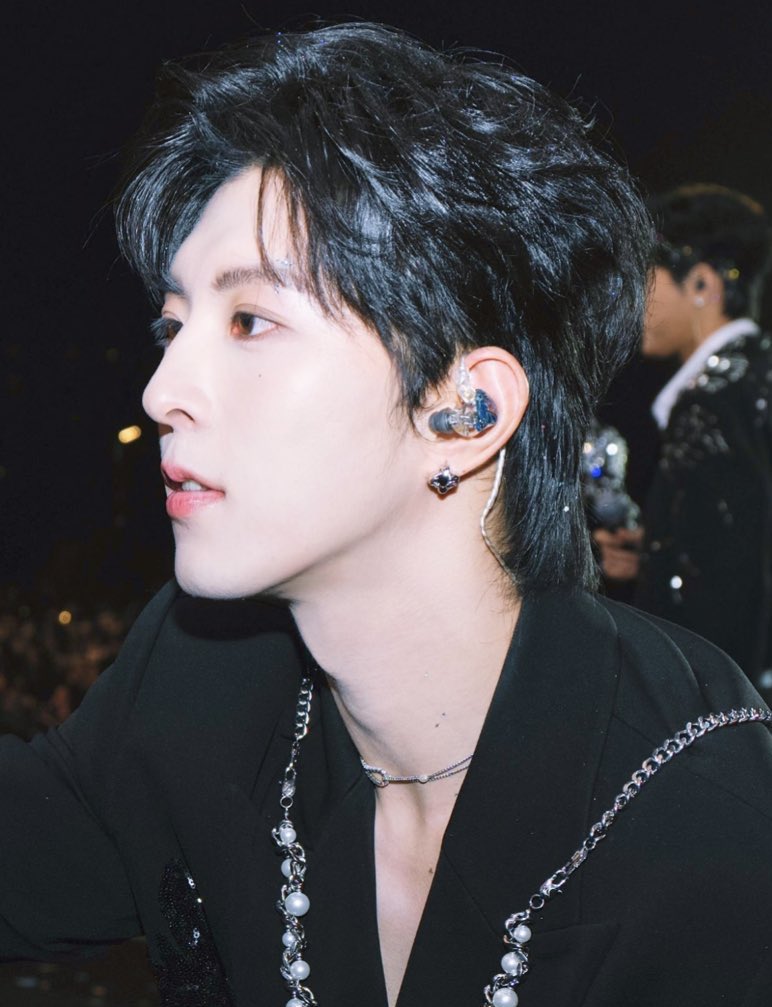
A little dive into Qiu Dingjie (Kipuka Qiu)’s mindset through psychology.
I’ve been paying attention to how Kipuka talks about life, growth, work, and himself. What interests me isn’t simply “how talented is he?” but how he views ability, agency, the learning process, and relationships.
Disclaimer, this is NOT a clinical assessment or diagnosis, but my personal interpretation of his public statements through psychological frameworks.
1. “越努力越幸运” - Agency
This reminds me of Internal Locus of Control (Julian Rotter): the tendency to see outcomes as influenced by one’s own actions rather than entirely by luck or external forces. (1)
I don’t read it as “hard work guarantees success.” Opportunity, timing, environment, and luck still matter.
What interests me is that he focuses on what he can control.
He can’t decide when an opportunity arrives, but he can decide how prepared he is when it does.
2. Growth Mindset - “I can’t yet” ≠ “I’m not talented.”
This connects to Growth Mindset (Carol Dweck): abilities can develop rather than being treated as completely fixed. (2)
There is a huge difference between
“I can’t do this.”
and
“I can’t do this yet.”
The first can become an identity. The second leaves room for learning.
And this is what fascinates me about Kipuka: he doesn’t seem to treat his starting point as his final limit.
If he doesn’t know → he learns.
If he’s unfamiliar → he adapts.
If he’s a beginner → he allows himself to be one.
That willingness to start from zero is more interesting to me than simply being “naturally talented.”
3. “慢下来,不要浮躁,不要焦虑” - Don’t rush the process.
Kipuka has also written about slowing down, not being restless or anxious, and noticing life’s beautiful moments.
Psychologically, this can be related to mindfulness and savoring: attending to present-moment experience and appreciating positive experiences. (3)
So his philosophy doesn’t seem to be
work harder → move faster → achieve more.
More like:
work hard, but don’t become frantic.
Have ambition, without letting anxiety about outcomes consume the process.
4. “保护所爱,被人所爱” - Relatedness & meaning
He once wrote that although being human means experiencing suffering, he still wanted to be human because only as a human could he protect those he loves and be loved by others.
This connects with Self-Determination Theory (Deci & Ryan), particularly relatedness: the psychological need to feel connected, cared for, and involved in meaningful relationships. (4)
So his idea of a meaningful life isn’t only :
“What can I achieve?”
but also:
“Who can I love, protect, and be loved by?”
5. Put the three together:
越努力越幸运
👉 Agency: focus on what you can control.
慢下来,不要浮躁,不要焦虑
👉 Mindfulness & process: keep moving without rushing yourself.
保护所爱,被人所爱
👉 Relatedness: let relationships give meaning to the journey.
So I don’t think Kipuka’s mindset is simply “work hard.”
It’s more like
Do what you can control.
Don’t rush the process.
Don’t forget what makes the journey meaningful.
And perhaps that’s why I dislike “that’s simply not his talent.”
Talent may influence where someone starts.
But “not good at it yet” ≠ “incapable of developing it.”
If Kipuka is willing to become a beginner again, learn, adapt, and keep going without needing to prove he was naturally gifted from the beginning
that’s the part I admire most.
Not the idea that he can do everything.
But the willingness to say,
“I don’t know how to do this yet. So I’ll learn.”
#QiuDingJie
#KipukaQiu