I am just seeking clarification. You stated that individuals went onto your company’s website page and posted negative comments about you. However, the screenshot you shared appears to be from WhatsApp messages, and the phone number shown has a Ugandan country code.
Is your company based in Uganda, or does your company website use a Ugandan WhatsApp phone number?
I believe there is some inconsistency here, and the information does not seem to fully align. It gives the impression that the narrative may have been presented in a way that supports your point of view.
What Olara Otunnu’s Weak UN Straw Poll May Mean for Uganda?
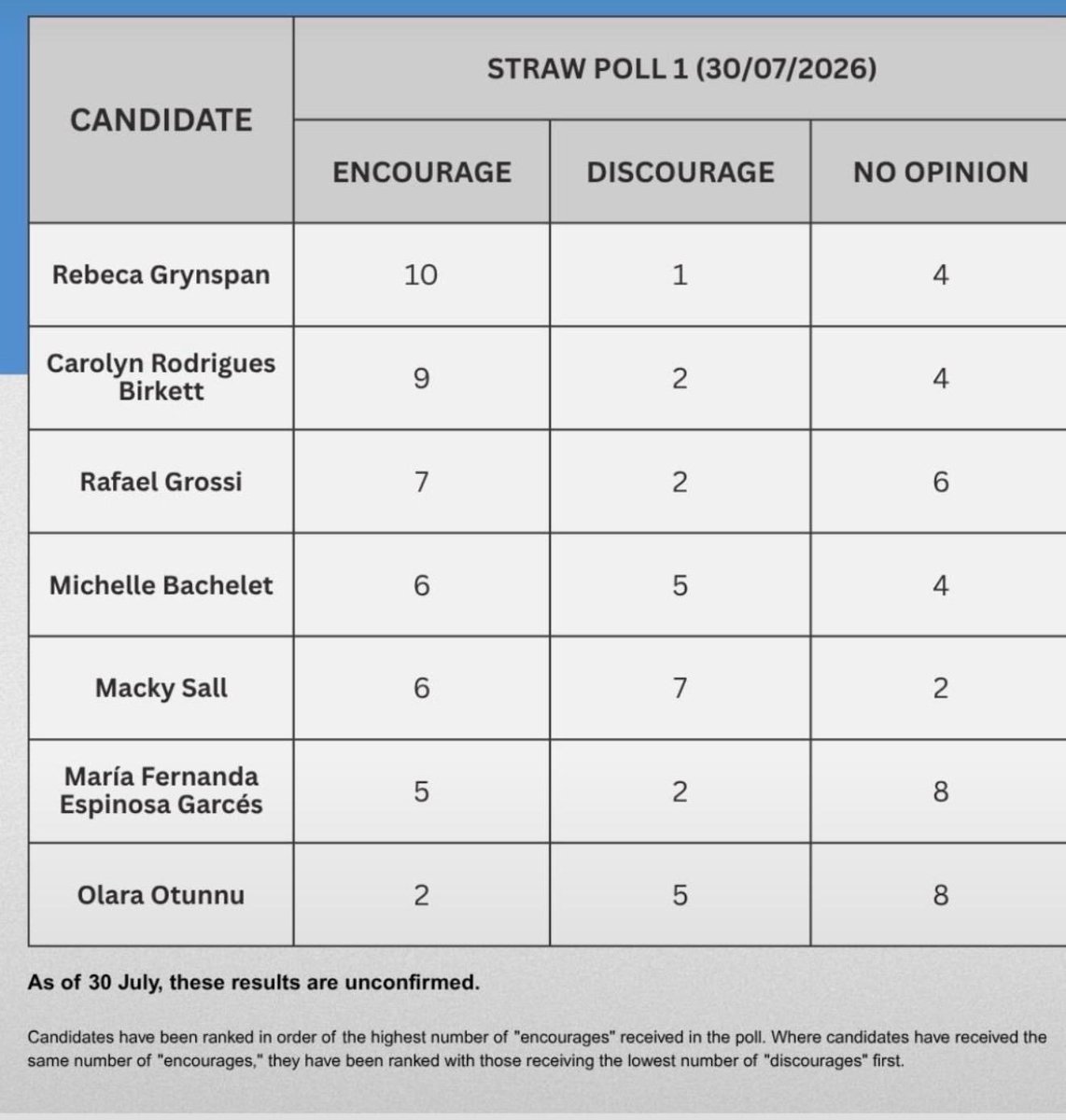
The reported first UN Security Council straw poll in the 2026 Secretary-General race has raised important diplomatic questions for Uganda. According to the unconfirmed figures circulating publicly, Uganda’s nominee, Olara Otunnu, received 2 “encourage” votes, 5 “discourage” votes, and 8 “no opinion” votes, placing him last among the seven declared candidates.
Although straw polls are informal and non-binding, they are widely regarded as an indicator of early diplomatic momentum. The result does not eliminate Mr. Otunnu from the race, but it suggests that he has not yet secured broad confidence among Security Council members.
The significance of the poll extends beyond the personal standing of the candidate. Mr. Otunnu is being sponsored by President Yoweri Museveni’s government, which has for years faced criticism from international human rights organizations, foreign governments, and UN mechanisms over allegations of arbitrary arrests, torture, restrictions on political opposition, and limitations on freedom of expression. The Ugandan government has consistently denied systematic wrongdoing and maintains that its actions are lawful and necessary for public order.
It would be inaccurate to conclude that the discouraging votes were cast solely because of human rights concerns. Security Council deliberations are confidential, and member states evaluate candidates on multiple factors, including geopolitical interests, regional balance, diplomatic alliances, electability, and the ability to build international consensus.
However, perception is a powerful element of multilateral diplomacy. A candidate for the office of Secretary-General is often viewed not only as an individual, but also through the lens of the nominating state’s international reputation. In that sense, Uganda’s current political climate may influence broader diplomatic assessments, even if it is not the sole determining factor.
Mr. Otunnu nevertheless brings substantial international credentials. As a former UN Under-Secretary-General and Special Representative for Children and Armed Conflict, he earned recognition for humanitarian advocacy and child protection. His supporters may therefore argue that his decades of multilateral service demonstrate independence of judgment and should not be conflated with the policies of the government that nominated him.
The most revealing figure may be the 8 “no opinion” votes, indicating that a majority of Security Council members have not firmly aligned either for or against his candidacy. In UN diplomacy, undecided positions can sometimes be influenced through sustained negotiations and coalition-building.
Yet the gap with the leading candidates remains significant. The poll therefore raises a broader question for Uganda: Can a country facing persistent international scrutiny over governance and human rights successfully present one of its diplomats as a future moral and political voice of the United Nations?
For now, the answer remains uncertain. Mr. Otunnu’s challenge is no longer only to prove his qualifications, but to convince the international community that his candidacy represents an independent multilateral vision capable of rising above the political controversies associated with the government that endorsed him.
ANALYSIS | Can Uganda's Human Rights Record Undermine Olara Otunnu's Bid for UN Secretary-General?
Uganda's nomination of veteran diplomat Olara Otunnu for the post of United Nations Secretary-General has sparked an important question: Can a candidate rise above the human rights record of the government that nominated him?
President Yoweri Museveni's administration has, for years, faced criticism from the United Nations, human rights organizations, and several Western governments over allegations of arbitrary arrests, torture, restrictions on freedom of expression, suppression of political opposition, and the use of excessive force against protesters. Ugandan authorities have frequently denied wrongdoing or argued that security measures are necessary to maintain public order.
Against this backdrop, Otunnu's candidacy is likely to face heightened scrutiny. Although he is widely respected for his distinguished career as a former UN Under-Secretary-General and Special Representative for Children and Armed Conflict, political perception often matters as much as professional credentials in the race for the UN's top job.
Critics may argue that accepting the backing of President Museveni's government creates an uncomfortable contradiction. They could question whether a nominee supported by a government accused of serious human rights violations can credibly lead an organization whose Charter commits it to promoting human rights, justice, and the rule of law.
Supporters, however, are likely to make a different case. They will argue that Otunnu should be judged on his own decades-long international record rather than on the actions of the government that nominated him. They may also point out that every Secretary-General is nominated by a member state, and many nominees have come from countries that have faced criticism over governance or human rights.
Ultimately, the decisive question for UN member states is unlikely to be Uganda's record alone. The selection process is shaped by diplomacy, regional politics, and the interests of the five permanent members of the UN Security Council, each of which holds veto power. A candidate's independence, credibility, and ability to build consensus often prove more influential than the domestic politics of the nominating country.
For Otunnu, the challenge will be convincing the international community that his long record of multilateral diplomacy and advocacy for vulnerable populations reflects the values of the United Nations,and that his leadership would remain independent of the government that endorsed his candidacy. Whether that argument succeeds may become one of the defining questions of the 2026 race for the world's highest diplomatic office.
Race for the United Nations' Top Job: Who Could Become the Next Secretary General?
As United Nations Secretary-General António Guterres approaches the end of his second and final term on 31 December 2026, global attention has shifted to the highly anticipated contest to choose his successor. The next Secretary-General will inherit an institution facing some of the most complex challenges in its history from ongoing wars in Ukraine, Gaza and Sudan to climate change, artificial intelligence governance, humanitarian crises, and financial pressures on the UN system.
The race has attracted an experienced field of diplomats, former presidents and international civil servants. While the selection process officially remains open, several candidates have emerged as leading contenders.
Among the most prominent is Michelle Bachelet of Chile, a former President of Chile and former UN High Commissioner for Human Rights. She is widely respected for her leadership on democracy, gender equality and human rights, and many diplomats view her as a strong candidate to become the first woman to lead the United Nations.
Another leading contender is Rafael Grossi of Argentina, the current Director General of the International Atomic Energy Agency (IAEA). Grossi has earned international recognition for his work on nuclear diplomacy, particularly during the conflicts involving Ukraine and Iran. His supporters argue that his crisis-management experience would be valuable at a time of heightened global tensions.
Rebeca Grynspan of Costa Rica also commands significant respect. A former Vice-President of Costa Rica and current senior UN official, she has built a reputation for promoting sustainable development, economic cooperation and international partnerships. Her supporters believe her consensus-building skills could help restore confidence in multilateral diplomacy.
Former Ecuadorian Foreign Minister and former President of the UN General Assembly María Fernanda Espinosa has campaigned on reforming the UN, arguing that the organization must become more efficient, transparent and responsive to today's global crises. She has also emphasized the historic opportunity to appoint the first female Secretary-General.
Representing Africa, former Senegalese President Macky Sall has secured official backing from his country and support from several African leaders. His candidacy reflects Africa's long-standing argument that the continent deserves greater representation in global leadership, although he faces strong competition from Latin American candidates.
Most recently, Uganda nominated veteran diplomat Olara Otunnu, a former UN Under-Secretary-General and Special Representative for Children and Armed Conflict. Otunnu has pledged to pursue institutional reforms, strengthen conflict prevention, improve oversight of artificial intelligence, and balance climate action with economic development.
Although much discussion has focused on regional balance, the final decision ultimately rests with the fifteen-member UN Security Council, where any of the five permanent members the United States, China, Russia, the United Kingdom and France can veto a candidate. After the Security Council recommends one nominee, the UN General Assembly formally appoints the Secretary-General.
Political analysts suggest that no clear frontrunner has emerged. Many diplomats believe Latin America and the Caribbean have a strong claim under the tradition of regional rotation, while others argue that the UN should finally appoint its first female Secretary-General after eight decades of male leadership. However, geopolitical rivalries among major powers may prove more decisive than regional considerations or campaign promises.
As the campaign enters its decisive phase, the outcome will shape the future direction of the United Nations at a time when international cooperation is under unprecedented strain.
@rwomchechen Who received this document and stamped it July 1, 2027, even though we are still in 2026? Mistakes like this make it difficult to defend the actions of some government officials.
When one's actions genuinely serve the interests of the nation and future generations, there is little need for constant justification or self-defense. Good governance speaks for itself through transparency, accountability, and the public interest.
However, from every objective indication, this proposed Bill appears to be inconsistent with the will and aspirations of the people it is intended to serve. Public office is a sacred trust conferred by the citizens, and every holder of that mandate bears a constitutional and moral obligation to exercise it faithfully and in the best interests of the electorate.
You may choose to be used in advancing measures that undermine the public interest, but remember that history records the conduct of those entrusted with power. The consequences of today's decisions do not end with the present generation; they extend to future generations, including your own descendants, who will inherit the legacy of the actions taken while you held public office.
Ultimately, betraying the confidence and mandate bestowed upon you by the people is a matter for both history and posterity to judge.
One must ask whether some judicial officers genuinely believe that the authority they exercise today is permanent. Public office is temporary, but the principles of justice are enduring. Those who are unjustly denied bail today are members of society whose children may one day become magistrates, judges, or other officers entrusted with the administration of justice.
The true legacy of a judicial officer is not the office they once held, but the fairness, impartiality, and constitutional fidelity reflected in their decisions. Every ruling should therefore be guided by the Constitution, the rule of law, and judicial conscience, rather than by arbitrary considerations. Justice administered with integrity protects not only the rights of today's litigants but also the credibility and dignity of the judiciary for future generations.
An apology does not automatically erase the consequences of what was said or posted. Whether your statement was made in jest, out of excitement, anger, frustration, or as an act of revenge, it has already shaped how people perceive your judgment.
While many of your followers may have accepted your apology, that does not necessarily mean they have forgotten the incident. Instead, they are likely to observe your future conduct more closely. In that sense, you will stand out like a white dog in the darkness-highly visible, with every future action attracting greater scrutiny.
My advice is simple: always think before you speak, review and edit before you post, and never make public statements while overwhelmed by excitement, anger, or any strong emotion. A few moments of careful reflection can prevent lasting damage to your reputation and credibility.
Imagine waking up to the devastating news that your wife, daughter, or son has been abducted. Would you truly have the strength to attend your employer's morning staff meeting as though nothing had happened? If you were self-employed, would you calmly open your business and serve customers with the same focus and determination to maximize your daily profit?
It is easy to issue statements, pass judgment, or comment on such incidents when they have not touched your own life or that of someone you deeply love. The true weight of pain, fear, and uncertainty can only be understood by those who have endured it. Empathy demands that we place ourselves in the position of those who are suffering before we speak or judge.
As the saying goes, "Until it happens to you, it is difficult to understand the pain of another." In matters involving abduction, torture, or the loss of a loved one, compassion should always prevail over indifference.
The Fear of Leaving Power: A Threat to Democratic Legitimacy in Uganda
One of the greatest challenges confronting Uganda's democratic development is not merely the struggle for political power, but the persistent fear among some political leaders of relinquishing it. In every constitutional democracy, political authority is a temporary trust bestowed by the people through legitimate electoral processes. However, when leaders begin to perceive political office as a permanent entitlement rather than a public mandate, governance gradually shifts from serving citizens to preserving individual survival.
The fear of losing power often generates a climate where institutions are weakened, dissent is viewed as hostility, and political competition is treated as an existential threat. Instead of strengthening democratic institutions capable of guaranteeing peaceful transitions, enormous effort is devoted to maintaining the status quo. This approach undermines constitutionalism, erodes public confidence in state institutions, and weakens the rule of law.
Where a state or its agents resort to practices such as torture, arbitrary abduction, intimidation, or other forms of coercion to silence citizens who peacefully demand justice, accountability, constitutional governance, and the protection of human rights, such conduct is fundamentally inconsistent with the principles of democratic governance and the rule of law. These methods cannot serve as legitimate instruments of governance or public administration. Governments derive their legitimacy from the consent of the governed and from their commitment to uphold constitutional rights, not from fear or coercion. Suppressing lawful civic participation through intimidation is not a sustainable path to political stability; instead, it weakens public confidence, damages institutional credibility, and erodes respect for the Constitution and the administration of justice.
Ironically, the greatest uncertainty for leaders frequently begins after they leave office. When a political system becomes heavily personalized, departing leaders may fear legal accountability, political retaliation, or loss of influence. Such anxieties create incentives to remain in power indefinitely rather than preparing for a lawful and dignified transition. In doing so, the nation pays the price through political polarization, reduced institutional independence, and diminished democratic credibility.
History demonstrates that no political office is permanent. Nations that embrace peaceful transitions of power often enjoy stronger institutions, greater investor confidence, and enhanced political stability. Conversely, prolonged struggles to retain power frequently generate instability that extends beyond individual leaders and affects generations of citizens.
The true measure of statesmanship is not how long one remains in office, but how effectively one strengthens institutions capable of functioning independently after one's departure. Democratic legitimacy is earned through the consent of the governed and preserved through respect for constitutional limits, accountability, and the peaceful transfer of authority.
Uganda's future should not depend on the longevity of individual political leaders but on the resilience of its democratic institutions. A political culture that values lawful succession over personal permanence will inspire public trust, strengthen national unity, and safeguard constitutional governance. Ultimately, the legacy of any leader is defined not by the years spent in office, but by the democratic foundations left behind for future generations.
As someone who has observed human behavior, communication breakdowns, and the impact of emotional neglect, I believe one of the most overlooked mental health challenges is living with someone who is physically present but emotionally absent.
The causes are often gradual rather than sudden. Poor communication, unresolved conflicts, work-related stress, digital distractions, loss of mutual respect, and failure to appreciate one another can slowly create emotional distance. Many couples do not realize the damage until the connection has already weakened.
The consequences can be severe. Individuals may experience loneliness, anxiety, low self-esteem, emotional exhaustion, and depression while remaining in a relationship. The pain is particularly difficult because there is no clear ending only a growing feeling of being unseen, unheard, and unvalued.
Prevention starts with intentional communication. Partners must make time to listen, express appreciation, address concerns early, and remain emotionally available to one another. Respect, empathy, and honest conversations should never be treated as optional components of a relationship.
The way forward requires courage and accountability from both sides. Acknowledge the problem. Have difficult but necessary conversations. Seek professional counseling when needed. Rebuild trust through consistent actions rather than promises. Most importantly, maintain your own sense of identity, self-worth, and mental well-being regardless of the state of the relationship.
A healthy relationship is not measured by how long two people stay together. It is measured by whether they continue to see, hear, respect, and support one another through life's challenges.
Sometimes the greatest form of rejection is not being left behind it is being emotionally abandoned while still standing side by side.
As a Security Professional and former Investigative Journalist, I have learned that one of the greatest responsibilities we carry is not simply protecting people, property, and information it is protecting privacy, human dignity, and fundamental human rights.
In today's security environment, we have access to surveillance footage, access control systems, incident reports, intelligence data, personal records, and sensitive operational information. This access comes with immense responsibility. Every report we write, every camera we monitor, every investigation we conduct, and every piece of information we handle can have a lasting impact on someone's life.
A common mistake in our profession is believing that security and privacy are competing interests. They are not. Effective security is built on trust, accountability, and respect for individual rights. The strongest security programs are those that protect people while safeguarding their privacy and dignity.
The reality is that one careless mistake can have serious consequences. An unauthorized disclosure of information, mishandling confidential records, sharing surveillance footage without proper authority, discussing sensitive matters publicly, or accessing information without a legitimate operational purpose can expose individuals to harm and organizations to significant risk.
Such actions may result in civil lawsuits, regulatory penalties, loss of professional credibility, termination of employment, and in certain circumstances, criminal liability. More importantly, they can damage lives and erode public trust.
As security professionals, we must remember that behind every file, report, photograph, and database entry is a human being whose rights deserve protection.
Particular attention must be given to children and minors. During our operations, investigations, incident responses, and public safety activities, we have a duty to ensure that minors are not unnecessarily exposed, identified, photographed, or discussed in ways that could compromise their safety, privacy, or future well-being. Protecting vulnerable individuals is not only a legal responsibility but an ethical obligation.
Technology continues to expand our capabilities through AI, biometrics, facial recognition, drones, and advanced surveillance systems. However, the existence of technology does not eliminate the need for professional judgment. Just because information can be collected does not mean it should be collected. Just because data can be accessed does not mean it should be shared.
Professionalism requires restraint, integrity, and accountability.
The future of security will not be defined solely by technology. It will be defined by our ability to balance operational effectiveness with respect for privacy, data protection, and human rights.
Security and Journalism without accountability is dangerous.
Security and Journalism without privacy protection is unsustainable.
Security and Journalism without respect for human rights loses legitimacy.
Both security professionals and journalists must recognize that one careless decision can have lasting consequences. Unauthorized disclosure of personal information, publication of sensitive details, exposure of confidential sources, mishandling of records, sharing images without proper consideration, or failing to protect private data can expose individuals to harm and organizations to significant legal and reputational risks.
The true measure of a security professional is not how much authority they exercise, but how responsibly they exercise it.
Are security organizations doing enough to protect privacy and human rights while maintaining effective security operations?
As a security professional who has had the opportunity to travel through the United Arab Emirates, I continue to be impressed by the country's commitment to security, innovation, and operational excellence across its transportation infrastructure.
From airports and metro systems to critical transportation hubs, the UAE has successfully integrated advanced technologies with highly visible and professional security operations. One aspect that stands out is the use of intelligent access control measures, including geo-fencing, to protect sensitive and restricted areas.
Geo-fencing enables security teams to establish virtual security boundaries, allowing real-time monitoring of personnel, vehicles, and assets while enhancing situational awareness and response capabilities. When combined with access control systems, surveillance technologies, and well-trained security personnel, it creates a robust, layered security framework.
What makes the UAE's approach particularly effective is its ability to balance strong security measures with a seamless passenger experience. Travelers feel safe without feeling restricted—a benchmark many countries strive to achieve.
The UAE continues to demonstrate how technology-driven security can strengthen critical infrastructure while supporting efficiency, resilience, and public confidence.
As security professionals, there is much we can learn from the UAE's forward-thinking approach to protecting transportation networks and other critical assets.
#SecurityManagement #PhysicalSecurity #CriticalInfrastructure #AccessControl #GeoFencing #TransportationSecurity #UAE #SecurityProfessionals #RiskManagement