Money ultimately functions as a savings technology. When savings are reliably preserved, time horizons lengthen—and when time horizons lengthen, societies build differently.
Bitcoin does not replace productive assets.
It clarifies their role:
Real estate can return to shelter, income generation, and productive use. Commodities can return more fully to industrial function. Businesses can focus more fully on production. Capital can be allocated with less distortion. Money can return to its primary role: preserving value across time.
That is the deeper meaning of bitcoin’s rise.
I explore this in my latest newsletter, "Toward the Separation of Money and Production", (link in bio).
Toward the Separation of Money and Production
My latest newsletter is now available on YouTube, narrated by an AI model trained on my voice.
https://t.co/zdT0l0P9YV
The core failure of fiat money.
Fiat rewards proximity to credit creation. It advantages asset owners over wage earners.
It pulls capital toward financial engineering, leverage, bureaucracy, and political allocation. It punishes savers, distorts time preference, and forces everyone into speculation simply to avoid being diluted.
Over time, the distinction between money, production, and political control begins to collapse.
In heavily centralized economies, this dynamic becomes obvious.
Production is no longer guided primarily by real demand, profitability, or efficient capital allocation.
It is guided by political incentives, artificial employment, administrative expansion, and the preservation of the system itself.
But the same pattern exists in softer form across modern fiat economies.
Large parts of the state apparatus, regulatory complex, and subsidized economy increasingly serve themselves.
Jobs are presented as socially necessary, while many exist primarily to manage the consequences of prior distortions.
Bureaucracy expands because the system creates problems that require more bureaucracy to administer.
This is how fiat economies stagnate.
They do not collapse overnight. They become heavier, slower, more indebted, more regulated, and less productive. They create the appearance of activity while real economic vitality deteriorates underneath.
Propaganda is essential to this process.
People must be told that inflation is normal, that rising asset prices are wealth, that debt-funded consumption is growth, and that monetary debasement is a technical necessity rather than a political choice.
Bitcoin breaks that narrative.
It reintroduces a monetary standard that cannot be printed, politically adjusted, or expanded to finance the next emergency.
In my latest piece, "Toward the Separation of Money and Production", I explore how bitcoin separates value preservation from productive activity (link in bio).
Bitcoin's trajectory does not depend on ideology or permission, but on its ability to coordinate human action more honestly than the systems that came before.
In my latest newsletter, "Toward the Separation of Money and Production", I explore how bitcoin may separate value preservation from productive activity; and what that could mean for real estate markets, capital allocation, and long-term prosperity (link in bio).
Integrating bitcoin into real estate development finance aligns real estate more closely with the monetary logic of the digital era. Long-duration assets require long-duration monetary reserves.
For real estate businesses, bitcoin represents a comparable shift—not a replacement for physical assets, but a new monetary layer that can be integrated to preserve flexibility and long-term relevance.
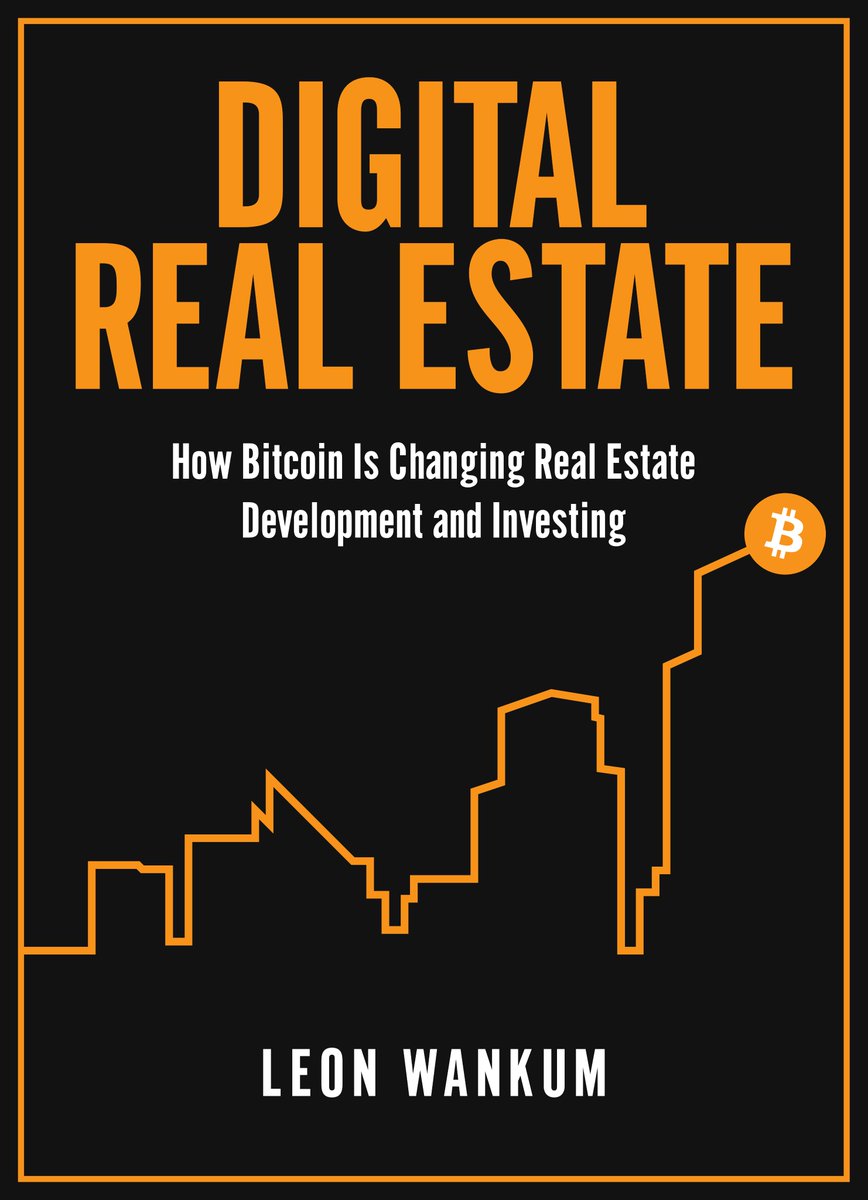
Digital Real Estate is finally available for pre-order.
The book explores bitcoin’s rise as a new store of value, and the challenge it poses to real estate’s long-standing monetary role.
It offers a practical framework for understanding how bitcoin is reshaping the role of property, capital allocation, and corporate balance sheets.
Written from my perspective as a real estate developer, the book connects monetary theory with real-world investing—and shows how bitcoin integrates into existing businesses and and real estate portfolios.
After years of work, Digital Real Estate is finally available for pre-order—with a Bitcoin Conference special offer.
Pre-order for $21 (regular $29) · April 27 – May 4 only.
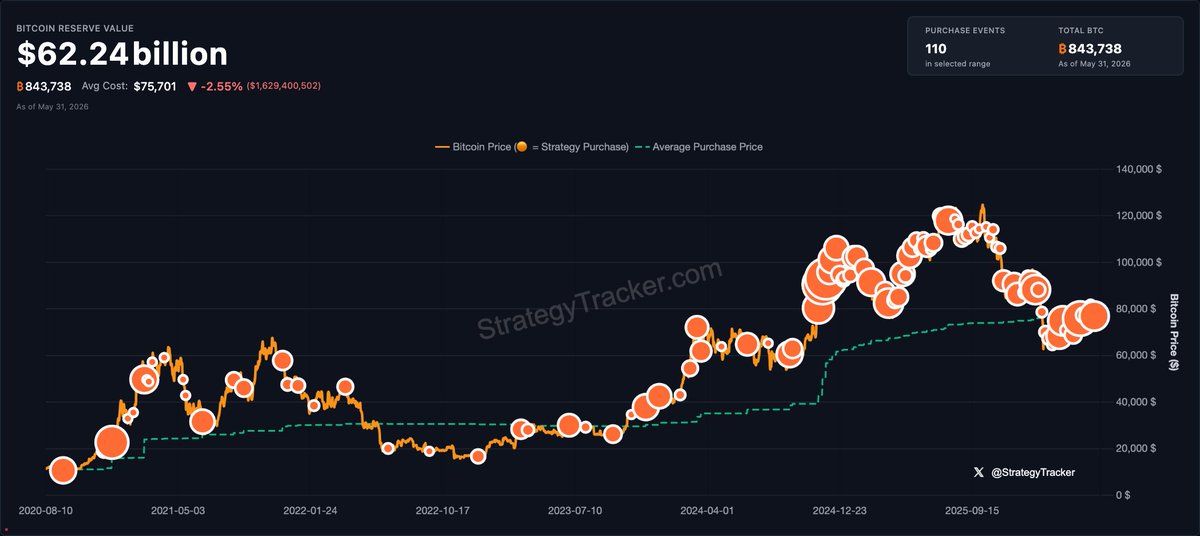
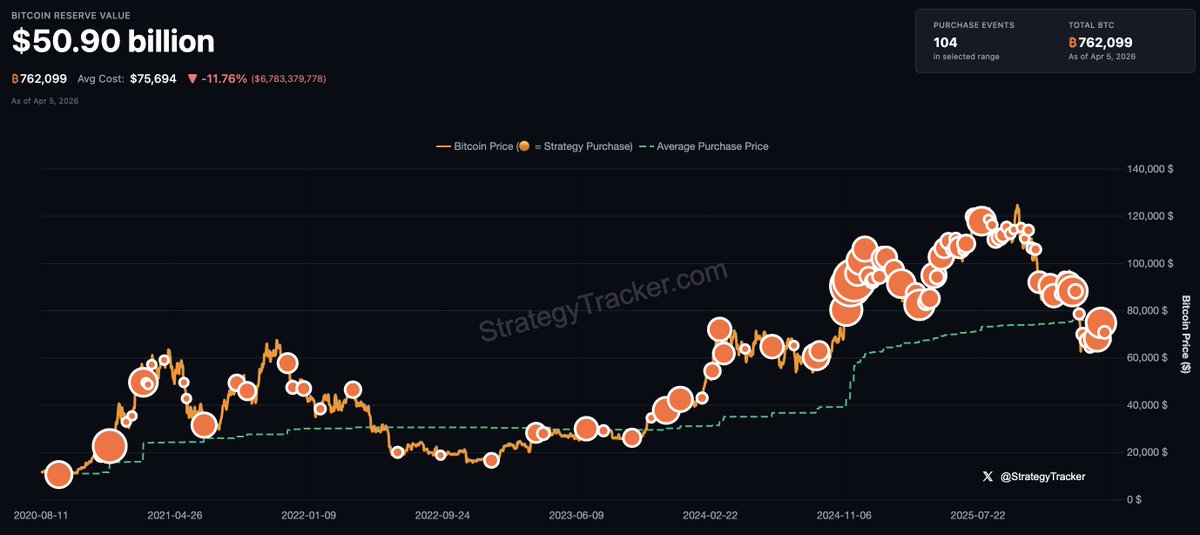
Strategy has acquired 3,015 BTC for ~$204.1 million at ~$67,700 per bitcoin. As of 3/1/2026, we hodl 720,737 $BTC acquired for ~$54.77 billion at ~$75,985 per bitcoin. $MSTR $STRC https://t.co/rqDIhlUDNx