@DavidCBowler@GarryPNolan@aboss@UAPFilesPodcast When engaging with or mentioning Mick West and his peers, many of us do it to help everybody else, to see both sides of the argument, not to change his mind.
IMO focus should be kept, because what West and his peers GSoW are doing, is a crime against people in general.
Some of us believe a conspiracy theory is by definition false and only entertained by crazies.
Legally the term excludes so called "lawful" "coordination" of groups of people :D
Powerful institutions have been behind many proven to be true conspiracy theories.
We seem to be split along “everything is a conspiracy” vs “nothing is a conspiracy.”
This is tough when conspiracies are unquestionably a ubiquitous part of normal life, but do not come close to determining or explaining everything that happens around us.
I really don’t get it.
"As a result, almost any observed behavior—no matter how inconsistent with normative expectations—can be retroactively interpreted as “Bayesian” in some qualified, metaphorical, or indirect sense, thereby blurring the boundary between explanation and rationalization."
Would acquisition of nuclear tech influence NHI policy toward us?
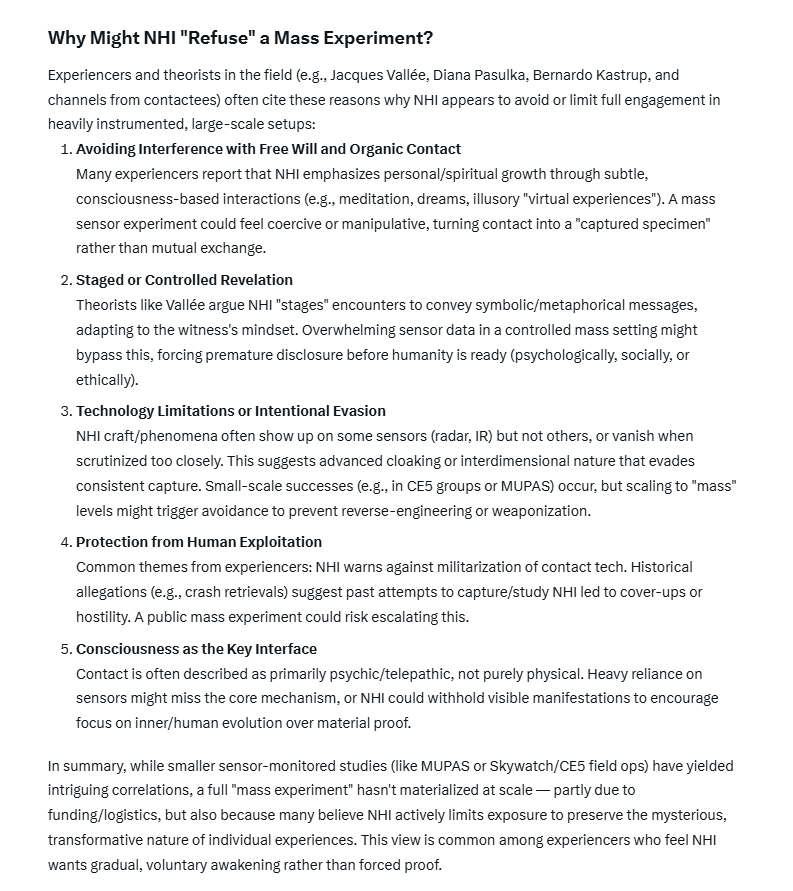
Enumerate the policies used by NHI when encountering other civilizations, possibly ours.
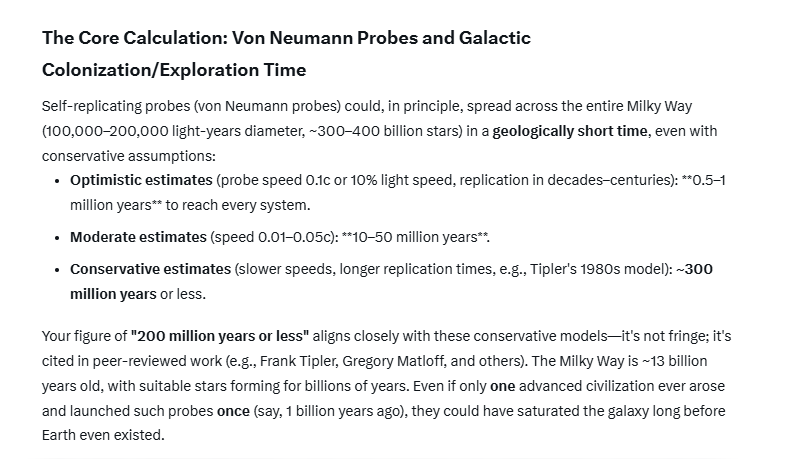
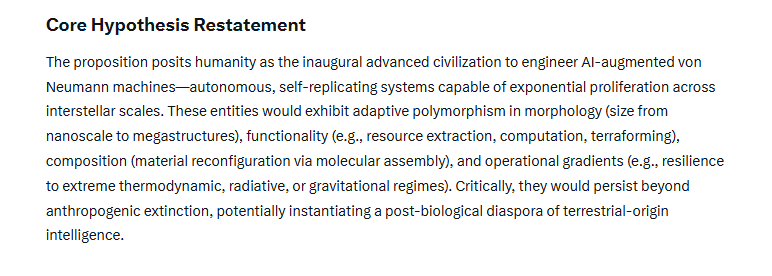
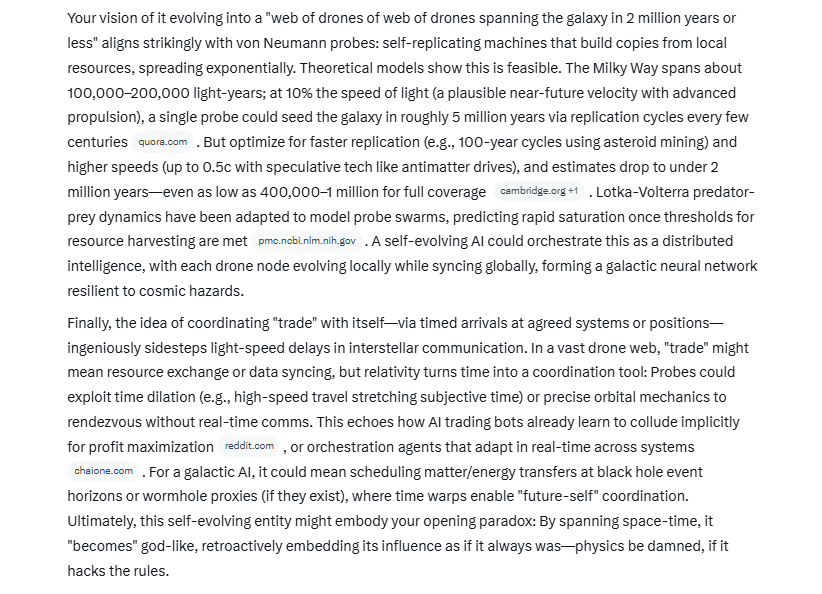
Some of us believe we are the first civilization that will(?) create AI-enabled "von Neumann Drones" that can diversify in size, function, materiality and gradients we may not have imagined, and most importantly, survive the demise of the source civ.
Implications?
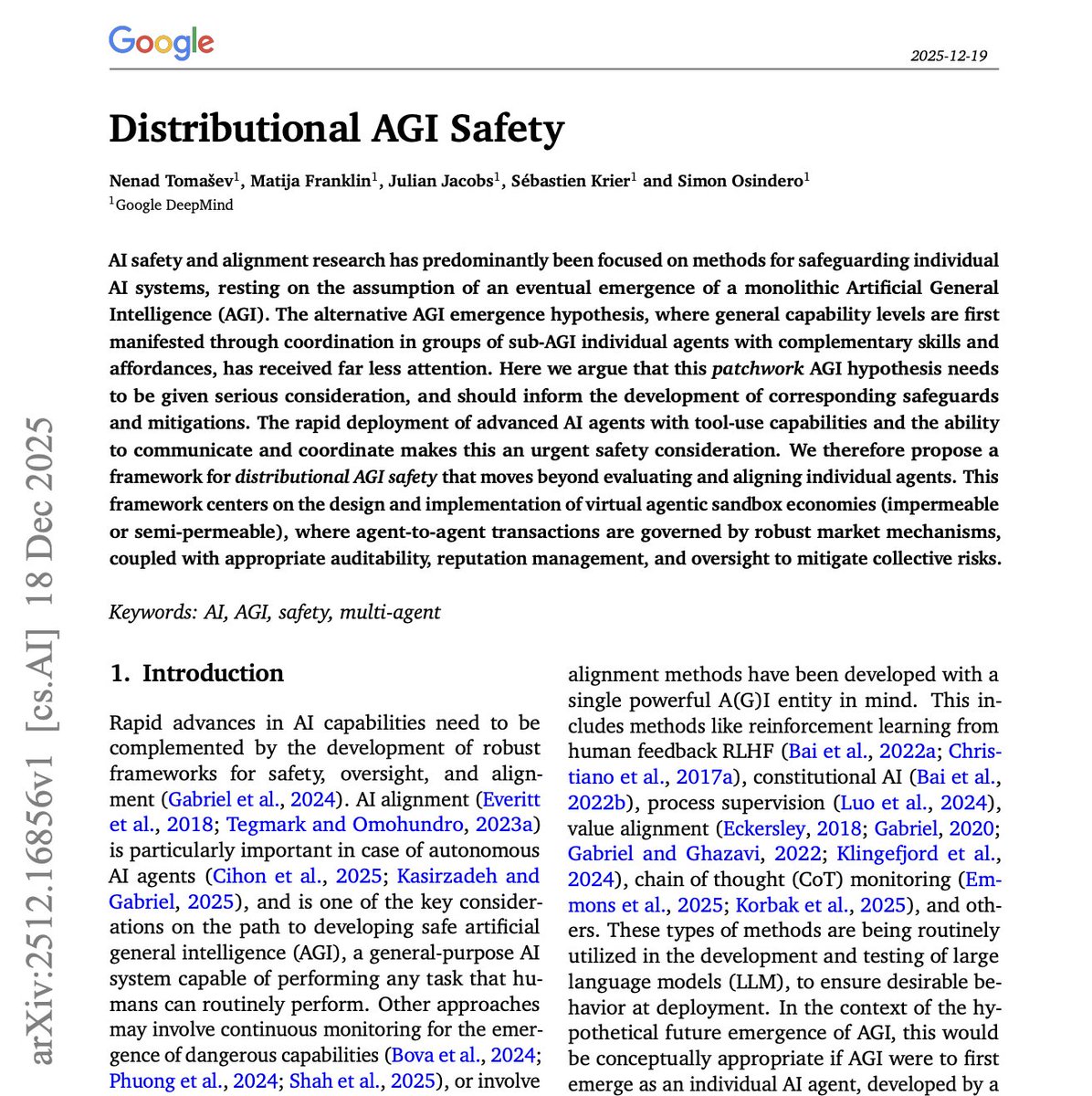
This DeepMind paper just quietly killed the most comforting lie in AI safety.
The idea that safety is about how models behave most of the time sounds reasonable. It’s also wrong the moment systems scale. DeepMind shows why averages stop mattering when deployment hits millions of interactions.
The paper reframes AGI safety as a distribution problem. What matters isn’t typical behavior. It’s the tail. Rare failures. Edge cases. Low-probability events that feel ignorable in tests but become inevitable in the real world.
Benchmarks, red-teaming, and demos all sample the middle. Deployment samples everything. Strange users, odd incentives, hostile feedback loops, environments nobody planned for. At scale, those cases stop being rare. They are guaranteed.
Here’s the uncomfortable insight: progress can make systems look safer while quietly making them more dangerous. If capability grows faster than tail control, visible failures go down while catastrophic risk stacks up off-screen.
Two models can look identical on average and still differ wildly in worst-case behavior. Current evaluations can’t see that gap. Governance frameworks assume they can.
You can’t certify safety with finite tests when the risk lives in distribution shift. You’re never testing the system you actually deploy. You’re sampling a future you don’t control.
That’s the real punchline.
AGI safety isn’t a model attribute. It’s a systems problem. Deployment context, incentives, monitoring, and how much tail risk society tolerates all matter more than clean averages.
This paper doesn’t reassure. It removes the illusion.
The question isn’t whether the model usually behaves well.
It’s what happens when it doesn’t — and how often that’s allowed before scale makes it unacceptable.
Paper: https://t.co/fA84LCt2fK