I've learned some more about how different "new" DiD estimators fare with missing data and staggered interventions. Not surprisingly, using an extended TWFE estimator -- with either lagged indicators or leads and lags -- is the best: both use all complete cases.
📢 Out now in the 🏖️July 2026 issue🏖️ of #JAERE! 📢
"Causal Inference, High-Frequency Data, and the Recreational Value of Water Quality" by Andrew Earle @ndrewearle and Hyunjung Kim @HyunjungGim.
📎 Read it here: https://t.co/p5VXdXUwgB
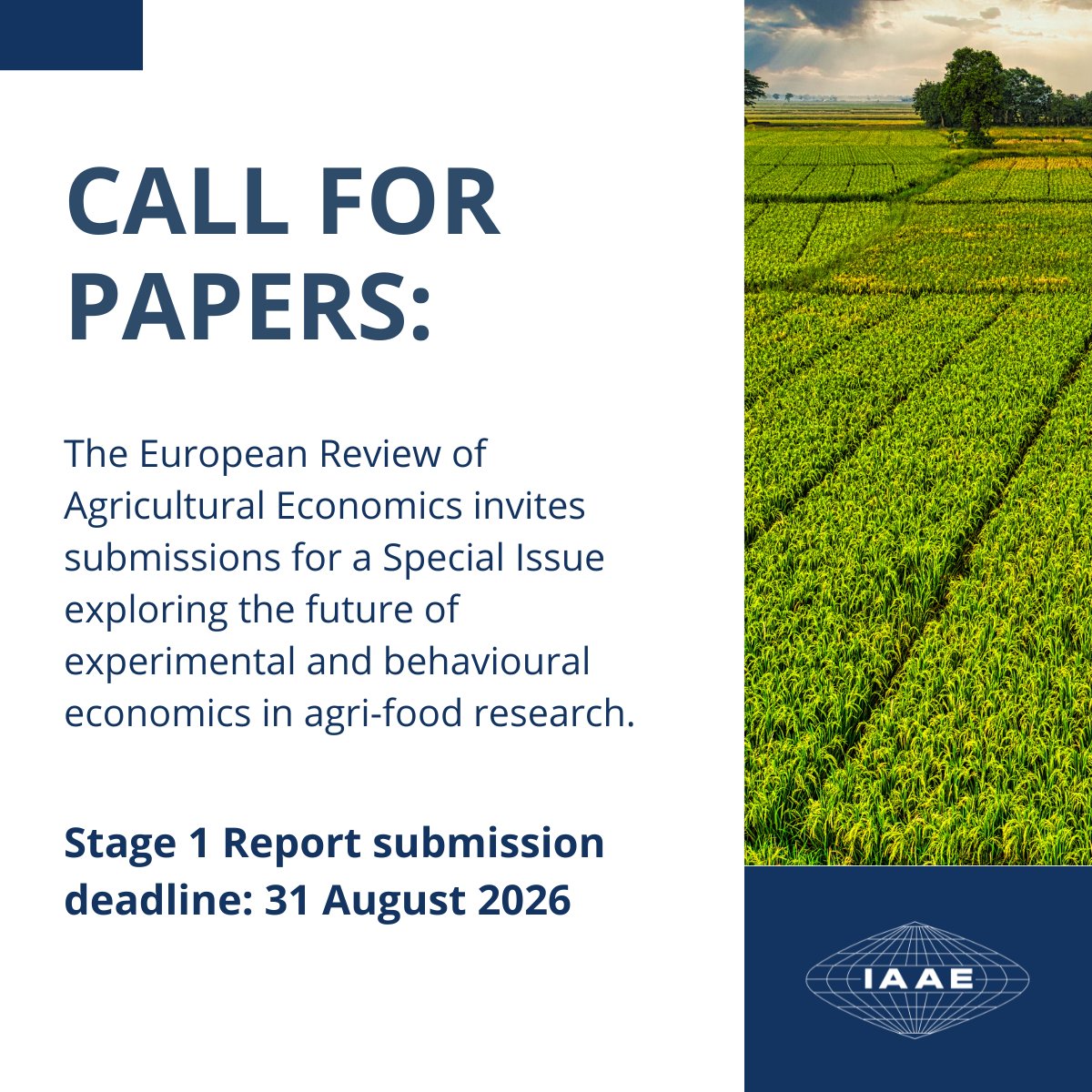
Call for Papers | Special Issue on Behavioural & Experimental Economics in Agricultural Economics
📅 Stage 1 Report submission deadline: 31 August 2026. Learn more: https://t.co/5uB0QEfVmy
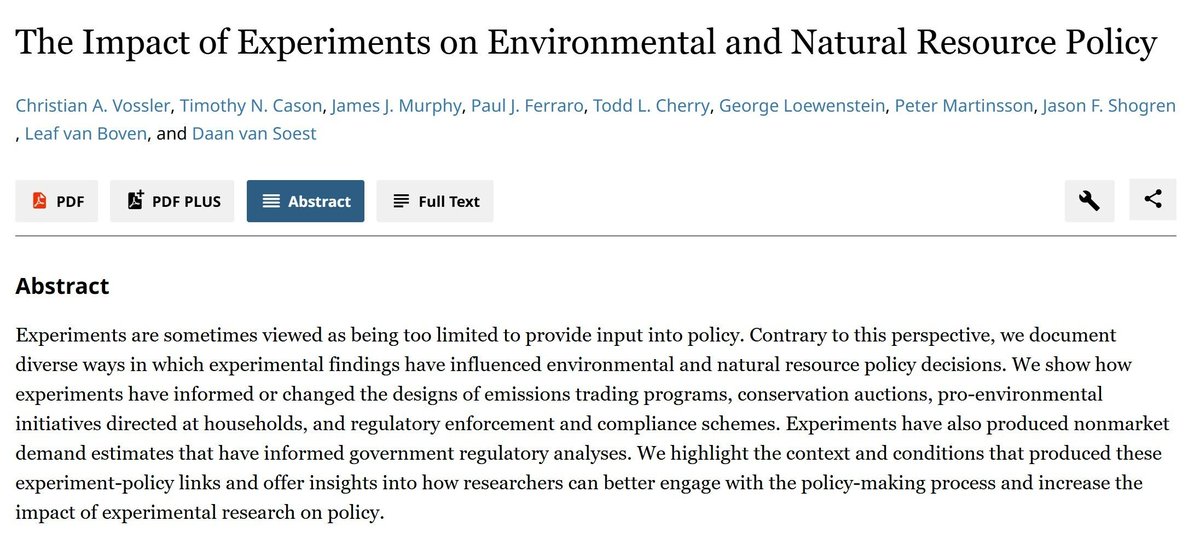
📢 Ahead-of-print in #REEP 📢
"The Impact of Experiments on Environmental and Natural Resource Policy" by Christian Vossler, Timothy Cason, James Murphy, Paul Ferraro, Todd Cherry, George Loewenstein, Peter Martinsson, Jason Shogren, Leaf van Boven, and Daan van Soest.
【研究論文】
森林科学分野 豆野皓太 助教が以下の研究論文を発表しました。
論文名 How Commercial Video Games Engage with Biodiversity and Conservation: A Systematic Map of Literature
雑誌名 Games: Research and Practice
DOI https://t.co/uHL8KBuZsh
#北海道大学#北大農学研究院
Can video games encourage people to care about biodiversity? 🎮
Researchers reviewed 380 papers covering 450 video games across 5 languages to find out how gaming links to nature engagement.
Read the paper led by WildCRU’s Katie Blake👉 https://t.co/avge9kVD7J
1/6
🏞 Tourism can drive biodiversity loss, or biodiversity recovery
Our authors new roadmap for #NaturePositiveTourism focus on changing behavior, preserving habitats, keeping wildlife wild, & generating measurable gains for nature
🔗 https://t.co/aUt1HpglmO
@NaturePortfolio