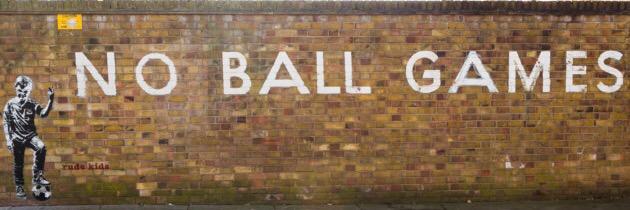
The campaign to remove 'No Ball Games' signs/culture & replace it with #KnowBallGames? signs/culture, thus returning space/place to us all! #PlayStreets#Splace
We are a proud partner of the #MoreBallGames campaign!
At @KnowBallGames, we have spent over a decade passionately campaigning to reclaim public spaces for play. Founded in 2011, our mission has been clear:
✅ Remove ‘No Ball Games’ signs⛔️
https://t.co/KeVXdtT1EW
#LetsPlay!
The Culture, Media and Sport Committee has published a new report on community and school sport.
We're calling for more investment, wider-ranging PE, better facilities, removing “No Ball Games” signs and ending the 3pm blackout for women’s football.
‘Lose 'no ball games' signs to get nation moving - MPs’ - @BBCNews
https://t.co/qQ7WHU6kDm
The Culture, Media and Sport Committee 'Game On' report, urges the government to legislate to require local authorities and housing associations to remove unnecessary 'no ball games' signs, "to make public spaces more usable for children's play."
https://t.co/qpRl0JNLzo
It calls for a cross-government strategy to deliver a healthier nation, and an increase in funding to boost participation in local communities.
The MPs want spending on sport and recreation to go from the current 0.3% of total government expenditure to at least 0.6% over the next 10 years, claiming that "funding for school and community sport is insufficient and increasingly unstable".
They also recommend that PE is granted the same status as English, mathematics and science in schools.
Following a year-long inquiry, the MPs' conclude that despite strong demand, committed volunteers, and many successful local initiatives, sport and physical activity "remain under-recognised within national health policy, and that a statutory duty must be placed on local authorities to provide sporting and leisure facilities in their communities".
#ItAllStartsWithPlay #NationalPlayStrategy #PlaySufficiency #MoreBallGames #ActiveWellbeing
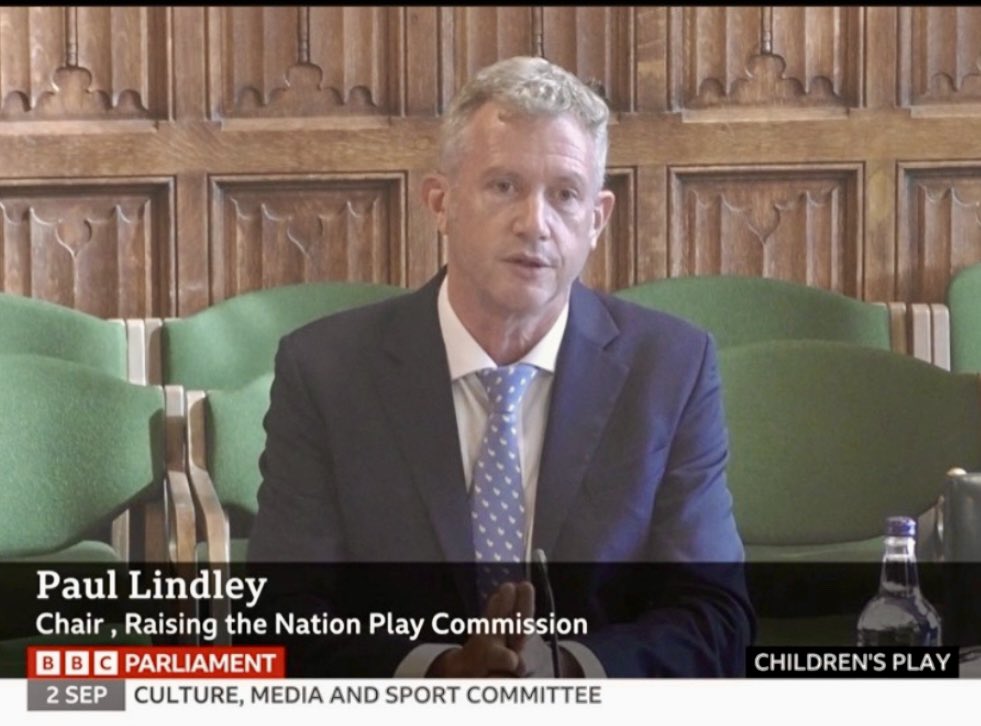
‘The hidden cost of “deplaytion”’ - @NewStatesman
Ban social media all you like – but don’t ignore their crap playgrounds
https://t.co/hzFImDzhtI
Councils have long struggled to maintain their playgrounds or open new ones since budget cuts were imposed more than a decade and a half ago. In the UK, nearly 800 playgrounds closed between 2013 and 2023, and we’re still seeing the effects. From Leicester to Greenwich in south London, children are on the brink of losing beloved local adventure playgrounds because of council funding pressures.
https://t.co/Vq3mv4runG
Poorer play areas are part of this picture, as are overprotective parents, traffic, digital life and the more intensive school day. The [play] commission recommends a national play strategy from the government to address the problem. The last one was 18 years ago, before most adults owned a smartphone, let alone their kids.
https://t.co/00esZiHeZg
In the most recent Budget, Rachel Reeves announced £18m to refurbish play areas. And for the first time, proposed revisions to national planning policy include the need to consider children in street and space design.
https://t.co/lyZuFm7Iap
#ItAllStartsWithPlay! #EvrythingToPlayFor #PlaySufficiency #NationalPlayStrategy
One of those unexpected, but meaningful moments!
While at Parliament today for the Westminster Hall debate on play in the Key Stage 1 curriculum, I bumped into @JonHaidt author of The Anxious Generation and The Amazing Generation.
His work has informed @PlayEngland’s bold, new 10-year strategy - It All Starts with Play! which seeks to restore a play-based childhood for all children by 2035.
https://t.co/CE4OtbW9cY
Grateful for the chance to speak with him, however briefly, about why giving children their childhood back matters - and to thank him for his work. His thinking aligns powerfully with our mission to make play a normal, accepted and visible part of everyday life again.
#ItAllStartsWithPlay #PlaySufficiency #TheAnxiousGeneration
🎥 A powerful moment for play in Parliament.
Yesterday, Baroness @NatalieBen spoke in the House of Lords in support of the Play Sufficiency Amendment (A179/121e) to the Planning and Infrastructure Bill - developed by @PlayEngland ⤵️
https://t.co/33LzQjQGML
The amendment would place a duty on local authorities to assess, secure, enhance and protect sufficient play opportunities for all children - just as Wales and Scotland already do.
Tomorrow (Tuesday 29 October), the amendment is likely to be put to a vote in the @UKHouseofLords.
This is our chance to show that children matter, play matters, and that every child deserves time, space, opportunity and freedom to play.
Watch Baroness Bennett's contribution 🎥👇or read Hansard - https://t.co/e7S8KlbkeC
#ItAllStartsWithPlay #PlaySufficiency
‘Children should have a right to play in the streets, alleys, pavements and car parks of their neighbourhoods’ - @ConversationUK
https://t.co/bVH3AJeqU0
Streets and other “grey” spaces, such as car parks, pavements and back alleys, have historically been the places where children predominantly played, both before and after the emergence of playgrounds. These are also the spaces in which children choose to play, when the conditions are right.
These are the spaces that remain most accessible for children in all sorts of diverse places across the world. This is especially the case for children living in neighbourhoods facing intersecting disadvantage, such as poverty, racism and environmental injustice.
Through playing in these urban grey spaces, children enact their right to play and their right to the city. This play has the potential to reinforce their connection to their neighbourhoods, their sense that they belong and have the right to use the spaces on their doorsteps.
If we fail to value and enable play in grey spaces, we are ignoring – and devaluing – spaces that afford not only diverse and accessible play opportunities, but also the potential for valuable spaces of connection and care. The singular valuing of green space for children’s play rests on particular ideas of children, childhood and play. It shifts political and financial attention away from the everyday spaces of urban play.
#ItAllStartsWithPlay #PlaySufficiency #FreePlay #RightToPlay #StreetPlay #PlayStreets #HomeZones #FUN #EverythingToPlayFor #KnowBallGames
The House of @CommonsLibrary has published a new Research Briefing on Children, Young People and the Built Environment, exploring how planning, design and development affect children’s ability to access both formal and informal spaces for play.
https://t.co/MjF3zL2QBY
The briefing sets out the barriers many children face in finding safe, welcoming, and inclusive spaces, and highlights the benefits of a child-centred, place-based approach to shaping our built environment — supporting health, wellbeing, and vibrant, sustainable communities.
@PlayEngland welcomes this research, which aligns closely with our bold, new 10-year strategy #ItAllStartsWithPlay! and our continued advocacy for a play sufficiency approach embedded within planning policy and local decision-making.
https://t.co/4ZQvWYrysl
@PlayEngland’s work (& many others) is referenced throughout, reflecting our evidence and advocacy on play sufficiency legislation, planning reform, and the need to embed children’s right to play in the design of our towns, cities and neighbourhoods.
It validates the central tenets of our strategy: that play sufficiency, child-centred planning and spatial justice are not optional extras — they are essential to delivering equitable, thriving places.
It also further strengthens the political case for change. With the Commons Library now signalling the issue, there is a clear mandate for policymakers and local authorities to embed play principles in planning frameworks and statutory guidance.
Read the full research briefing: https://t.co/AYARTcNomv
#PlaySufficiency #ChildFriendlyPlanning #RightToPlay
🆕 Councillors unanimously endorsed our plans for a 'Play Sufficiency Strategy' to improve children’s access to play facilities, spaces, and opportunities across Bristol
https://t.co/gs7oOWlO9F
‘No ball games’ signs should be removed as upgrade for Bristol play parks on the cards - @BristolLive
https://t.co/QZ8CB3Owoi
‘No ball games’ signs should be removed according to Labour councillors calling for an upgrade to play parks across Bristol. They are calling for a task force to explore how children can get more opportunities to play, like creating spaces to kick a ball around in housing developments.
Playing is an important part of childhood development but in recent years children have become less free to roam around outdoors, while also spending more time looking at a screen. Labour believes Bristol City Council should be doing more to help children play.
Plans to improve access to play facilities will be debated by councillors in a full council meeting on September 9. Labour has tabled a motion saying the council should come up with a play strategy, following similar plans in Leeds such as letting children play on some streets.
Only one in six people in deprived parts of Bristol are satisfied with activities for children and young people, according to the council’s Quality of Life survey. If the task force is set up, they could explore ideas such as removing ‘no ball games’ signs, mapping small green spaces that could be used for play, and looking at which parks need priority for investing in new equipment.
#KnowBallGames #ItAllStartsWithPlay #EverythingToPlayFor #FreePlay #Playgrounds #Article31 #UNCRC
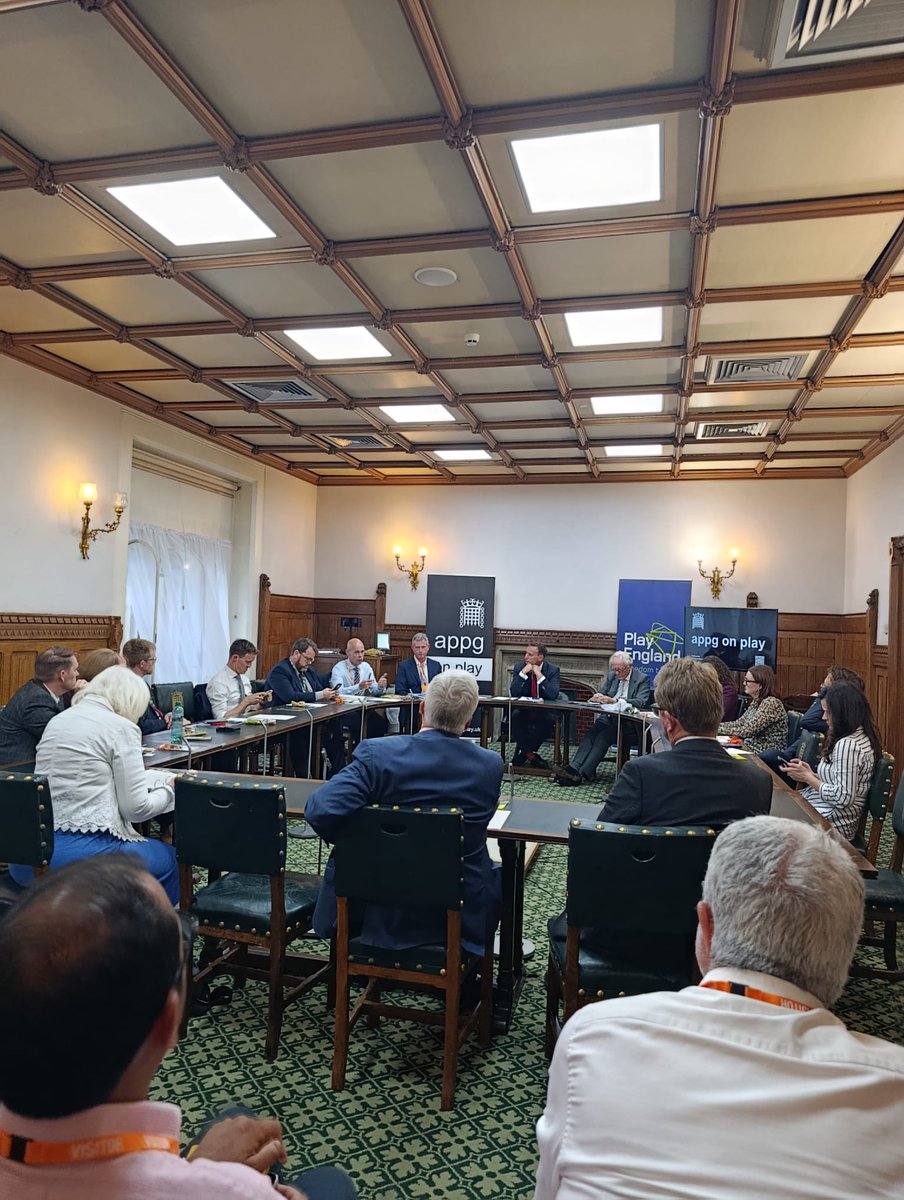
Yesterday we attended the inaugural meeting of the new All-Party Parliamentary Group on Play @APPGonPlay. Thank you to @PlayEngland for organising. We’re excited to work together to ensure that all children can claim their right to play. Let’s put play at the heart of childhood!
Yesterday we launched the All-Party Parliamentary Group on Play (@APPGonPlay) 🎉
We're already 40 MPs and Peers strong, working together to:
✅ Push for a National Play Strategy
✅ Champion play sufficiency law
✅ Put play back at the heart of childhood
Thanks to @PlayEngland for their support and work as the APPG's secretariat!




![EugeneMinogue's tweet photo. ‘The hidden cost of “deplaytion”’ - @NewStatesman
Ban social media all you like – but don’t ignore their crap playgrounds
https://t.co/hzFImDzhtI
Councils have long struggled to maintain their playgrounds or open new ones since budget cuts were imposed more than a decade and a half ago. In the UK, nearly 800 playgrounds closed between 2013 and 2023, and we’re still seeing the effects. From Leicester to Greenwich in south London, children are on the brink of losing beloved local adventure playgrounds because of council funding pressures.
https://t.co/Vq3mv4runG
Poorer play areas are part of this picture, as are overprotective parents, traffic, digital life and the more intensive school day. The [play] commission recommends a national play strategy from the government to address the problem. The last one was 18 years ago, before most adults owned a smartphone, let alone their kids.
https://t.co/00esZiHeZg
In the most recent Budget, Rachel Reeves announced £18m to refurbish play areas. And for the first time, proposed revisions to national planning policy include the need to consider children in street and space design.
https://t.co/lyZuFm7Iap
#ItAllStartsWithPlay! #EvrythingToPlayFor #PlaySufficiency #NationalPlayStrategy](https://pbs.twimg.com/media/G_xppsDW8AA4t3p.jpg)