Life is like a camera. Just focus on what's important & capture the good times, develop from the negatives and if things don't work out, just take another shot.
In the City of London on Idol Lane, there stands a hollow, heavily decorated cast-iron bollard dating back to 1886. While it looks like standard Victorian street furniture, it was actually designed by engineer William Haywood to serve an entirely different purpose: it is a disguised ventilation shaft for a former subterranean public urinal system.
The Haunted Cellars of Millbank Prison.
Beneath the Morpeth Arms, Millbank, holds the original underground holding cells and part of a tunnel system from the old prison.
This tunnel was used to march convicts directly from Millbank Prison to the river steps, where they were deported by ship to penal colonies in Australia.
Many prisoners died of disease or malnutrition in these grim vaults before their ships even arrived. The hauntings are traditionally linked to two specific spirits: a prisoner who tragically hanged himself in the cells to avoid deportation, and another who was fatally shot down by guards during a desperate escape attempt.
Staff and visitors have long reported sudden drops in temperature, intense feelings of panic, and objects moving on their own. Poltergeist activity is common; bottles have launched themselves from behind the bar, and drinks have been knocked clean off tables.
The phenomenon became so frequent that the pub installed a closed-circuit "Ghost Cam". Customers can watch a live feed of the haunted subterranean tunnels directly from the comfort of the bar.
I was given a private tour by bar staff a few years ago for the https://t.co/Af4QeKwWrj website. Very eerie experience!
Pulpit-Shaped Bridge Piers, Blackfriars.
Standing in the River Thames next to the modern train lines are the red, stubby columns of the original 1886 railway bridge. The tops are distinctly shaped like church pulpits to reflect the medieval dissolution of the monastery by Henry VIII.
The Mysterious Green "Mini" Stink Pipe, located at the eastern end of Shepherd's Bush Green near the Uxbridge Rd. The pipe is an anomaly among typical London sewer vents.
Unlike standard 6-to-8-metre-tall columns, this specific cast-iron pipe is unusually short. It is dark green, features decorative ridges, and is uniquely topped with a distinctive circle of crenellations (a crown-like top).
Because it is so low to the ground, local historians and urban explorers often debate its exact ventilation purpose. Its short height is highly unusual for venting foul odours directly into pedestrian paths. It is heavily speculated to have originally ventilated long-lost subterranean Victorian public toilets that once sat nearby
In the late 1990s, archaeologists excavating near the foot of Vauxhall Bridge Road (where the subterranean River Effra flows into the Thames) discovered two lines of oak posts dating back to the Middle Bronze Age (between 1750 BC and 1285 BC). This represents the oldest known prehistoric bridge-like structure found anywhere in Britain.
Picture of how it would have looked by Time Team.
From the 1950s until its discovery in 1985, Soviet KGB agents used this specific Victorian lamppost in South Audley Street as a "dead letter box" to exchange secret documents and microfilms.
A spy would slip messages inside a small maintenance door at the rear base of the post and leave a white chalk mark on the side to signal to their handler that a pickup was ready.
In a bizarre twist of reality mirroring fiction, the building right next door at 3 Audley Square served as the production offices for EON Productions. In the early 1960s, legendary film producers Cubby Broccoli and Harry Saltzman were inside that building casting Sean Connery as James Bond for cinema's very first 007 movie, Dr. No.
While cinema's most glamorous fictional spy was being brought to life on paper and cast inside the building, real-life Soviet spies were quietly operating on the pavement just a few feet away outside their window. The lamppost still stands there today with its little metal trapdoor intact.
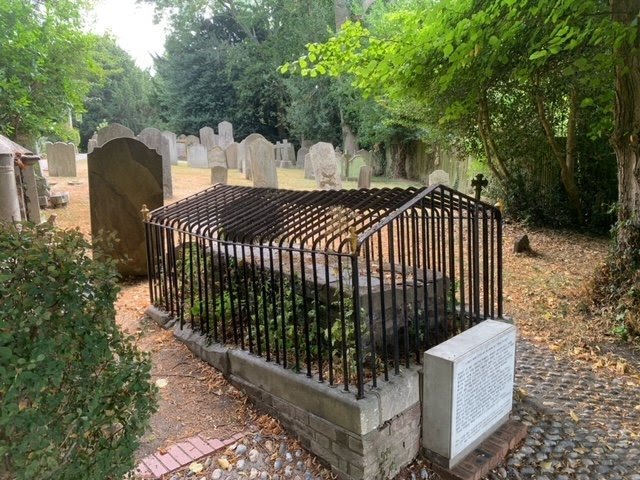
@NeilJopson “John Peachey Esq, of the island of St Christopher’s”, who has thus gained prolonged and unintended fame because of his grave’s location and the identity of its famous lounger.
The churchyard of St Mary’s Church, Harrow on the Hill, with views of the countryside, is where young Byron would sit on this grave after school and compose poems. Visitors attracted to the tomb would chip away at it, therefore a cage was added.
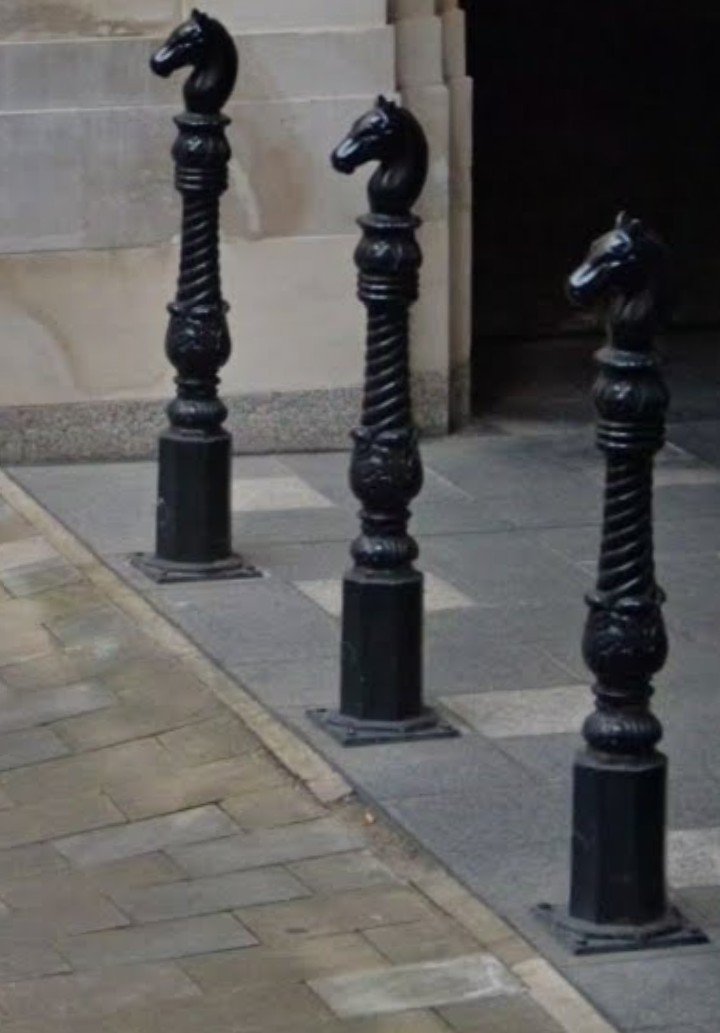
The distinctive horse-head bollards located on Gutter Lane in the City of London serve as a direct visual tribute to the Worshipful Company of Saddlers.
When the modern office buildings and pavements along Gutter Lane were developed, these custom, black-painted cast iron bollards topped with horse heads were installed to delineate the pedestrian walkways. A nod to the area's deep equestrian and trade history of the Worshipful Company of Saddlers.
The churchyard of St Mary’s Church, Harrow on the Hill, with views of the countryside, is where young Byron would sit on this grave after school and compose poems. Visitors attracted to the tomb would chip away at it, therefore a cage was added.
London Character: Joe of Sidcup in 1953. Smokey Joe lived off Sidcup Hill. He could often be seen and heard rattling down the hill with no tyres on his bike, wearing a police helmet. It is said the police locked him up and gave a good wash in the winter.
@EX_SW7_Cab Like the old 1959 Coasters hit 🎶"Charlie Brown, he's a clown, but he's going to get caught just you wait and see, why is everybody always picking on me?"🎶😂🤣
Charlie Brown's Roundabout in South Woodford, East London, is a major road junction connecting the M11 motorway, the A406 North Circular, and the A1400.
The story actually begins a few miles south in the London Docklands. Charlie Brown Sr. (1859–1932) was a former boxer who took over the Railway Tavern in Limehouse in 1893. The pub became an internationally famous hotspot for sailors, who traded rare, global curiosities and treasures to Charlie Sr. in exchange for drinks. It became so iconic that sailors worldwide would simply say, "Meet you at Charlie Brown's."
When Charlie Sr. passed away in 1932, his funeral was one of the largest the East End had ever seen, drawing 16,000 people. Following his death, a family dispute arose over his massive collection of eccentric treasures. The curiosities were split between his daughter (who took over the Railway Tavern) and his son, Charlie Brown Jr., who ran the Blue Posts pub directly across the street. Both pubs aggressively put up signs reading "Charlie Brown's", causing mass confusion for locals and visiting sailors.
Moving to Woodford and 'The Roundabout' Pub
Tired of competing with his sister, Charlie Brown Jr. left Limehouse in 1938 and moved out to the Essex border to take over a newly built pub in Woodford called The Roundabout. He brought a portion of his father’s famous eccentric treasures with him.
The pub sat adjacent to a small, early version of the junction built in the 1920s. It quickly became a beloved community hub and landmark, with locals universally nicknaming the building (and the junction next to it) "Charlie Brown's". The pub was instantly recognizable by its unique pub sign: a tall pedestal topped with an ornate, moving fairground carousel complete with finely carved gilt horses. According to a local community group discussion on Facebook, this landmark pub, along with the adjacent Ted's Transport Cafe, served as the primary anchors for the area before major urban development changed the landscape.
Demolition and the Modern Junction
In 1972, major infrastructure plans completely altered the area. To accommodate the construction of the new M11 motorway terminus and expand the A406 North Circular, the original junction had to be drastically enlarged to build new slip roads and flyovers.
Tragically, The Roundabout pub stood directly in the way of the expansion and was demolished. The community was effectively split in two by the massive new concrete roads, cutting residents off from local shops and schools.
The remaining pub treasures were scattered or lost, and the iconic carousel pub sign reportedly disappeared "up north," despite later community efforts to track it down and reinstall it.
Though the pub has been gone for over half a century, the name stuck so firmly in the local lexicon that transport authorities officially designated the concrete interchange as Charlie Brown's Roundabout, keeping the memory of the East End's most famous publicans alive.
Located inside the elegant Queen's House, Greenwich, is Britain’s first centrally unsupported geometric spiral staircase. Beyond its architectural brilliance, it is famous for a bizarre 1966 photograph taken by a retired Canadian reverend and his wife visiting the Queen’s House. The Reverend and Mrs R. W. Hardy had heard about the famous Tulip Stairs and took a photograph which after developing appears to show a shrouded, ghostly figure climbing the stairs.
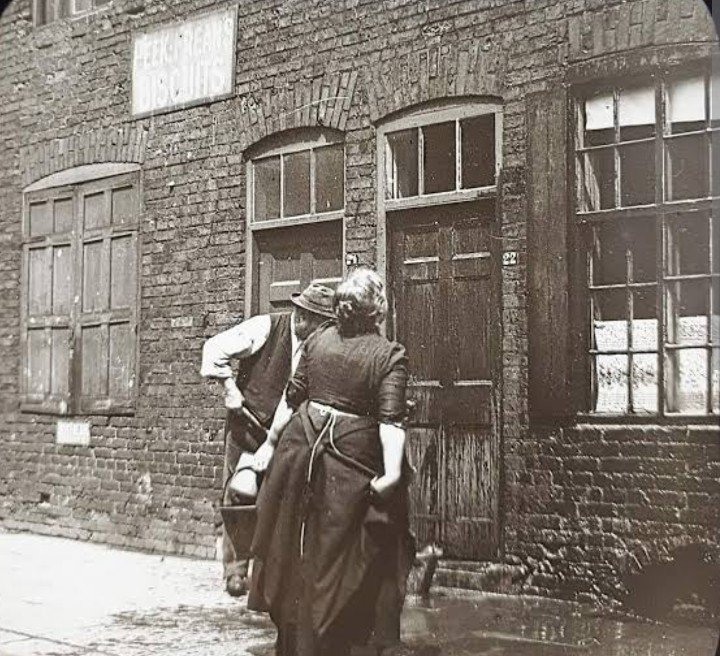
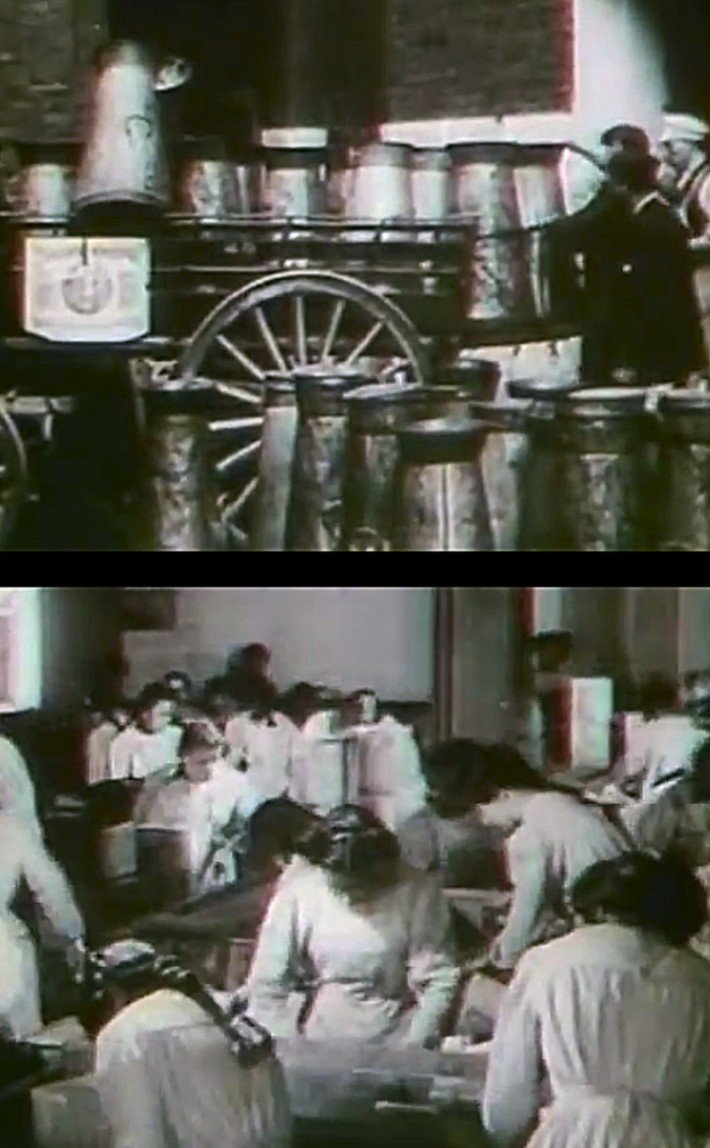
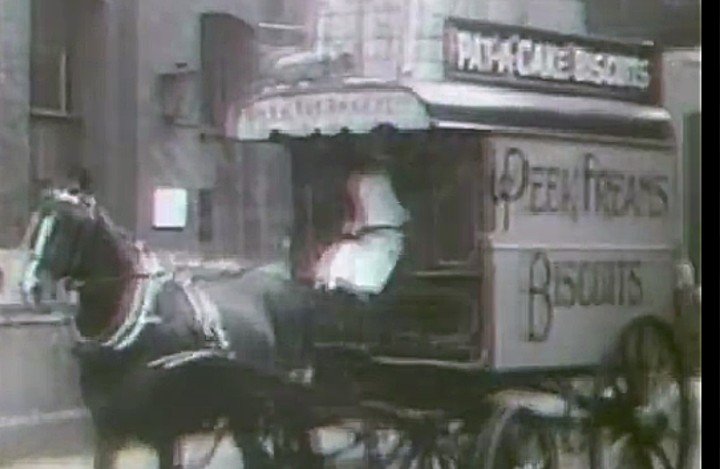
Peek Frean's company was founded in 1857 by James Peek, a London tea merchant and George Hender Frean, a ship's biscuit maker. They initially set up production in a disused sugar refinery on Mill Street in Dockhead.
While Peek and Frean started the company, its legendary success is widely attributed to John Carr, who joined the firm and introduced innovative, modern biscuit-making machinery and techniques.
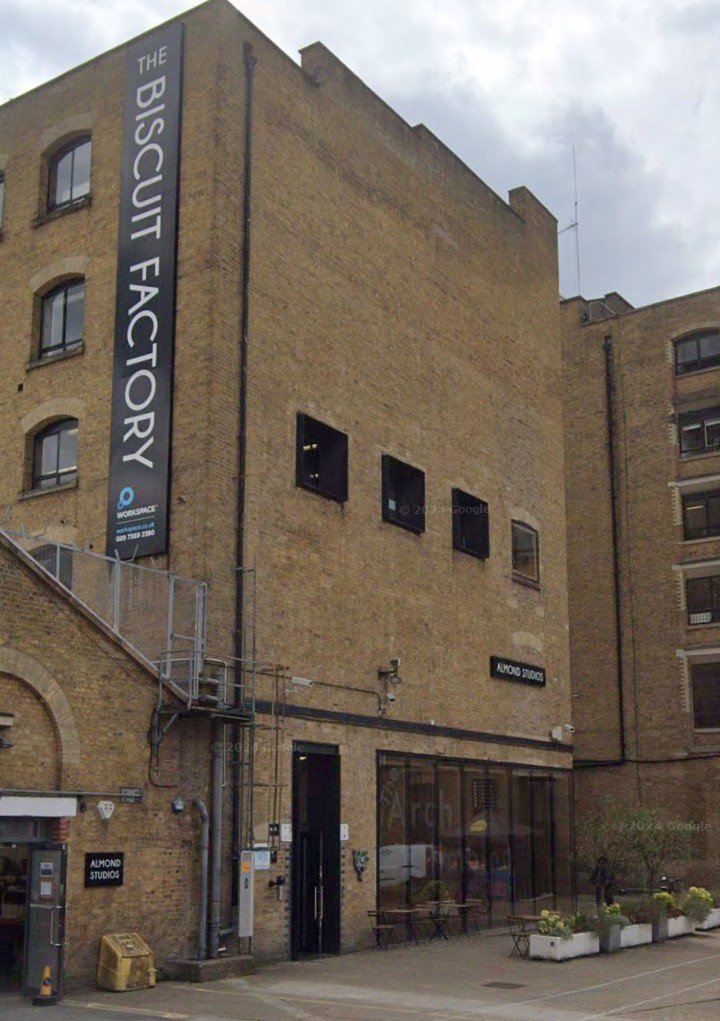
Needing more space to fuel their rapid growth, the company bought a site integrated with the London and Greenwich Railway arches, opening the newer, massive factory at Drummond Road in 1866.
Growing up in Bermondsey I can well recall the delicious smell of custard all about this area.
Sadly the factory closed in May 1989.
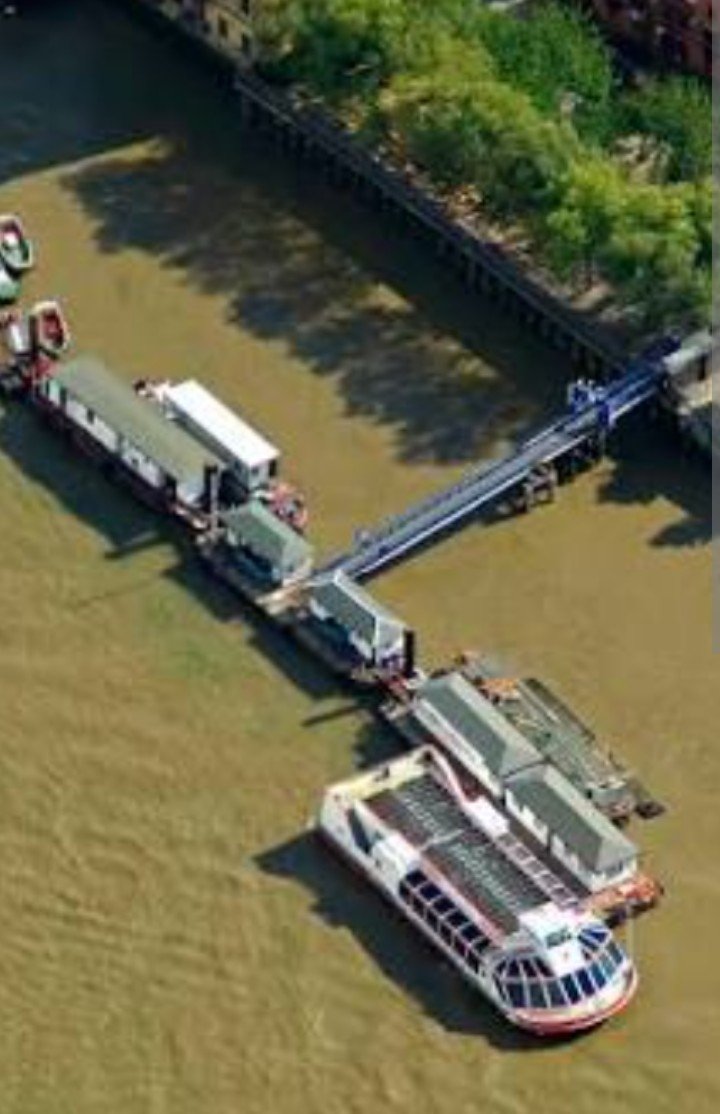
Cherry Garden Pier - The PLA Lookout Huts.
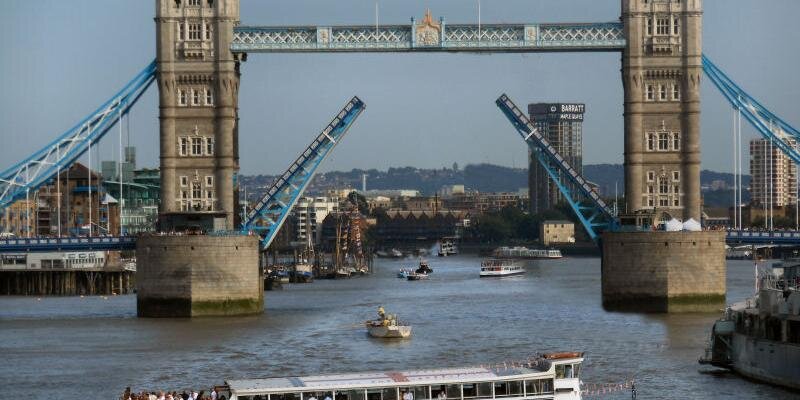
Surviving Port of London Authority (PLA) wooden huts remain from the days when 24/7 staff watched ships round Limehouse bend and telephoned Tower Bridge to coordinate bridge lifts.
The Plessey electronics factory on Ley Street in the London Borough of Redbridge was a major local manufacturer, employer, and a vital wartime production site.
Plessey established premises on Ley Street around 1924 after moving from earlier local sites, growing into one of the largest electronics and telecommunications employers in the area.
The television pioneer John Logie Baird worked from a workshop on the roof of the Plessey premises on Ley Street during the 1920s.
After heavy German bombing damaged surface facilities during the 1940 Blitz, Plessey moved a massive defense manufacturing operation into the uncompleted Central line tube tunnels between Leytonstone and Gants Hill.
Up to 4,000 workers (predominantly women) worked 24-hour shifts in the deep tunnels producing vital war goods, including bomber wireless receivers, field telephones, wiring sets for Halifax and Lancaster bombers.
The original Ley Street factory buildings have since been demolished and replaced by modern housing developments.
The circular blue plaque at the Grade II listed carriage ramp in Deptford Market Yard, by the railway arches and station, commemorates the design and history of the historic structure.
The ramp was originally used to haul carriages, locomotives, and livestock from the ground-level market up to the elevated viaduct tracks.
After years of dereliction, the yard was restored and reopened around 2015/2016 as Deptford Market Yard, repurposing the arches into local businesses.