In 1800, William Herschel placed a thermometer beyond the red end of a rainbow and detected more heat where no visible light existed.
He had discovered infrared radiation.
The invisible world was hiding in plain sight.
#KnowledgePerView#Physics
Some dwarf reed snakes escape danger by cartwheeling instead of slithering. Researchers recorded rolling speeds of up to 3.69 m/s, around four times their average slithering speed.
Nature is stranger than fiction.
#KnowledgePerView#Science
Five facts. Five questions. How much do you remember?
Test your knowledge of spider sleep, microscopic organisms, ancient Egyptian engineering, lotus leaves, and the world’s famous ancient astronomical mechanism.
Can you score 5/5? Reply with your answers.
Charles Darwin suspected some Saxifraga plants could eat insects. In 2026, researchers found strong evidence that Saxifraga candelabrum traps prey, digests it, and absorbs its nutrients.
Even flowering plants can surprise us.
Follow Knowledge Per View for a new fact every day.
Can spiders dream?
Researchers found that jumping spiders show REM-like sleep, including eye movements and body twitches. Whether they actually dream remains unknown.
Follow Knowledge Per View for a new fact every day. #Science
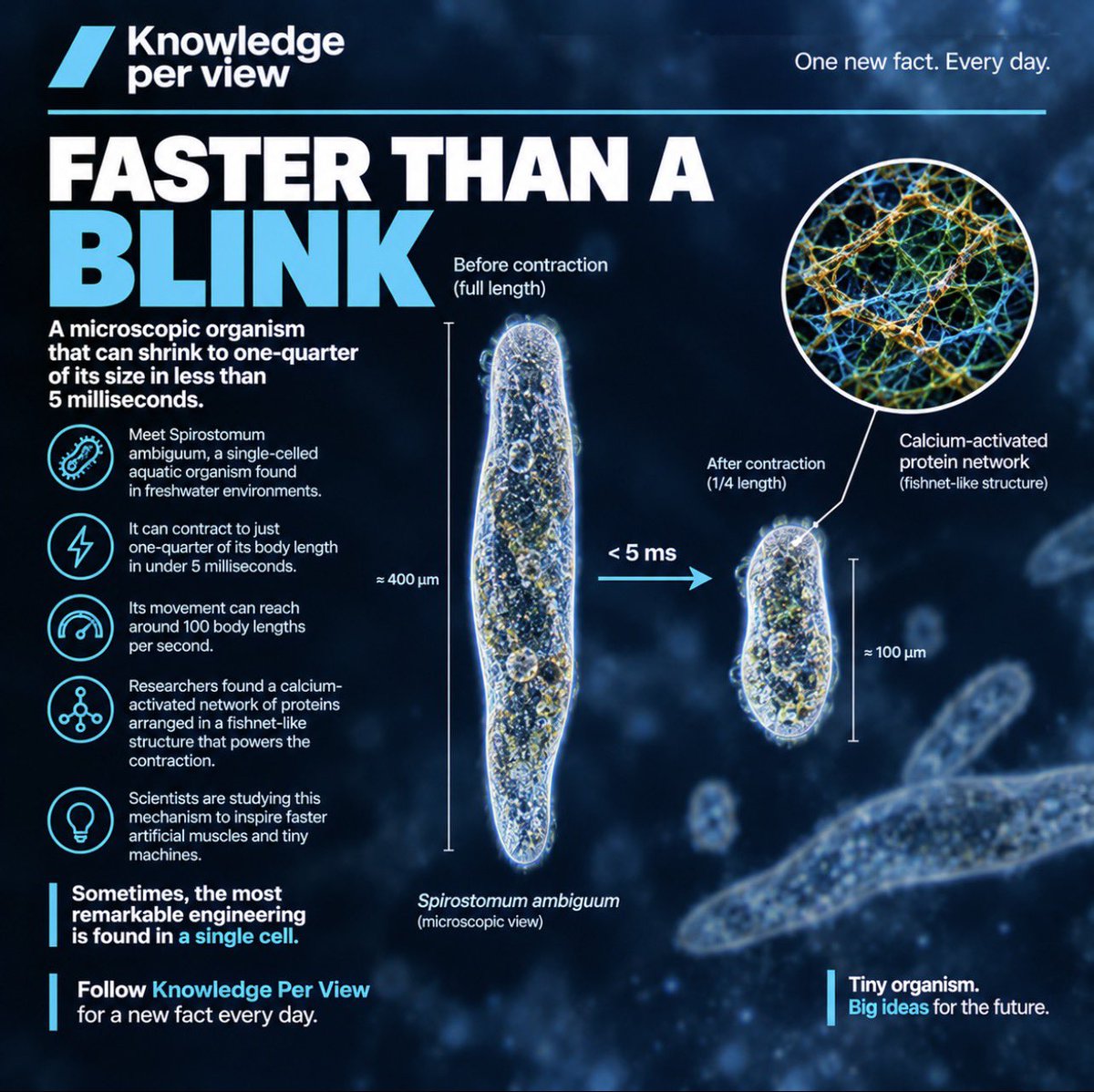
A microscopic organism called Spirostomum ambiguum can shrink to one-quarter of its body length in under 5 milliseconds.
Scientists are studying its unusual protein network for clues to building faster artificial muscles.
Follow Knowledge Per View for a new fact every day. #Sci
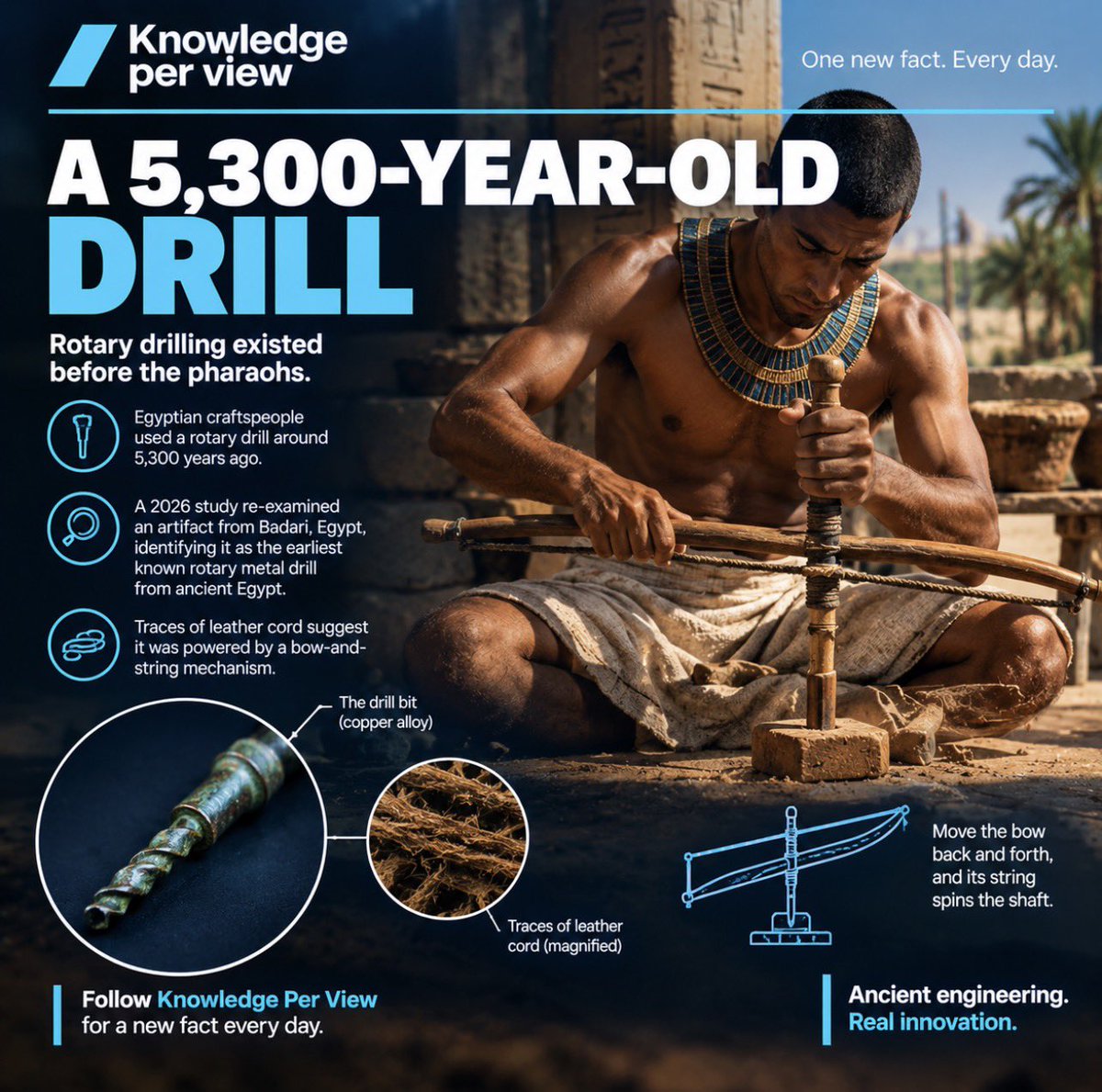
About 5,300 years ago, Egyptian craftspeople used a rotary drilling tool powered by a bowstring mechanism.
A 2026 study re-examined an artifact that reveals just how sophisticated early engineering could be.
Follow Knowledge Per View for a new fact every day. #AncientTechnology
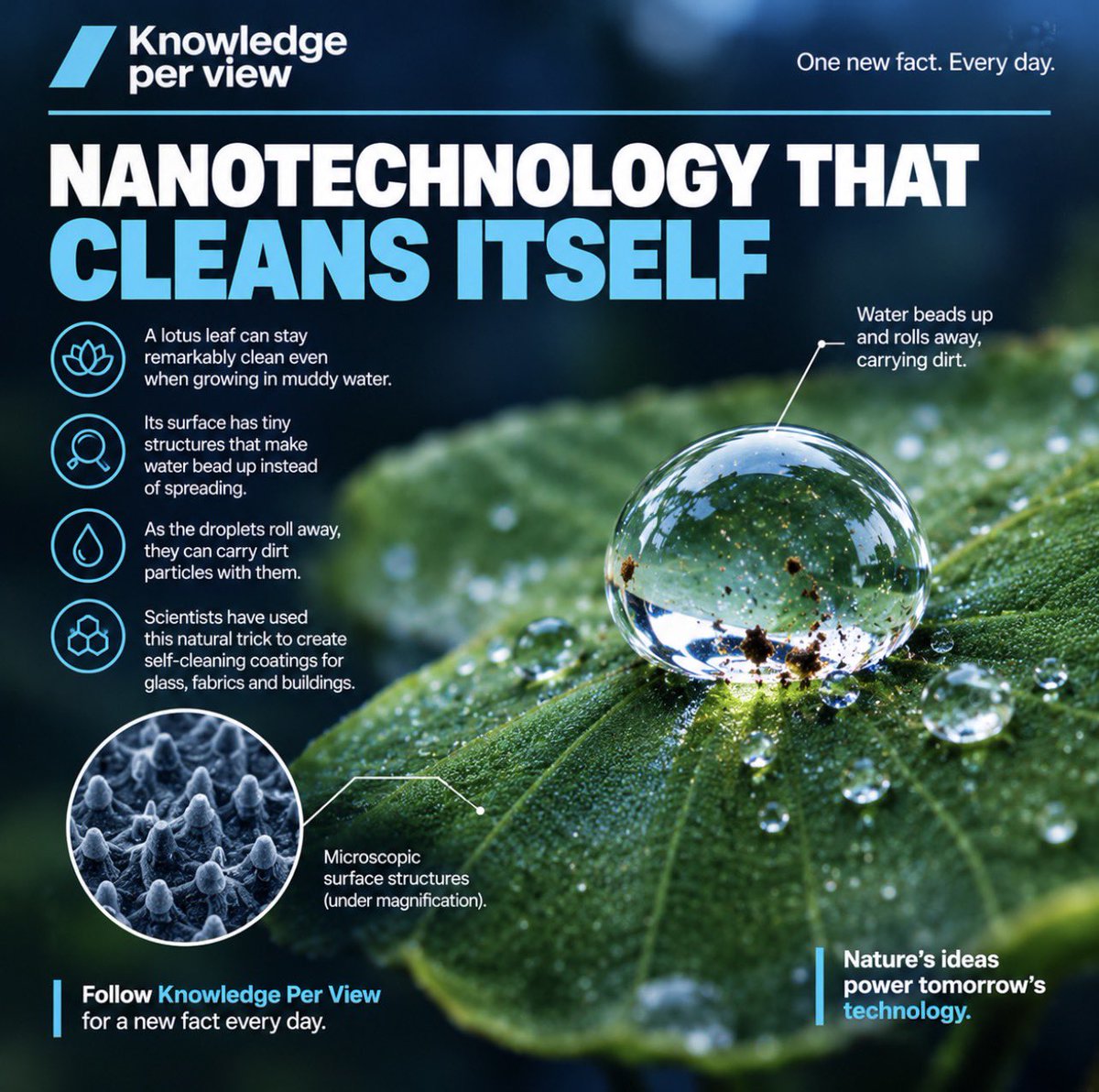
A lotus leaf’s microscopic surface structures help water droplets roll away with dirt, inspiring self-cleaning coatings in materials science.
Nanotechnology often takes its best ideas from nature.
Follow Knowledge Per View for a new fact every day. #Nanotechnology#Knowledgepv
Over 2,000 years ago, Greek engineers built a mechanical calculator using intricate bronze gears to track the Sun and Moon and predict eclipses
Meet the Antikythera Mechanism, often called the world’s first analogue computer.
Follow @KnowledgePV for new facts daily #AncientTech
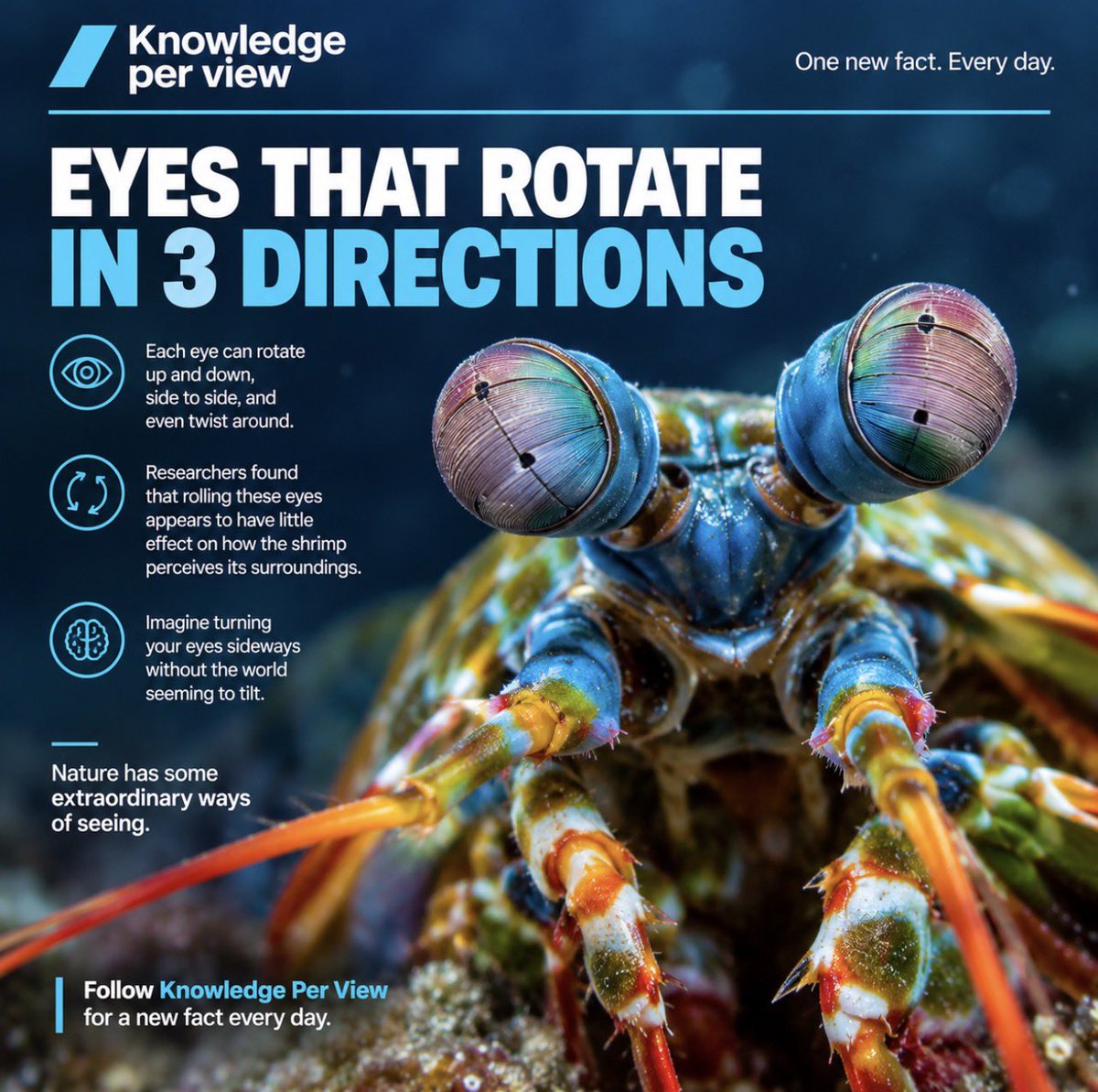
A mantis shrimp can rotate each eye in three directions, including a full twist, while its perception of the world stays remarkably stable.
Nature’s vision systems are stranger than we imagine.
Follow Knowledge Per View for a new fact every day. #Biology#animals#insects
AN ELEPHANT’S TRUNK HAS AROUND 1,000 WHISKERS.
Those tiny hairs do more than you might think.
Researchers studying elephant whiskers found that their unusual structure may help elephants sense touch and handle objects with remarkable precision.
IN THE 1800s, SOME FAMILIES PHOTOGRAPHED THEIR DEAD.
In Victorian Britain and America, families sometimes hired photographers to take portraits of loved ones after they died.
Why? Photography was expensive, and many people had never had their picture taken while alive…1/2
A post-mortem portrait might be the family’s only photograph of that person.
The deceased were often arranged to look peacefully asleep. What seems unsettling today was, for grieving families, a way to preserve a final memory.
#HistoryFacts#PhotographyHistory#DidYouKnow
Scientists are using these findings to investigate ways of making modern concrete more durable.
The ancient recipe was not magic, and not every Roman structure has survived, but its chemistry still has lessons to teach us.
Follow Knowledge Per View for a new fact every day.
WHY SOME ANCIENT ROMAN CONCRETE CAN REPAIR ITS OWN CRACKS
Imagine a building material that can help seal its own cracks, even centuries after it was made.
Ancient Romans built harbours, aqueducts and massive structures using concrete that has survived for thousands of years.
In 2023, researchers studying Roman concrete found that tiny, calcium-rich lime fragments may help explain its remarkable durability.
When cracks allow water to enter, these fragments can dissolve and form new minerals that fill parts of the cracks.
China has proposed new export controls covering 40 technologies across AI, biomedicine and solar manufacturing. The draft is open for public consultation until 15 November 2026.
Follow Knowledge Per View for a new fact every day.
#China#AI#Technology#GlobalAffairs