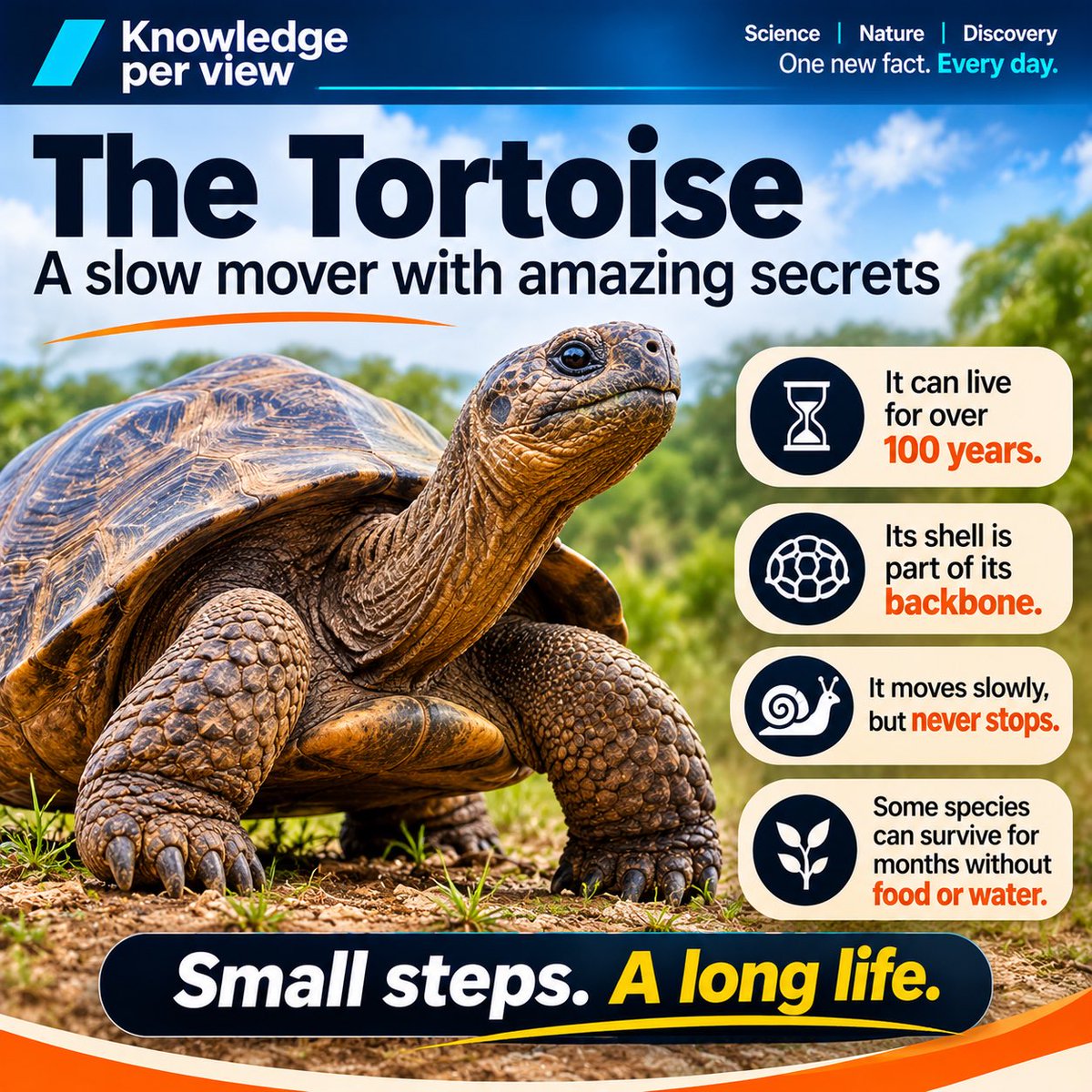
Some giant tortoises can live for over 100 years. Their shells are part of their skeletons, and their bodies are adapted to conserve energy.
Slow movement, extraordinary survival.
Follow Knowledge Per View for more fascinating facts.
#Nature
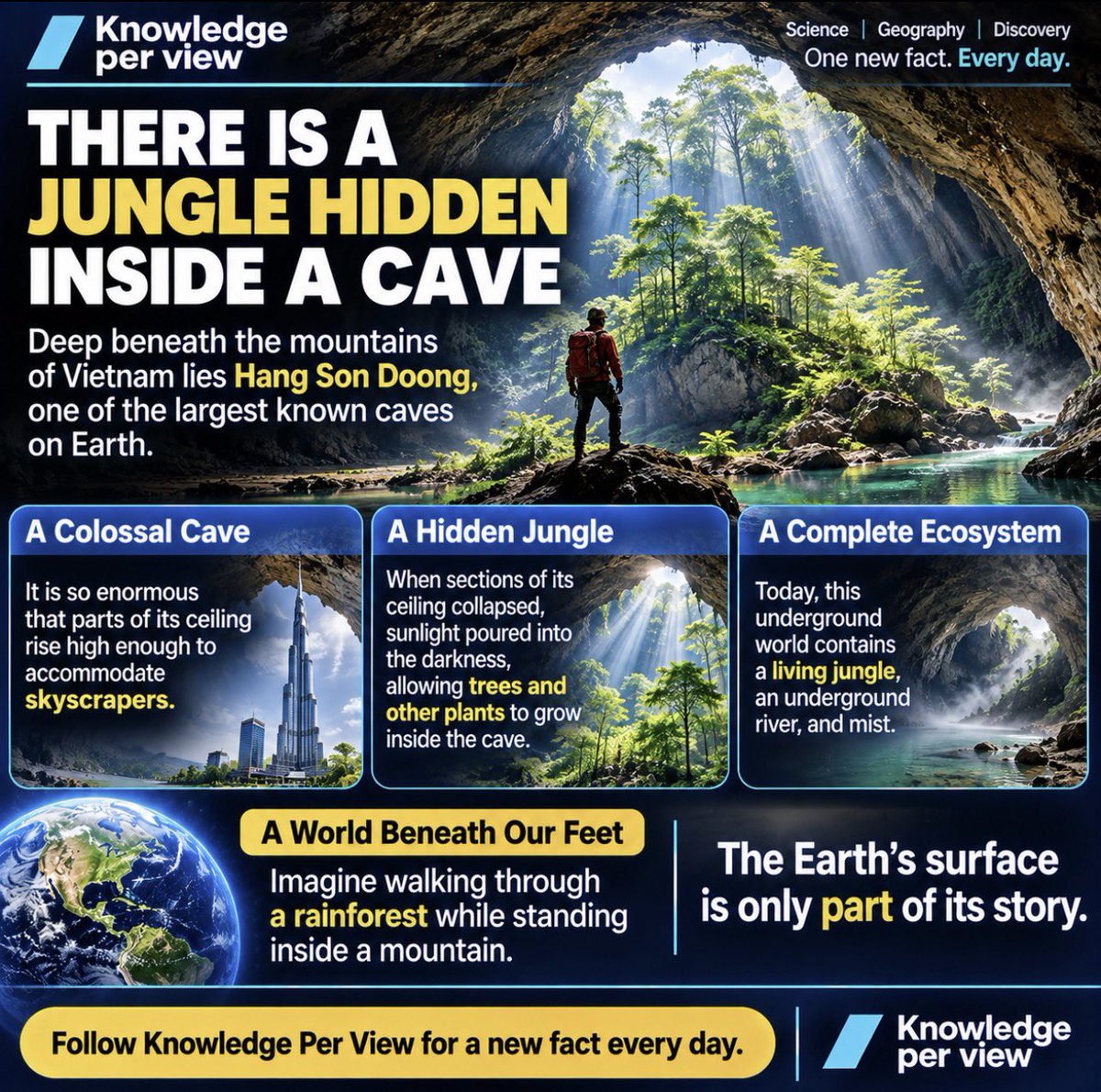
Vietnam’s Hang Son Doong is a colossal cave containing an underground river and a jungle growing beneath collapsed sections of its ceiling. Sunlight reaches the cave floor, allowing trees and plants to thrive underground
The Earth hides entire worlds beneath our feet
#Geography
NATO’s Article 5 treats an armed attack on one member as an attack on all. But it doesn’t automatically mean every country must declare war or send troops.
The alliance’s power lies partly in making an attack risk a much wider conflict.
#Geopolitics
A country doesn’t need to be invaded to face enormous pressure.
Because the US dollar sits at the centre of global finance, financial sanctions can restrict a nation’s access to international banking and trade.
Controlling the system can be as powerful as controlling territory.
In 1800, William Herschel placed a thermometer beyond the red end of a rainbow and detected more heat where no visible light existed.
He had discovered infrared radiation.
The invisible world was hiding in plain sight.
#KnowledgePerView#Physics
Some dwarf reed snakes escape danger by cartwheeling instead of slithering. Researchers recorded rolling speeds of up to 3.69 m/s, around four times their average slithering speed.
Nature is stranger than fiction.
#KnowledgePerView#Science
Five facts. Five questions. How much do you remember?
Test your knowledge of spider sleep, microscopic organisms, ancient Egyptian engineering, lotus leaves, and the world’s famous ancient astronomical mechanism.
Can you score 5/5? Reply with your answers.
Charles Darwin suspected some Saxifraga plants could eat insects. In 2026, researchers found strong evidence that Saxifraga candelabrum traps prey, digests it, and absorbs its nutrients.
Even flowering plants can surprise us.
Follow Knowledge Per View for a new fact every day.
Can spiders dream?
Researchers found that jumping spiders show REM-like sleep, including eye movements and body twitches. Whether they actually dream remains unknown.
Follow Knowledge Per View for a new fact every day. #Science
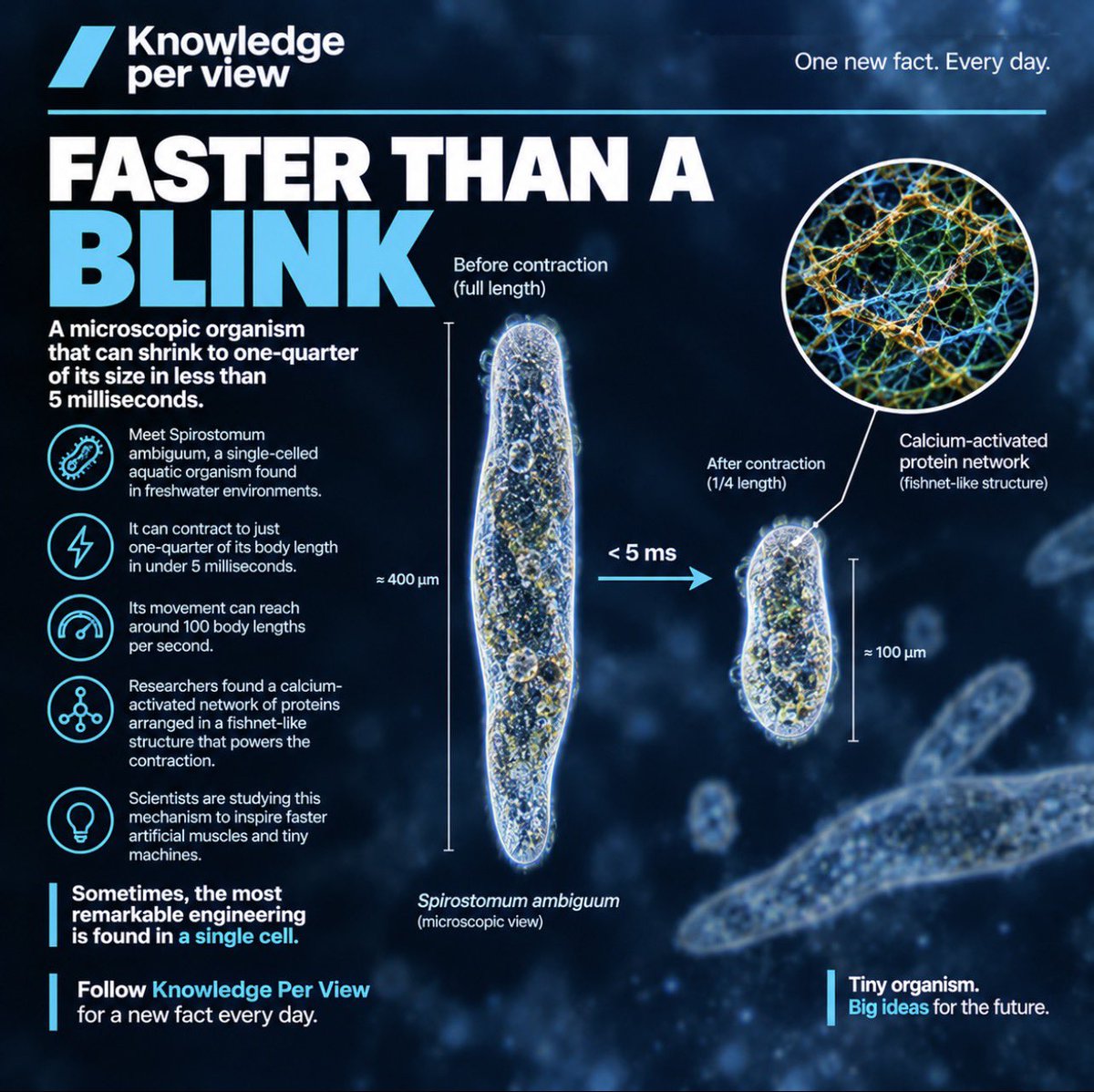
A microscopic organism called Spirostomum ambiguum can shrink to one-quarter of its body length in under 5 milliseconds.
Scientists are studying its unusual protein network for clues to building faster artificial muscles.
Follow Knowledge Per View for a new fact every day. #Sci
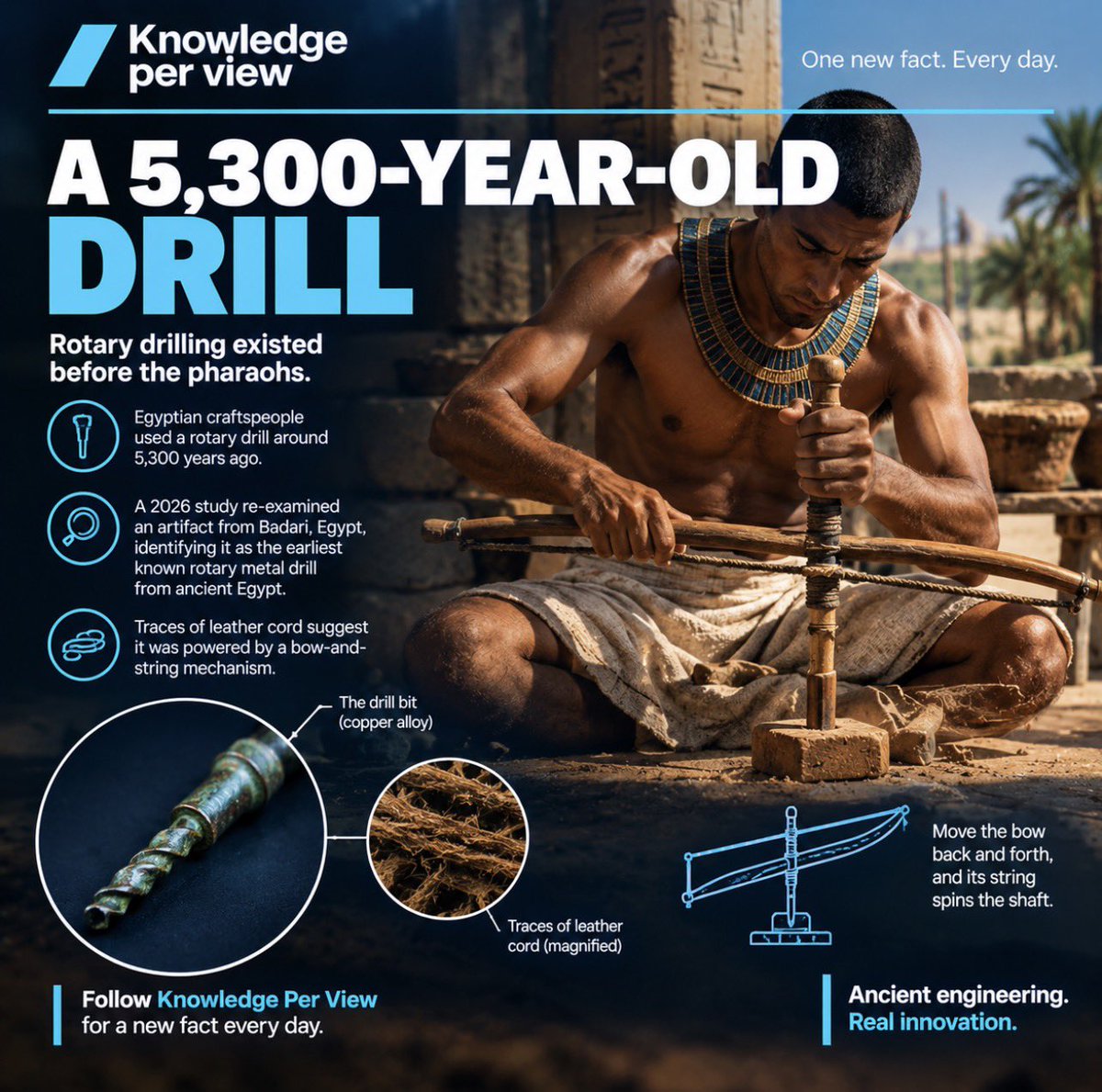
About 5,300 years ago, Egyptian craftspeople used a rotary drilling tool powered by a bowstring mechanism.
A 2026 study re-examined an artifact that reveals just how sophisticated early engineering could be.
Follow Knowledge Per View for a new fact every day. #AncientTechnology
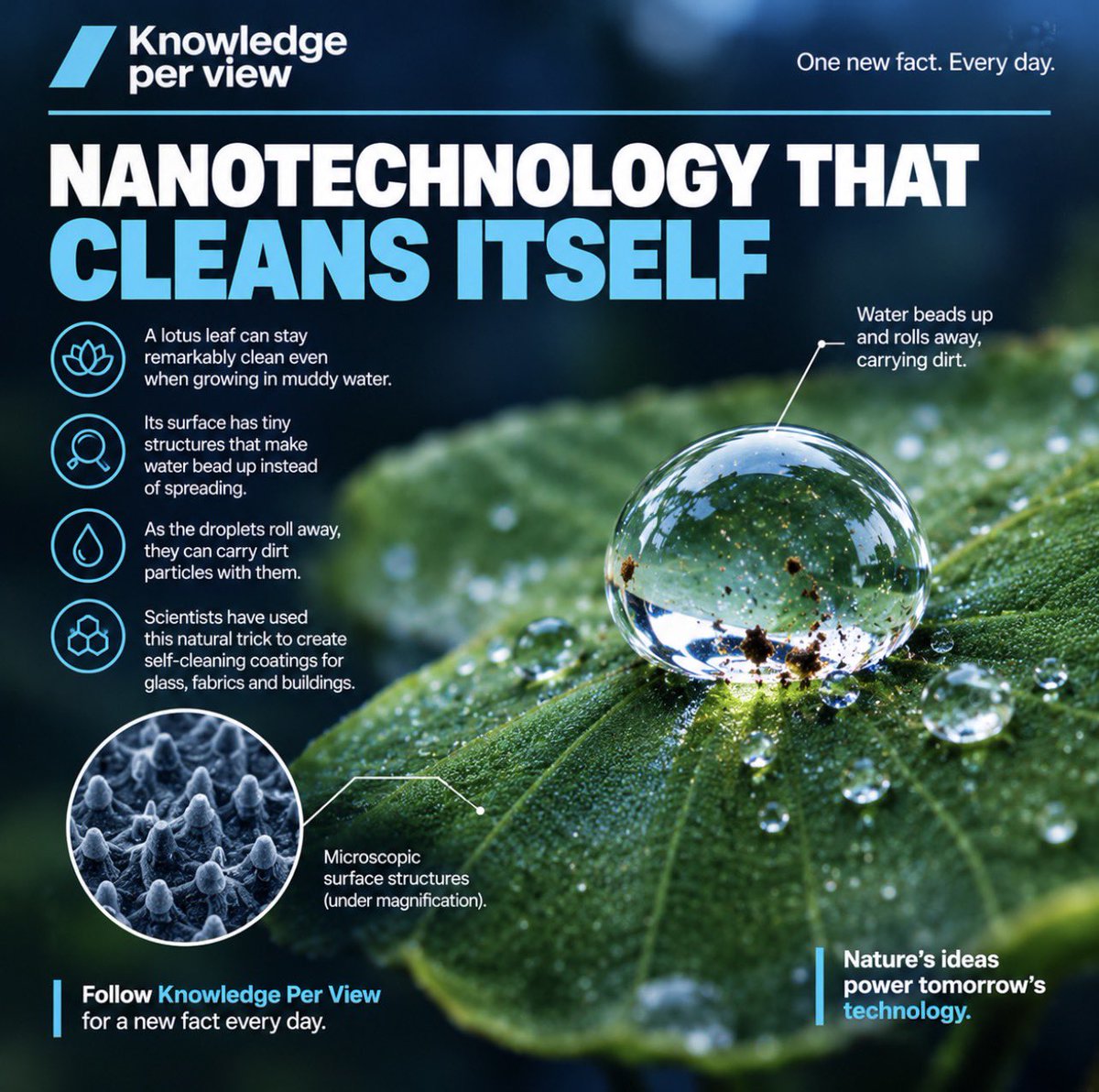
A lotus leaf’s microscopic surface structures help water droplets roll away with dirt, inspiring self-cleaning coatings in materials science.
Nanotechnology often takes its best ideas from nature.
Follow Knowledge Per View for a new fact every day. #Nanotechnology#Knowledgepv
Over 2,000 years ago, Greek engineers built a mechanical calculator using intricate bronze gears to track the Sun and Moon and predict eclipses
Meet the Antikythera Mechanism, often called the world’s first analogue computer.
Follow @KnowledgePV for new facts daily #AncientTech
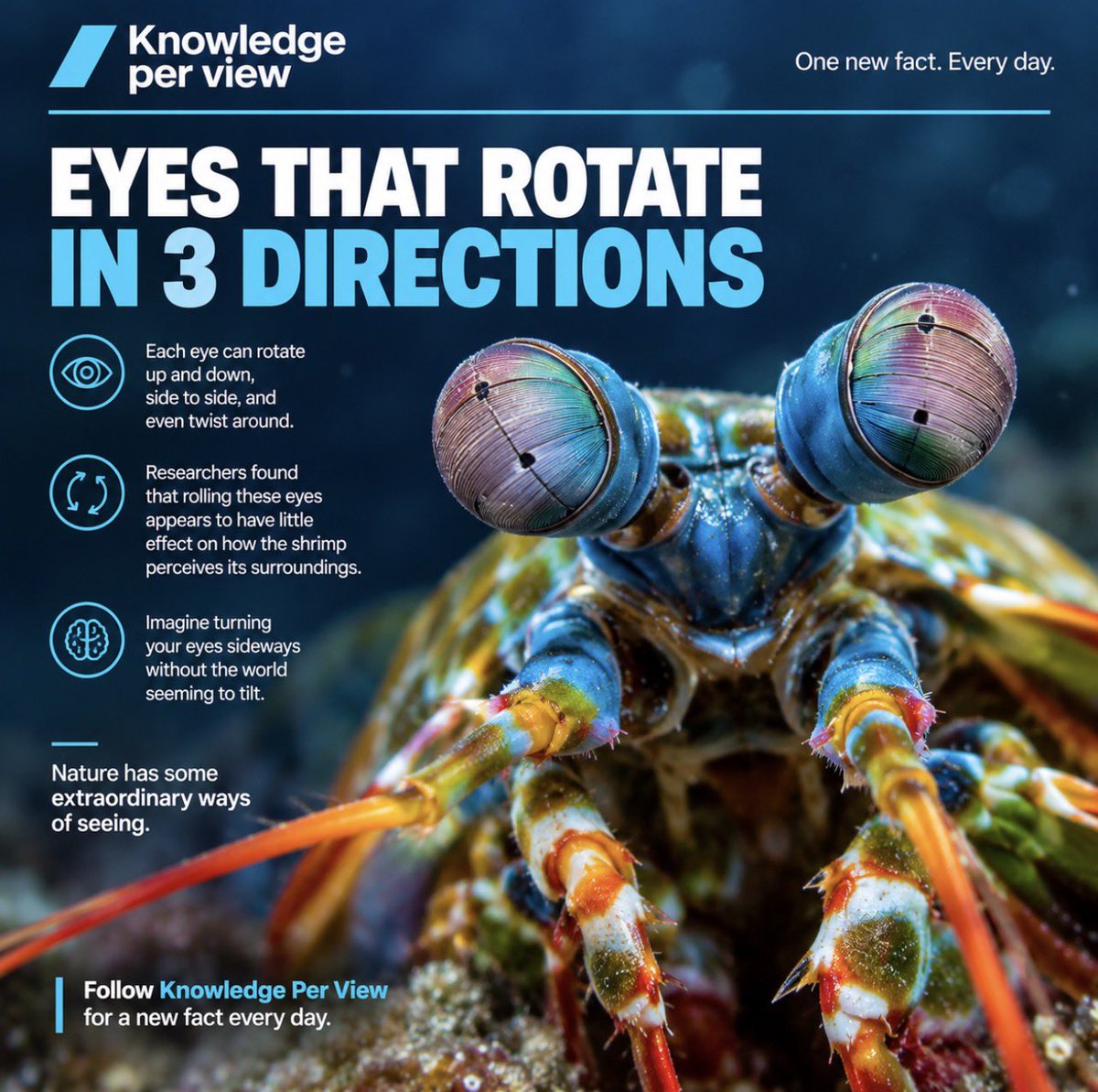
A mantis shrimp can rotate each eye in three directions, including a full twist, while its perception of the world stays remarkably stable.
Nature’s vision systems are stranger than we imagine.
Follow Knowledge Per View for a new fact every day. #Biology#animals#insects
AN ELEPHANT’S TRUNK HAS AROUND 1,000 WHISKERS.
Those tiny hairs do more than you might think.
Researchers studying elephant whiskers found that their unusual structure may help elephants sense touch and handle objects with remarkable precision.
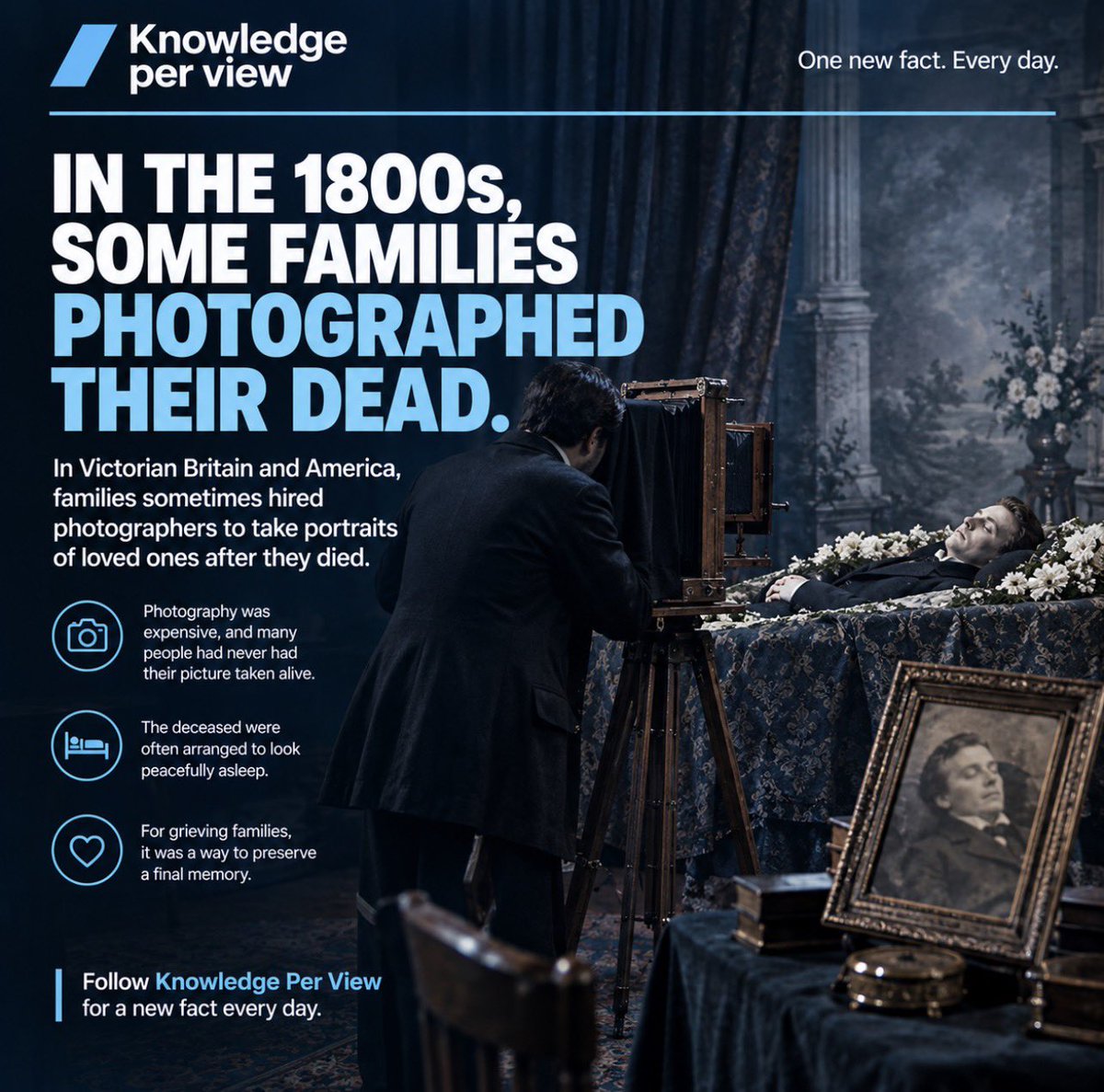
IN THE 1800s, SOME FAMILIES PHOTOGRAPHED THEIR DEAD.
In Victorian Britain and America, families sometimes hired photographers to take portraits of loved ones after they died.
Why? Photography was expensive, and many people had never had their picture taken while alive…1/2
A post-mortem portrait might be the family’s only photograph of that person.
The deceased were often arranged to look peacefully asleep. What seems unsettling today was, for grieving families, a way to preserve a final memory.
#HistoryFacts#PhotographyHistory#DidYouKnow