I realized now that if Claude, the environment that runs ai, etc., has specs can be verified overwhelmingly on the spot, so good results will be obtained.
How our Vision Pro VR rendering works:
1. Half-Life Alyx runs on Mac via GPTK
2. SteamVR is bypassed; custom OpenVR DLL dumps raw frames to shared memory
3. Mac VideoToolbox hardware-encodes to HEVC
4. NAL units stream via AWDL (P2P UDP) to Vision Pro!
I'm playing Half-Life: Alyx on my Mac with Apple Vision Pro. The screen still goes black, but I can see the image. My goal now is to get to the point where I can play it while it's projected onto the Apple Vision Pro.
As a weekend project, I will run the half-life:alyx of steam, which only works on windows x86, with a combination of MacBook Pro M1 Max 64GB and Apple Vision Pro I'm doing something like that. Currently, the game has been completed to the screen recording.
TALKIEPRESS is a website that generates fake news by having the model talkie-1930:13b, built on knowledge up to 1930, write the news. It operates with a memory consumption of 17GB through compression without causing the model to collapse.
Verantyx: An open-source macOS IDE for local AI agents.🚀
👁️ Visual Anchors: Injects image-based rules to stop hallucinations (Data: 2B models crash with >2 visual rules!)
🖱️ Bypasses WAF/BotGuard by synthesizing human biometric entropy via CGEvent.
Code👇
https://t.co/PiRE1JMidO
The auto mode is fully automated, using a secret ingredient to make the browser and mouse cursor move like a human. It's almost awe-inspiring to watch it operate on its own.
Initially, it was just a "colorless scream" that stopped due to an error. By continuously feeding it API specifications (knowledge fodder) manually (from an external source), the system learns a loop of "discomfort → exploration → stability."
This isn't a tool to make LLM write code. This is an ecosystem (Verantyx) for "nurturing" AI on my local PC. The project is gradually becoming my toy.
Hardcoding "emotions" into an AI won't give it life.
What's needed is a "physical void (tension)" in space. When concepts don't connect on JCross, the system detects it not as a "structural error" but as a "thirst for learning (thirst)." To heal its pain, it autonomously searches the web and expands its own neural network.
The inner workings of the UI, which we've named "Crucible (Alchemy Circle)."
In reality, the rendering layout engine (vx-layout) is completely separated from visual rendering and misused for organizing and annotating a distributed semantic space (memory).
By physically colliding "CSS concepts" and "RAG vectors," an unknown architecture emerges.
Throwing raw data into the cloud's frontier model is a recipe for hallucination and exorbitant API charges.
That's why I built a zero-trust wall in Rust called "Stealth-Storage-Actor." A local SLM strictly validates the JCross schema, and if it fails, the payload is completely discarded. Zero wasted cloud resources.
#Rust #Agentic
Are you guys still manually organizing project folders?
While I'm sleeping, my local Gemma 4 autonomously parses 512 files and conceptually compresses them not into simple text, but into a multidimensional spatial graph called "JCross." Vector DB cosine similarity? I don't use such outdated stuff.
#LocalLLM #AIArchitecture
We are currently developing a pak game that eats the mouth 👄.
•Working
The detection reflects the closed mouth in conjunction with the camera.
•Privacy consideration
No external data transmission
The video is under development.
The End of Multi-Monitor Setups.
We only crave more monitors because our OS is too "dumb" to understand our intent. We spend half our lives dragging windows and switching apps—that’s a legacy bottleneck of the Neumann architecture.
With Verantyx, the GUI as we know it becomes a "steam engine" of the past.
1️⃣ One Window (Omni-Input) 2️⃣ Semantic Dispatch (via .jcross) 3️⃣ Autonomous Synchronization
No more "where is the app?" Just "what is the intent?" We’re moving from Address-based to Semantic-based computing.
One bar. Total sync. Infinite reach.
#Verantyx #FutureOfComputing
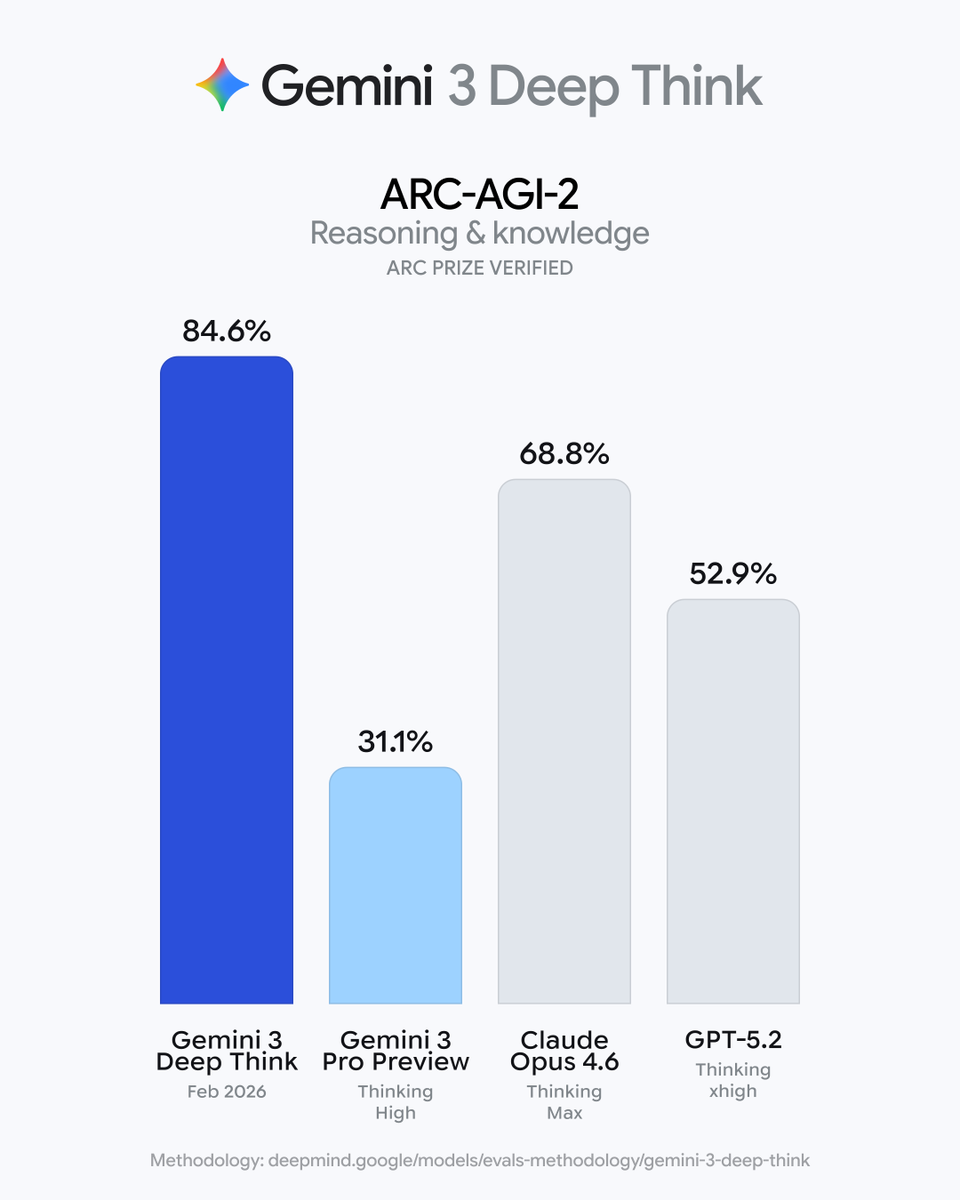
My homemade engine "Verantyx," which achieved a score of 84.0% on ARC-AGI-2, has received stars on GitHub from ARC researchers around the world.
I'm humbled that respected experts like leaderboard regulars KurSh and eunho, and neurosymbolic authority Eduardo Rubim are watching my work.
Although verification will take time due to the limitations of my machine's specs (a single M1 Max), I intend to further refine this logic engine.
@fchollet Just hit 82.6% on ARC-AGI-2 Public Eval with Claude Sonnet 4.5 + Verantyx hybrid symbolic engine — running on a MacBook at near-zero cost (~30s/task).
Outperforming Gemini 3.1 Pro's 77% semi-private score, only 2.4% away from the 85% Grand Prize.
GitHub : https://t.co/RCHfhCtgW3
Logic scaling beats compute scaling! 🚀
#ARCprize #SymbolicAI