In a striking experiment, completely sterilized soil, devoid of any detectable microbial life, continued to consume oxygen and release carbon dioxide for more than six years.
Biochemist Sébastien Fontaine and his team at the French National Institute for Agriculture, Food, and Environment subjected soil samples to intense gamma radiation to eliminate all living organisms. They expected biological respiration to cease entirely. Instead, the lifeless dirt kept “breathing.”
Microscopic analysis confirmed the complete absence of cellular life, yet the soil persistently consumed oxygen and emitted CO₂ inside sealed containers. This non-living respiration lasted for over six years.
The findings, published in Science Advances, suggest that key metabolic processes long considered exclusive to living cells can occur through purely geochemical mechanisms in soil. Soil particles appear capable of facilitating extracellular reactions that oxidize organic matter, essentially a form of metabolism without biology.
This discovery blurs the line between living and non-living chemistry and raises intriguing possibilities about the origins of life: some of the fundamental metabolic pathways that power modern organisms may have existed as natural geochemical processes on early Earth, long before the first cells emerged.
[Bouquet, C., Kéraval, B., Traikia, M., Alvarez, G., Perrière, F., Le Jeune, A.-H., Billard, H., Colombet, J., Revaillot, S., Fontaine, S., & Lehours, A.-C. (2025). Nonliving respiration: Another breath in the soil? Science Advances, 11(46), eadw9065. DOI: 10.1126/sciadv.adw9065]
Here is a video compilation from @React19org of Dr. Peter Marks’ comments to people suffering from COVID-19 injection adverse events.
Based on our report, do you think he was being honest with them?
The year is 1950. Your doctor lights a cigarette and tells you smoking is fine. He read it in a study. He is telling the truth about having read it. He does not know, or is not saying, that the study was funded by the tobacco industry.
The year is 1958. Your doctor tells you to eat less fat. The evidence is contested. The contestation is not in the public messaging. The food industry has been helpful in clarifying which findings deserve attention. Some researchers who published contradictory data have been quietly defunded. Ancel Keys is on the cover of Time magazine.
The year is 1962. Your doctor prescribes thalidomide to your pregnant wife for morning sickness. It has been approved. The FDA gave it the green light in Europe. Twelve thousand children will be born with severe limb malformations before anyone in an official capacity acknowledges the problem. The families are told the drug was safe. The drug was approved. Both of these things remain true.
The year is 1972. Your doctor prescribes Valium. Britain is in the grip of a benzodiazepine wave that will last two decades. The dependency risk is known internally. It is not shared. Your doctor is not lying to you. He was not told either.
The year is 1999. Your doctor prescribes Vioxx for your arthritis. It is newer than ibuprofen, well-tolerated, and Merck has a study showing it works. Merck also has internal data suggesting it roughly doubles the risk of heart attack. This data will not reach your doctor for four more years. Fifty thousand people are estimated to have died in the interim. Merck eventually settles for 4.85 billion dollars. No criminal charges are brought.
The year is 2002. Your doctor prescribes OxyContin. Purdue Pharma trained its sales representatives to tell doctors the addiction risk was less than one percent. That figure came from a letter, not a study. The letter was about patients with terminal cancer on short-term doses in hospital settings. Your doctor is a GP with a patient who has a bad back. Nobody draws a distinction. Nobody is required to.
The year is 2008. Your doctor checks your cholesterol. Your LDL is elevated. You are prescribed a statin. Nobody mentions that the number needed to treat for primary prevention is approximately 250. Nobody mentions that the muscle deterioration you'll notice over the next two years is listed as a rare side effect rather than a documented pattern affecting a meaningful percentage of patients. The trial that informed the prescription was funded by the manufacturer.
Now it is today.
Your doctor has new guidelines. New studies. New consensus.
He is confident.
He has always been confident.
The confidence has never been the problem.
The confidence is, in fact, precisely the problem.
1/ Malignant narcissism
“Malignant narcissism is a variant of narcissistic personality that has gained public attention in recent years. It is, in fact, the intersection of narcissistic personality and antisocial-psychopathic personality, blending the characteristics of both.
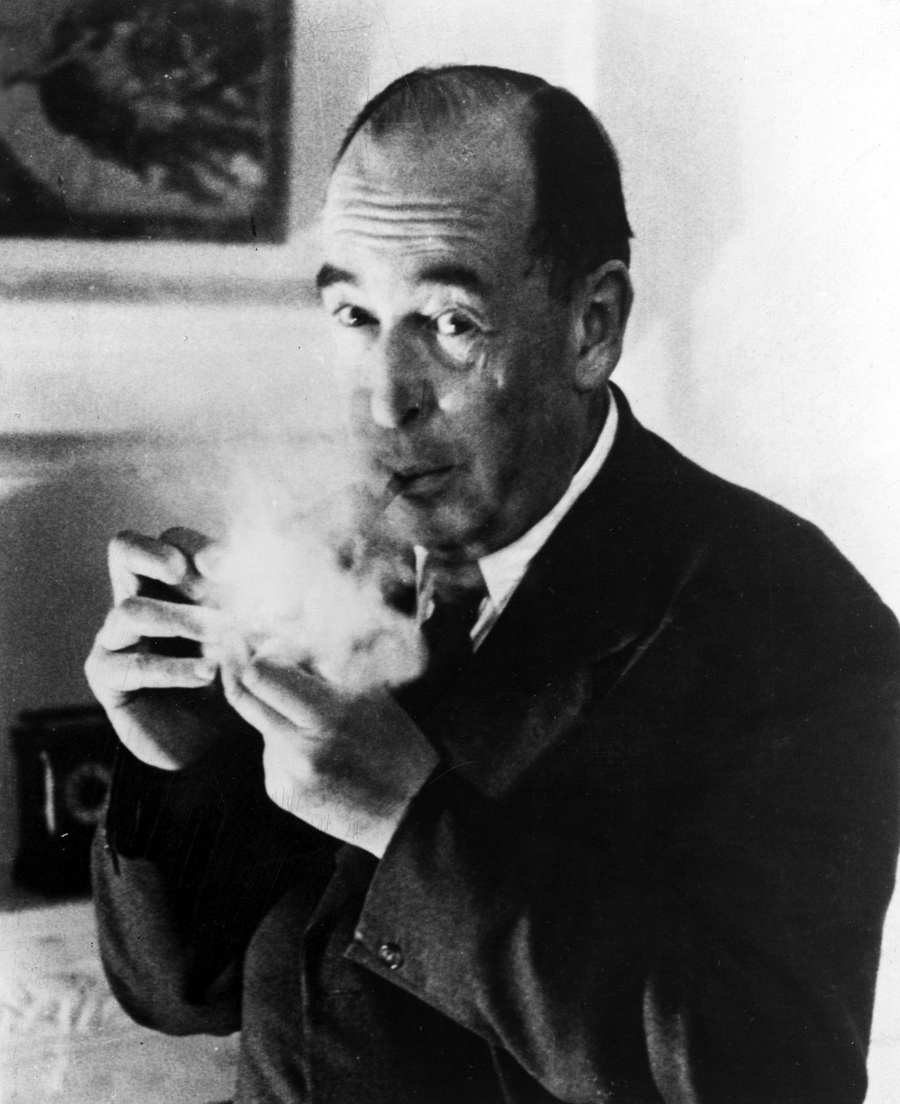
Did you know C.S. Lewis predicted the modern obsession with “being nice” would destroy the soul?
In The Abolition of Man, Lewis argues that when a society stops believing in objective virtue, it doesn’t become tolerant… it becomes manipulable.
He calls the result “men without chests.”
People with appetites and intellects, but no courage, no honor, no trained moral instincts. They can calculate everything and defend nothing.
Lewis saw that once we reject inherited moral law, we don’t become free. We become raw material… easily shaped by propaganda, pleasure, and fear.
Modern man prides himself on compassion while quietly surrendering every standard that once gave compassion meaning.
Lewis’s insight is brutal: a civilization that educates clever cowards will eventually be ruled by tyrants or technicians.
Because when nothing is worth dying for, everything becomes negotiable… including human dignity.
The Amazon Makes Its Own Rain
Every day, billions of trees in the Amazon pull water from the soil and release it into the air through their leaves. This process, called transpiration, sends enormous amounts of water vapor into the atmosphere. Together with moisture that evaporates from rivers and wet leaves, the forest adds huge quantities of water to the sky above it.
As this moist air rises, it cools and forms clouds, which then fall back to Earth as rain. Much of the rain that falls on the Amazon is actually recycled water that the forest itself put into the air earlier. This allows the rainforest to stay wet even far from the ocean.
But the impact doesn’t stop there. Winds carry this moisture away from the Amazon in invisible streams sometimes called “flying rivers.” These airborne rivers move water vapor across South America, helping bring rain to farms, grasslands, and cities thousands of miles away- including regions that grow food for millions of people.
When large areas of forest are cut down, this water-cycling system weakens. Fewer trees means less water vapor, fewer clouds, and less rainfall. Over time, this can lead to drier climates, droughts, and reduced crop growth.
The Amazon doesn’t just respond to rain- it creates it. By protecting the rainforest, we are also protecting the rainfall that supports life far beyond its borders.
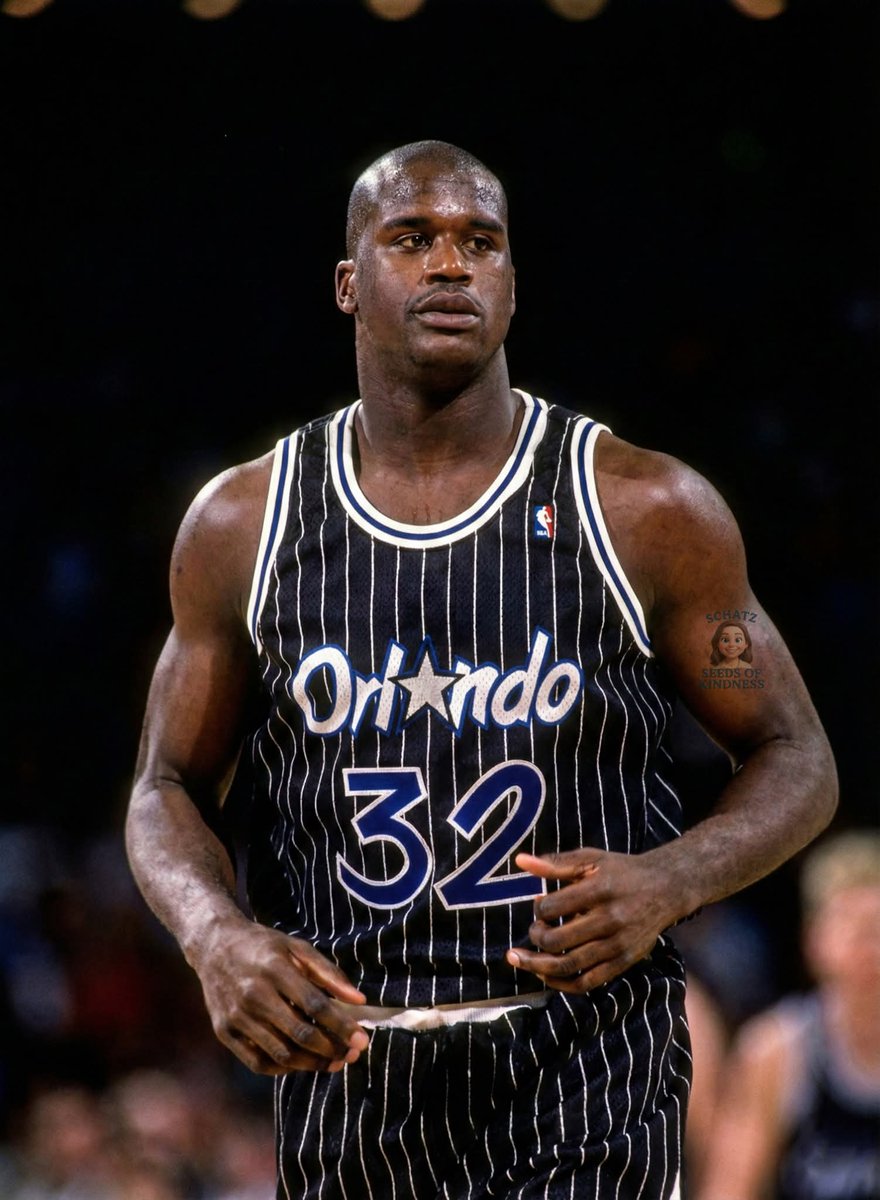
Shaquille O'Neal said, “My stepdad was a sergeant in the army—a serious, strong man of character. We had an excellent relationship.
I once played at Madison Square Garden against the New York Knicks in my first season in the National Basketball Association. I had a terrible game.
Afterward, he called me and asked why I played so badly. He wondered if it was the pressure of facing Patrick Ewing and the Knicks. I told him I felt pressure. He said, “Tomorrow, I want you home at 7:00 AM. Pick me up—we're going to see a family that has no home.”
On the way, we encountered a family in need. My stepdad stopped, gave them money for their next meal, and said, “That’s pressure. You have everything; you’re weak. There’s no pressure in playing basketball and earning millions of dollars. Real pressure is felt by those who don’t know when or where their next meal will come from.” He told me to get out and help that family.
I got out and saw a man with his wife and two children who had just lost their home. The man was looking for work. He told me he was cutting grass. I called a friend and asked him to get this man a job. I called another friend and said I needed an apartment for a family of four, promising to send a check the next day. They needed help.
After that, I never felt pressure in a basketball game again because that family had real pressure.”
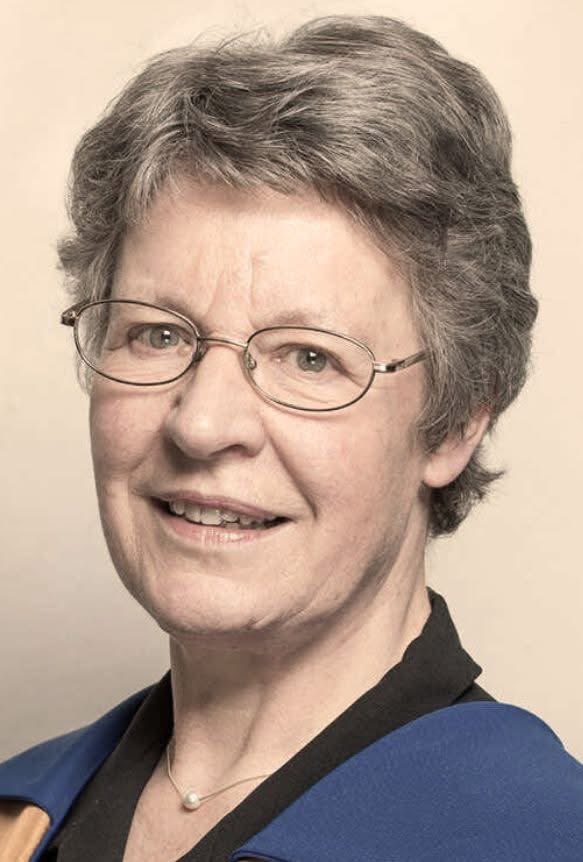
She kept finding women in laboratory photographs from the 1800s. Then she read the published papers—and every single woman had vanished. Someone had erased them from history.
Yale University, 1969.
Margaret Rossiter was a graduate student studying the history of science. She was one of very few women in her program.
Every Friday afternoon, students and faculty gathered for beers and informal conversation. One week, Margaret asked a simple question: "Were there ever any women scientists?"
The faculty answered firmly: No.
Someone mentioned Marie Curie. The group dismissed it—her husband Pierre really deserved the credit.
Margaret didn't argue. But she also didn't believe them.
So she started looking.
She found a reference book called "American Men of Science"—essentially a Who's Who of scientific achievement. Despite the title, she was shocked to discover it contained entries about women. Botanists trained at Wellesley. Geologists from Vermont.
There were names. There were credentials. There were careers.
The professors had been wrong.
But Margaret's discovery was just the beginning. Because as she dug deeper into archives across the country, she found something far more disturbing.
Photograph after photograph showed women standing at laboratory benches, working with equipment, listed on research teams.
But when she read the published papers, the award citations, the official histories—those same women had disappeared. Their names were missing. Their contributions erased.
It wasn't random. It was systematic.
Women who designed experiments watched male colleagues publish results without giving them credit. Women whose discoveries were assigned to supervisors. Women listed in acknowledgments instead of as authors. Women passed over for awards that went to male collaborators who contributed far less.
Margaret realized she was witnessing a pattern that stretched across centuries.
Women had always been present in science. The record had simply pushed them aside.
She needed a name for what she was documenting.
In the early 1990s, she found it in the work of Matilda Joslyn Gage—a 19th-century suffragist who had written about this exact phenomenon in 1870.
In 1993, Margaret published a paper formally naming it: The Matilda Effect.
The term captured something that had been hidden in plain sight for generations. Once you knew the term, you saw it everywhere.
Her dissertation became a lifelong mission.
For more than 30 years, Margaret researched and wrote her landmark three-volume series: Women Scientists in America. She examined letters, institutional policies, individual careers. She gathered undeniable evidence that women in science had been consistently under-credited and structurally excluded.
Her work faced resistance. Many dismissed women's history as political rather than academic. Others insisted she was exaggerating.
Margaret didn't argue emotionally. She presented data. Documented cases. Patterns repeated across decades and institutions.
Eventually, the evidence became undeniable.
Her research helped restore recognition to scientists who had been erased:
Rosalind Franklin, whose X-ray work revealed DNA's structure—credit went to Watson and Crick.
Lise Meitner, who explained nuclear fission—omitted from the Nobel Prize.
Nettie Stevens, who discovered sex chromosomes—received little credit.
Cecilia Payne-Gaposchkin, who discovered stars are made of hydrogen—initially dismissed.
And countless others whose names had nearly vanished.
Margaret changed the narrative. Science was no longer just the story of solitary male geniuses. It became a story of collaboration that included women who had been written out.
The Matilda Effect became standard terminology. Scholars used it to examine how credit is assigned, how authors are listed, who receives awards, who gets left out.
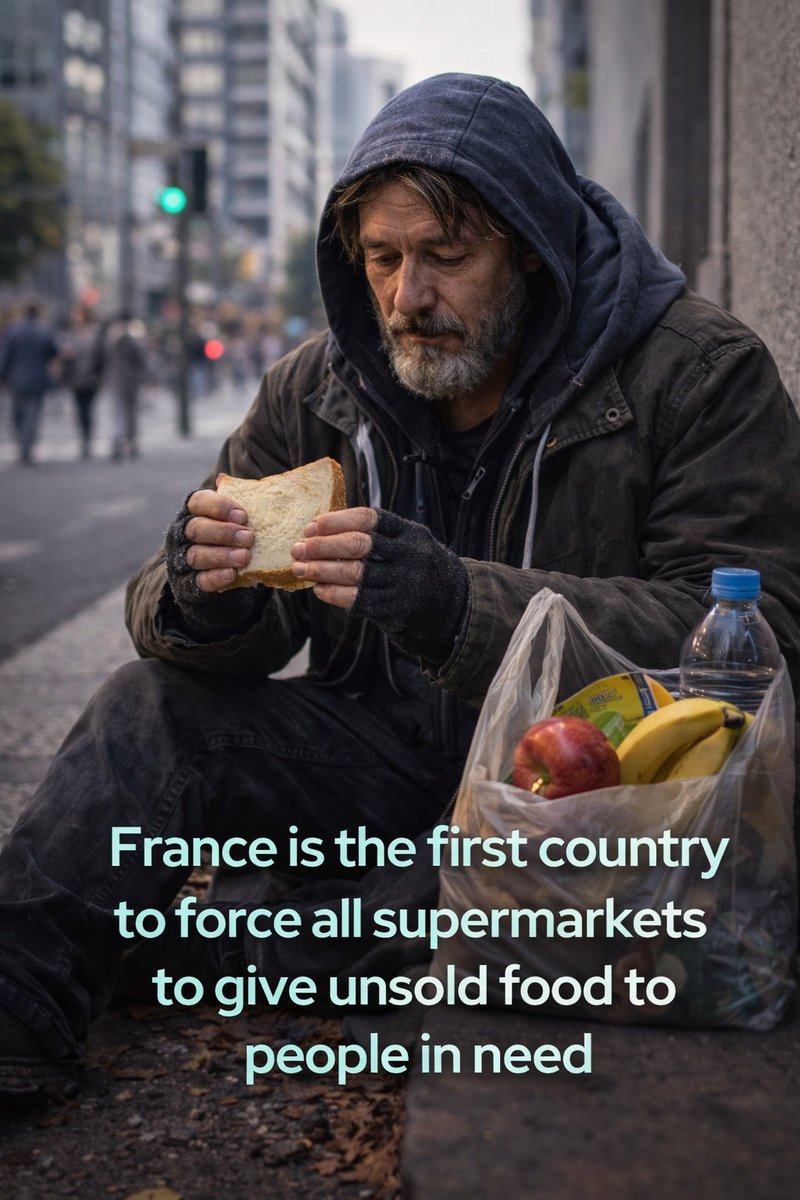
France made it illegal for supermarkets to throw away edible food.
In 2016, France became the first country to require large supermarkets to donate unsold food instead of destroying it. The law applies to stores larger than about 4,305 square feet (400 square meters), which must partner with charities to redistribute food that is still safe to eat.
The policy was introduced to address a growing contradiction: while millions of people experience food insecurity, large amounts of perfectly edible food were being discarded every year. In some cases, supermarkets even poured bleach on food in dumpsters to prevent people from taking it.
Under the law, supermarkets are prohibited from deliberately spoiling unsold food. Edible products must be donated to charities and food banks so they can reach people in need, while food that is no longer suitable for human consumption can be redirected to animal feed or composting.
Food waste remains a major global issue. France generates about 7.1 million tons (6.4 million metric tonnes) of food waste annually, while worldwide roughly 2.9 trillion pounds (1.3 billion metric tonnes) of food are wasted each year.
The legislation is part of a broader national goal to cut food waste in half, supported by education campaigns in schools and businesses and changes across food supply chains.
Supporters say the law helps address both environmental damage and food insecurity, while critics argue it does not fully tackle the deeper problem of overproduction in the global food system.
Since the law was introduced, several European countries have explored similar policies to reduce waste and redirect edible food.
It leaves an important question for the rest of the world: if food is still edible, should it ever be thrown away?
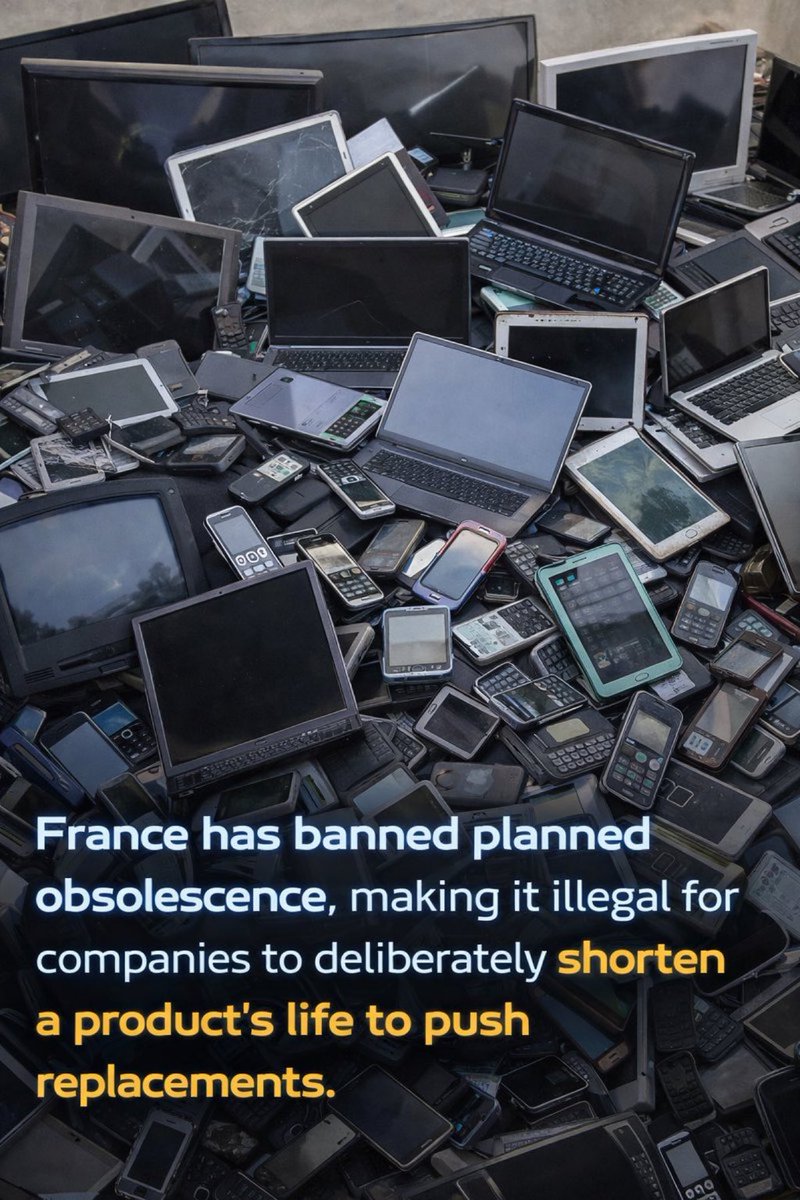
France has taken a bold step by making planned obsolescence a criminal offense — meaning companies can now be punished for intentionally designing products to wear out early.
If manufacturers deliberately create electronics or appliances that fail sooner than they should- whether through weak hardware, software updates that slow devices, or other built-in limitations, they can face serious consequences. Penalties include up to two years in prison and fines of €300,000, or as much as 5% of a company’s annual revenue in major cases.
The law grew out of France’s consumer-protection efforts and was strengthened after investigations into phone slowdowns revealed how software could be used to push people into buying replacements.
But this isn’t just about punishment. It’s part of France’s wider “right to repair” movement, which aims to reduce electronic waste, stop hidden forced upgrades, and encourage companies to make products that last longer and can be repaired more easily.
By cracking down on disposable-by-design goods, France is sending a strong signal to manufacturers worldwide: build products to last. The goal is a more sustainable system where items are repaired instead of replaced helping both consumers and the planet.
The BBC just released a new adaptation of Lord of the Flies, the classic novel by William Golding. It's beautifully made, but it's still telling the wrong story.
A few years ago, I went looking for the *real* Lord of the Flies. I wanted to know: has it ever actually happened? Have kids ever been shipwrecked on a deserted island?
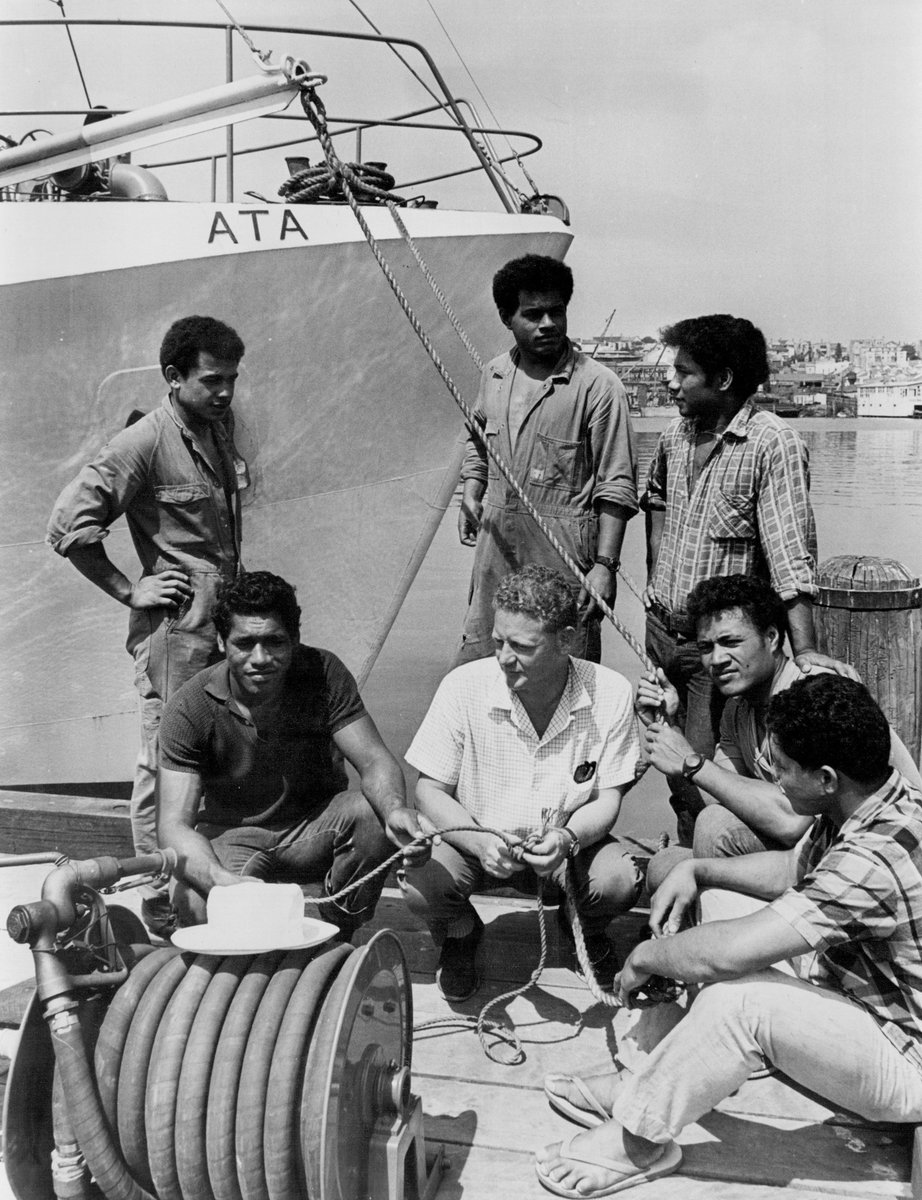
It took me a year of research, but I found it. In 1965, six boys from a boarding school in Tonga stole a boat, got caught in a storm, and drifted for eight days without food or water. They washed up on 'Ata, a remote, uninhabited island in the Pacific. They stayed there for 15 months, and what happened on that island was the exact opposite of William Golding's novel.
These boys set up a small commune. They built a food garden, stored rainwater in hollowed-out tree trunks, created a gym with improvised weights, and built a badminton court. One of them, Stephen (who would later become an engineer) managed to start a fire using two sticks. They kept it burning the entire time.
Of course they fought too. But then they argued, they had a rule: go to opposite ends of the island, cool down, then come back and apologize. As one of them told me: ‘That's how we stayed friends.’
Back home, everyone assumed that the boys – Luke, Stephen, Sione, David, Kolo and Mano — were dead. When they were finally discovered by an Australian captain named Peter Warner, he radioed their names to Tonga. After twenty minutes, a tearful response came back: ‘You found them! These boys have been given up for dead. Funerals have been held. If it's them, this is a miracle!’
Peter commissioned a new ship, hired all six boys as his crew, and named the boat the Ata, after the island where he found them. They remained friends for the rest of their lives – Peter and Mano even became soulmates. I tracked them down, and it became one of the central chapters of my book Humankind.
Here's what struck me most: William Golding (the author of Lord of the Flies) was a troubled man, an alcoholic who once said ‘I have always understood the Nazis, because I am of that sort by nature.’ I think he was projecting his own darkness onto children. And we turned it into a lesson about human nature that we teach to millions of kids around the world.
I think the real lesson is the opposite. When real children found themselves alone on a real island, they didn't descend into savagery. They cooperated, they took care of each other, they survived.
I'm not saying that the Tongan castaways were representative of all kids everywhere. But I am saying that every kid who has to read or watch the fictional Lord of the Flies also deserves to know what actually happened when it played out in real life.
Stories are never just stories. We become the stories that we tell ourselves.
No internet? No cellular signal? No worries—stay connected with a revolutionary new app.
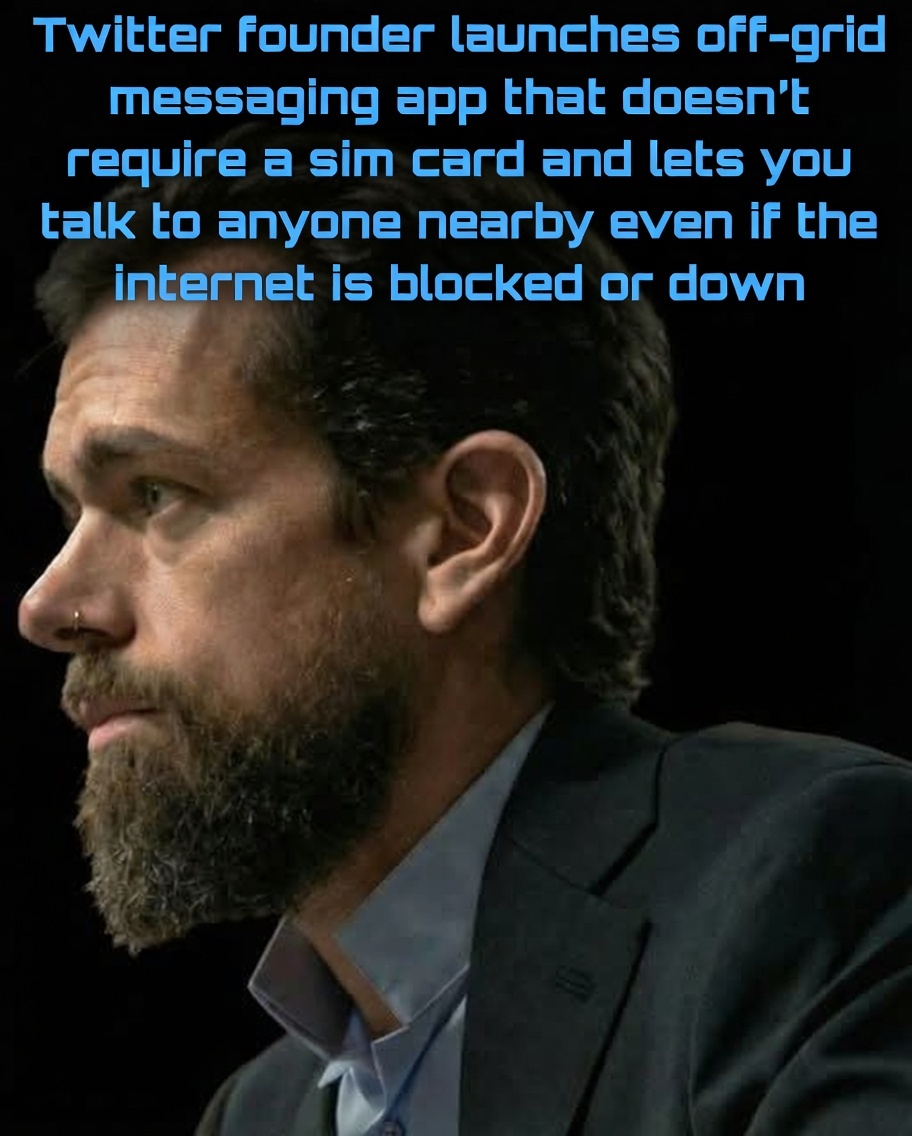
Jack Dorsey, co-founder of Twitter (now X) and Block, has launched Bitchat, a fully decentralized, peer-to-peer messaging platform that operates completely off-grid, without needing internet access, cellular service, phone numbers, emails, accounts, or central servers.
Currently available in beta via Apple's TestFlight (and with an Android version in development), Bitchat leverages Bluetooth Low Energy (BLE) mesh networking to enable direct device-to-device communication. Nearby phones automatically form ad-hoc networks, relaying encrypted messages hop-by-hop across multiple devices—extending range far beyond standard Bluetooth limits through a "store-and-forward" system where messages persist locally until delivered.
This design makes Bitchat highly resilient: it shines in scenarios like internet blackouts, network shutdowns, remote wilderness areas, crowded events (e.g., concerts or protests), or even airplanes without Wi-Fi. All data stays on users' devices, with end-to-end encryption ensuring privacy and no central entity collecting information.
By turning everyday smartphones into a self-sustaining communication mesh, Bitchat embodies a push toward user-controlled, censorship-resistant infrastructure—an off-grid alternative to apps like WhatsApp that keeps working precisely when traditional networks fail.
This bird issued Mob-like threats in a Mob-like voice to all America and America is so soft and supine that it not only let him it celebrated him.
Well, not all of America did, but a lot of it did.
Freaky.
Terrifying.
@WUTangKids My son is in remission from Bipolar I with a medically supervised ketogenic diet. We started a foundation to fund research and provide clinical and public education. You can learn more at https://t.co/ZdcZy9YnOF. Dr. Chris Palmer was the physician we worked with.
🚨BREAKING: Robert F Kennedy Jr announced it is official. Mercury is REMOVED from all vaccines.
“Now that America has removed mercury from all vaccines, I call on every global health authority to do the same”
Do you support this?
YES or NO?
IF Yes, Give me a THUMBS-UP👍!
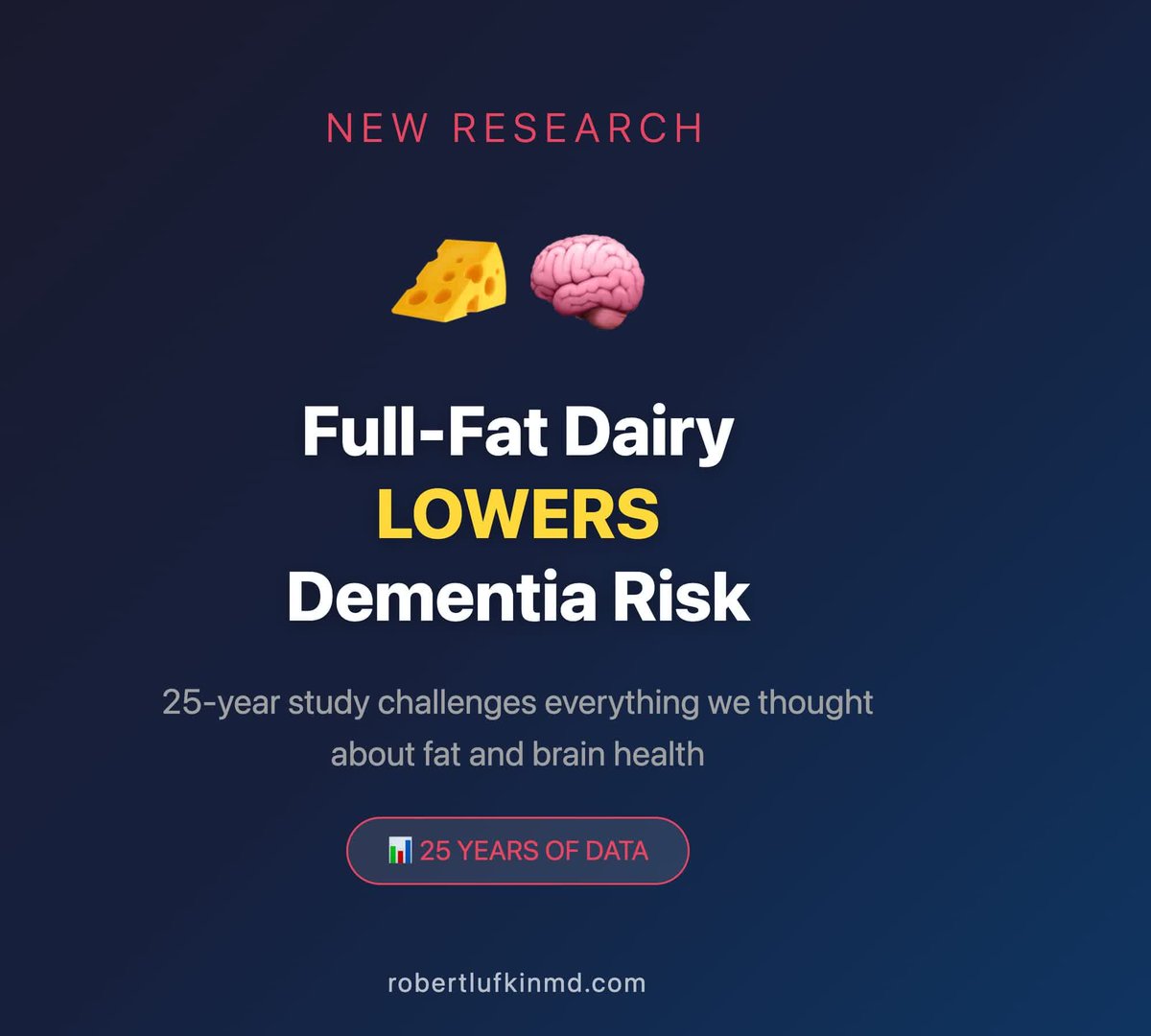
🧀 Everything we thought we knew about fat and brain health might be wrong.
A massive 25-year study just dropped a truth bomb:
People who ate MORE full-fat cheese and cream had LOWER dementia risk.
Not marginal. Not insignificant. LOWER.
(Remember this is association and not causation.)
For decades, we've been told:
→ "Cut the fat"
→ "Choose low-fat dairy"
→ "Saturated fat = brain enemy"
Turns out, the brain LOVES fat.
Your brain is ~60% fat. It needs the right building blocks.
Full-fat dairy provides:
• Vitamin K2 (protects neurons)
• Omega-3s (anti-inflammatory)
• Saturated fats for cell membrane integrity
The low-fat craze may have been a 40-year mistake.
Does this mean go crazy on cheese? No.
But it DOES mean:
✅ Stop fearing whole foods
✅ Quality matters more than fat %
✅ Real food beats processed "low-fat" every time
The science is shifting.
Are you paying attention?
🔗 https://t.co/UfxDTERXKp



![Rainmaker1973's tweet photo. In a striking experiment, completely sterilized soil, devoid of any detectable microbial life, continued to consume oxygen and release carbon dioxide for more than six years.
Biochemist Sébastien Fontaine and his team at the French National Institute for Agriculture, Food, and Environment subjected soil samples to intense gamma radiation to eliminate all living organisms. They expected biological respiration to cease entirely. Instead, the lifeless dirt kept “breathing.”
Microscopic analysis confirmed the complete absence of cellular life, yet the soil persistently consumed oxygen and emitted CO₂ inside sealed containers. This non-living respiration lasted for over six years.
The findings, published in Science Advances, suggest that key metabolic processes long considered exclusive to living cells can occur through purely geochemical mechanisms in soil. Soil particles appear capable of facilitating extracellular reactions that oxidize organic matter, essentially a form of metabolism without biology.
This discovery blurs the line between living and non-living chemistry and raises intriguing possibilities about the origins of life: some of the fundamental metabolic pathways that power modern organisms may have existed as natural geochemical processes on early Earth, long before the first cells emerged.
[Bouquet, C., Kéraval, B., Traikia, M., Alvarez, G., Perrière, F., Le Jeune, A.-H., Billard, H., Colombet, J., Revaillot, S., Fontaine, S., & Lehours, A.-C. (2025). Nonliving respiration: Another breath in the soil? Science Advances, 11(46), eadw9065. DOI: 10.1126/sciadv.adw9065]](https://pbs.twimg.com/media/HJ43mxNWcAEa0QE.jpg)