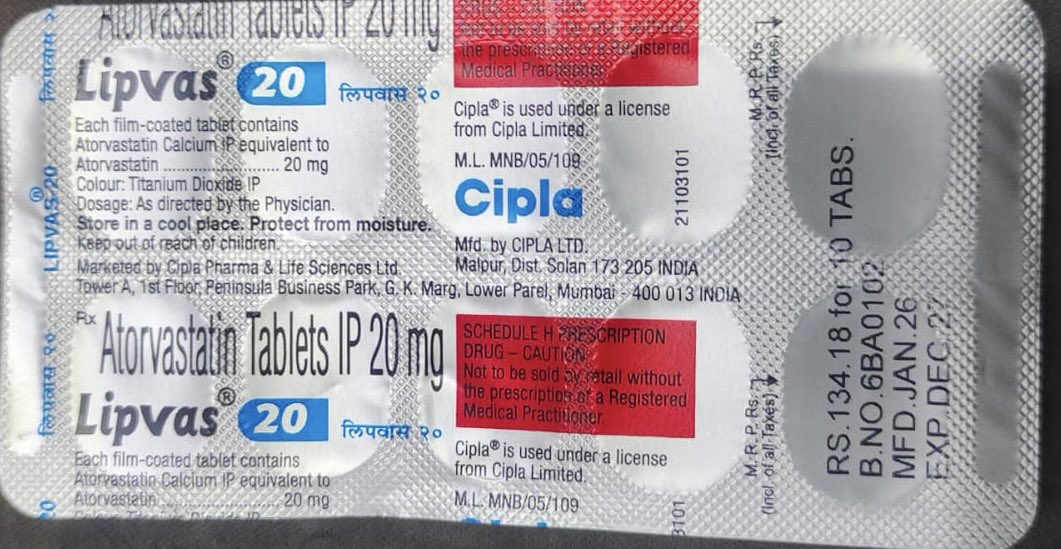
Dear Supreme Court,
This is just one example.
Lipvas 20 is a generic Atorvastatin (statin) for cholesterol. MRP is ₹134 for 10 tablets, but wholesalers get it at only ₹29–30. The price then becomes ₹134 for the customer.
Medicines are not bought for luxury or to feel good. People buy them only because it is a compulsion. Such huge margins on essential medicines should be stopped.
📣 The Jetpack Compose and internals course is the materialization of all my explorations to write the Jetpack Compose internals book, and based on my experience so far working with it professionally.
🗓️ Next cohort starts in April 1st.
The course has around 8 weeks worth of content and teaches you Compose from scratch while you also master its internals. You can consume it at your own pace or follow the group registered to the same cohort.
It covers 👇
🌟 Architectural layering. Libraries involved in Compose, their purpose, how they work together
🌟 Composable functions in depth. Their properties. New language features enabled by Compose
🌟 Approaches to integrate in existing codebases
🌟 How Compose builds and updates the node tree
🌟 The Composition and the slot table
🌟 Working with Compose previews
🌟 User interaction
🌟 Lazy lists
🌟 The modifier system
🌟 Writing custom modifiers
🌟 The Modifier.Node api
🌟 Layout and draw modifiers in depth
🌟 Writing custom layouts
🌟 Writing custom lazy layouts
🌟 Composition, measuring and drawing phases
🌟 Writing custom measure policies
🌟 Intrinsic measuring
🌟 Subcomposition and SubcomposeLayout
🌟 LookaheadLayout
🌟 CompositionLocals, recommendations on when to use them.
🌟 Runtime support for any node types
🌟 Providing different node types, node types in Compose UI, working with multiple node types in the same tree via Subcomposition
🌟 The list of changes for the tree as a result of the composition and recomposition process
🌟 How and when changes are applied to the tree and finally visible on screen (materialized)
🌟 Appliers, how and when to create them when writing Compose client libraries
🌟 How and when Composition is created and provided to the runtime
🌟 Theming system, how to organize themes in real projects
🌟 Colors, how to organize them
🌟 Dark mode and dynamic theming
🌟 Typographies and shapes
🌟 Extending material themes
🌟 Creating fully custom themes
🌟 Nested themes, overriding theme properties
🌟 Snapshots, how to work with them
🌟 The snapshot state system as a mechanism for state isolation and change propagation
🌟 Compose state in depth
🌟 Monitoring recompositions
🌟 UI state. How to model it and where to put it
🌟 Architecture tips around Jetpack Compose
🌟 State holders and working with ViewModels
🌟 Config changes and process death
🌟 Derived state
🌟 Observable state adapters for widely used 3rd party data types
🌟 The Composable lifecycle
🌟 Side effects in Compose, how to approach them safely. Lifecycle-aware effects
🌟 All the effect handlers. Detailed explanations on how and when to use each
🌟 Dealing with Android resources, how to organize them
🌟 Animations in depth
🌟 Navigation in Compose apps
🌟 Dependency injection in Compose apps
🌟 UI testing in Compose apps, screenshot testing
🌟 Semantic trees
...and more.
There is a limited number of seats available. Help with a retweet or a quote and you might win a FREE seat for this brand new edition 💯🚀
Find all the details in https://t.co/iOSuShOc5i
I'll be looking for a new job to start in January. Feel free to reply or DM if you think I could help your team in any way.
Also: RT this and you might win a free seat for the next Compose and internals course edition, likely starting in January 🔥
📣 The Jetpack Compose and internals cohort course is the materialization of all my explorations to write the Jetpack Compose internals book.
It starts in Sept 1, registrations closing very soon. The course has around 8 weeks worth of content and teaches you Compose from scratch while you also learn about its internals. You can consume it at your own pace or follow the group registered to the same cohort.
It covers 👇
🌟 Architectural layering. Libraries involved in Compose, their purpose, how they work together
🌟 Composable functions in depth. Their properties. New language features enabled by Compose
🌟 Approaches to integrate in existing codebases
🌟 How Compose builds and updates the node tree
🌟 The Composition and the slot table
🌟 Working with Compose previews
🌟 User interaction
🌟 Lazy lists
🌟 The modifier system
🌟 Layout and draw modifiers in depth
🌟 Writing custom layouts
🌟 Writing custom lazy layouts
🌟 Composition, measuring and drawing phases
🌟 Writing custom measure policies
🌟 Intrinsic measuring
🌟 Subcomposition and SubcomposeLayout
🌟 LookaheadLayout
🌟 CompositionLocals, recommendations on when to use them.
🌟 Runtime support for any node types
🌟 Providing different node types, node types in Compose UI, working with multiple node types in the same tree via Subcomposition
🌟 The list of changes for the tree as a result of the composition and recomposition process
🌟 How and when changes are applied to the tree and finally visible on screen (materialized)
🌟 Appliers, how and when to create them when writing Compose client libraries
🌟 How and when Composition is created and provided to the runtime
🌟 Theming system, how to organize themes in real projects
🌟 Colors, how to organize them
🌟 Dark mode and dynamic theming
🌟 Typographies and shapes
🌟 Extending material themes
🌟 Creating fully custom themes
🌟 Nested themes, overriding theme properties
🌟 Snapshots, how to work with them
🌟 The snapshot state system as a mechanism for state isolation and change propagation
🌟 Compose state in depth
🌟 Monitoring recompositions
🌟 UI state. How to model it and where to put it
🌟 Architecture tips around Jetpack Compose
🌟 State holders and working with ViewModels
🌟 Config changes and process death
🌟 Derived state
🌟 Observable state adapters for widely used 3rd party data types
🌟 The Composable lifecycle
🌟 Side effects in Compose, how to approach them safely. Lifecycle-aware effects
🌟 All the effect handlers. Detailed explanations on how and when to use each
🌟 Dealing with Android resources, how to organize them
🌟 Animations in depth
🌟 Navigation in Compose apps
🌟 Dependency injection in Compose apps
🌟 UI testing in Compose apps, screenshot testing
🌟 Semantic trees
🌟 Intro to Compose multiplatform
...and more.
There are still a few seats available. Help with a retweet or a quote and you might win a new free seat for this edition 💯
Find all the details in https://t.co/OD2JuwFQK1
✈️ Take a look at what it's like to be a GDE — and get a glimpse into Google's Malaysia office!
Android #GDE Hassan Abid traveled from Singapore to speak at Kuala Lumpur's I/O Extended event. Thank you for sharing your experience @devhassan80!
@Flipkart My order got canceled by the seller 17 days ago as the product was not available and I did not receive the refund as the product was received by the seller after it was canceled.
I don't understand the logic
@flipkartsupport
ONE month to go until #GoogleIO! Are you ready? 😎
Join communities around the world on May 10th:
🚀 Collaboration
✨ Networking
👥 Meetups
🥳 and more!
Register here → https://t.co/xDieuchHa5
🚨Introducing https://t.co/W6XN79l2kj 🚨
Ever wondered how often popular apps on Google Play release their apps?
Analyse release strategies of your favourite apps in one place!
#AndroidDev
Today, I created and open-sourced Android developer roadmap 🗺️ for all Android levels 🎉 that should help you to get started on your journey to becoming an Android Developer
Link to the roadmap 🗺️ 👉🏻 https://t.co/Sg5bCt6V8L
#android#learning#AndroidDev#roadmap
#Java performance tip: Instantiate collection only if you are sure that your are going to add objects to it. If you need empty collection, use Collections.emptyList/Map/Set();
Performance difference is up to 15x.
11 ways ChatGPT saves me hours of work every day, and why you'll never outcompete those who use AI effectively.
A list for those who write code:
1 of 16
We are looking for UX Designer to help us design the MVP of a FinTech product. If you are looking to work with a top notch tech and product team from the FinTech industry to build a data intelligence driven application to manage aspirations, then please ping.
7 reasons my 1st startup failed:
1. Started too big
2. In an industry I didn't know
3. Didn't have a marketing plan
4. Didn't understand the users
5. Focused way too much on startup contests and PR
6. Focused on VC money and not getting users to pay
7. Hired too much
Do better