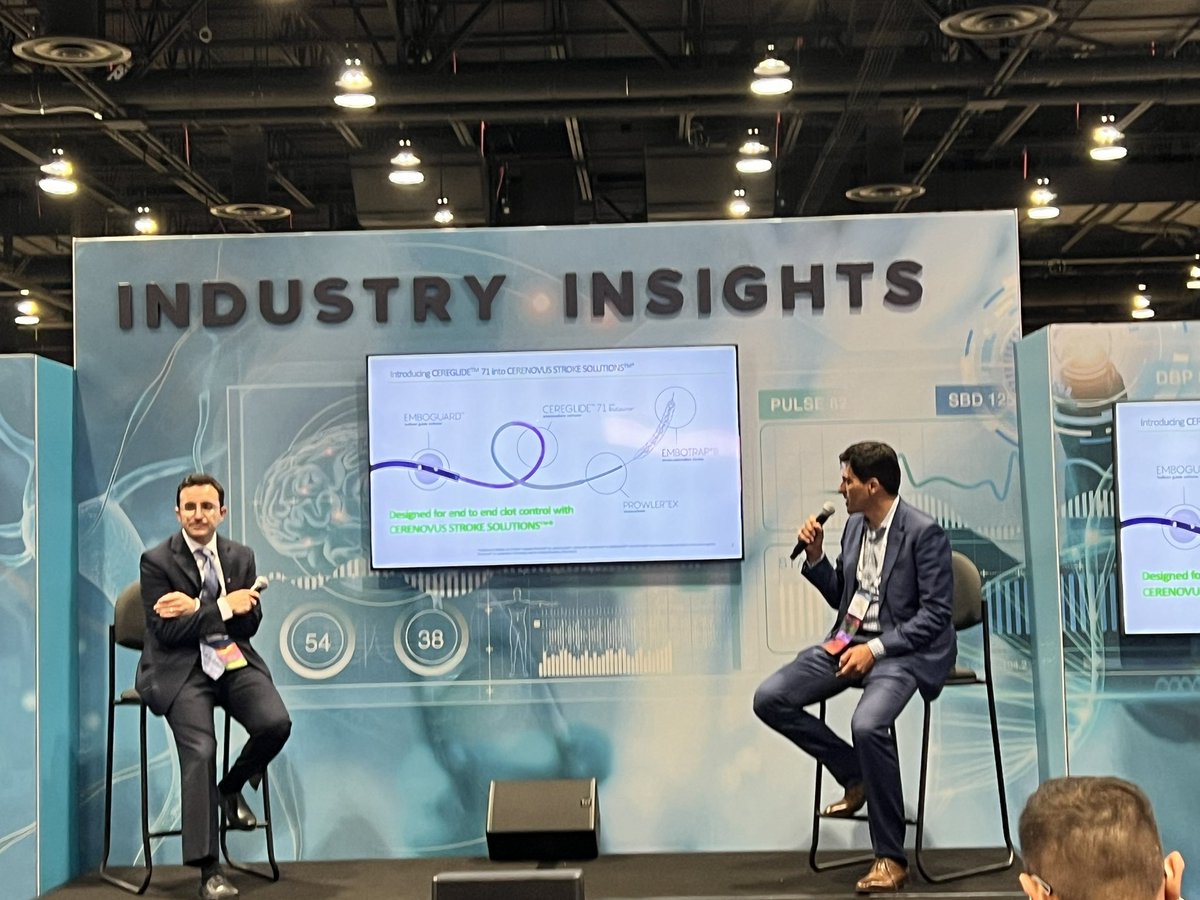
New publication from the Northwell CV lab!
The use of balloon guide catheters during venous sinus stenting - Justin Turpin, @timothywhiteMD, Daniel Toscano, @DalalSidd, @MiriamShao,@ShyleMehta, Jared Bassett, Kevin A. Shah, Athos Patsalides, 2024 https://t.co/q3p48ZHN12
Angioplasty with medical management superior to medical management alone from BASIS trial. BTW, a stent plasty device trial, TG dilator to treat LVO with ICAD is taking place in Japan. Prolonged angioplasty may be enough and stent may not be needed.
https://t.co/N7ePOtxqHP
Proud to have contributed to this work. In this individual patient metaanalysis from SAMMPRIS and CASSISS, stenting in symptomatic ICAS was again associated with high risk of short term complications. Highlighting the need for better selection criteria.
🩸🕸️How are radiological features of the Carotid Web associated with stroke risk?
📊1.7% patients had carotid web
⭕️Carotid web length, thickness, volume, & angle relative to the carotid wall were associated with symptomatic carotid web
https://t.co/68baKwjEtP @FouziBala
Article Commentary: “How Clot Composition Influences Fibrinolysis in the Acute Phase of Stroke”
In this #BloggingStroke post, Antonella Potenza discusses #Stroke article by Doche et al. #AHAJournals@aphm_actu
https://t.co/z3XYYdWwBr
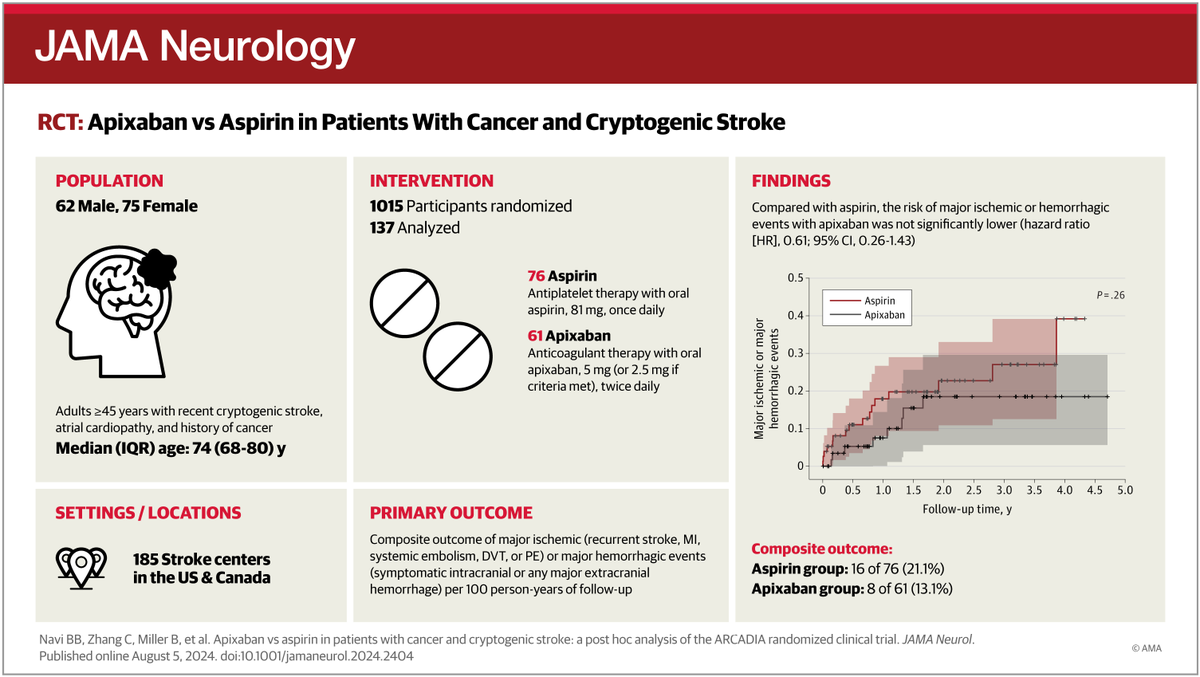
Most viewed in the last 7 days from @JAMANeuro:
What is the optimal antithrombotic strategy for cancer-associated cryptogenic stroke?
https://t.co/SLCNVk7nU2
Time to go for the jugular when it comes to carotid stenosis!
Degree of stenosis isn’t all that matters
Here’s cheat sheet you NEED to remember the risky features of carotid plaques
Read on for the newest @theAJNR SCANtatistic on carotid stenosis:
https://t.co/SieEdSWFrc
NASCET isn’t the end of what you need to know—it’s just the beginning.
In addition to degree of stenosis, there are features of plaques on imaging that suggest they are prone to rupture & cause strokes.
You can remember the high-risk features by remembering that atherosclerosis is influenced by a bad diet—so the features you get when you have a bad diet are the same features vulnerable plaques will show on imaging!
High risk features:
🔸Size
You get increased size w/outward remodeling of your belly w/a bad diet. Same w/vulnerable plaques—larger plaques with outward remodeling are riskier
🔸Irregularity
If you eat a poor diet, you will get constipated & irregular. Same w/vulnerable plaques—irregular plaques are at higher risk
🔸Ulceration
Obesity is associated with ulcers. Same w/vulnerable plaques—ulcerated plaques are more vulnerable
🔸Lipid necrotic core
If you eat a lot, you get more belly fat or lipid in your core. Same w/vulnerable plaques—plaques with fatty deposits in their core are more vulnerable
🔸Loss of fibrous cap
If you eat a lot, your belt can’t hold your fat in anymore & will break. Same w/vulnerable plaques—loss of the fibrous cap holding in the lipid core is a high-risk feature.
🔸Neovascularity
Poor diet leads to constipation & hemorrhoids, a sort of neovascularity. Same w/vulnerable plaques—increased vasculature in the plaque & enhancement is a high-risk feature.
🔸Hemorrhage
Poor diet & hemorrhoids leads to bleeding. Same w/vulnerable plaques—intraplaque hemorrhage is associated with increased chance of rupture
More and more research like the research in this month’s @theAJNR have shown that looking at only degree of stenosis & symptomatology are not enough
Now you know all the imaging features that suggest a high-risk plaque beyond the degree of stenosis. Don’t narrow your focus when it comes to carotid narrowing!
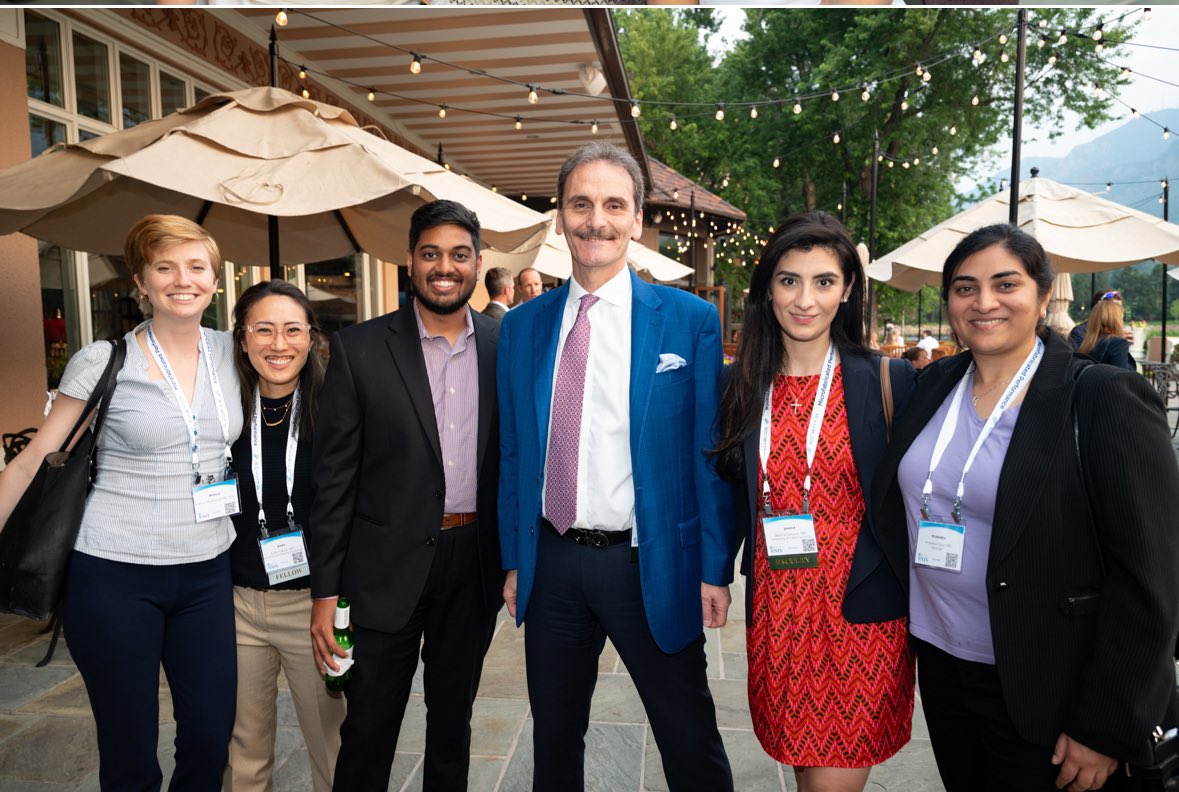
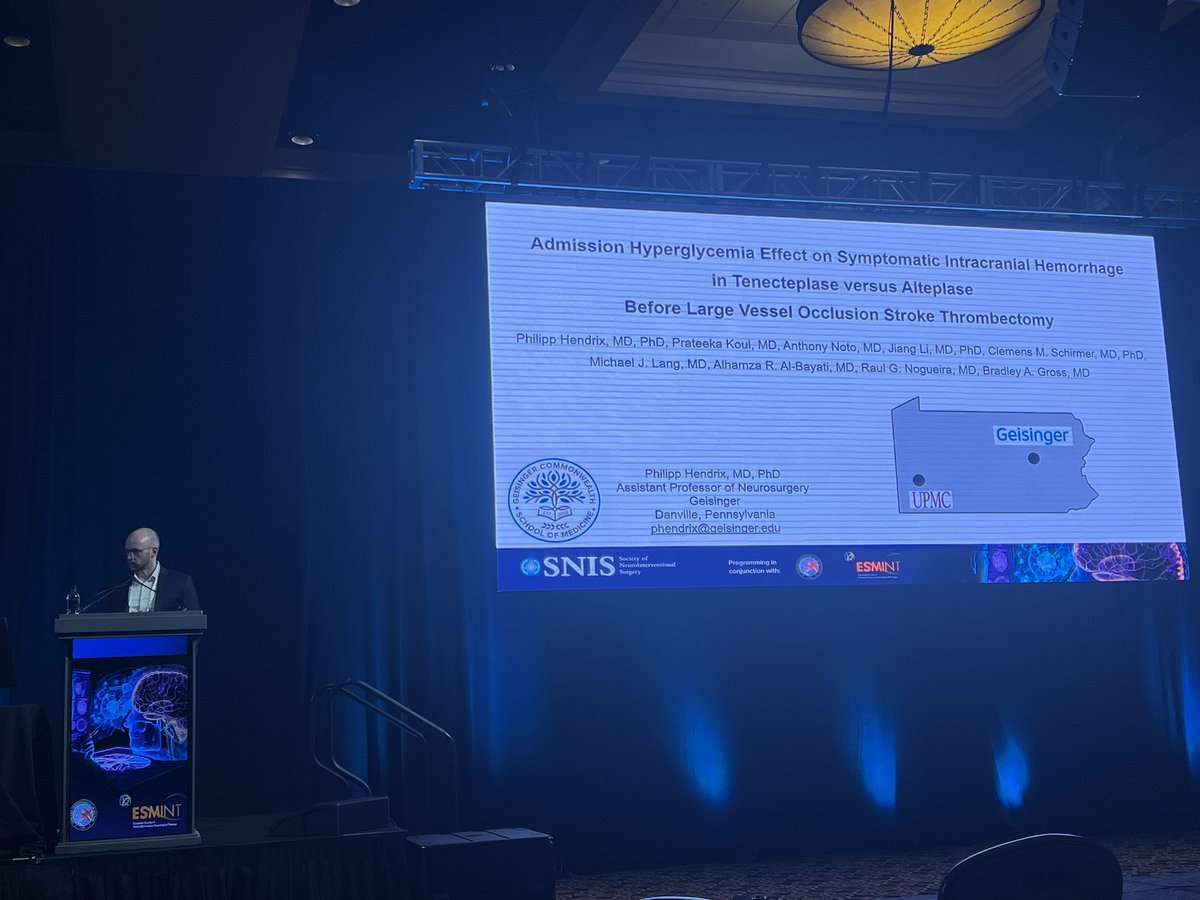
Thank you for attending the @SNISinfo Annual Meeting! Feedback indicates this was the best ever! Welcoming attendees from over 30 countries, we continue to attract a global audience. We look forward to seeing you in Nashville in 2025. @esmintsociety@cvsection@WFITN_Society