A common error in shoulder ultrasound scans when assessing the claviculocoracoid ligaments is that the ligamentum conoideum and the ligamentum trapezoideum are identified too superficially. This is incorrect, as they lie beneath a subcutaneous layer containing various blood vessels. The ligaments are situated at a subcutaneous depth and extend towards the coracoid process at a slightly deeper level. https://t.co/bFIC8daAPZ
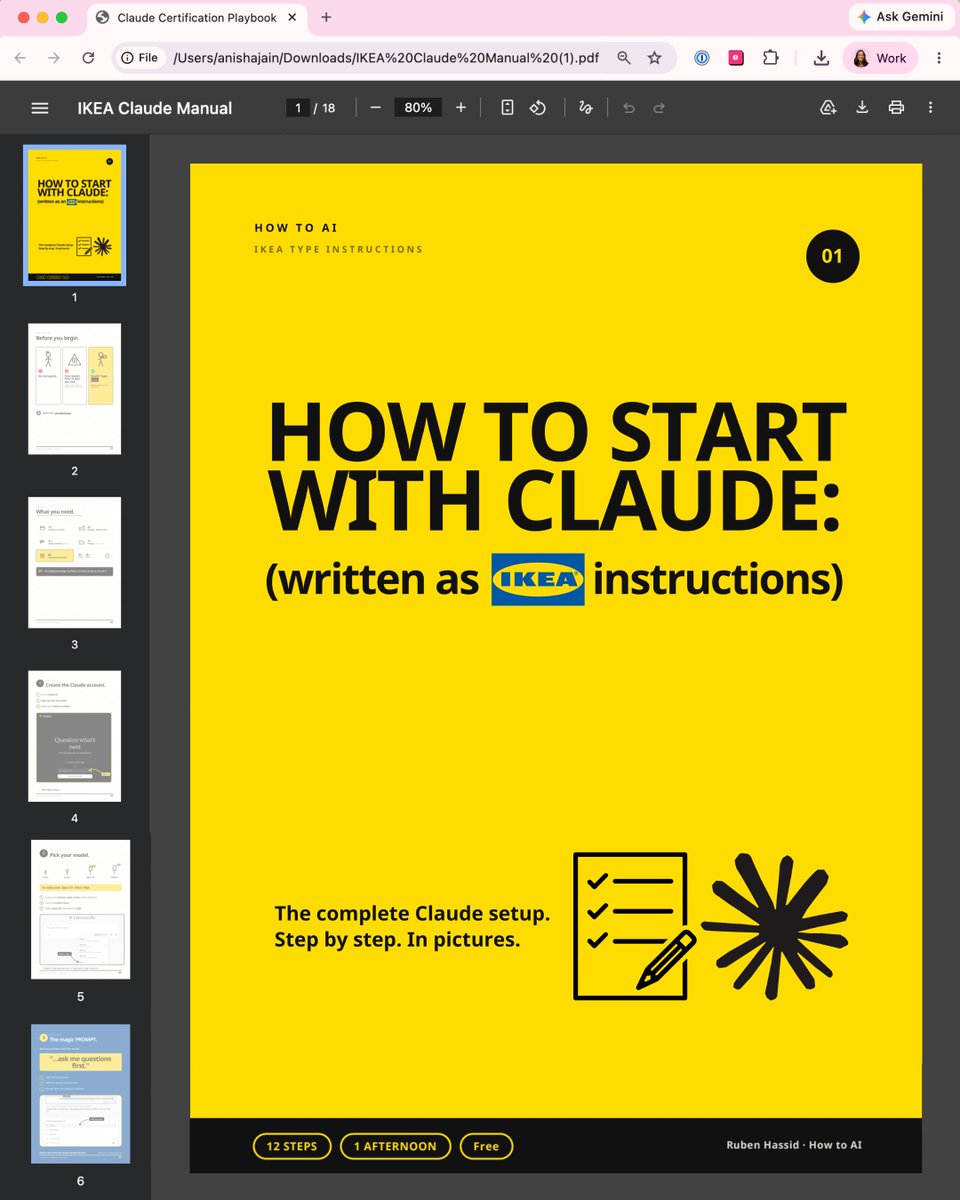
Claude doesn't come with a manual.
So I wrote a simple guide (like IKEA instructions):
Most people open Claude, type a question, get a bad answer & decide it's "just another chatbot."
The problem is nobody handed you the instructions. So I wrote one, like flat-pack furniture.
Here's the whole thing:
1. Get the entire manual (for free)
Go to https://t.co/psB7XxB2Y4. Subscribe for free.
Open the received email in your inbox.
Go to the link, download "Ikea Claude manual"
Keep it open in a second tab while you follow along.
2. The one sentence to end every prompt with - it makes you better at Claude than 99% of people
3. Goals vs. tasks: why "write me an email" gets a worse result than telling Claude what you want
4. The Claude rule that stops your chats getting slow, dumb, and expensive
5. How to give Claude a memory, so every chat already knows who you are
6. The expensive model nobody warns you about and when to use it
7. Connecting your Gmail and calendar, and the skills you build once and never rebuild
No coding. No folders. No jargon.
If you can build a bookshelf, you can do this.
Keep it open in a second tab while you follow along:
→ https://t.co/psB7XxB2Y4.
I removed every word that wasn't necessary and drew the rest.
If your team is still typing one-line questions into a Ferrari, send them this.
(If you share it, mention the newsletter. Be nice.)
Superficial radial nerve: anatomy matters. 🖐️
At the wrist, the superficial radial nerve becomes subcutaneous and crosses over the first extensor compartment (APL and EPB) before progressively dividing into its terminal sensory branches.
High-resolution ultrasound allows us to follow these tiny branches toward the dorsum of the hand and fingers, revealing considerable variability in their branching pattern and distribution.
Recognizing this detailed anatomy is essential for clinical correlation, ultrasound-guided procedures and surgical planning, helping to identify the symptomatic branch and avoid iatrogenic nerve injury.
High-resolution ultrasound is not only about finding the nerve — it’s about understanding its branches.
#mskrad
I dont want to be that guy, but @DrJN_SportsMed you know ive got some software that can pimp your sketches into publishable clarity with a few clicks?
not saying the sketches are bad btw... just giving you a heads up whats possible with https://t.co/W0WOT4mjYc 'scribble fixer'








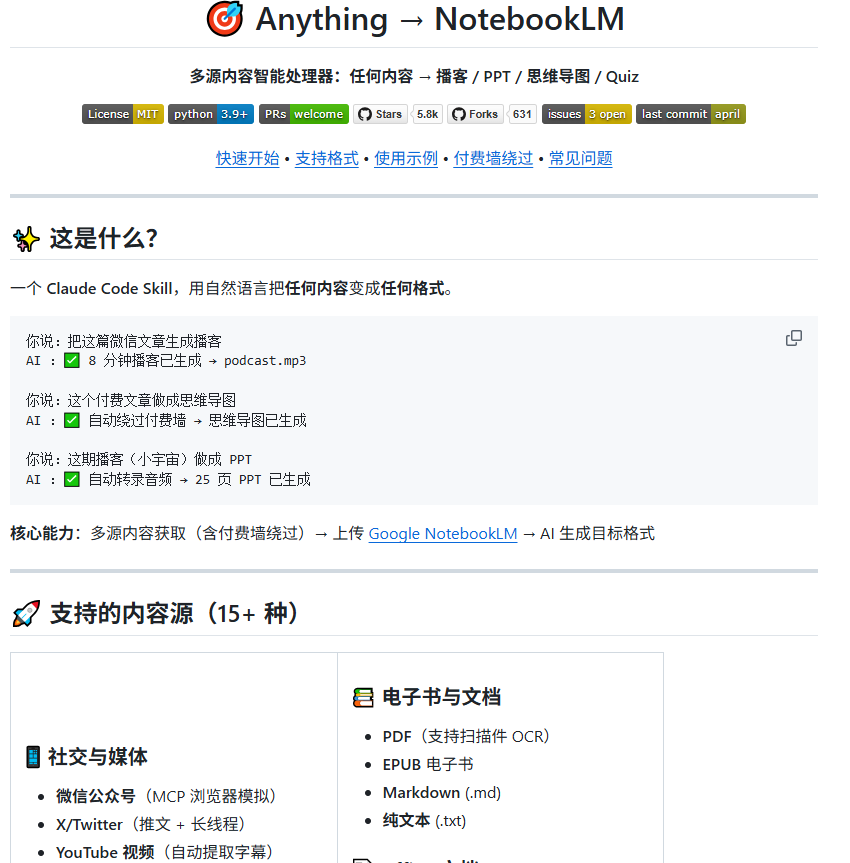
![AYi_AInotes's tweet photo. 做PPT的AI Skill榜单我按实用性重排了。
第一名48.7k stars,不是最好看的那个,但一定是唯一一个正式场合真能交差的。
用 AI 做 PPT 最大的坑,不是生成得慢,而是生成出来的全是一张张无法二次修改的静态废图,或者土到掉渣的默认模板,
这次按真实可编辑性、审美上限和 GitHub 社区热度,全网最能打的 10 个 PPT Skill 终极榜单都在这了,
不管是给老板汇报、技术分享还是路演,把这 10 个塞进你的 Agent,彻底解决 PPT 生产力:
01 👑 ppt-master (hugohe3/ppt-master | 48.7k⭐)
• 定位:原生可编辑 PPTX 之王
• 解决:直接输出带完整图层、文字框的原生 .pptx 文件,改字换图零门槛
• 场景:正式职场汇报、客户提案、必须交由他人修改的硬核交付
02 🌐 frontend-slides (zarazhangrui/frontend-slides | 28k⭐)
• 定位:高完成度零依赖 HTML 网页 PPT
• 解决:不依赖任何本地环境,单 HTML 文件在浏览器双击秒开,排版极度现代
• 场景:在线演示、远程技术分享、追求高颜值与交互
03 🎨 guizang-ppt-skill (op7418/guizang-ppt-skill | 24.7k⭐)
• 定位:杂志风 + 瑞士国际主义审美标杆
• 解决:彻底干掉土味排版,直接生成画册级、海报级高阶视觉
• 场景:产品发布会、线下主题演讲、个人品牌风格展示
04 ⚡ huashu-design (alchaincyf/huashu-design | 23.4k⭐)
• 定位:设计自由度最高(HTML + 可编辑 PPTX 混合)
• 解决:兼顾细腻网页动效与本地 PPTX 导出,支持自定义复杂设计规范
• 场景:交互原型演示、设计团队多格式混合输出
05 🎙️ html-ppt-skill (lewislulu/html-ppt-skill | 8k⭐)
• 定位:主题与演讲者模式最齐全
• 解决:自带倒计时器、逐字稿提词器、双屏演讲者视图与丰富排版主题
• 场景:严肃答辩、路演发布、上台演讲需要提词辅助
06 📝 MiniMax-pptx (MiniMax-AI/skills | 数千⭐)
• 定位:轻量 Markdown 一键转可编辑 PPTX
• 解决:丢一段会议记录或大纲文本,秒出结构化原生 PPT 草稿
• 场景:内部极速对齐、临时出活、大纲快速可视化
07 🖼️ codex-ppt (ningzimu/codex-ppt | 数千⭐)
• 定位:高视觉冲击图片流 PPT
• 解决:强封面感与海报级单页张力,整套 PPT 视觉语言高度统一
• 场景:社媒切片发布、视觉向演讲、冲击力优先的开场
08 📊 ui-ux-pro-max (nextlevelbuilder/ui-ux-pro-max-skill | 8万+⭐)
• 定位:数据图表 + UI 级 HTML 交互演示
• 解决:把复杂业务数据自动转为带交互的 SVG 图表与 UI 级看板
• 场景:数据分析复盘、高保真产品评审、技术方案展示
09 💻 revealjs-skill (ryanbbrown/revealjs-skill | 数千⭐)
• 定位:极客与程序员专属的经典代码 PPT
• 解决:原生代码高亮、Markdown 驱动、支持上下左右二维嵌套导航
• 场景:技术架构分享、开发者大会、开源项目宣讲
10 🚀 Slidify (https://t.co/r1P2Nv1YgB | 在线工具)
• 定位:零代码一句话生成可编辑 PPT
• 解决:不想配置开发环境、不想装任何 CLI/Agent 的小白开箱即用
• 场景:急用出稿、轻量任务、非技术同学日常使用
💡 场景秒选指南:
• 必须交给别人改、正式交付 → 01 ppt-master
• 只要好看、浏览器打开就能讲 → 02 frontend-slides / 03 guizang-ppt-skill
• 既要动效又要导出 PPTX → 04 huashu-design
• 上台演讲要提词器和计时 → 05 html-ppt-skill
• 极客带代码分享 → 09 revealjs-skill
安装方式:
直接在 Claude Code / Cursor / Codex 中输入:
`npx skills add [仓库名]` 或把 GitHub 链接直接丢给 Agent
高清全景对比图已附,建议直接收藏,需要时随查随用 👇](https://pbs.twimg.com/media/HQZolV8X0AEFRs0.jpg)


