I believe that the Central Government should prepare a comprehensive action plan and develop the Madhav-Kuno-Shergarh-Ranthambore-Ramgarh-Mukundra landscape for tigers with proper long-term planning. So far, work on these areas has been limited only to budgetary allocations, with less than 1% of that actually reaching the ground.
There are some complexities involved because this landscape spans two states. However, this region holds tremendous potential. Some work has been done here due to the cheetah project, though most of it has been concentrated on the Madhya Pradesh side. I am not saying that radical changes have occurred, but there has been some improvement in security-related matters.
Cheetahs and tigers can easily coexist with each other. We can transform this approximately 25,000 square kilometre area into an ideal landscape for increasing India’s tiger population. Of course, this will require the relocation of around 250 villages. The nonsense of “coexistence” should not even be considered in this plan.
In the future, this landscape will naturally expand to include the Karauli-Dholpur Tiger Reserve (part of which will also cover Morena in Madhya Pradesh) and Sonchiraiya Sanctuary in Gwalior.
This project can only be realised after spending around ₹1,100 crore. It will bring two major benefits: cheetahs will get a vast, open forest area with zero human interference, while tigers who are already native to this region will simply need to expand their territories.
In my opinion, this task is not difficult; it just needs to be started soon. Incidentally, many trees were already cut down in Kuno forest for the cheetah project to create open plains, and whatever was left was completed by the local villagers, who have been freely grazing their cows, buffaloes, sheep, and goats inside the forest.
##bigcatprotection #bigcatcorridor #cheetahproject #cheetahcorridor
#ranthambhoretigerreserve #kunonationalpark #madhavtigerreserve #Ramgarhtigerreserve #mukundrahillstigerreserve #dhaulpurkaraulitigerreserve
Rajasthan is India’s largest state by area, yet it lags significantly behind other states in terms of forest cover. However, it possesses a unique biodiversity, with many mammal and other species that can be found here but nowhere else. Despite this, only 8-9% of the state’s total area is under forest cover, and that too is concentrated in eastern Rajasthan primarily the Aravalli Mountains and the regions to their east.
Today, the purpose of our discussion is to explore which areas in Rajasthan could serve as good future habitats for tigers. This is based on my personal research.
1. Jamwa Ramgarh Viratnagar Wildlife Sanctuary
This sanctuary is connected at one end to the Jhalana and Amer hills near Jaipur city and on the other to the Sariska hills (Tahla range). It currently spans approximately 500 square kilometres and has the potential to expand up to 850 square kilometres. A tiger, ST-24, has been a resident here for a long time.
Key advantage: It is adjoining Sariska. Declaring it a separate Tiger Reserve would be a wise decision. The herbivore population here is moderate to averagely good, which is very important for tigers.
2. Kumbhalgarh Sanctuary
This sanctuary was declared a proposed Tiger Reserve in 2023, and its Eco-Sensitive Zone was also notified the same year. It covers approximately 1,400 square kilometres, proposed to be formed by including the Rawali Totgarh Wildlife Sanctuary.
Currently, the prey base here is low to moderate, which urgently needs improvement. In many parts, the forest is quite narrow, which somewhat reduces its suitability for tiger adaptation.
3. Sitamata Wildlife Sanctuary
Located in Pratapgarh district on the Rajasthan-Madhya Pradesh border, this sanctuary lies at the junction of the Aravalli, Vindhya, and Malwa plateaus. It is directly connected to the Peepalkhunt Wildlife Sanctuary in Banswara (from where a tiger from Madhya Pradesh recently moved into Gujarat).
The entire area forms a mixed landscape of about 1,200 square kilometres. The prey base here is also low to moderate. In the future, this could become a suitable habitat for tigers.
We have today explored these three wildlife sanctuaries where we can expect tiger habitation in the future. One thing common to all these places is that the population of wild herbivores is currently insufficient.
#bigcathabitat #tigerreserve #wildlifecorridors #wildlifeinrajasthan
The moment has arrived for RBT-7 to be freed from the enclosure. The gate of his enclosure will be opened on Saturday evening. After this, the tiger will be set free to roam in the open jungle.
It is worth noting that three tigresses are currently ready for breeding. Out of these, two are his sisters daughters of RBT-1 and are approximately 3 years old.
The said tiger is a young male, around 3 years and 4 months old. After the death of his mother, T-114, in Ranthambore, the Forest Department raised him with minimum human intervention. He had to go through a long and rigorous process to become fit for life in the wild, and he has successfully passed this test.
Once released, this tiger will now have to overcome the next challenges of the jungle. I hope this becomes a successful rewilding story. #ramgarhtigerreserve #bigcatprotection #tigerrewilding #bigcatofindia
Yesterday, a rather absurd or bizarre allegation I’m not even sure what to call it came to my attention regarding Madhav National Park in Shivpuri. The matter is as follows:
Villagers living adjacent to Madhav National Park accused a park employee of stealing a 3 years old buffalo calf from their village and loading it into their camper. This was reportedly witnessed firsthand by a villager named Sangram Singh Gurjar. The villagers claim that the park staff will release this 3-year-old calf inside the enclosure to feed the tiger kept there.
On this, the Ranger stated that ever since tigers were introduced in Madhav, they have strictly prohibited villagers from taking their livestock for grazing inside the forest. Because of this restriction, the villagers held a group meeting and leveled these baseless allegations against the forest staff.
Now, let’s look at both sides of the issue.
First perspective: The tigress brought from Bandhavgarh is currently confined in the enclosure on charges of killing a human. She requires food once every 5 days. In this context, the villagers’ allegation may have been made after careful thought and could possibly be true.
Second perspective: It is true that forest staff have recently become stricter in stopping illegal grazing inside the forest. Therefore, this could also be a false case fabricated by the villagers.
Whatever the truth may be, there is a severe shortage of wild herbivores in the forests of Madhav. This area was hastily declared a Tiger Reserve by politicians to serve their political interests in the Gwalior division of Madhya Pradesh.
What do you all think about this matter? Please comment and share your views.
By the way, the rules for providing prey to tigers kept in enclosures are completely different from this case.(from NTCA rules book)
#madhavtigerreserve #kunonationalpark #tigerprotection #bigcatsafety #villagerelocation
(Post-3 our tiger series problems)
We will cover Sariska Tiger Reserve as the next tiger reserve in our series today. This park is the last tiger habitat in the Aravali Mountain range. It is an isolated forest with an average tiger density. The park faces numerous problems, primarily due to its unique geographic location. From a mountain range perspective, this park is even more beautiful and densely forested than Ranthambore. However, the surrounding plains are equally disturbed and fragmented.
The main problems of this park, which the administration must address in a phased manner, are as follows:
1. (Unique Problem) There are two major religious sites inside the park: the first is the Pandupol Hanuman Ji Temple, and the second is the Bhairav (Bhrathri) Temple of the Gorakhnath sect. Especially at the Bhairav Temple, thousands of devotees from the sect visit daily for darshan and leave behind polythene bags and other garbage in the forest. Shockingly, both these sites are located in the heart of the park’s core jungle. Sambhar deer, Hanuman langurs, and other wildlife are consuming thousands of kilograms of this plastic waste and sugar-rich products, falling victim to various diseases.
2. A state highway passes through the middle of this jungle, serving as the only shortcut connecting the state capital to Alwar. Heavy vehicles continue to ply on it until 6 PM.
3. The most common issue is illegal mining, but the most critical problem here is the mining lobby’s deep influence in the government. Under pressure from this lobby, the government is intent on denotifying important parts of the tiger reserve (where tigers currently reside) to convert them into revenue land. The local MP and the Union Environment Minister have remained mute spectators, or their silence may even amount to tacit support for this unreasonable move.
4. Inbreeding among tigers here has reached its peak. Most tigers belong to the T-16 Machli family lineage, which could negatively impact the future breeding capacity of these fast-breeding carnivores.
5. In the plains, domestic livestock have severely degraded the grasslands, which has deeply affected the breeding capacity of wild herbivores.
6. In terms of human interference, this park is a textbook example of a tiger reserve with perhaps the highest level of human intervention.
7. The delay in notifying Jamwa Ramgarh and Viratnagar Sanctuaries as part of the tiger reserve’s core area is also a matter of serious concern. Even now, 1-2 male tigers continue to live in these forests.
8. Despite villagers causing damage to administrative staff and personnel, the silence of the authorities will once again create a crisis for the survival of tigers in the future. Some parts of this area also connect to the Mewat region, which is a highly sensitive zone for wildlife survival.
It is a matter of great surprise that both the Union Environment Minister and the State Environment Minister belong to Alwar. If they cannot secure their own home, then expecting them to protect another home would be our naivety. #bigcatprotection #sariskatigerreserve #tigerisland #ranthambhoretigerreserve #rajasthanforest #wildlifeawareness
Yuvraj tiger ST-21 at Sariska
Today, I am going to surprise many of you with an important reality.
We always talk about conserving apex predators like tigers, leopards, and cheetahs. But we rarely discuss the trees and vegetation in the forests where these animals live and the serious threats they are facing.
Yes, we sometimes talk about deforestation, but today let’s focus on one tree that keeps the forests of the Satpura and Vindhya mountain ranges lush and dense the Sal tree.
Over the last 10 years, nearly 5 lakh hectares of Sal forests have been continuously destroyed by a tiny insect called the Sal borer. This is not a small or ordinary problem. The main reason behind this outbreak is climate change and global warming.
This beetle lays its larvae inside the trunk of the Sal tree. The larvae then go through different stages over the next one year, slowly hollowing out the tree from within and ultimately killing it.
Where is this infestation spreading?
Right now, the impact is particularly severe in the non-reserved forests of Madhya Pradesh’s mountain ranges. Apart from climate change, a major reason is that the wildlife in these unprotected forests is already at its lowest point. We have destroyed or heavily damaged the habitats of minor predators that naturally control this beetle.
These include:
• Woodpeckers, which drill holes in the trunk and pull out the larvae to eat.
• Other bird species that depend on these forests.
• Red ants especially weaver ants and other tree-dwelling ants 🐜 that attack and destroy the larvae and beetles.
In recent years, the unprotected Sal forests around Mandla, Dindori, Balaghat, and Amarkantak have been suffering badly from this infestation.
If this continues unchecked, the day is not far when we will lose vast stretches of these magnificent Sal forests within the next decade.
The truth is, we cannot immediately reverse global warming. But by protecting these minor predators woodpeckers, birds, and especially the red tree ants we can definitely save these Sal forests. And if the Sal forests survive, our tigers, leopards, and the entire ecosystem will also survive. #savesalforest #tigerconservation #climatechange #satpura #vindhyachal
I am often surprised when I compare India’s rising tiger numbers with the population of our wild herbivores. Have the herbivore numbers increased in the same proportion?
The answer is no. This is an untouched subject that most people are not even aware of.
In recent days, I tried to gather data on how many herbivores are present in various national parks and how much their numbers have grown in the last 4 years in proportion to the increase in tiger numbers. However, I did not receive any serious or substantive reply. I was simply told that the Wildlife Institute of India (WII) conducts such surveys.
The only reason I raised this issue was to bring the truth in front of everyone.
Let me explain the ground reality: Many national parks in India are managing core and buffer areas with overcrowded tiger populations. In Central India, only Satpura, Pench, and Kanha have adequate wild herbivore numbers to support their tiger populations and even in these parks, the situation is far from ideal. Parks like Bandhavgarh, Panna, and Sariska are lagging far behind in herbivore population growth compared to their tigers. Madhav, Mukundra, and Ramgarh are poor forests where they release 15–20 herbivores every month or two, captured from other places.
The real question that needs serious thought is this: When governments and forest departments are already paying crores of rupees every year as compensation for domestic cattle killed by tigers, why don’t they allow a comprehensive captive breeding programme for wild herbivores one with minimum human involvement? This could be done at a much lower cost than the compensation being paid in the name of so-called “coexistence.” Otherwise, tigers will continue to behave as shown in the video. #wildherbivores #bigcatsafety #Tigerpopulation #bigcatofindia #bigcatindanger
Today, let’s talk about ST-21, the heavy and muscular male tiger of Sariska Tiger Reserve. This tiger carries the direct DNA lineage of the legendary Ranthambore tigress Machhli (T-16).
His mother is ST-12, who is the daughter of the tigress relocated from Ranthambore Bina-2 / ST-10. You’ll be amazed to know that this Bina-2 is the same tigress who, along with her sister, was raised single-handedly by their father T-25 (Dollar male) in the forests of Ranthambore after the death of their mother T-5. He instilled in them all the qualities that a tiger should possess.
Now, coming to ST-21 this tiger has acquired a very large territory and rules the jungle like a king. He is currently in the prime of his age. His genetic history is extremely strong, which is clearly visible in his powerful and robust physique.
This tiger is frequently seen roaming as a pair with his grandmother’s sister Bina-1 / ST-9. If you have seen a tigress with the lower part of her tail cut in any video, that’s her.
Of course, inbreeding is quite common in this isolated forest. One of his male cubs had reached Rewari in Haryana. Later, he was relocated to Ramgarh Tiger Reserve (Bundi). However, on the 5th day after relocation, before he could even be given a formal identity, the existing tiger RBT-1 killed him in a territorial fight.
Nevertheless, this tiger has played a vital role in repopulating Sariska with tigers. ST-21 rules the jungle with strength and firm determination. The new generation that is coming up in the coming years will be even stronger and more powerful. They will take over his kingdom. This is the first and last rule of the jungle only the strongest have the right to live and rule here. #sariskatigerreserve #ranthambhoretigerreserve #Ranthambhoretigerbloodline #Ramgarhtigerreserve #tigerrelocation #sariskastory
In this video, ST-21 is roaring while marking its territory.
A decade ago, in the desert districts of western Rajasthan, thousands of Chinkara (Indian Gazelle) used to roam freely in large herds across the Orans (traditional sacred grazing lands). But now, they are rarely seen. Many have been killed, many have died entangled in barbed wire fences, and many have fallen prey to stray dogs.
On top of this, the state government has dealt the final blow by establishing thousands of hectares of solar power generation plants on this desert land, completely destroying their natural habitat. Where are these animals supposed to go now? For the government, this may be nothing more than barren, unproductive wasteland, but it sustains a complete biodiversity cycle that we have shattered.
Restoring it to its former glory is an extremely difficult task and perhaps it is no longer even possible. We speak of conservation, yet we continue to create problems for these living beings.
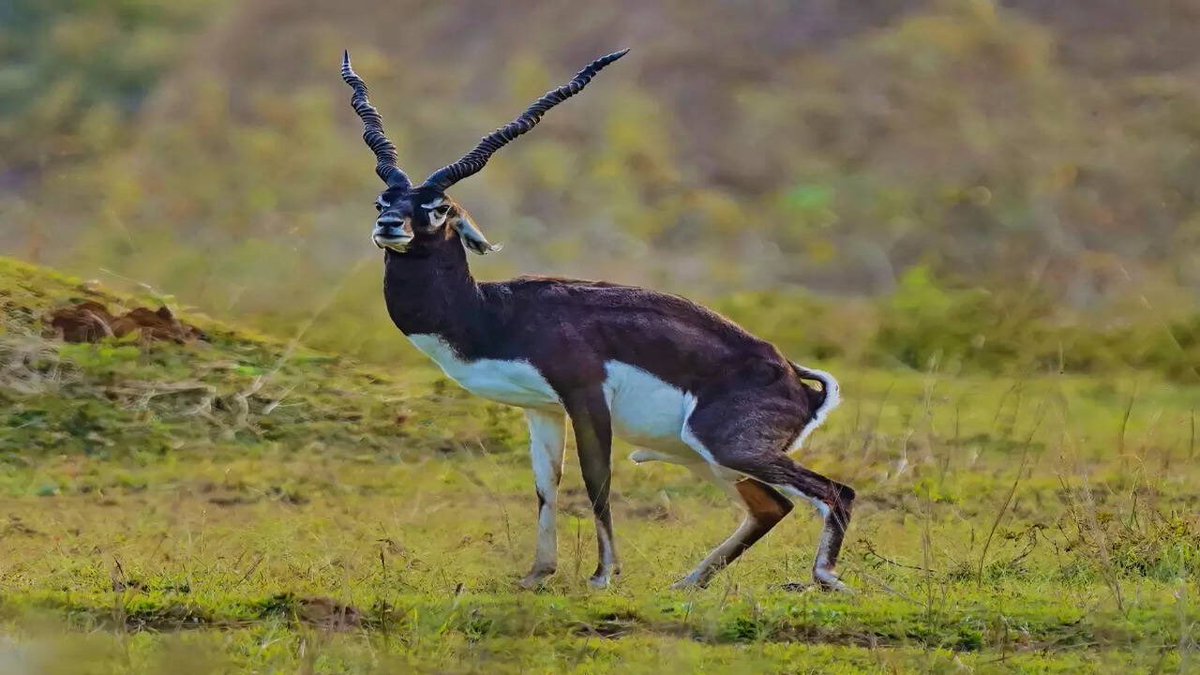
In these regions, species like Nilgai (Blue Bull), Chinkara, Blackbuck, and many important resident as well as migratory bird species are found throughout the year. The Great Indian Bustard a bird reminiscent of the Gondwana era also inhabits these areas. Seven species of vultures are present here. Among carnivores, Caracal, Desert Cat, Jackal, Wolf, and other species are being wiped out for our own benefit a step that can only be considered unjust.
Now it remains to be seen how the future of these wildlife species survives amidst the state government’s policies that run contrary to wildlife conservation and the interests of industrial lobbies. #desertwildlife #wildlifeinrajasthan #thardesert #caracal #solarenergy
For the first time in Jim Corbett National Park, due to the rising cases of human-wildlife conflict, leopards are also being counted alongside tigers during the 2026 tiger census. While this count may not be entirely exact, the effort will still help, at least to some extent, in checking the increasing human-wildlife conflicts in Uttarakhand.
In forest areas where tigers density is high, leopards are inevitably pushed towards the outer fringes of the jungle. From there, they often reach densely populated regions and attempt to prey on humans and their livestock. However, tigers from the Terai region are no less responsible. The geographical setting of these forests naturally draws excess populations of both these big cats outward, leading to confrontations with humans and resulting in unfortunate incidents.
Collecting such data will greatly assist forest staff in preventing these events. It is no secret that nearly 50% of all human-wildlife conflict cases occur in these Terai forests alone, and around 40% of the resulting human deaths also take place here.
According to preliminary estimates from the current census data, there are approximately 380 tigers in Jim Corbett and its peripheral forests. This reflects a healthy tiger population. However, shrinking habitats and competition for food with other large carnivores have made the situation highly complex.
In my view, the Van Gujjar community should be immediately relocated out of the forest as the top priority. Otherwise, the destruction of these forests is inevitable. It is not that policymakers are unaware of this they know and understand it very well. If timely action is not taken, a major crisis is imminent.
In many cases, members of this community have been found in contact with international poaching syndicates operating from Nepal. It is extremely essential to address this issue before it is too late. #jimcorbetttigerreserve #humanwildconflict #wildlifeawareness #vangujjarthreat
#tigerawareness #leopardofindia
The male tiger that has been found positive for “Canine Distemper Disease”🦠 is the cub from the previous litter of Sandukhol Tigress T-66. This tigress is frequently seen roaming around Mocha and Kipling Camp in the Kisli and Khatia buffer areas.
The said male tiger is currently being kept in isolation at the Mukki Quarantine Centre. His condition remains extremely critical and concerning; however, he is under close observation and is receiving continuous necessary medical treatment.
Canine Distemper has really emerged as a new and serious challenge for wildlife. If a swift and effective solution is not found soon, it could turn into a major crisis. A permanent remedy must be implemented with immediate effect. #caninedistempervirus #bigcatsafety #tigerawareness #wildlifecare #kanhatigerreserve
In the video sandukhol female and her latest litre cubs.
I was greatly surprised to learn that the Government of India has blocked many proposed tiger reserves and areas where tigers have been roaming for a long time. In these regions, there is potential for extracting minerals from the land in the future, or geological surveys have already found minerals there.
It is surprising because we are a developing country with increasing needs for self-reliance over time. Yet, on the other hand, the conservation of wildlife is also an extremely important aspect. I can say without any exaggeration that in the recent government, there has been more focus on media attention in the name of wildlife conservation, while very little actual work has been done on the ground.
They have destroyed many elephant corridors in Madhya Pradesh, Chhattisgarh, and Jharkhand in the name of coal mining. Additionally, the boundaries of several tiger reserves have been tampered with during this government’s tenure. This includes the important Ken-Betwa project in Panna and disturbances to wildlife in Tadoba, Maharashtra, along with the Yavatmal district, where they seem to have a mindset of disrupting wildlife.
Furthermore, in Sariska Tiger Reserve in Rajasthan, certain areas of critical tiger habitat are being removed areas that form part of the tigers’ territory while new areas are being added where tiger movement is only occasional and sporadic. These actions appear to be taken solely to benefit their friends.
All these situations are increasing stress on the lives of wild animals and raising the likelihood of them entering residential areas. If this continues, it won’t take long for this cycle to break down completely, because wild animals are highly sensitive and cannot tolerate such changes.
If we truly want to set an example in wildlife conservation (not just through media coverage, but on the ground), then we must stop all these unnecessary “innovations” and the destruction of forests. Otherwise, everything will shrink into very limited pockets.
Politicians plant trees under slogans like “Ek Ped Maa Ke Naam”, but they clear large forest areas elsewhere. There must be sincerity in every task mere photo-ops achieve nothing.
#forestecology #wildlifeawareness #bigcatprotection #developbharat
The Central Government provided funding of approximately ₹500 crore last year under the Centrally Sponsored Scheme (CSS) for the relocation of villages from tiger reserves. Under this, each family where individuals aged 18 years and above are considered is counted as one family unit as per the scheme guidelines as 2021.
However, the pace of implementation varies significantly across states. Some states have performed exceptionally well, while others are moving at a snail’s pace. The states that have utilized the maximum funding for this purpose are Madhya Pradesh, Karnataka, and Maharashtra.
In Madhya Pradesh, Satpura Tiger Reserve and Kanha Tiger Reserve have become completely population-free in their core jungle areas true inviolate tiger reserves. Pench is also nearly there. However, the situation in Madhav and Bandhavgarh cannot yet be described as fully relocated. As for the remaining ones like Sanjay Dubri, Nauradehi, and Ratapani what can one even say, Here, the number of local residents visible in the forest every day far exceeds the total number of tourists visiting in an entire month. In other words, human influx and presence remain overwhelmingly high.
In Ranthambore, the process is ongoing. Sariska is in a league of its own in this forest, the domestic cattle (cows, buffaloes, and goats) seem to outnumber the wild herbivores, creating a constant “whose numbers are higher” competition. In Ramgarh Vishdhari, only 1 village has been relocated so far, with 7 still remaining. The same situation exists in Mukundra and Karauli-Dholpur Tiger Reserves.
The point is: What special methods or approaches have states like Maharashtra, Madhya Pradesh, and Karnataka adopted that enabled them to achieve the highest number of relocations? Meanwhile, in Rajasthan, even relocating a single family feels like an uphill task. Whenever you speak to officials, the standard response is that “the relocation process is underway.”
In this matter, I would like to offer some suggestions for change:
First, the relocation package should be increased to at least ₹20 lakh per family. Second, voluntary relocation should be converted into a necessary (mandatory where critical) process. Additionally, the Government Housing Department which constructs and sells houses in cities should be handed over this responsibility. They should build well-equipped, quality housing on government land in the nearest city to the respective park (where the responsibility of resettling people from that park has been assigned). For ensuring the quality and integrity of the work, a committee formed by the people from the relocated village should remain involved in vigilance and quality checks.
Remember, these houses can also be constructed under the Pradhan Mantri Awas Yojana (PMAY) or the Chief Minister’s Awas Yojana, so that the relocated families receive durable, long-term housing.
What do you all think about this? Please do share your views in the comments. #villagereloaction #tribalecommunities #wildlifeprotection #wildlifecorridors
राजस्थान के परियावास को जितना नुकसान मनुष्य पहुँचा रहे है उतना ही जूलीफ़्लोरा पेड़ नुमा रक्तबीज पहुँचा रहा है ।
India’s forests, invasive weeds are destroying native ecosystems whether it’s Lantana or others. But in Rajasthan, this thorny invader was deliberately brought by the British in the early 1900s from South American countries to stop the spread of the desert.
No one could have imagined that this “blood seed” would, in the 21st century, destroy an average of 30% of Rajasthan’s indigenous forest vegetation.
The saddest part is that the Rajasthan government, instead of launching a war-level campaign for its complete eradication, conveniently counts it as forest cover and pats itself on the back. This is a betrayal of wildlife. It is nothing but an easy way to inflate forest cover statistics.
Meanwhile, our native trees and plants have paid the ultimate price. This shrub increases nitrogen in the soil and, due to its enormous water consumption, has drastically lowered the water table in many areas.
Even the removal efforts by the Forest Department are highly suspicious. They remove it only after the pods have formed and fallen to the ground ensuring that new Juliflora plants will sprout again next season. This way, the cycle of funds and “bandarbaant” (mismanagement) continues uninterrupted.
In Rajasthan’s all Tiger Reserves, 30-40% of the area is now covered by this shrub. It is not a suitable habitat for either herbivores or carnivores. Its large, strong thorns injure animals herbivores’ horns get entangled, making them easy prey for stray dogs. In many cases, tigresses get thorns stuck in their paws, requiring rescue and treatment. Without timely intervention, they can even lose their lives.
Scientific Solution:
Removal should be done using proper scientific techniques immediately after the monsoon, before pod formation. The land must then be kept open until the next monsoon. Even a single remaining shrub can regenerate an entire jungle again.
The damage done so far will take years to repair, but urgent eradication is essential. I hope the Rajasthan government and Forest Department will finally come up with a concrete, effective plan against this wild blood seed.
What do you think? Is it time to treat Juliflora as a national ecological emergency?
#Juliflora #InvasiveSpecies #Aravalli #TigerConservation #AtigerTrails #RajasthanForests #tigerprotection
After the release of the rewilded tigress MT-7 from Mukundra Tiger Reserve, her brother RVT-7, who was kept in the enclosure at Ramgarh Tiger Reserve, will now be released into the open jungle next week.
This tiger has successfully made the required kills as per NTCA SOP during his 20 months in the enclosure. In this context, his old radio collar was replaced yesterday with a more advanced one. He will be kept under observation for the next one week and then released into the wild.
Currently, the park has one male tiger and five females roaming freely in the open jungle. Out of these, two females are daughters of the existing male, RVT-1. Among the other females, one has come from Pench, one is a daughter of Arrowhead, and another female is moving with a male cub.
It will be very interesting to see how this new male tiger competes with the existing male and establishes his territory in this corridor-like, relatively narrow jungle. However, I hope this tiger successfully establishes his territory and becomes the father of new cubs.
The next 1-2 months are likely to give the Forest Department quite a headache. #Ramgarhtigerreserve #mukundrahillstigerreserve #ranthambhoretigerreserve #tigerrewilding #bigcatstories
These stray dogs have created havoc in our forests by relentlessly harassing the grazing wild herbivores. They hunt in packs, surrounding and killing chital (spotted deer) and sambar the primary prey of tigers and leopards. This is putting the lives of tigers and other carnivores at serious risk.
It is not that the administration is unaware or inactive. However, monitoring the entire forest and controlling all stray dogs is practically impossible. Forest staff are caught in a dilemma: should they focus on monitoring wild animals or on controlling these dogs that live in villages but regularly hunt in the forest?
If forest personnel try to control them, villagers object strongly, claiming that their “pet dogs” are being targeted. If they don’t control them, these semi-feral dogs continue to damage the wildlife in the buffer zones. Some gaps remain, and dog lovers rush to the High Court and Supreme Court, securing stay orders to “protect” the dogs and project themselves as their saviors.
In reality, these dogs have severely disrupted the life cycle of the forests. The administration knows this very well, but they hesitate to act decisively, fearing it might create new controversies or conflicts.
Because of the fear of a few people, we are destroying our wildlife. These dogs are causing constant stress to wild animals. It is extremely important to find a solution to this problem in time. Otherwise, deadly diseases like Canine Distemper Virus and Rabies already knocking at the doors of our forest areas will spread rapidly among wild carnivores.
Now we must decide: will we resolve this issue, or allow it to take a more monstrous form?
This is a clip from my 45 minutes video where we were walking on foot through the Khatiya Buffer Zone in kanha . At the end, a pack of dogs crosses right in front of us. The nearest village from this location is about 2 kilometers away.”
#straydog #bigcatindanger #caninedistempervirus #rabies #kanhatigerreserve #feraldogs #tigerdeath
Another batch of cheetahs from Kuno has reached Kishanganj in Rajasthan. This time, Vira has entered Rajasthan along with all her cubs. Although this is not Vira’s first visit to Rajasthan she had previously taken Rajasthan’s tourism slogan “Padharo Mahare Des” quite seriously and stayed for 10 days before returning.
What makes this visit special is that she has now come to explore Rajasthan with her cubs. Let’s see how many days’ “visa” the Madhya Pradesh Forest Department has granted her this time. Because so far, the standard plan has been to catch these poor animals and bring them back the moment they step into another state.
They must immediately develop this cheetah corridor. Along with that, Rajasthan’s forest staff should be sent to African countries for proper training in cheetah monitoring techniques. Because I see no benefit in taking training from India’s so-called cheetah experts. #cheetahproject #cheetahcorridor #cheetahinrajasthan #visaallotment