Bridging the Gap: Farm Transition Workshops bring families, advisors, and lenders together to turn tough talks into clear next steps.
📍 Upcoming sessions:
• Vermilion – Feb 10
Register here: https://t.co/P0CqyFwOan
#ABag#FarmTransition
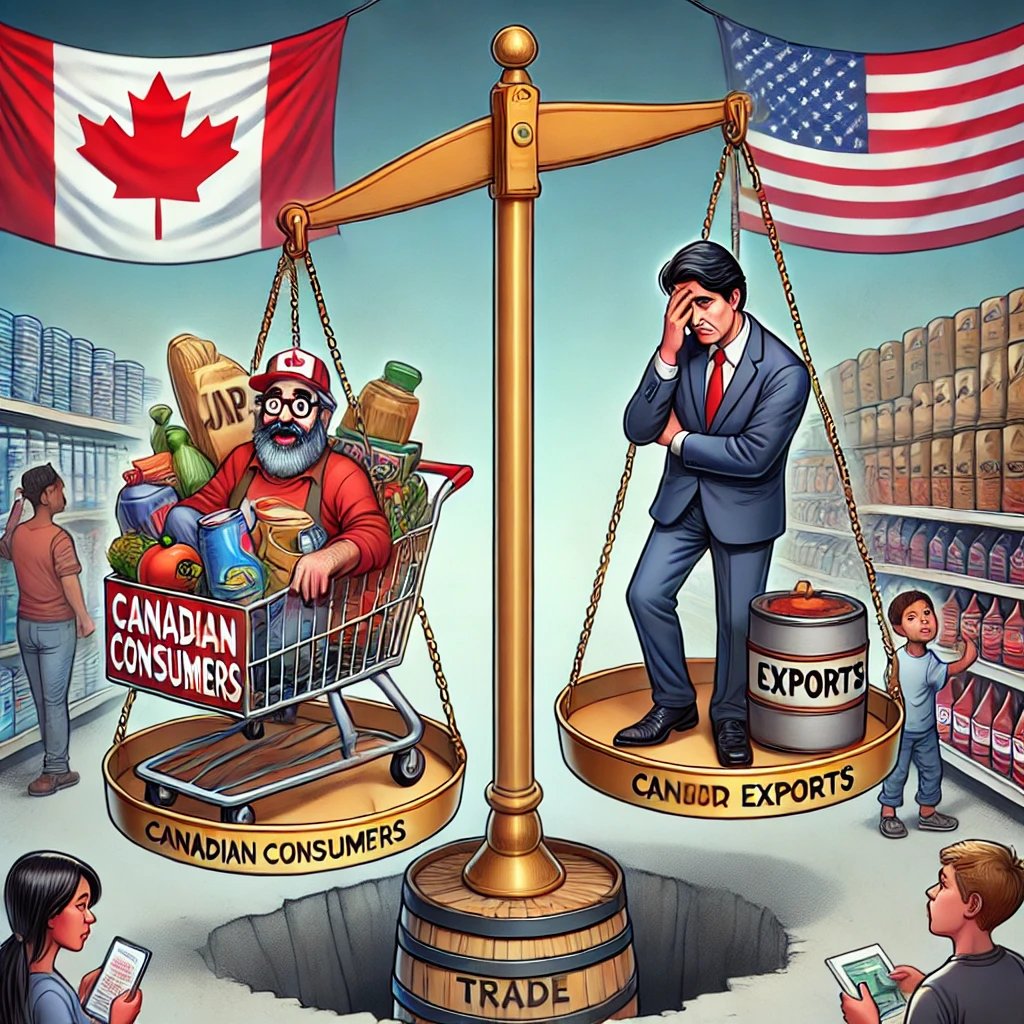
The Cost of Retaliation: Canada’s Trade War Misstep
"Canada cannot win a trade war by taxing its own people—true leverage comes from targeting American reliance on our exports, not undermining our own food security and economy."
The trade war between us and the American is no longer just academic. It’s real, and Canada is at the center of one. In response to escalating tariffs from the United States, Canada has chosen to retaliate. While standing up to protectionist policies is necessary, the Federal Government’s approach could ultimately harm Canadian consumers far more than it impacts American interests.
Placing tariffs and taxes on food and essential goods that Canadians rely on is not just a poor economic decision—it is a direct attack on our own food security. It is impossible to win a trade war against the United States, the most powerful economy in the world, and the strategy of imposing retaliatory tariffs will likely yield more tariffs in response. The end result? A prolonged economic downturn that will hit Canadians the hardest.
The reality is that these tariffs act as a tax on Canadian consumers. Every additional cost imposed on imported goods translates into higher prices at the grocery store, increased costs for businesses, and a greater financial strain on households. The government may attempt to justify this as necessary pushback against U.S. trade policies, but the truth is simple: Washington will not bear the brunt of this burden—Ottawa’s own citizens will.
The federal government’s strategy not only risks exacerbating inflation but could also tip Canada into recession. As disposable incomes shrink and household budgets tighten, consumer spending—a major driver of economic growth—will decline. Instead of punishing American trade aggressors, Canada is punishing itself.
A more effective response would be to shift the burden onto U.S. consumers by implementing taxes on Canadian exports such as potash, beef, pork grains, and canola oil��commodities that the U.S. heavily relies on. This strategy would maintain leverage over the American market while avoiding unnecessary harm to Canadian households. Instead, Ottawa has chosen to disguise this tax grab as a patriotic countermeasure against the U.S., misleading Canadians into believing that it will make a difference. The government not only collects revenue through the tariffs themselves but also benefits from the additional 5% GST on these higher-priced goods. This is not sound economic policy—it is an economic miscalculation.
At a time when food affordability is already a pressing issue, Canadian policymakers should be seeking ways to support consumers, not further strain them. Provinces and citizens alike must recognize that better tools exist to navigate trade disputes, ones that do not come at the cost of food security and economic stability.
With a new leader set to take charge in Canada within days, the future of these policies remains uncertain. However, one thing is clear: continuing down this path will only lead to greater hardship for Canadian families. It is time for a change in strategy—one that protects Canada’s interests without inflicting unnecessary pain on its own people.
It’s important to understand that the 25% tariffs announced by President Trump today are NOT imposed on Canada — they will be paid by American consumers and businesses who buy goods imported from Canada. Tariffs are a tax, and Americans who will have to pay more or go without our products will be the first to suffer.
Of course, Canadian exporters of these goods will as a consequence lose clients, contracts and sales, and will be forced to cut down on production and lay off workers. Or they will lower their prices to keep market shares and will see their profits diminish.
Because 75% of our exports go south of the border, our economy will for sure be very negatively impacted by this.
The stupidest thing our government can do however to deal with this crisis is to impose the same kind of tariffs “dollar for dollar” against US imports.
The US economy is ten times bigger than ours, much less reliant on trade than ours, and much less dependent on our market than we are on theirs.
Not only would retaliatory tariffs have much less impact on American exporters, they would immediately impoverish Canadian consumers forced to pay more for imported goods, as well as destabilize Canadian businesses that need inputs from the US in their production processes. It would more than double the harm of the US tariffs to our economy.
Trade wars are bad for everyone, but they are much worse for a small country with fewer options. We simply cannot win a trade war with the US. It’s very unlikely that Trump will back down. All we will do is provoke a massive economic crisis in Canada, until we are forced to capitulate.
Another self-destructive thing to do would be to set up giant “pandemic-level” bailout plans to support everyone affected by this trade war. This will simply bankrupt our governments even more than they already are and make us even weaker.
So what should we do?
1. Double down on efforts to control our border, crack down on fentanyl dealers, deport all illegals, and impose a complete moratorium on immigration, to answer Trump’s immediate concerns about Canada.
2. Tell the US administration that we are ready to renegotiate North American free trade and put dairy supply management and other contentious issues on the table.
3. Wait and see to what extent Trump is willing to keep tariffs in place despite the harm it does to the US economy. Despite his pretenses that Americans don’t need our stuff, the reality is that on the contrary they have few other options for crucial resources like oil, lumber, uranium and other minerals, etc. He will stop acting like a bully when he sees that he can get more results by sitting down and negotiating.
3. To reduce our dependence on the US market, immediately implement an ambitious plan to tear down interprovincial trade barriers and help our impacted exporting industries find alternative markets in other countries.
4. Immediately implement a series of bold reforms to make our economy more productive, including: reduce corporate and personal taxes, abolish the capital gains tax, abolish all corporate subsidies, get rid of excessive regulation, remove impediments to the exploitation and export of natural resources, drastically cut government spending, mandate the Bank of Canada to stop printing money and start accumulating a gold reserve to prepare for the global monetary reset (which is likely part of Trump’s plan).
In short, instead of adopting a suicidal strategy to confront Trump, we must do what we should have done a long time ago to strengthen our economy and our bargaining position. The transition will be rough, but not as much as complete bankruptcy and disintegration.
Tony Dungy, the Hall of Fame NFL coach who spoke at the March for Life rally yesterday is being attacked by left wing extremists over his pro-life Christian views. Dungy has 3 biological children and 8 adopted children. Retweet to show your support to this great man!
However we get there, the bottom line is, in a room of 180 kids, 3 kids knew the significance of this weekend in Canada and the @cfl. That isn’t unfortunate it’s a death sentence for the league. Those kids won’t even know it happened. THAT IS THE ONLY ISSUE THAT NEEDS ATTENTION
#cdnangus members, the Canadian Angus Association office will be closed on Thursday, August 4 to allow staff to attend our colleague Brian Good's celebration of life.
The service will be livestreamed at 1:00 p.m. via https://t.co/BIOq0TaluC
@sskroughriders Great selections this year! All three were huge part of the heart and soul of what the Rider were and are. It was a pleasure to play with Mike & Dressler and be coach by coach Miller. Congratulations!