A Japanese engineer invented something you scan almost every day, then gave it away for free.
In 1994, Masahiro Hara and his small team at Denso, an auto-parts company in Japan, built the QR code. The idea came from the black and white stones of a Go board.
Here is the part most people don't know: Denso held the patent. They could have charged the world for every single scan.
They chose not to. They kept the standard open, for free, forever.
That one decision is why QR codes are now on menus, tickets, and payments on every continent.
A gift from Japan that we all use and never paid for.
A British biologist looked at 200,000 years of human history and found that the entire reason humans broke out of poverty was not intelligence, not language, not even agriculture, but one mechanism so simple a 6-year-old could explain it.
His name is Matt Ridley.
He is a zoologist by training, an evolutionary biologist by career, and in 2010 he wrote a book called The Rational Optimist that quietly argued the most important fact about human progress had been hiding in plain sight for the entire history of economics.
Naval Ravikant has been telling people to read everything Ridley has ever written for the last 15 years. The reason is the argument inside this one book.
For 200,000 years, anatomically modern humans walked around with the same brain you have right now. Same skull size. Same neural architecture. Same raw capacity for language, planning, and abstract thought.
For roughly 190,000 of those years, almost nothing happened. Generation after generation lived and died inside the same Stone Age toolkit their great-great-grandparents had used. Then somewhere around 50,000 years ago, the line on the chart of human progress started to tick upward. Then it bent. Then it exploded.
The question Ridley spent years on was the only question that mattered. What changed.
It was not the brain. The brain had been the same for 190,000 years. It was not language, which had existed long before the takeoff. It was not even agriculture, which arrived only 10,000 years ago and was actually preceded by the upward bend, not the cause of it.
What changed was that humans started trading with strangers.
This sounds too small to be the answer. Ridley argues that it is the answer to almost everything. The moment one human exchanged a useful object with another human from a different group, something happened that no other species on earth had ever done.
Two ideas that had developed in isolation came into contact. The flint knapper learned what the spear maker had figured out. The fisherman from the coast learned what the hunter from the forest had figured out. The two pieces of knowledge fused into something neither side could have produced alone.
Ridley calls this ideas having sex. The phrase sounds frivolous and it is meant to. The point is that ideas, like genes, get better when they combine with other ideas from different lineages.
An idea sitting inside one head, no matter how brilliant the head, eventually hits a ceiling. The same idea exposed to ten thousand other ideas does something genes do under sexual reproduction. It mixes. It recombines. It produces offspring nobody planned.
The cleanest proof of this argument is the most uncomfortable case study in the book. Tasmania.
Around 10,000 years ago, rising sea levels cut Tasmania off from mainland Australia. A population of roughly 4,000 humans was now isolated on an island, with no possibility of contact with the rest of humanity. They had the same brains. The same language. The same starting toolkit as their cousins 150 kilometers north. The natural experiment was now running.
What happened next is something no economist or geneticist had ever predicted.
The mainland Australians kept inventing. Boomerangs. Spear-throwers. Fishing nets. Bone needles for sewing fitted clothes. Watercraft with paddles. Their technology compounded slowly across the centuries.
The Tasmanians went the other way. They did not just fail to invent the new tools their cousins were developing. They started losing the tools they already had. Fishing was abandoned within a few thousand years. Bone tools disappeared. Fitted clothing disappeared. They forgot how to make fire from scratch and started carrying lit firebrands from camp to camp instead, relighting their fires from a neighbor's whenever their own went out.
By the time European explorers arrived in the 17th century, the Tasmanians had the simplest toolkit of any human society ever recorded. Their material culture had gone backward for 8,000 years.
The archaeologist Rhys Jones called it a slow strangulation of the mind.
Joseph Henrich at Harvard later proved with formal mathematical models that there was nothing wrong with Tasmanian brains. There was something wrong with their network. A toolkit requires a critical mass of people exchanging skills to maintain itself.
The act of teaching a skill is imperfect. Every generation loses a small percentage of what the last generation knew. If your population is large enough and trading widely enough, those losses get caught and corrected by someone else who still remembers.
If your population shrinks below a certain threshold and stops mixing with outsiders, the small losses compound until entire technologies disappear.
This is the part that should haunt anyone reading this in 2026.
Intelligence is not a property of the individual brain. Intelligence is a property of the network the brain is connected to. A genius in isolation will produce less than a mediocre thinker inside a dense exchange of other mediocre thinkers.
The thing your ancestors needed in order to break out of 190,000 years of stagnation was not better brains. It was better connections between brains they already had.
The implication for any individual is direct and uncomfortable. If you are smart and isolated, you will be outproduced by people half as smart who are connected.
The most successful people in any field are almost never the smartest people in it. They are the ones positioned at the intersection of the most idea flows. They are reading more authors than their competitors. They are talking to more people from more disciplines. They are in the rooms where ideas from different lineages bump into each other.
Ridley ends the book on the line that sounds optimistic but is actually a warning its this "The future will be invented by people who connect ideas, not by people who guard them."
Tesla Vision > Hardware bloat
Look at this intersection standoff. 🛑
Waymo is out here wearing 29 cameras, 5 LiDARs, and 6 radars.
Zoox is fully kitted out too.
Yet, with all that data, they are frozen.
Complete sensor paralysis. 😂
Tesla Vision: Just 8 cameras and AI.
Reads the room, understands the assignment, and would drive right past.
Turns out you don't need a spaceship on your roof.
Coastal cities are replacing concrete seawalls with oyster reefs. The oysters are better at the job.
Seawalls start degrading the day they're installed. Waves chew them up, storms crack them, and the repairs never stop.
An oyster reef, on the other hand, doesn't break down. It actually grows. The oysters stack, reproduce, and fuse into living rock that gets stronger every year. A mature reef can cut incoming wave height by up to 83%, trap sediment, rebuild the shoreline behind it, and shelter fish, crabs, and shrimp while it does the work.
A hectare of reef provides up to $85,000 a year in shoreline protection. Concrete costs over a million dollars a hectare to build and only weakens.
Once again, working with nature instead of against it is the answer.
Voltaire passed away today in 1778.
There are two quotes of his I always come back to:
"I disapprove of what you say, but I will defend to the death your right to say it."
and
“Those who can make you believe absurdities can make you commit atrocities.”
For 8 years, people at Morgan Stanley called Rick Rescorla paranoid.
Then September 11th proved he was right.
Rick was a decorated Vietnam veteran who became Head of Security for Morgan Stanley at the World Trade Center.
In 1990, he walked through the underground parking garage and quietly warned:
“Someone could park a truck bomb here and bring this whole place down.”
Executives dismissed the concern as excessive.
Then came February 26, 1993.
A truck bomb exploded in the World Trade Center parking garage almost exactly where Rick predicted.
Six people died.
Over 1,000 were injured.
The evacuation was chaos.
Rick watched terrified employees stumble through smoke-filled stairwells for hours with no real preparation.
Afterward, he made a decision.
Morgan Stanley employees would practice evacuation drills every three months.
All 2,700 of them.
No exceptions.
People hated it.
The company occupied floors 44 through 74 of the South Tower.
That���s a very long walk down when you have meetings, deadlines, and places to be.
Employees complained constantly.
“He’s obsessed.”
“This is unnecessary.”
“He’s paranoid.”
Rick didn’t care.
He timed every evacuation.
Studied bottlenecks.
Adjusted routes.
Ran the drills again.
And during the drills, he sang old military songs to keep people calm while they descended the stairwells.
For 8 years, people rolled their eyes at him.
Then came September 11, 2001.
8:46 a.m.
The North Tower was hit.
An announcement in the South Tower told people to remain at their desks because the building was secure.
Rick ignored it.
He grabbed a bullhorn and ordered:
“Everyone out. Now.”
Then he personally directed employees through the stairwells floor by floor.
And he sang.
The same songs people once mocked during drills suddenly became the sound keeping frightened people calm as they escaped.
At 9:03 a.m., the South Tower was struck.
Rick was still inside helping people evacuate.
His coworkers begged him to leave.
He refused.
“As soon as everyone’s out.”
By 9:45 a.m., nearly all 2,700 Morgan Stanley employees had escaped safely.
Rick could have saved himself.
Instead, he turned around and went back up.
Searching for anyone left behind.
Before the tower collapsed, he called his wife one final time.
“If something happens to me, I want you to know you made my life.”
At 9:59 a.m., the South Tower collapsed with Rick still inside.
Final numbers:
Morgan Stanley employees inside that morning:
~2,700
Survived:
~2,687
Most of the 13 lost were in the direct impact zone where no evacuation could have reached them in time.
Rick Rescorla died alongside members of his security team while trying to save others.
But here’s the important part:
Rick didn’t save those people on September 11th.
He saved them for 8 years before it happened.
He saved them every time he forced another evacuation drill.
Every time people mocked him.
Every time he prepared anyway.
The coworkers who thought he was paranoid went home to their families because one man refused to stop taking danger seriously.
Sometimes preparation looks ridiculous until the day it looks like survival.
And sometimes the people everyone dismisses are the only ones truly paying attention.
Rick Rescorla died in the stairwell doing what he had trained for nearly a decade.
And thousands of ordinary lives continued because he never stopped preparing for the day nobody believed would come.
Itadakimasu.
One word. Japan says it before every meal.
The world hears "let's eat."
That is not what it means.
It means: I humbly receive.
Not thanks to the cook.
Thanks to the life on the plate.
The fish.
The rice.
The vegetables.
The animal.
Everything that died so you could keep living.
A small child says it.
A businessman says it.
You say it alone, with no one there to hear.
A tiny daily bow to one fact.
Your life is paid for by other lives.
Two seconds.
Before you pick up your chopsticks.
Every single time.
Itadakimasu.
Thank you for the life I get to keep.
For over a decade, we’ve accepted that end-to-end backprop is the only way to train deep networks. But holding the entire network in memory all at once is why AI training is hitting a resource wall.
We found a new way to break the network into blocks and train them independently. The trick? Treating the network’s forward pass like a diffusion model denoising a signal.
This reinterpretation slashes the memory needed to train deep models. In our #ICLR2026 paper (https://t.co/PK5h0mqQSo), we matched end-to-end performance across ViTs, DiTs, and LLMs. We did this while training just one isolated block at a time.
Things you don’t have to worry about when you own a Tesla and charge while you sleep:
• credit card skimmers
• standing in oil, gas, and whatever mystery fluid is marinating at the pump
• random dudes asking for “just a couple dollars”
• dropping $50+ every few days
• touching a gas handle that’s probably seen more germs than a hospital waiting room
• being turned into a fireworks show by a guy chain-smoking next to Pump 6
Wake up. Unplug. Drive.
In 1943, the Gestapo finally caught Raymond Aubrac — one of France's most wanted Resistance leaders. He was sentenced to death. His execution was days away.
His wife Lucie was six months pregnant.
Most people would have hidden. Would have grieved quietly and prayed for a miracle. Lucie Aubrac did something else entirely. She obtained forged identity papers, constructed a cover story, and walked straight into the office of Klaus Barbie — the man history would remember as the Butcher of Lyon — and convinced him to grant her a visit with the condemned man.
She wasn't there to say goodbye.
She was memorizing guard positions. Counting minutes. Mapping the route the prison truck would take.
On October 21, 1943, that truck rolled through the streets of Lyon carrying Raymond and other prisoners toward what should have been the end. Lucie had spent weeks quietly assembling a team of Resistance fighters, planning an ambush with the precision of a military operation. When the truck reached the ambush point, the team struck — fast, coordinated, and without hesitation.
In the chaos of gunfire and confusion, Raymond Aubrac was pulled free.
Lucie — visibly, unmistakably pregnant — had organized every detail of his liberation.
They went into hiding. Weeks later, Lucie gave birth to their daughter in a safe house while German forces searched for them across France. When liberation finally came, the Aubracs didn't merely survive — they rebuilt.
Raymond became a celebrated engineer and entered public life. Lucie became a historian, pouring decades into ensuring that the women of the French Resistance — so often unnamed, so easily forgotten — were written permanently into the record. They raised three children. They traveled the world. They argued and laughed and grew old together.
When journalists asked Lucie, years later, what had compelled her to risk everything that October day, she didn't hesitate.
"He was my husband. What else would I do?"
Lucie Aubrac passed away in 2007 at the age of 94. Raymond — who had once needed a commando team to be freed from a German prison — lived on until 2012, reaching 97 years old. In his final years, he continued speaking publicly about the Resistance, about memory, about the obligation to tell the truth.
They had been married for 64 years.
Not a love story built on grand gestures or perfect circumstances. A love story built in occupied France, in safe houses and forged documents and a prison truck ambush on a Lyon street — forged in fire, and never broken.
True love doesn't wait for rescue. Sometimes, it does the rescuing
Finnish scientists trucked in real forest dirt and grass and laid it over the gravel at four daycare yards. They let the kids dig around in it for a month. The blood tests came back with changes the researchers hadn’t expected to see so fast or so clear.
The study ran at ten daycares in two Finnish cities with 75 kids aged three to five. Four of the yards got the forest treatment: about a tennis court worth of soil and grass laid over the gravel, plus planters and peat blocks the kids could dig and climb on. Three others stuck with their normal gravel yards. The last three were daycares where the kids were already visiting real forests every day.
After one month, the variety of bacteria living on the kids’ skin shot up, and the kind that helps train the skin’s immune defenses jumped the most. Their gut bacteria started to look like the gut bacteria of the forest-visiting kids. Their blood showed more of the immune cells whose job is to keep the body from freaking out at harmless stuff like pollen and peanuts, and overall inflammation dropped. The kids on the plain gravel yards showed none of this.
Childhood asthma in the US doubled between 1980 and 1995. Food allergies in kids jumped 50 percent between 1997 and 2011, then jumped another 50 percent between 2007 and 2021. And peanut allergies in one-year-olds tripled between 2001 and 2017.
The Finnish researchers think one of the reasons is simple: kids today don’t get dirty enough. 37 percent of American preschoolers now spend an hour or less outside on a normal weekday. Their immune systems are getting trained in environments stripped of the bacteria humans have always lived around.
Aki Sinkkonen, who led the study, put it in plain words: “It would be best if children could play in puddles and everyone could dig organic soil.” The Finnish government is now helping pay for daycares across the country to make the same changes.
Fetuses:
•don’t respond to stimuli until ≈ 8 weeks.
•don’t have pain receptors until ≈ 24 weeks.
•heart finishes developing at 10-12 weeks.
•brainstem finishes developing at 26-28 weeks.
66% of abortions happen BEFORE 8 weeks.
79% of abortions are done BEFORE 10 weeks
93% of abortions are done BEFORE 14 weeks.
Less than 1% of abortions happen after 24 weeks ,any abortions performed are out of medical necessity or safety of the mother.
Abortion is healthcare.
Education is important.
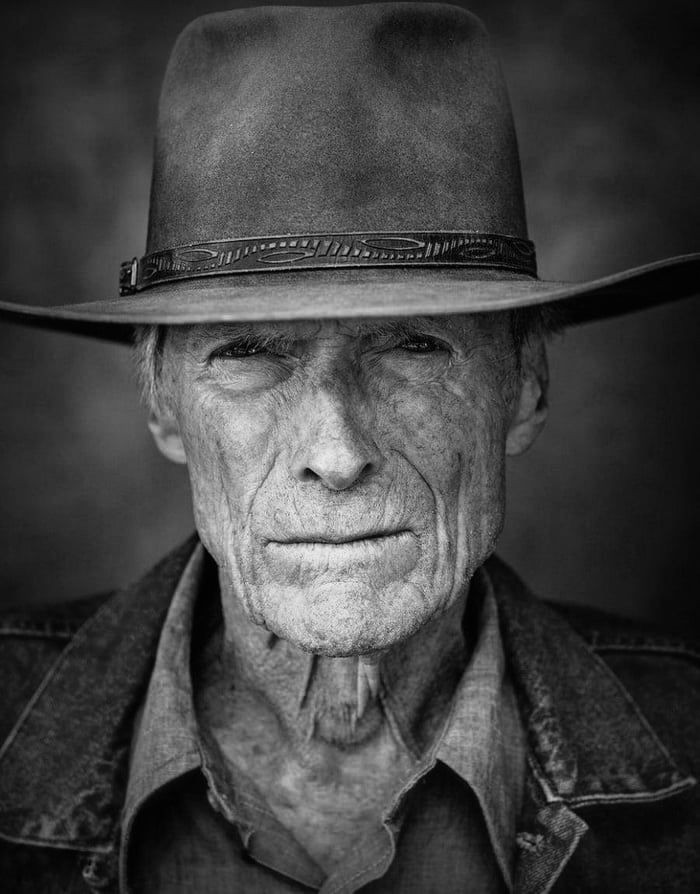
Clint Eastwood, 94-year-old vegan actor legend, formulated one of the most important lessons of his life so far for the young generation:
"Don't look for luxury in watches or bracelets, don't look for luxury in villas or sailboats!
Luxury is laughter and friends, luxury is rain on your face, luxury is hugs and kisses.
Don't look for luxury in shops, don't look for it in gifts, don't look for it in parties, don't look for it in events!
Luxury is being loved by people, luxury is being respected, luxury is having your parents alive, luxury is being able to play with your grandchildren. Luxury is what money can't buy."
Elon Musk's first wife once described what it's like to watch him fail.
She said he doesn't react the way normal people react. When a rocket explodes, most people in the room go silent. Some cry. Some start calculating the financial damage.
Musk pulls out his phone and starts making calls. Not emotional calls. Engineering calls. "What failed. When can we fix it. When's the next launch." His voice doesn't change. His face doesn't change. The rocket that just cost $60 million is already in the past. The next one is all that exists.
She said it was the most unsettling thing she'd ever witnessed. Not because he was cold. Because he genuinely wasn't affected. The failure didn't register as failure. It registered as data. An experiment that produced results. Results that inform the next experiment.
This is why he wins. Not because he doesn't fail. He fails more spectacularly than anyone in history. He wins because failure occupies zero psychological space. It enters as data and exits as action.
Most people lose not because they fail but because they spend weeks processing the failure before acting again. Musk spends zero seconds. The gap between failure and next attempt is a phone call.
After nearly 18 years I can stop working on Model S and X. We put so much love into these products, but will continue to pour that into the future products. Thanks to everyone who believed in and supported these cars through the years. We strived for the best and will never stop. Saying goodbye to something great and making room for something even greater!
Your brain has a circuit that doesn't know you live in a city. Its only job is to monitor whether birds are still singing. When they stop, something dangerous is nearby. When they continue, the coast is clear. This wiring predates primates. These kids are being sedated by the oldest safety signal in the mammalian nervous system.
The Max Planck Institute tested this in 2022 with 295 participants. Six minutes of birdsong reduced anxiety and paranoia with medium effect sizes. Six minutes of traffic noise increased depression by the same margin. The effect worked on people who had never left dense urban environments. Their bodies responded to a signal their conscious minds had never learned.
King's College London ran a larger study. 1,292 participants, real-time mood tracking through a phone app, 26,856 assessments over three years. Hearing or seeing birds improved mental wellbeing for up to eight hours afterward. The effect held for people diagnosed with depression. Trees, plants, and waterways didn't explain it. The birds themselves were the variable.
Now here's where Italy connects to Finland. 95% of parents in the Finnish city of Oulu let their babies nap outside starting at two weeks old. A 2008 study confirmed the children took longer, deeper naps outdoors. Parents reported letting them sleep in temperatures as low as -15°C. 66% said their babies were more active afterward compared to indoor naps. The practice started as a public health initiative from Nordic maternity clinics in the early 1900s and became cultural infrastructure.
The Italian kindergarten in this video is running the same program the Nordic countries have been running for a century. Outdoor naps, natural soundscapes, no white noise machines, no blackout curtains. Meanwhile, American kindergartens have been eliminating nap time entirely to squeeze in more instruction. A UMass study showed that children who skipped naps forgot 12% of what they learned that morning. The nap itself was the learning.
The irony is that the countries spending the least on sleep technology for children are producing the best sleep outcomes. No sound machines. No apps. Just birds.