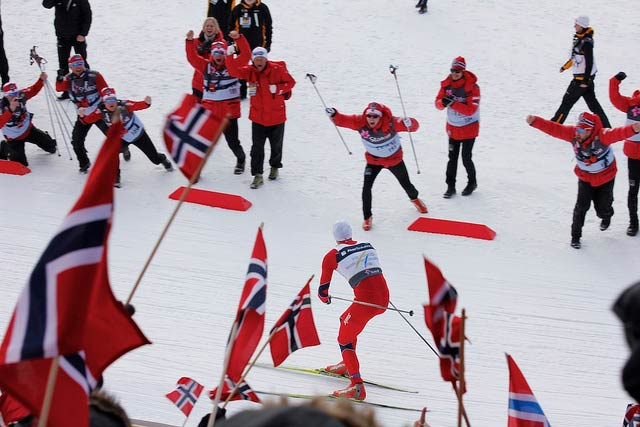
Norway consistently wins the most medals at the Winter Olympic Games, with a population of just 5.6 million people.
A big part of their success is how they treat youth sports—and it’s the opposite of what we do in the US. Here’s what we can learn from Norway:
1. Scorekeeping:
In the US: Youth sports tend to be hyper competitive even at early ages. Leagues almost always keep score.
In Norway: Scorekeeping isn’t even allowed until age 13.
Removing winners and losers keeps the focus on the process not outcomes. It keeps kids engaged longer because it minimizes pressure (and tears) and maximizes fun, learning, and growth. The goal isn’t to win a third grade championship. It’s to love sport and keep playing.
2. Trophies:
In the US: If you give everyone a trophy, you’re creating snowflakes who will never gain a competitive edge.
In Norway: Whenever trophies are awarded, they are handed out to everyone.
If getting a trophy makes young kids feel good, we should give them trophies. Maybe they’ll come back and play again next year!!
As for the creation of snowflakes with no competitive edge—Norway’s athletes are tough as nails and all they do is win.
3. Prioritizing Fun:
In the US: Far too often, the goal is to win.
In Norway: The national philosophy is “joy of sport.”
Youth sports in the US are driven by adults, ego, and money. Youth sports in Norway are driven by fun.
Only half of kids in the US participate in sports. The number one reason they drop out: because they aren’t having fun anymore. In Norway, 93% of kids participate in youth sports. Fun is the foremost goal.
4. Playing Multiple Sports:
In the US: There’s pressure to specialize early and play your best sport year round.
In Norway: Try as many sports as you can before specializing as late as college.
Norway encourages kids to try all types of sport. This reduces injury and burnout and increases all-around athleticism. It also helps promotes match quality, or finding the sport you are best suited for as your body develops, which is impossible if you commit to a single sport too early.
5. Affordability
In the US: There is increasingly a pay-to-play model with high fees for leagues, equipment, and travel. This excludes many kids from playing.
In Norway: It’s a national priority to keep youth sports affordable and therefore accessible for all.
Kids aren’t priced out, which creates opportunities for everyone to participate (and develop into athletes), regardless of their parents’ income level.
We could learn a lot from Norway:
In the US, 70% of kids drop out of youth sports by age 13. This not only diminishes an elite-athlete pipeline, but it also destroys an opportunity for healthy habits and all the character lessons kids can learn from sport.
In Norway, lifelong participation in sport is the norm. The goal isn’t to have the best 9U team. It’s to develop the best athletes. Those are two very different things. And Norway has the gold medals to prove it.
The @argoalumni's golf tourney, now named after Pete Martin, will be held Oct. 5 at Lionhead in support of Football Toronto’s Helmet Bank & the TAAA Alumni Support Fund. To ensure we make the biggest impact possible, we'd love to have you join us or consider sponsorship. 1/2
The Prime Minister Decides To Go & Canada Says THANK GOD
At 10:45, we will know exactly how he's going & how he will actually depart the job, we will get the announcement with details to follow
It doesn't really matter how he finally goes: Bottom Line is he's finished
2/
Even if you paid $250 for the Centre Ice Package in Canada, but don't have Amazon Prime and didn't upgrade your cable package to include Sportsnet One, that means you've had no NHL hockey for two of the past three nights. I swear the NHL doesn't want people to watch its games.
@Eddie_Steele97 I completely get what you’re saying on the not playing part and I also think the coach going to the media with that story just backfired because the team didn’t end up winning with MBT. Coach didn’t have to but it supported his decision and they didn’t end up winning enough 🤷♂️