I have decided to weigh in on the conversation of setting up an Ebola Isolation Unit, not just to provide points for discourse, or a point of view, but because I was a responder during the Ebola outbreak in Sierra Leone in 2014. The outbreak found me already working in a hospital (Aberdeen Women’s Centre, @AbWomensCentre ) in Freetown, Sierra Leone, and for a period of 8 months of the outbreak I was active in ground.
So here are my thoughts after some reflection.
· First, with the right protocols in place it is very possible to run an isolation ward effectively, with significantly reduced risk of a leak beyond the isolation facility. Proper protocols for the entire response team, from doctors to nurses to cleaners to security guards. While I was at Aberdeen Women’s Centre, we ran a public facing service through out Ebola without a single incidence of Ebola. Proper screening and IPC procedures can work (we also prayed a lot as a mission hospital). So maybe, ni God manze.
· Secondly, even with the best IPC protocols. The risk of the disease escaping from the isolation facility through a carrier is not completely removed. EVD is an exceptionally contagious virus that even the slightest error in IPC procedure, more so, removal of PPE can lead to contamination, which then leads to infection and cross infection. This provides for a low probability, high risk outcome. These are not common; most people assume that low probability means low risk. When a 0.05% probability / possibility of a leak could end up in community infection, community level quarantine, deaths, borders closed, airports closed, economic disruption, then that 0.05% probability should still be viewed as high risk. And it should be clear what protocols will be in place in the event of a leak outside the isolation area. For example, if this was to happen, does the US Gov take responsibility for a wider response and any lives lost? Those planning the response should be public about what guarantees are in place. This cannot be a let’s wait and see situation.
I witnessed exceptionally well-run isolation centers, MSF / WHO end up with infected responders. This is the risk, there are no safety guarantees. But there are work arounds that can be thought through that might work.
My thoughts for work arounds are as follows:
· Employees choosing (choosing because it should be voluntary, non-coerced) to work in the isolation facility should live in a camp-based arrangement (no leaving the compound, yes new entrants). They should not be allowed to leave (even for R&R) until the regional outbreak is declared over plus 30 days (standard is 21).
· Employees should understand the risk clearly and the response should provide adequate guarantees through insurance for all staff, medical and non-medical in the event that they get infected in a response. The response should be public about what guarantees are in place. This cannot be a let’s wait and see situation.
An afterthought is that the greatest risk is introducing a new disease that has not existed in our ecosystem. We have our monkeys and bats (normal carriers) and a community level infection, could imply the introduction of a new pathogen in our ecosystem which might be very difficult to clear. Implication of this could be subsequent outbreaks in the country. Currently we have bats (synanthropic) even in Laikipia that could act as carriers. Other known carriers are in the Taita Taveta region.
So yes, it is possible to run an isolation center safely, but this is not without risk. The slightest probability of the disease leaking out of the isolation facility to the community, though a very low probability, could be catastrophic. This is the risk that the government is taking.
If they decide that it is fair game to set up the facility and actually isolate travelers / suspected patients, they should also develop a mission ready plan for a wider response in case this happened. A wider response will cost Kenya billions of dollars that we cannot afford given our fiscal situation.
I am not a medical expert nor a public health expert nor am I a government apologist (my profile speaks for itself on this). I am weighing in from a position where I managed a health facility way into an Ebola outbreak.
FG
I was an ebola responder in Sierra Leone in 2014.
These are my thoughts regarding today's ministry of health announcement.
First, the announcement should be treated with utmost seriousness, and the government should assess thoroughly, contacts, community level risk etc.
(I wrote something about community level risk on this shared post below).
Still I have a few questions
First of all, a single case of ebola in a country is regarded as a disease outbreak of national importance. Why hasn't WHO issued any statement on this outbreak.
Two, when did the doctor at Nairobi Hospital order for a haemorrhagic disease test and when did the diagnosis come through. When did the government know that the patient had Ebola, and why were they not removed from Nairobi Hospital and sent to the isolation centre as the protocol would require. The response for outbreaks like ebola is a public health response and only the government has the responsibility to isolate and treat.
Three, Are there no screening facilities at the airport? The government is talking about preparedness, why was this not caught at the point of entry. A patient travelling from an Ebola zone and arrives with fevers, chills etc ...what are the port of entry protocols. I remember my entry in 2014 October from Sierra Leone, perfectly healthy, the entry process was so rigorous which ended with the MoH isolating me for 21 days. Why was this not picked up? What is this animal that the government calls preparedness if they failed to catch this at the point of entry.
Kenyans, take this matter with utmost seriousness. Our public health system has never dealt with anything like ebola.
Trust me on this one. If we have had community level infection out of this.... We are in for tough times. The chain works like this.
Infected Patient is in hospital.
2 to 3 Nurses take care of him, a cleaner and kitchen porter every single day.
The 5 people travel home in a matatu, everyone is exposed.
They get home three of them have kids and family ( exposure increases)
Kids play with other kids ( more contact) and they go to school ( further contact).
Those hospital workers go back to work the next day, public. Transport exposure, interact and share facilities with other staff, before end of day two...the chain reaction of contact persons is significant....
And there is always the gap between patient admission in hospital, first responders, before the doctor comes in to see the patient, order for tests, etc.... normally, the risk is here because normal IPC procedures are used, and these are nowhere near what is needed to respond to Ebola.
No kubaya.
Also on another note tusisahau 2 weeks ago G20 mobilised close to USD 3 billion to respond to Ebola. With all the seriousness it deserves, I still smell sharp boys.
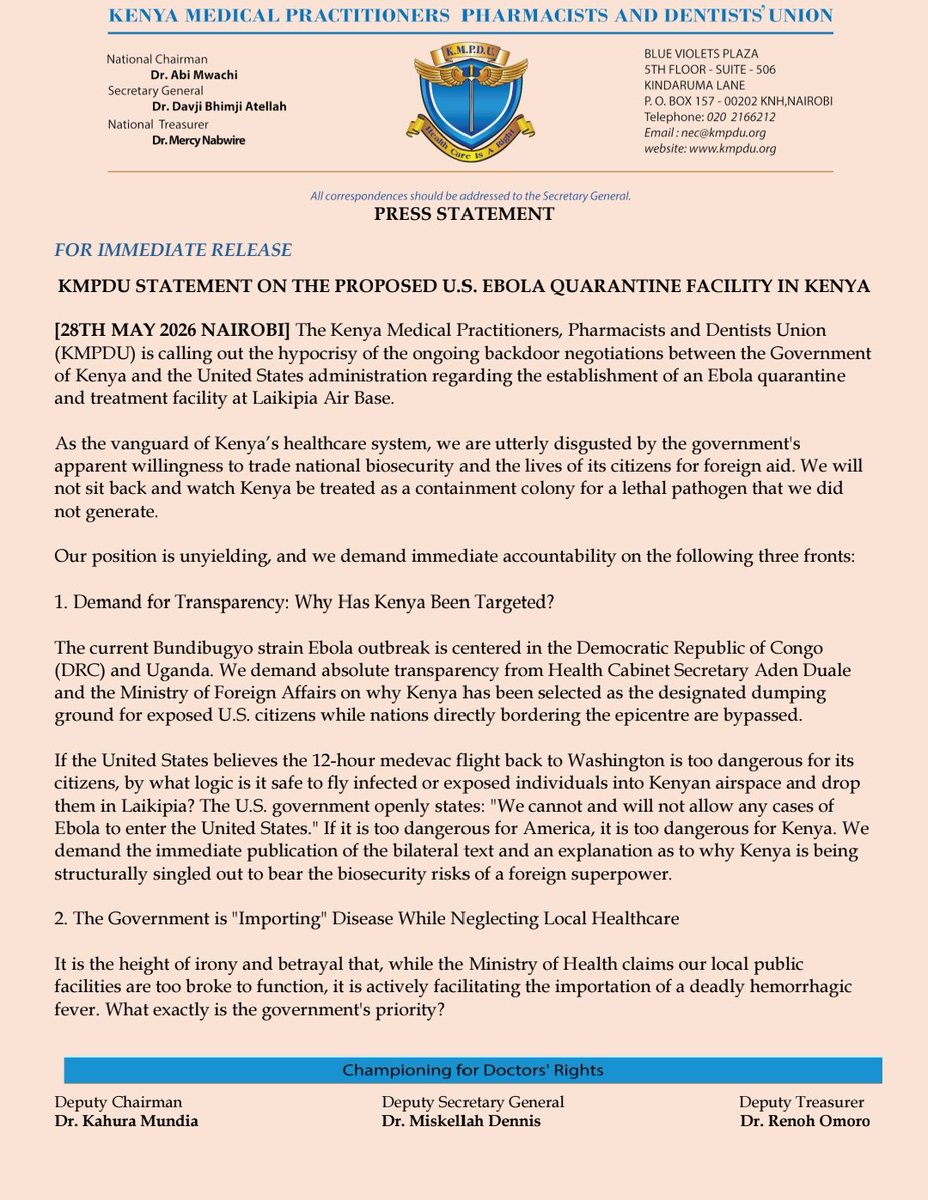
EPRA has slapped us with three new separate charges: Ksh 3.47/kWh for fuel costs, Ksh 1.23/kWh for forex losses, and a Ksh 0.0154/kWh for a water levy. Together, this adds a punishing Ksh 4.70 to every single unit of electricity with the heavy charges before factored in. This means a 20% to 30% spike above the normal power bills. A family buying Ksh 200 worth of tokens will get 6.4 units today, when that exact same Ksh 200 bought 8 units just last month. How did we, as a country, sit back and allow this economic plunder to happen?
Ethiopia’s Sidama Bank has signed a correspondent banking agreement with Equity Bank Kenya, gaining access to cross-border payments, trade finance and foreign currency transaction channels across East and Central Africa.
https://t.co/XxB8CC3T2R
@citizentvkenya By framing the protests as "profiling against Ruto," the administration attempts to shift the conversation from economics to identity politics. This implies that Kenyans are not genuinely hungry or struggling to pay bus fare, but are instead just politically biased.
Comoros🇰🇲 government now suspends new fuel prices introduced in response to the Iran war, backing down after the hikes, diesel prices by 46% and gasoline prices by 35%, prompted demonstrations and deadly clashes across the East African archipelago.
"The government and President Azali (Assoumani) heard the cries of the Comorian people. There was no other solution than to listen to them. The goal is to preserve peace," Energy Minister Aboubacar Saïd Anli announces.
President Azali suspended the decrees related to the fuel price hike, which were introduced on May 9, to allow for talks on the matter.
Source: @Reuters.
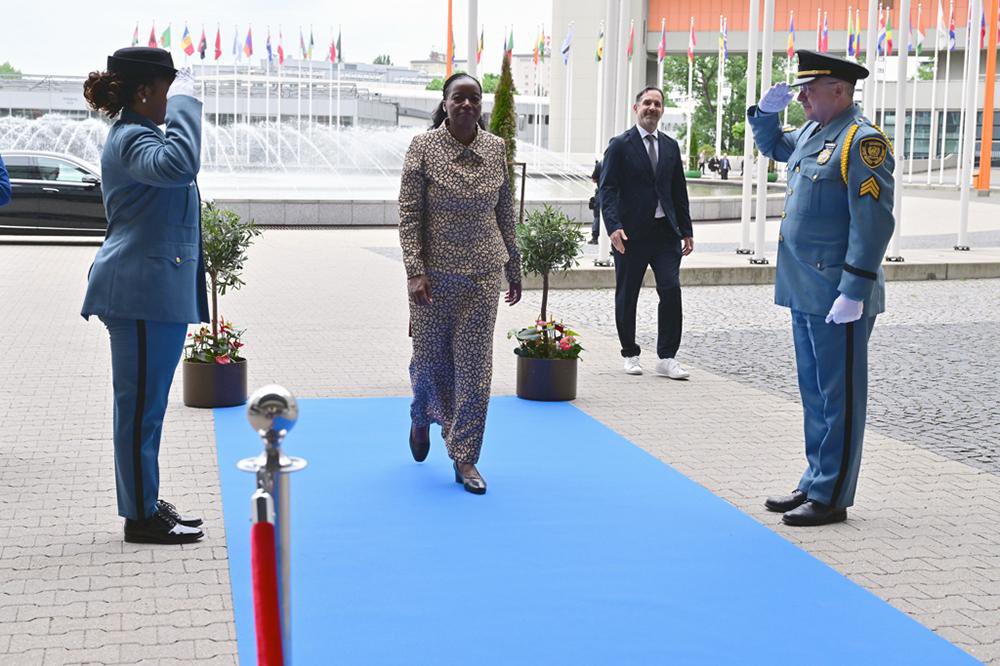
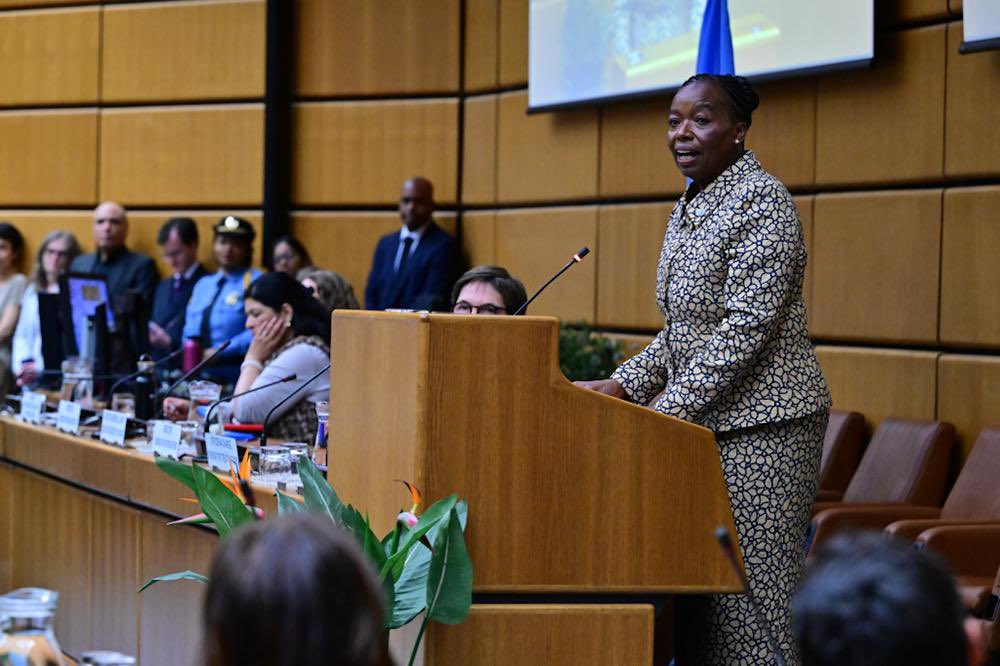
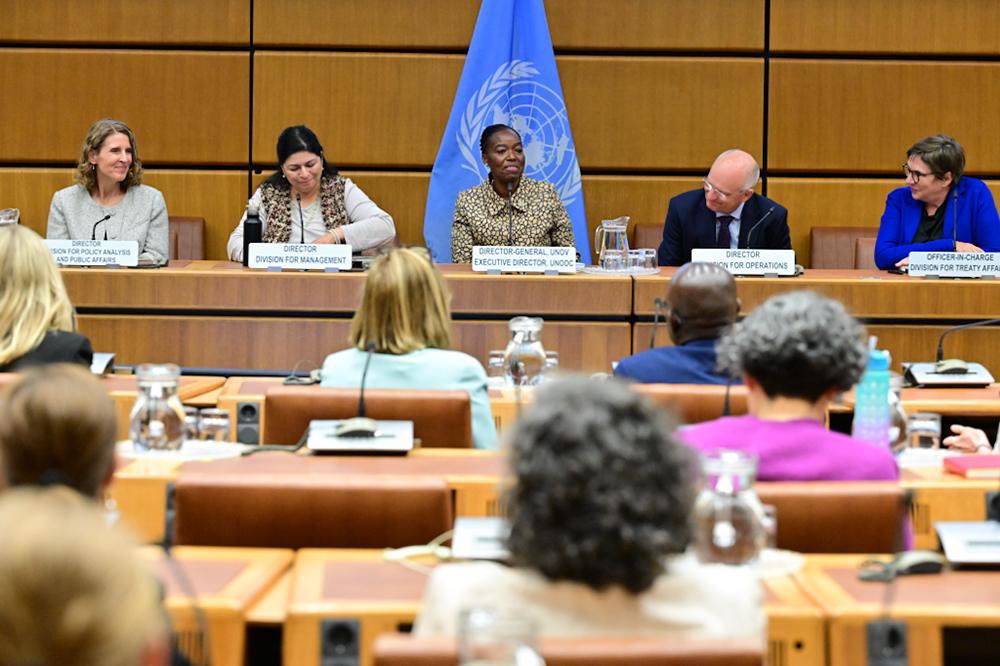
I am deeply proud and honoured to start my tenure as Director-General/Executive Director of the UN Office at Vienna/@UNODC.
I look forward to leading the @UN’s work in addressing the challenges of drugs, organized crime, corruption and terrorism, for a safer and more just world.
35 WEBSITES THAT ARE ACTUALLY USEFUL
1. archive. org — access old content
2. wolframalpha. com — solve anything
3. removebg. com — remove image background
4. tinypng. com — compress images free
5. smallpdf. com — edit PDFs free
6. ilovepdf. com — merge & split PDFs
7. deepl. com — best translator online
8. grammarly. com — fix your writing
9. hemingwayapp. com — simplify writing
10. chatgpt. com — ask any question
11. perplexity. ai — smart search engine
12. notion. so — organize your whole life
13. trello. com — manage any project
14. canva. com — design for free
15. unsplash. com — free photos
16. pexels. com — free videos & photos
17. flaticon. com — free icons
18. coolors. co — pick color palettes
19. fonts. google. com — free fonts
20. namecheap. com — buy cheap domains
21. github. com — free code hosting
22. replit. com — code from browser
23. regex101. com — test any code
24. explainshell. com — understand commands
25. fast. com — check internet speed
26. haveibeenpwned. com — check if hacked
27. virustotal. com — scan files for virus
28. downdetector. com — check if site is down
29. 10minutemail. com — temp email address
30. justpaste. it — share text instantly
31. screely. com — make screenshots beautiful
32. carbon. now. sh — share code beautifully
33. squoosh. app — compress any image
34. similarsites. com — find similar websites
35. shortcuts. design — design shortcuts list
After leaving OPEC
With its Fujairah pipeline bypassing the Strait of Hormuz, UAE can now ramp up freely potentially adding around 2 million extra barrels a day and helping break the high-price grip..
Game changer for markets😎
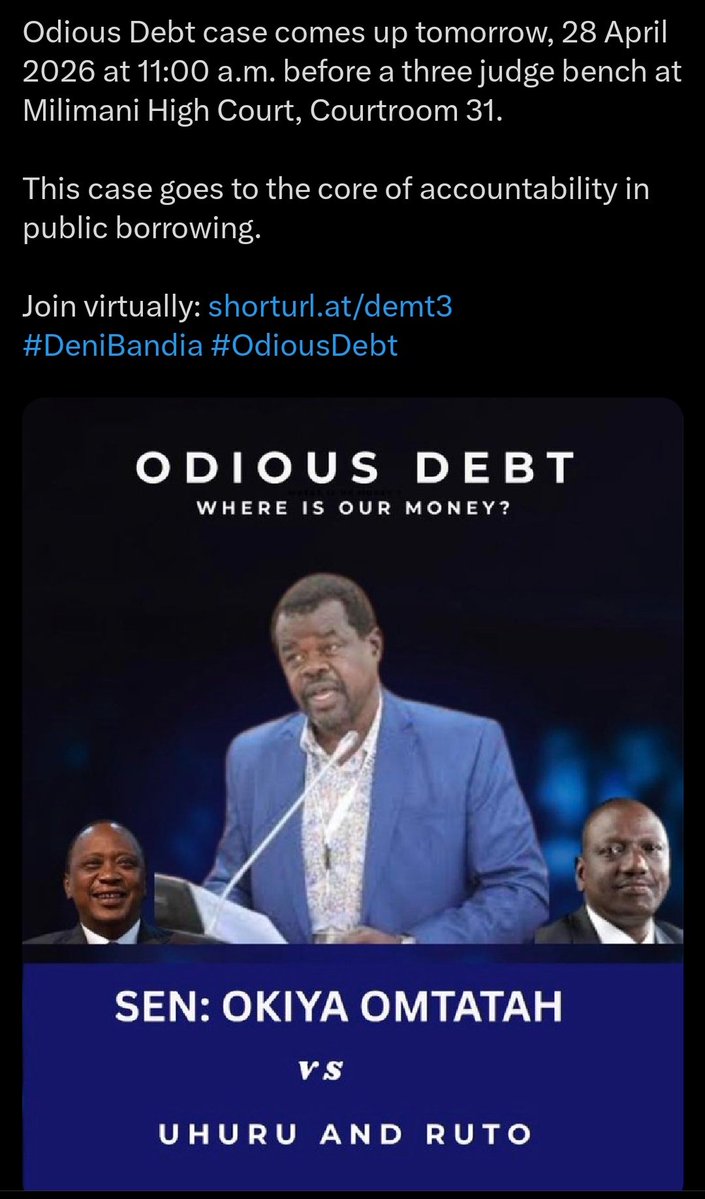
Why Sen @OkiyaOmtatah is challenging Kshs. 6,950,163,132,328 (Sh6.95T) in public debt — including USD 7.1B in Eurobond loans — incurred between 2014/2015 and 2024/2025.
Core Issue: The Executive borrowed without parliamentary appropriation, deposited proceeds offshore, and used funds outside budgeted development expenditure. The debts are therefore odious, unconstitutional, illegal, and unenforceable against Kenyan taxpayers.
Seven Interlocking Legal Doctrines
1. Odious Debt — Debt incurred without popular consent, not used for public benefit, with lender knowledge of illegitimacy, is not binding on the people. Only 28.6% of actual borrowings had Appropriation Act authorisation. Eurobond proceeds financed no development projects — borrowed for “hot air.”
2. Derivative Unconstitutionality — Like the “fruit of the poisonous tree,” all subsequent transactions (repayments, roll-overs, refinancing) are void. Anchored in Ndii v AG (BBI case) and Kenya Bankers Association [2024]. Every successive Eurobond is a “child of the poisonous tree.”
3. Illegality (Ex Turpi Causa) — Four compounding constitutional violations: offshore deposits breaching Article 206(1); unauthorised withdrawals breaching Articles 228(4)&(5); borrowings outside Appropriation Acts; and unconstitutional PFMA amendments passed without Senate involvement.
4. Ostensible Authority — Lenders cannot claim apparent authority where the agent (CS Treasury/PS) exceeded expressly limited statutory powers. Eurobond proceeds placed offshore was a clear red flag that constitutionally mandated channels were bypassed.
5. Public Policy — The borrowing scheme subverted constitutional oversight, USD 999 million from first Eurobond remains unaccounted for, and 73% of tax revenue was consumed servicing debt — largely odious. The 55% GDP debt ceiling is itself contrary to public policy; debt sustainability must be measured against revenue.
6. Legitimate Expectation — Citizens reasonably expected constitutional compliance, parliamentary authorisation, development-linked use of funds, and transparency. All expectations were systematically frustrated.
7. Restitutionary Remedies — Article 226(5) imposes personal liability on public officers who direct unlawful use of public funds. Former President Uhuru Kenyatta (Sh4.6T) in unauthorised borrowings during his tenure) and named Treasury/audit officials face personal liability.
Key Conclusions Sought
✅Sh6.95Tdeclared odious and not binding on Kenyans
✅USD 7.1B Eurobond loans declared unconstitutional and illegal
✅PFMA Amendment Act 2014 declared unconstitutional
✅Named respondents, including Uhuru Kenyatta, held personally liable under Article 226(5)
✅IMF “On-lent loan” facilities declared to have no basis in Kenyan law
✅Government permanently prohibited from repaying odious debts from public funds
Good afternoon patriots. Here is your Lunchtime dose of anger. This should make you angry enough to avoid any nice looking thing near you.
Today at Milimani High Court.
Courtroom 31.
One man is challenging KSh 7 trillion of debt.
Borrowed in your name.
Without your approval.
Routed to offshore accounts instead of the Consolidated Fund.
KSh 12.4 trillion total.
And only 28.6% had proper legal backing.
The rest was just borrowed.
Quietly.
On your behalf.
While you were sleeping.
The political class is silent.
The media is silent.
The same media that covered Ruto's misquoting in real time.
Silent.
The same politicians who scream about the people on rally podiums.
Silent.
Because this case does not just challenge the debt.
It challenges everyone who borrowed it.
Past presidents.
Current presidents.
Treasury officials.
The IMF.
All named as respondents.
Now here is the question nobody is asking.
If Omtatah wins.
Who pays?
You.
The same Kenyan who did not borrow the money.
Did not approve the money.
Did not see the money.
Will pay back the money.
With SHA deductions.
And housing levy.
And dirty fuel taxes.
This is the most important court case in Kenya's history.
And it is trending below Ruto's English lessons.
Stand with Omtatah Kenya.
He is doing what the whole Parliament should be doing.
For free on your behalf.
Again. Make it trend as they do not want you to know about #DeniBandia
Dismas wa Tabu. Dreaming in installments. Billed in full.
Iran has never fired at Africa.
Iran fired at the Middle East bases of the US and Israel, which STARTED THE WAR.
You have killed over 66,000 people since October 2023.
Killed at least 210 journalists.
Raped prisoners.
Tortured children. Used starvation as a weapon of war
You're an immediate threat.
Mwananchi ajitolee, aamke 5am, akae kwa jam mpaka afike job 7:30am. Then apige 8-5 yake. Alipe 30% tax. Alafu bado aswim akienda home while fighting for his life.
Aren't we angry enough Kenyans?







![smutoro's tweet photo. Why Sen @OkiyaOmtatah is challenging Kshs. 6,950,163,132,328 (Sh6.95T) in public debt — including USD 7.1B in Eurobond loans — incurred between 2014/2015 and 2024/2025.
Core Issue: The Executive borrowed without parliamentary appropriation, deposited proceeds offshore, and used funds outside budgeted development expenditure. The debts are therefore odious, unconstitutional, illegal, and unenforceable against Kenyan taxpayers.
Seven Interlocking Legal Doctrines
1. Odious Debt — Debt incurred without popular consent, not used for public benefit, with lender knowledge of illegitimacy, is not binding on the people. Only 28.6% of actual borrowings had Appropriation Act authorisation. Eurobond proceeds financed no development projects — borrowed for “hot air.”
2. Derivative Unconstitutionality — Like the “fruit of the poisonous tree,” all subsequent transactions (repayments, roll-overs, refinancing) are void. Anchored in Ndii v AG (BBI case) and Kenya Bankers Association [2024]. Every successive Eurobond is a “child of the poisonous tree.”
3. Illegality (Ex Turpi Causa) — Four compounding constitutional violations: offshore deposits breaching Article 206(1); unauthorised withdrawals breaching Articles 228(4)&(5); borrowings outside Appropriation Acts; and unconstitutional PFMA amendments passed without Senate involvement.
4. Ostensible Authority — Lenders cannot claim apparent authority where the agent (CS Treasury/PS) exceeded expressly limited statutory powers. Eurobond proceeds placed offshore was a clear red flag that constitutionally mandated channels were bypassed.
5. Public Policy — The borrowing scheme subverted constitutional oversight, USD 999 million from first Eurobond remains unaccounted for, and 73% of tax revenue was consumed servicing debt — largely odious. The 55% GDP debt ceiling is itself contrary to public policy; debt sustainability must be measured against revenue.
6. Legitimate Expectation — Citizens reasonably expected constitutional compliance, parliamentary authorisation, development-linked use of funds, and transparency. All expectations were systematically frustrated.
7. Restitutionary Remedies — Article 226(5) imposes personal liability on public officers who direct unlawful use of public funds. Former President Uhuru Kenyatta (Sh4.6T) in unauthorised borrowings during his tenure) and named Treasury/audit officials face personal liability.
Key Conclusions Sought
✅Sh6.95Tdeclared odious and not binding on Kenyans
✅USD 7.1B Eurobond loans declared unconstitutional and illegal
✅PFMA Amendment Act 2014 declared unconstitutional
✅Named respondents, including Uhuru Kenyatta, held personally liable under Article 226(5)
✅IMF “On-lent loan” facilities declared to have no basis in Kenyan law
✅Government permanently prohibited from repaying odious debts from public funds](https://pbs.twimg.com/media/HG7BeweawAAjP1v.jpg)
![smutoro's tweet photo. Why Sen @OkiyaOmtatah is challenging Kshs. 6,950,163,132,328 (Sh6.95T) in public debt — including USD 7.1B in Eurobond loans — incurred between 2014/2015 and 2024/2025.
Core Issue: The Executive borrowed without parliamentary appropriation, deposited proceeds offshore, and used funds outside budgeted development expenditure. The debts are therefore odious, unconstitutional, illegal, and unenforceable against Kenyan taxpayers.
Seven Interlocking Legal Doctrines
1. Odious Debt — Debt incurred without popular consent, not used for public benefit, with lender knowledge of illegitimacy, is not binding on the people. Only 28.6% of actual borrowings had Appropriation Act authorisation. Eurobond proceeds financed no development projects — borrowed for “hot air.”
2. Derivative Unconstitutionality — Like the “fruit of the poisonous tree,” all subsequent transactions (repayments, roll-overs, refinancing) are void. Anchored in Ndii v AG (BBI case) and Kenya Bankers Association [2024]. Every successive Eurobond is a “child of the poisonous tree.”
3. Illegality (Ex Turpi Causa) — Four compounding constitutional violations: offshore deposits breaching Article 206(1); unauthorised withdrawals breaching Articles 228(4)&(5); borrowings outside Appropriation Acts; and unconstitutional PFMA amendments passed without Senate involvement.
4. Ostensible Authority — Lenders cannot claim apparent authority where the agent (CS Treasury/PS) exceeded expressly limited statutory powers. Eurobond proceeds placed offshore was a clear red flag that constitutionally mandated channels were bypassed.
5. Public Policy — The borrowing scheme subverted constitutional oversight, USD 999 million from first Eurobond remains unaccounted for, and 73% of tax revenue was consumed servicing debt — largely odious. The 55% GDP debt ceiling is itself contrary to public policy; debt sustainability must be measured against revenue.
6. Legitimate Expectation — Citizens reasonably expected constitutional compliance, parliamentary authorisation, development-linked use of funds, and transparency. All expectations were systematically frustrated.
7. Restitutionary Remedies — Article 226(5) imposes personal liability on public officers who direct unlawful use of public funds. Former President Uhuru Kenyatta (Sh4.6T) in unauthorised borrowings during his tenure) and named Treasury/audit officials face personal liability.
Key Conclusions Sought
✅Sh6.95Tdeclared odious and not binding on Kenyans
✅USD 7.1B Eurobond loans declared unconstitutional and illegal
✅PFMA Amendment Act 2014 declared unconstitutional
✅Named respondents, including Uhuru Kenyatta, held personally liable under Article 226(5)
✅IMF “On-lent loan” facilities declared to have no basis in Kenyan law
✅Government permanently prohibited from repaying odious debts from public funds](https://pbs.twimg.com/media/HG7BewXacAA4ajh.jpg)
![smutoro's tweet photo. Why Sen @OkiyaOmtatah is challenging Kshs. 6,950,163,132,328 (Sh6.95T) in public debt — including USD 7.1B in Eurobond loans — incurred between 2014/2015 and 2024/2025.
Core Issue: The Executive borrowed without parliamentary appropriation, deposited proceeds offshore, and used funds outside budgeted development expenditure. The debts are therefore odious, unconstitutional, illegal, and unenforceable against Kenyan taxpayers.
Seven Interlocking Legal Doctrines
1. Odious Debt — Debt incurred without popular consent, not used for public benefit, with lender knowledge of illegitimacy, is not binding on the people. Only 28.6% of actual borrowings had Appropriation Act authorisation. Eurobond proceeds financed no development projects — borrowed for “hot air.”
2. Derivative Unconstitutionality — Like the “fruit of the poisonous tree,” all subsequent transactions (repayments, roll-overs, refinancing) are void. Anchored in Ndii v AG (BBI case) and Kenya Bankers Association [2024]. Every successive Eurobond is a “child of the poisonous tree.”
3. Illegality (Ex Turpi Causa) — Four compounding constitutional violations: offshore deposits breaching Article 206(1); unauthorised withdrawals breaching Articles 228(4)&(5); borrowings outside Appropriation Acts; and unconstitutional PFMA amendments passed without Senate involvement.
4. Ostensible Authority — Lenders cannot claim apparent authority where the agent (CS Treasury/PS) exceeded expressly limited statutory powers. Eurobond proceeds placed offshore was a clear red flag that constitutionally mandated channels were bypassed.
5. Public Policy — The borrowing scheme subverted constitutional oversight, USD 999 million from first Eurobond remains unaccounted for, and 73% of tax revenue was consumed servicing debt — largely odious. The 55% GDP debt ceiling is itself contrary to public policy; debt sustainability must be measured against revenue.
6. Legitimate Expectation — Citizens reasonably expected constitutional compliance, parliamentary authorisation, development-linked use of funds, and transparency. All expectations were systematically frustrated.
7. Restitutionary Remedies — Article 226(5) imposes personal liability on public officers who direct unlawful use of public funds. Former President Uhuru Kenyatta (Sh4.6T) in unauthorised borrowings during his tenure) and named Treasury/audit officials face personal liability.
Key Conclusions Sought
✅Sh6.95Tdeclared odious and not binding on Kenyans
✅USD 7.1B Eurobond loans declared unconstitutional and illegal
✅PFMA Amendment Act 2014 declared unconstitutional
✅Named respondents, including Uhuru Kenyatta, held personally liable under Article 226(5)
✅IMF “On-lent loan” facilities declared to have no basis in Kenyan law
✅Government permanently prohibited from repaying odious debts from public funds](https://pbs.twimg.com/media/HG7BewXaQAAen7w.jpg)







![smutoro's tweet photo. Why Sen @OkiyaOmtatah is challenging Kshs. 6,950,163,132,328 (Sh6.95T) in public debt — including USD 7.1B in Eurobond loans — incurred between 2014/2015 and 2024/2025.
Core Issue: The Executive borrowed without parliamentary appropriation, deposited proceeds offshore, and used funds outside budgeted development expenditure. The debts are therefore odious, unconstitutional, illegal, and unenforceable against Kenyan taxpayers.
Seven Interlocking Legal Doctrines
1. Odious Debt — Debt incurred without popular consent, not used for public benefit, with lender knowledge of illegitimacy, is not binding on the people. Only 28.6% of actual borrowings had Appropriation Act authorisation. Eurobond proceeds financed no development projects — borrowed for “hot air.”
2. Derivative Unconstitutionality — Like the “fruit of the poisonous tree,” all subsequent transactions (repayments, roll-overs, refinancing) are void. Anchored in Ndii v AG (BBI case) and Kenya Bankers Association [2024]. Every successive Eurobond is a “child of the poisonous tree.”
3. Illegality (Ex Turpi Causa) — Four compounding constitutional violations: offshore deposits breaching Article 206(1); unauthorised withdrawals breaching Articles 228(4)&(5); borrowings outside Appropriation Acts; and unconstitutional PFMA amendments passed without Senate involvement.
4. Ostensible Authority — Lenders cannot claim apparent authority where the agent (CS Treasury/PS) exceeded expressly limited statutory powers. Eurobond proceeds placed offshore was a clear red flag that constitutionally mandated channels were bypassed.
5. Public Policy — The borrowing scheme subverted constitutional oversight, USD 999 million from first Eurobond remains unaccounted for, and 73% of tax revenue was consumed servicing debt — largely odious. The 55% GDP debt ceiling is itself contrary to public policy; debt sustainability must be measured against revenue.
6. Legitimate Expectation — Citizens reasonably expected constitutional compliance, parliamentary authorisation, development-linked use of funds, and transparency. All expectations were systematically frustrated.
7. Restitutionary Remedies — Article 226(5) imposes personal liability on public officers who direct unlawful use of public funds. Former President Uhuru Kenyatta (Sh4.6T) in unauthorised borrowings during his tenure) and named Treasury/audit officials face personal liability.
Key Conclusions Sought
✅Sh6.95Tdeclared odious and not binding on Kenyans
✅USD 7.1B Eurobond loans declared unconstitutional and illegal
✅PFMA Amendment Act 2014 declared unconstitutional
✅Named respondents, including Uhuru Kenyatta, held personally liable under Article 226(5)
✅IMF “On-lent loan” facilities declared to have no basis in Kenyan law
✅Government permanently prohibited from repaying odious debts from public funds](https://pbs.twimg.com/media/HG7BewiboAA-Lny.jpg)