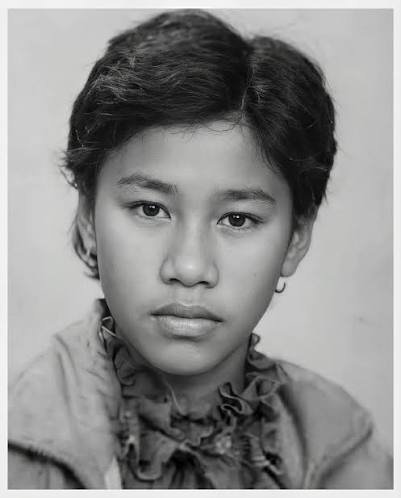
*the Nǀuu language
The Nǀuu tongue that Ouma Katrina Esau them are reviving is a Tuu language, not a Khoe language like Nama (Khoekhoegowab) or !Ora (Khoemana). We need to take care to not also misname already little-known endangered languages like this.
Every word spoken is a step towards reclaiming our heritage. 🌿
Ouma Katrina is teaching the Khoi language to young Khoi descendants, ensuring that the voices of their ancestors continue to live on. By passing the language to the next generation, she is preserving a rich cultural heritage, strengthening identity, and inspiring pride in where they come from.
A people who keep their language alive keep their history alive.
Before there was Griqualand, there was Adam Kok I.
Born around 1710, Adam Kok I became the founding Kaptyn of the Griqua people. He united Khoikhoi, freed slaves, and people of mixed ancestry into a community that refused to be defined by colonial rule.
His leadership laid the foundation for a nation whose legacy still lives on in South Africa today.
The story of the Griqua begins with Adam Kok I. Never forget his name.
#Griqua #AdamKokI #Khoisan #SouthAfricanHistory #ColouredHistory #Heritage
The Griqua: A Story of Survival, Leadership, and Identity
The Griqua are one of South Africa's oldest indigenous communities, descended primarily from Khoikhoi people with later European and other African ancestry. Many Griqua trace part of their heritage to the Chariguriqua (Chariaguriqua), one of the historic Khoikhoi chiefdoms of the Cape, alongside other Khoikhoi groups that contributed to the formation of the Griqua people.
Over time, the Griqua developed a distinct identity, culture, and political community. Rather than disappearing under colonial rule, they established their own nation, preserving indigenous traditions while forging a unique Griqua identity.
During the 18th and 19th centuries, the Griqua founded independent territories, including Griqualand West and Griqualand East. Under leaders such as Adam Kok III, Andries Waterboer, and Nicolaas Waterboer, they governed their own communities, negotiated with colonial powers, and fought to protect their people, land, and sovereignty.
The Griqua's history is one of resilience, migration, diplomacy, and leadership. Today, they remain a recognized indigenous community whose heritage is deeply connected to the wider Khoi and San history. Their story continues through their descendants, cultural traditions, and ongoing efforts to preserve their unique identity for future generations.
He was only 20 years old.
Robert Anthony Basil Waterwitch was a young anti-apartheid activist from Athlone who joined Umkhonto we Sizwe (MK) in the fight against apartheid.
On 23 July 1989, he was killed in an explosion during an operation targeting the Athlone Magistrate's Court. The exact circumstances of the explosion remain disputed, with later investigations raising questions about whether the operation had been compromised.
Though his life was cut short, his name remains part of South Africa's liberation history.
Never forget Robert Anthony Basil
Imagine watching strangers bulldoze the home your family built... simply because of the colour of your skin
They didn't just demolish houses. They demolished lives.
In District Six, the apartheid government ripped more than 60,000 people from the only homes they had ever known. The majority were Coloured families who lost their streets, neighbours, churches, schools, businesses, and generations of memories overnight.
You can rebuild buildings. You cannot rebuild stolen childhoods, broken communities, or the tears of families forced onto trucks because of the colour of their skin.
District Six is not just history. It is a scar on South Africa's soul.
Never forget. Never deny. Never allow it to happen again.
#DistrictSix #ForcedRemovals #NeverForget #SouthAfricanHistory #CapeTown
If ever you wanted a peek into the mind of a racist white South African, have a look at the comment section.
They are so blinded by hatred that they forget there are still people alive in our country today that tells the stories of the Coline Williams's of our country. People who did not read these stories but personally spoke to many of them face to face.
@Saxon_African@LabelBeyond1652 She didn’t kill herself that was a LIE! The evidence showed that she was killed and the explosive story was so inconsistent, it was evident that they were killed by apartheid police
@Saxon_African@LabelBeyond1652 Killed by the boers. That's the problem with your limitations, she wouldn't have had to be handling a home-made explosive if it wasn't for the cruel and vile system of apartheid, she had to take a stand, and she did. But it's boers who killed her..
She was only 22 years old.
Coline Williams was a young anti-apartheid activist from Bonteheuwel. As a teenager, she joined the struggle against apartheid, was detained without trial for 11 months, and later became an operative in MK.
On 23 July 1989, during an operation near the Athlone Magistrate's Court, an explosive device detonated, killing her at just 22 years old. While the official account was that the device exploded prematurely, her family has long questioned the circumstances of her death.
Today, Coline Williams is remembered by many as one of the young South Africans who sacrificed everything in the fight against apartheid. Her legacy continues to be honoured, and her story deserves to be remembered.
Coloured women who stood on the front lines of the liberation struggle.
Gertrude Fester
Dulcie September
Coline Williams
Rahima Moosa
Cissie Gool
Cheryl Carolus
Theresa Solomon
Liz Abrahams
Zubeida Jaffer
A special thanks to a fellow southern African woman who pute this together @MsLoveLiii ❤❤
This is Ouma Katrina a national treasure who refused to let the N|uu language die. At over 90 years old, she dedicated her life to preserving one of the world's oldest living languages. Every South African should know her name.