Tesla self-driving saves a lot of lives – the statistics are unequivocal.
That doesn’t mean it’s perfect, of course.
Even when we improve safety 10X, saving 90% of the million lives lost in auto accidents every year, Tesla will still get sued for the 10% who did die. The 90% who are still alive mostly won’t even know that Tesla saved them.
Nonetheless, it is the right thing to do.
Congratulations to @CoachDustyMay, Elliot Cadeau, and @UMichBBall on winning their first title since 1989! This team dominated the tournament from start to finish. Well deserved. Go Blue!
Most people are still focused on the usual platforms, but something different is starting to take shape.
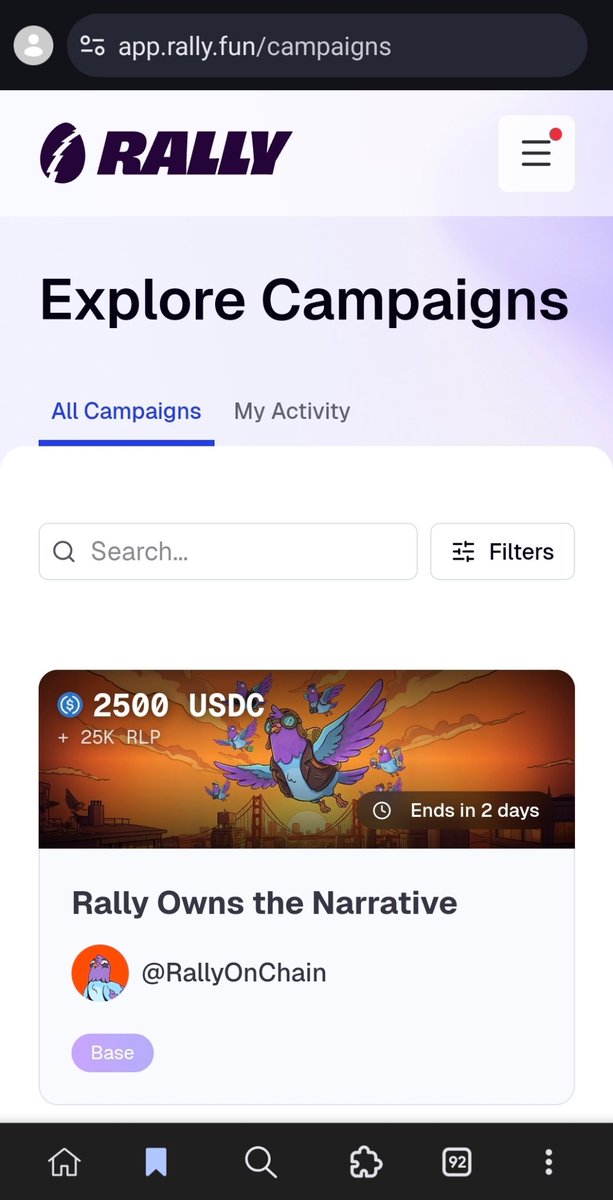
Rally Beta is already live, and it feels more like a system than just another campaign tool. @RallyOnChain is building around performance, not popularity.
You choose a campaign, follow the brief, and create your content with purpose.
Once submitted, AI evaluates it based on clarity, originality, accuracy, and real engagement.
No more guessing what works or relying on follower count to carry results.
Everything feels structured, transparent, and actually fair for creators.
What makes it more interesting is that rewards are already active on-chain.
Both stablecoins and Rally Points are being distributed right now.
That opens the door for smaller creators to compete on equal ground.
This kind of shift doesn’t happen often, but when it does, it changes the landscape.
Bradbury testnet just went live, and this feels like a real shift in how we think about blockchains.
@GenLayer is not just improving existing systems, it is rethinking what blockchains can actually do. Instead of being locked into rigid, deterministic execution, it introduces a model where contracts can interpret data, reason through it, and reach outcomes collectively.
That matters a lot right now.
We are stepping into an agentic era where AI agents are acting on behalf of users, making decisions, pulling information from the web, and interacting across systems. These agents are not dealing with perfect inputs, they operate in uncertainty.
Traditional chains were never built for that kind of environment.
GenLayer’s intelligent contracts create a layer where interpretation and real-world context can exist inside decentralized systems. Validators do not just repeat computation, they evaluate outcomes together, which makes more complex use cases possible.
Bradbury testnet is the first step where this becomes real for builders.
It gives developers a space to explore what happens when blockchains are designed for reasoning, not just execution.
If AI agents are going to be everywhere, they need infrastructure that can actually keep up. This is where things start to get interesting.