O mankind, fear your Lord, who created you from 1 soul!
يَا ذَا الْجَلَالِ وَالْإِكْرَامِ، أَسْأَلُكَ حُسْنَ الْخَاتِمَةِ
اللهم لا تقبض روحي إلا وأنت راضٍ عني
Son! Are you STILL playing GTA?!
No, Baba! I'm playing Umrah from Haramain Info. I'm learning how to make Umrah.
The Haramain Info 3D Umrah Guide lets you walk through Umrah before you go: Tawaf with the Kaaba on your left, what to say at the Black Stone, and every step after it. Play it right in your browser, on your PC, laptop, phone or tablet.
Learn every step of Umrah... before you go.
Try it now: https://t.co/A2U0y86pot
#Umrah #HowToDoUmrah #Makkah #HaramainInfo
🔊 IMPORTANT ANNOUNCEMENT
I have some important news to share with everyone.
Recently, I have been subjected to deliberate slander, attacks on my reputation, blatant antisemitism, hate-related abuse, and false allegations concerning my alleged departure from Islam across various social media platforms.
Following the support and legal guidance we have received, I am now in a position to take formal legal action against those responsible. The law can reach individuals across borders, including throughout Europe.
Defamation, the deliberate destruction of someone’s reputation, and the spreading of hatred are serious matters that are not taken lightly under the laws of Europe and the United States.
I am working hand in hand with my colleagues and legal representatives to ensure that all appropriate legal steps are taken and that those responsible are held accountable.
This matter will be pursued through the proper legal channels, and I remain determined to see justice served.
Thank you to everyone who continues to stand with me during this time.
Rt.Hon. Dr. Moses Wetang'ula
SPEEKER OF KENAYA PARLAIMENT
William Samoei Ruto, PhD
President of The Republic of Kenya.
FARAH MAALIM AND HIS DANGEROUS POLITICAL INTERFERENCE IN THE HORN OF AFRICA
When a Kenyan Parliamentarian Crosses the Boundaries of Diplomacy, Sovereignty and Regional Responsibility
Mr. Farah Maalim, a Kenyan politician and parliamentarian, has for years positioned himself as an outspoken political actor in matters concerning Somalia, Somaliland, Ethiopia, and the wider Horn of Africa. However, his repeated political interventions, controversial rhetoric, and involvement in sensitive regional affairs raise serious questions about his political judgment, regional responsibility, and respect for the sovereignty of neighbouring countries.
For more than two decades, his political commentary and political engagement have repeatedly extended beyond Kenya's domestic affairs, touching upon internal political disputes, clan tensions, sovereignty questions, and regional political agendas. This pattern deserves serious scrutiny, particularly at a time when the Horn of Africa is already facing fragile political relationships, security challenges, and competing regional interests.
A Member of Parliament in Kenya has a constitutional and political responsibility to represent the interests of Kenyan citizens. While parliamentarians are entitled to express opinions on international affairs, there is a fundamental difference between responsible political commentary and persistent interference in the internal affairs of neighboring countries. Mr. Farah Maalim's repeated involvement in politically sensitive matters across the region raises the question of whether his rhetoric contributes to stability and constructive diplomacy or instead deepens political divisions and mistrust.
One of the most troubling aspects of his political discourse is his continued association with the idea of so-called Greater Somalia. This political ideology belongs to a different historical period and has long been associated with territorial disputes, regional confrontation, and political instability. The Horn of Africa cannot afford to revive historical ambitions that disregard the present political realities, territorial arrangements, and aspirations of the peoples living across the region.
Somaliland, Ethiopia's Somali Region, Djibouti, Somalia's Federal Member States, and the Somali communities in Kenya are not political instruments to be manipulated in pursuit of a historical nationalist project. Each has its own political realities, interests, and circumstances. Political leaders must learn to respect those realities rather than repeatedly promoting ideologies that risk reopening old wounds and destabilizing relations between neighbouring states.
The Greater Somalia narrative should not be used as a political weapon to undermine established political arrangements, encourage territorial ambitions, or interfere in the affairs of sovereign nations. The peoples of the Horn of Africa deserve a future built upon peace, economic development, political stability, and mutual respect not the revival of political dreams that have failed to deliver lasting regional unity or prosperity.
His political engagement concerning Ethiopia's Somali Region, Somaliland, and Somalia's Federal Member States is equally concerning. These are politically sensitive territories and political entities where responsible dialogue, respect, and careful diplomacy are essential. Political rhetoric that fuels divisions, encourages confrontation, or promotes external interference can have serious consequences for regional stability.
The Horn of Africa has experienced enough conflict driven by political ambitions, clan divisions, territorial disputes, and external interference. It is irresponsible for political figures to contribute to these tensions through inflammatory statements or political activism that risks undermining peaceful coexistence.
Mr. Farah Maalim should understand that expressing political opinions does not give him a mandate to influence the internal political direction of neighbouring countries. Political legitimacy, sovereignty, and the future of nations and peoples cannot be dictated by an individual parliamentarian sitting outside their political institutions.
His involvement in matters concerning the foreign relations and regional affairs of the United Arab Emirates also raises concerns about the boundaries of his political role. Kenya has an established foreign policy, diplomatic institutions, and official channels through which international relations are conducted. Individual parliamentarians should exercise responsibility and avoid statements or political activities that create unnecessary diplomatic tensions or confusion.
The Kenyan government should not be placed in a position where the political rhetoric of an individual parliamentarian is mistaken for the official position of the Republic of Kenya. If Mr. Farah Maalim's public positions contradict Kenya's diplomatic interests or official foreign policy, the Kenyan leadership should make its position clear.
There is a legitimate public interest in questioning whether Mr. Farah Maalim's repeated regional political interventions genuinely serve Kenya's national interests. His rhetoric has, on numerous occasions, created controversy across the Horn of Africa and raised concerns among those who believe that politicians should contribute to regional peace rather than political polarization.
Questions and allegations concerning political movements or agendas associated with the NFD have also emerged in political discussions. Such claims should be investigated or substantiated before being presented as facts. Nevertheless, the broader issue remains: Kenyan political leaders should be accountable for their public statements, political activities, and the consequences these may have for Kenya's relationships with neighbouring countries.
A politician's freedom of expression does not exempt him from political accountability, nor does it justify disregard for the sensitivities, sovereignty, and legitimate interests of other nations.
The Horn of Africa is at a critical crossroads. It needs economic partnerships, regional trade, infrastructure development, energy cooperation, peaceful diplomatic relations, and political maturity. It does not need politicians who continuously revive territorial ideologies, encourage political divisions, or position themselves as self-appointed representatives of the political affairs of neighbouring nations.
Mr. Farah Maalim should recognize the limits of his political mandate. He is a Kenyan parliamentarian, and his primary responsibility is to the Kenyan people and the institutions of the Republic of Kenya. He is neither the political guardian of the Horn of Africa nor the spokesperson for the aspirations of Somali communities across different countries and political territories.
The Horn of Africa has moved beyond the era when political ambitions could be imposed upon peoples and territories through ideological slogans. The future of the region must be determined through peaceful political processes, mutual respect, responsible diplomacy, and the recognition of existing political realities.
Engineer Abdi Ali Barkhad is a senior consultant. He has also studied international diplomacy and is a political analyst and writer known for his detailed commentary on the politics of the Horn of Africa and international relations. He has published numerous articles analyzing current policies in the region . He can be reached at: [email protected]@HonWetangula@WilliamsRuto@FarahMaalimM
Dahabshiil Group Plays Major Role in Making Somaliland Tech Expo 2026 a Reality
Dahabshiil Group companies have played a significant role in supporting and bringing the Somaliland Tech Expo 2026 to fruition, demonstrating the Group’s commitment to promoting technological innovation, digital transformation and economic development.
The Group said its participation reflects a strong commitment to supporting initiatives that encourage creativity, advance technology and accelerate the growth of the digital economy in Somaliland.
Through its support for the technology expo, Dahabshiil Group is contributing to efforts to create new opportunities for young people, entrepreneurs and the wider community, while helping promote innovation and the adoption of emerging technologies.
The Group emphasised that supporting platforms such as Somaliland Tech Expo 2026 is part of its broader commitment to initiatives that foster innovation, strengthen the digital economy and contribute to sustainable development.
#DahabshiilGroup #SomalilandTechExpo #Technology #Innovation #DigitalTransformation
@Dahabshil@DahabPlusApp
Dahabshiil App Puts Fast, Reliable Money Transfers at Customers’ Fingertips
Dahabshiil is highlighting the customer benefits of its mobile app, offering users a simple, flexible and convenient way to send money quickly and reliably while supporting the family members and loved ones who matter most.
Designed to make money transfers easier, the app allows customers to access Dahabshiil’s services directly from their mobile phones, helping them manage transfers with greater convenience and stay connected with loved ones across borders.
The company says thousands of satisfied customers trust its money transfer services, reflecting its commitment to providing a reliable and customer-focused experience.
With its easy-to-use mobile platform, Dahabshiil aims to make sending money more straightforward, helping customers support their families and meet their financial needs with greater ease.
Customers can download the Dahabshiil app and experience its convenient money transfer services:
Download the App: [https://t.co/VzfiMKiTTt](https://t.co/VzfiMKiTTt)
#Dahabshiil #FastTransfers #TrustedService #FamilySupport
@Dahabshil@DahabPlusApp
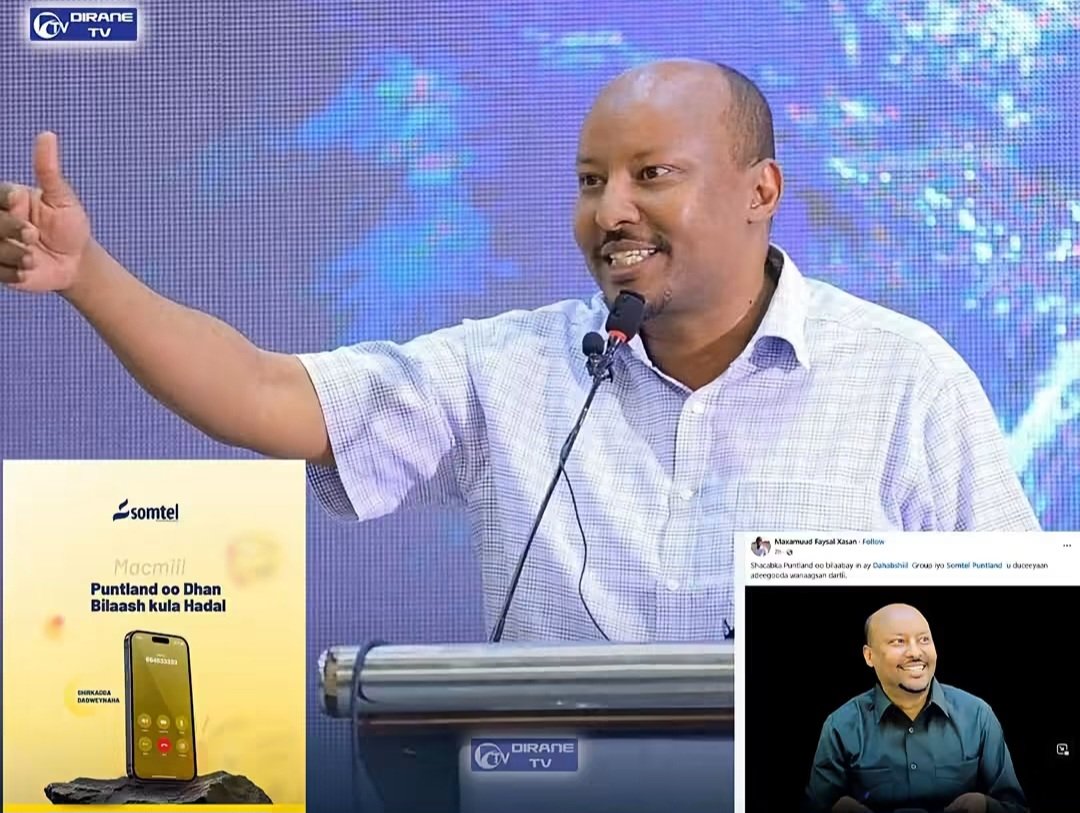
Somtel Puntland Makes Calls Free as Public Applauds Dahabshiil Group’s Move to Ease Economic Pressure
Residents across Puntland have widely applauded a decision by Somtel Puntland, part of the Dahabshiil Group, to make voice-calling services free, describing the move as a welcome response to growing economic pressures facing the public.
The announcement has drawn widespread appreciation from customers, who praised the company for taking a step they said would help ease the financial burden on households and make communication more accessible.
Members of the public also expressed gratitude to Dahabshiil Group CEO Abdirashid Dahabshiil and Somtel officials for introducing the initiative, saying it demonstrated the importance of businesses responding to the needs and concerns of their communities.
Somtel Puntland’s decision to waive charges for voice calls comes amid growing public concerns over the cost of living and household expenses.
Residents noted that telecommunications services have become an essential part of everyday life, enabling people to stay connected with family members, conduct business and access important information.
The initiative has therefore been welcomed as a meaningful contribution to easing the financial pressure on customers, while strengthening the company’s relationship with the communities it serves.
The public response highlights the growing expectation that private-sector companies play an active role in supporting citizens during challenging economic times.
@Dahabshil@somtel
#UPDATE: Evidence obtained by @Geylanmedia indicates that the Somali government has ordered the Somali National Army Command to resume the Banooda offensive, which aims to capture the area stretching from Buurhakaba to Daynuunaay. The operation had previously failed.
Some military officers who continue to warn about the risks of the operation have been instructed to carry out the order, with some threatened with disciplinary action if they fail to comply.
The evidence further indicates that fresh troops have been deployed to the operation, with 952 soldiers transferred from other locations to Balidoogle over the past 48 hours. Additional troops who were recently withdrawn are also being sent for retraining, including instruction on the use of heavy weapons.
President Hassan Sheikh Mohamud remains determined to capture the areas between Buurhakaba and Daynuunaay, seeking to relieve the pressure on his government. The government maintains that it intends to take control of these locations, despite conditions on the ground remaining largely unchanged from those that led to the previous operation's failure.
In a Madinah summer, it can reach 47 degrees outside. Yet inside the Prophet's Mosque, cool air comes out of its columns. And it all starts seven kilometres away. This is the cooling system of the Prophet's Mosque
West of the mosque stands its central cooling plant, one of the largest in the world. It sits near Madinah's Land Pilgrims City. And what it pipes to the mosque isn't air, it's water. Six large chillers, 3,400 tons each, chill water to just four or five degrees. Seven main pumps push it through insulated pipes, along a tunnel, to the mosque's basement. There, air handling units use it to cool the air, and push that air through pipes in the mosque's columns. The system reaches 2,357 columns. Then the water returns through insulated pipes to the plant, to be chilled again. And the whole system adjusts its cooling to the temperature outside, to keep the inside balanced
The mosque breathes, too. 27 domes, about 80 tonnes each, slide open on steel rails, to let in fresh air and daylight. Then they close, to keep the cool air in
Outside, 250 giant umbrellas open at sunrise and close before sunset. 436 misting fans spray a fine mist that draws heat out of the air. And underfoot, 117,000 square metres of white Thassos marble reflect the sun's rays, and stay cool
From a plant seven kilometres away to the marble under your feet: all of it, so worshippers can pray in comfort, even in summer
Allah says in the Quran:
“And Allah has made for you, from that which He has created, shadows, and has made for you from the mountains, shelters…�� (An-Nahl 16:81, the opening of the ayah, Sahih International)
Recitation: Sheikh Salaah Al Budair (Madinah, 'Isha, 21 November 2022).
Sources: Saudi Press Agency (SPA) · General Authority for the Care of the Two Holy Mosques · National Center of Meteorology (via SPA) · Quran translation: Sahih International
Follow @HaramainInfo info for a new film from the Haramain every day
Xasuuqii ardayda Dugsiga Sare ee Axmed Gurey waxa uu ahaa weerar naxdin leh oo 24-kii Decembar 2002 ka dhacay magaalada Muqdisho, kaas oo lagu rasaaseeyay gaari bas ah oo siday arday ka soo baxday imtixaan.
Waxana kaystay wasiir cusub ee gaashadhiga caday check comments
🇬🇷🇹🇷 Greek MEP Latinopoulou launches a FIERCE attack on Turkey in the EU Parliament...
She condemned Ankara's refusal to recognize the Armenian, Assyrian and Pontic Greek genocides, its continued occupation of northern Cyprus and its territorial claims in the Aegean.
Latinopoulou also accused Turkey of deliberately facilitating illegal migration into the EU.
She went as far as describing Turkey as a “terrorist state” and accusing it of rewriting history.
Writer: Samuel




#Dahabshiil #FastTransfers #TrustedService #FamilySupport
@Dahabshil @DahabPlusApp](https://pbs.twimg.com/media/HYDFdtDXUAAEvI2.jpg)