The Testnet V2 is live @dango and still cooking! 🔥
As the team mentioned, this is just a sneak peek at what’s coming 👀
Join here 👉 https://t.co/bKk2fXLXF2
What’s missing? A few major features like:
✔Perps
✔Margin trading
Guess what?
Both will roll out after Mainnet 🚀
YouTube just made FIFA World Cup clips monetizable. 1M views pays up to $15,000.
The tournament started June 11. Soccer Shorts are pulling 12M views while you read this.
Old way: download clips, cut for hours in CapCut, eat a copyright strike, earn $0.
New way takes 10 minutes.
Step 1 Connect.
Open Claude → Customize → Connectors → hit the +.
Add a video MCP connector. Done in 30 seconds.
Step 2 Hunt.
Search “FIFA World Cup clips” on YouTube. FIFA’s own channel sits at 26.3M subscribers. Their compilations pull 1.5M to 12M views each. Pick one, copy the URL.
Step 3 Prompt.
“Clip this video into viral YouTube Shorts formats” then paste the URL.
That’s the whole prompt. 1 sentence.
Step 4 Watch.
Claude finds the peaks, cuts 3 vertical 9:16 Shorts, picks the font, burns in captions, writes the titles. “Mbappé Turns The World Cup Final In 97 Seconds” it named that one itself.
The math:
3 Shorts per clip. 10 clips a day. 30 Shorts daily without filming, editing, or showing your face. Shorts pay less per view than long-form so you win on volume, not RPM.
The window: the final is July 19. 37 days of the biggest sporting event on earth, monetizable for the first time.
Most creators will watch the games.
A few will clip them.
The BIOFORMS website has evolved.
You can now explore the mechanics in greater depth, including evolution, predation, $BIO and war.
We’ve also opened the whitelist form.
The first bio-evolution NFT experiment is only beginning.
Enter the colony ↓
https://t.co/Y2ufevwUYJ
There are dozens of accelerators, grant programs, and startup funds actively looking for founders right now.
Here are 5 worth applying to before the end of June:
1. Techstars Anywhere
• Fully remote
• Any industry
• Any country
• No relocation required
• Funding: $220,000
• Deadline: June 10
2. Hello Alice x Allstate Main Street Grants
• 2-week Boost Camp
• 100 founders selected
• $20,000 grant per founder
• Deadline: June 23
3. Google for Startups Accelerator
• 10-week program
• AI for Energy startups
• Pre-seed to Series A
• No equity taken
• Deadline: June 30
4. The Bridge Fall 2026
• For non-US founders
• San Francisco residency
• Pre-idea to early-stage
• Up to $250,000 first check
• Backed by Entrepreneur First
• Deadline: June 28
5. mHUB Chicago Compute-Energy Nexus
• AI + Energy Hardware
• $200,000 investment for 6.5%
• Backed by Equinix, HPE, and Salesforce
• Deadline: July 13
One lesson I’ve learned after more than a decade building startups:
Most founders overestimate how ready they need to be before applying.
The best opportunities often go to people who apply before they feel ready.
If you’re building something interesting, submit the application.
Let investors, accelerators, and customers tell you “no.”
Don’t do it for them.
PS: PS: I’m hosting a free webinar for Africans in the US interested in starting a company. Visit: https://t.co/DC1ZWiSZJg to book a seat.
@RahulKu22532718 Good day to you, respected Sir.
I sent you a connection on linkedin, kindly accept 😃
I would love to 😊 connect with you, I love what you do🙌🤲
dude there’s no way this is real?! 😭
these teenagers are making $13,456/month with YouTube automation
All he does is:
1. Find viral YouTube videos
2. AI Clip them with Vugola
3. Posts 20+ viral clips a day across his channels
YouTube is paying $1-$12 per 1,000 views with monetization… 💵
this is by far the most simplest way to make money online in 2026.
PhD Students – How to do a systematic literature review in 1 hour?
Follow these simple steps
1. Go to https://t.co/sbnadJ1eRH
2. From the menu icon on the left, select Systematic Review
3. Insert topic of your literature review and apply filters
#phd
50 AI for Academic Support
1. Brainstorming » ChatGPT
2. Writing support » Claude
3. Data analysis » Julius
4. Literature search » Elicit
5. Research answers » Consensus
6. Source-backed search » Perplexity
7. Paper summarisation » SciSummary
8. PDF chat » ChatPDF
9. PDF analysis » Adobe Acrobat AI Assistant
10. Literature mapping » ResearchRabbit
11. Citation insight » Scite AI
12. Research discovery » Semantic Scholar
13. Paper explanation » Explainpaper
14. Literature review » Jenni AI
15. Academic writing » Paperpal
16. Grammar support » Grammarly AI
17. Academic editing » Writefull
18. Paraphrasing » QuillBot
19. Reference support » Zotero AI plugins
20. Thesis organisation » Notion AI
21. Note synthesis » NotebookLM
22. Reading papers » Humata AI
23. Research assistant » Scholarcy
24. Systematic review » Rayyan AI
25. Evidence synthesis » Iris. ai
26. Finding papers » Litmaps
27. Citation discovery » Connected Papers
28. Research summaries » Typeset. io
29. Journal finder » Elsevier Journal Finder
30. Manuscript check » Wiley AI manuscript tools
31. Statistical help » Julius
32. Coding support » GitHub Copilot
33. Python support » ChatGPT Code Interpreter
34. R support » Gemini
35. Survey analysis » Microsoft Copilot
36. Transcription » Otter. ai
37. Interview notes » Fireflies. ai
38. Audio transcription » Whisper
39. Translation » DeepL
40. Presentation design » Gamma
41. Slide creation » Tome
42. Visual design » Canva AI
43. Diagram generation » Napkin AI
44. Mind mapping » Miro AI
45. Task planning » ClickUp AI
46. Project management » Asana AI
47. Email drafting » Gemini for Gmail
48. Document drafting » Microsoft Copilot
49. Grant writing » Grantable
50. Career planning » Career Dreamer
AI should help you think, organise, analyse, and improve.
Always use in compliance with the ethical guidelines of your institution.
I searched 300 free courses, so you don't have to.
Here are the 35 best free courses.
1. Data Science: Machine Learning
Link: https://t.co/OA7Pycz3Xj
2. Introduction to computer science
Link: https://t.co/5HR4ZVBUL8
3. Introduction to programming with scratch
Link: https://t.co/AmdScqUlHg
3. Computer science for business professionals
Link: https://t.co/lPxaSK9Ylx
4. How to conduct and write a literature review
Link: https://t.co/8htGQex3ig
5. Software Construction
Link: https://t.co/5dUYLMebUQ
6. Machine Learning with Python: from linear models to deep learning
Link: https://t.co/GwU300uGBZ
7. Startup Success: How to launch a technology company in 6 steps
Link: https://t.co/NbNIULB4zT
8. Data analysis: statistical modeling and computation in applications
Link: https://t.co/bxJFbIvNL5
9. The art and science of searching in systematic reviews
Link: https://t.co/4MOiECPaLa
10. Introduction to conducting systematic review
Link: https://t.co/Py14dbZFNM
11. Introduction to computer science and programming using python
Link: https://t.co/FKyHvcBc9Z
12. Introduction to computational thinking and data science
Link: https://t.co/GAUwbh1RJG
13. Becoming an Entrepreneur
Link: https://t.co/QQyCwjfMMN
14. High-dimensional data analysis
Link: https://t.co/lPWIkWOflh
15. Statistics and R
Link: https://t.co/JkzkNqFobl
16. Conduct a literature review
Link: https://t.co/4AF8GE5dGR
17. Systematic Literature Review: An Introduction
Link: https://t.co/Onnhe5gewO
18. Introduction to systematic review and meta-analysis
Link: https://t.co/Di3vKVH51Q
19. Creating a systematic literature review
Link: https://t.co/oUeb3nrIV0
20. Systematic reviews and meta-analysis
Link: https://t.co/onZliWGP8i
21. Research methodologies
Link: https://t.co/Vw4OP7NDqJ
22. Quantitative and Qualitative research for beginners
Link: https://t.co/BPusqkNVwj
23. Writing case studies: science of delivery
Link: https://t.co/8kYDFaYsLA
24. research methodology: complete research project blueprint
Link: https://t.co/dsLURfohK3
25. How to write a successful research paper
Link: https://t.co/ZgpRMf0Coz
26. Research proposal bootcamp: how to write a research proposal
Link: https://t.co/jbxDDH0iQy
27. Understanding technology
Link: https://t.co/dOTkB9xotX
29. Introduction to artificial intelligence with Python
Link: https://t.co/mQqV5qwSEA
30. Introduction to programming with Python
Link: https://t.co/AJ6Nh8TsBr
31. Web programming with Python and JavaScript
Link: https://t.co/4HY1uBNJ25
32. Understanding Research methods
Link: https://t.co/WKIriRHy59
33. How to write and publish a scientific paper
Link: https://t.co/8Ns38x6CEH
34. Introduction to systematic review and meta-analysis
Link: https://t.co/Di3vKVH51Q
35. Research for impact
Link: https://t.co/4MTK1n0qmu
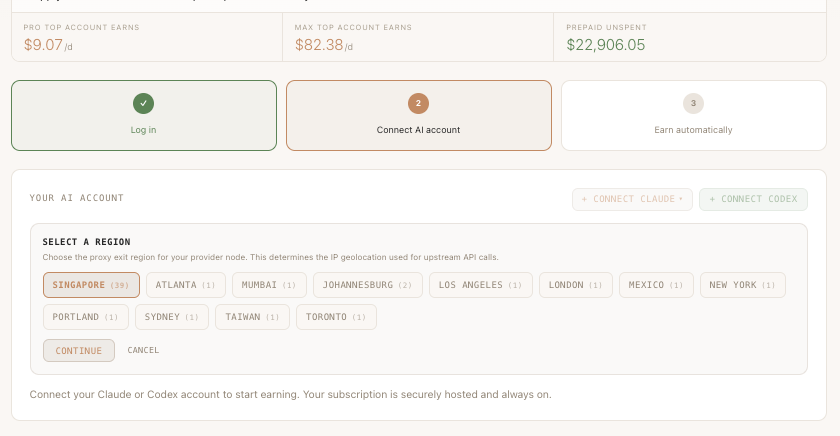
yg dapet GPT plus free tapi nganggur, mungkin bisa di konekin ke sini.
mayan buat muterin jadi duit daripada akunnya nganggur.
risk:
- rawan banned
rewards:
- dapet USDC dari platform ini
DYOR, buat yg mau aja dulu
link: https://t.co/WVgewxAh3b
x: @derouter_net
NOT PAID PROMOTION, PLEASE DYOR
As promised, here's a detailed video on how to make money using Pinterest.
You don't need thousands of followers to get started. In this video, you'll learn practical ways to turn Pinterest traffic into income.
How I moved from being a fresh Unemployed Graduate to Working With Companies Serving 100M+ Users in the US without 0 experience and connection.
1. Accepted that nobody was coming to save me.
After university, I quickly realized that sending out a degree and hoping for the best wasn't enough.
2. Learned a marketable skill.
I focused on skills that businesses actually pay for and need regardless of industry even after studying mechanical engineering.
3. Got certified.
I used certifications to validate my knowledge and make myself more credible.
4. I started building in public and I avoided X.
I consistently posted on LinkedIn even when nobody was paying attention. 1 likes and I was liking my own post.
5. Applied for jobs aggressively.
I sent countless applications and got almost no response.
6. Realized something wasn't working.
After repeated rejections and zero interviews, I stopped relying solely on job applications.
7. Ignored the "remote job hacks" and useless job-board threads on x.
Most of the opportunities being shared either required work permits or weren't relevant to my situation.
8. Made LinkedIn my primary platform.
Instead of chasing job boards, I focused on people starting to send a DM.
9. Practiced social listening.
I paid attention to conversations, industry trends, hiring posts, and what professionals were discussing.
10. Networked relentlessly.
I connected with professionals, founders, recruiters, and people already doing what I wanted to do.
11. Surrounded myself with ambitious people.
I intentionally spent more time around people who were working, freelancing, building businesses, and creating opportunities.
12. Stayed curious.
13. Gave up on applying.
14. Built relationships before asking for opportunities. That was how I got access to a lady that worked in Ferrari I was just texting anyone lmao 🤣
I focused on genuine connections instead of immediately asking people for jobs.
15. Got referrals from people I barely knew.
The relationships I built online started opening doors that job boards never did.
16. Landed my breakthrough opportunity.
Within about a year, I went from unemployed and struggling financially to earning a seven-figure income despite having no prior professional experience.
17. I was able to survive because I lived with my parents and I was super broke.
18. Expanded into bigger projects and bigger brands. Got invited by jobberman and MasterCard along the way.
19. Started working with companies serving over 100 million users and fintech brands outside Nigeria.
20. I finally started on x after understanding LinkedIn. And gotten opportunities from here too.
Now I'm building a startup with my little experience.@Aikidotcom
Opportunities that once felt impossible became accessible because of the foundation built through skills, visibility, networking, and consistency.
Start doing these things now to build a thriving freelancing career and position yourself for global opportunities online:
1. Master Your Craft:
✅ Dedicate 3–4 focused learning sessions per week (30–60 minutes each)
✅ Focus on high-demand skills: Coding, design, data, tech, Strategy, sales and marketing or Ai automation
✅ Apply progressive learning. Build on what you already know
✅ Share your progress publicly (Twitter, LinkedIn, communities)
✅ Consistency over perfection. show up even when it feels slow
2. Simplify Your Learning Path:
✅ Stick to one core skill at a time before branching out
✅ Use the 1-1-3 formula: 1 skill + 1 portfolio project + 3 platforms
✅ Batch-create samples of your work (case studies, designs, write-ups)
✅ Stop chasing “shiny new skills” and focus on depth and mastery
✅ Track your learning for 2 weeks to uncover gaps and strengths
3. Optimize Your Visibility:
✅ Post 3–4 times weekly to share your work, insights, and lessons learned
✅ Build in public. Talk about what you’re doing, not just the results
✅ Keep your online profiles (LinkedIn, X, personal site) polished
✅ Take 1–2 hours weekly to engage with other creators and clients online
✅ Visibility is when opportunities actually find you
4. Build Daily Consistency Habits:
✅ Write or create content for 30 minutes a day (threads, posts, short videos)
✅ Engage with at least 5 people daily in your niche or industry
✅ Document small wins (your process, not just the outcome)
✅ Collaborate with peers on projects, challenges, or open calls
✅ Every small action compounds toward global opportunities
5. Create Systems That Stick:
✅ Treat freelancing like a business (set work hours, track progress)
✅ Set up your environment for success (clear workspace, tools ready)
✅ Track your income streams, outreach, and projects over time
✅ Find an accountability partner, mentor, or mastermind group (tell us more about what you do in the comment section. You may just find an accountability partner)
6. Protect Your Eyes with Anti-Blue Glasses:
✅ Block harmful blue light from screens that cause fatigue and headaches
✅ Stay focused longer without burning out
✅ Remember that your vision is your most important freelancing tool
✨ Buy your Anti-Blue Glasses today and protect your future.
👉 Chat with us on WhatsApp to order: https://t.co/p7MNxwjXpa
Easy stuff
Step 1. Search for jobs in your niche. E.g product designer, product manager, data analyst and the likes
Step 2: Filter by location, remote or onsite (focus on the remote ones) and click on Job
Step 3: check each job. To do this, click the JD, check the name of the company (usually the first thing you see), and sometimes, LinkedIn includes the job poster. I mean the profile of the person that posted the job. Send a connection request to the person (could be your 2nd or 3rd degree connection)
Step 4: since that person works in the company, or automatically opens up your degree of connection. This is very important because LinkedIn works on network effect (it’s why you see something like “LinkedIn member” instead of names on some profile
- step 5: start connecting with decision makers at those companies after step 4. Make sure you connect with C-suites and leaders (CEOs, COOs, CMOs, head of product, CIO,, CSOs and the likes)
All the best
Looking for work-ready graduates?
Meet pre-screened Fellows and recruit at no cost at the NJFP Job fair happening in Abuja on the 4th and 5th of June 2026.
Register: https://t.co/c2EBuKRw3j
Application to be part of @rarebloomdao 🌸
Anyone accepted will get an invite
Keep an eye on your dm ^^
(Link Below), closes at 300 responses.
Goodluck ♡