Publicación gratuita
‘Manual de procedimiento para el uso de la IA🤖 en trabajos académicos, TFG y TFM’ (versión 1.1)
Madrid🇪🇸: @optica_ucm@unicomplutense, 2026.
PDF gratuito (30 págs.): https://t.co/HnTf0GG7eM
Today, I was lucky to lecture at Harvard on using deep learning to solve economic models.
I took the opportunity to update my slides and add new material on optimization, implicit regularization, and double descent. The slide deck is posted here:
https://t.co/lrSNrT8DRQ
The new deck is longer, 156 slides, and I would need around six hours to cover it carefully. So, I welcome any comments or suggestions.
I will be teaching the same material next week at Stanford, so any improvement would be fantastic. For instance, today’s students found that my treatment of why expressiveness grows exponentially with depth wasn’t intuitive enough; I need to redesign that part of the deck.
I also need to update the semester-long version, which covers much more material.
Finally, I am writing a slide deck on reasoning models in economics. Ideas about good sources? I have a preliminary slide deck, but I would rather read more before I post it.
Suffice it to say that I find many of the ideas behind reasoning models, such as inference-time compute scaling, quite fascinating. The application of reinforcement learning is also pretty cool, although I am a bit more familiar with that approach.
Thanks in advance!
Los resultados del #ESPE muestran que Colombia atraviesa una transición demográfica acelerada, caracterizada por menor fecundidad, rápido envejecimiento poblacional y marcadas diferencias regionales. Mientras algunos departamentos enfrentan una elevada proporción de población mayor, otros conservan estructuras jóvenes y continúan beneficiándose del bono demográfico.
Consulte el más reciente Ensayo sobre Política Económica 👉 https://t.co/8Op5ZYpIFf
New in the JDE: Joan Martínez follows 1.6M Peruvian students from age 12 to 22 to study how teachers' gender bias in grading affects outcomes. Some math teachers' grades favor boys more. A year with such a teacher widens the gender gap in formal jobs and pay🧵
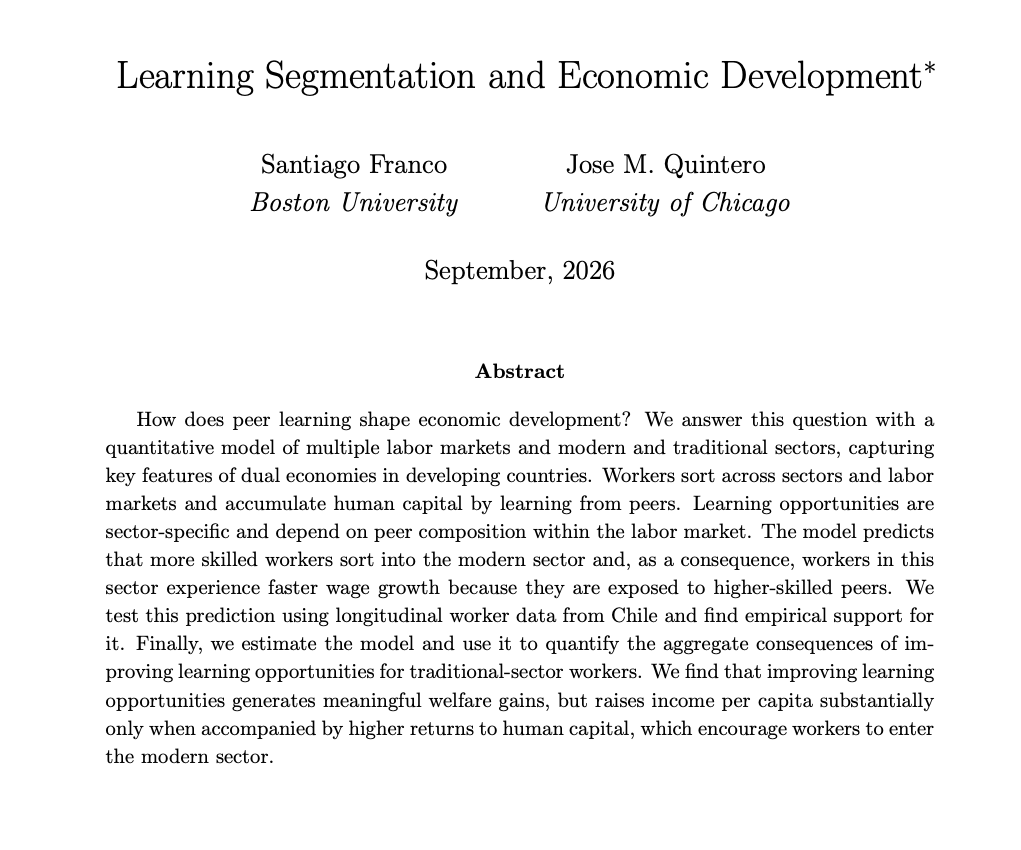
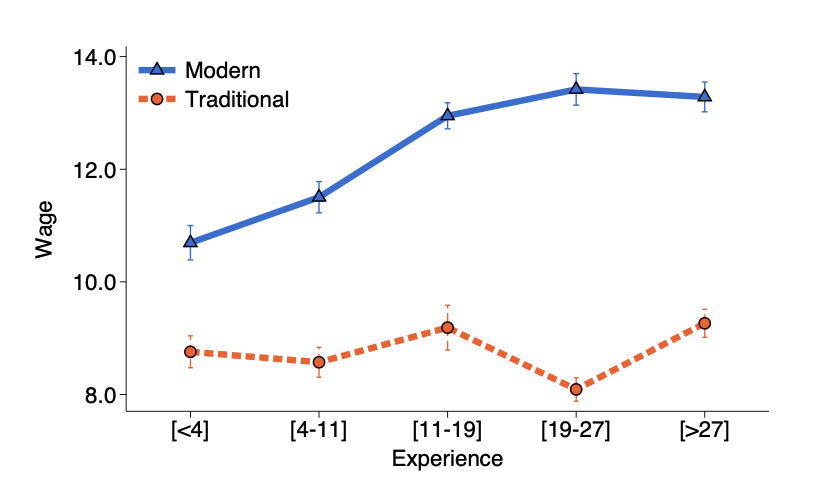
Workers in developing economies are segmented across modern and traditional sectors. Segmentation affects more than wages today (-20%), it determines who workers learn from, and hence wage growth.
@FrancoTabaresSa and I find that this gap widens to over 40% over the life cycle.
El FMI parece finalmente tener acceso a algunos datos económicos oficiales de Venezuela para la elaboración de su informe de perspectivas.
Pero antes del FMI están los ciudadanos venezolanos, sobre quienes los órganos oficiales tienen deber de informar.
https://t.co/D6UQewVgB2
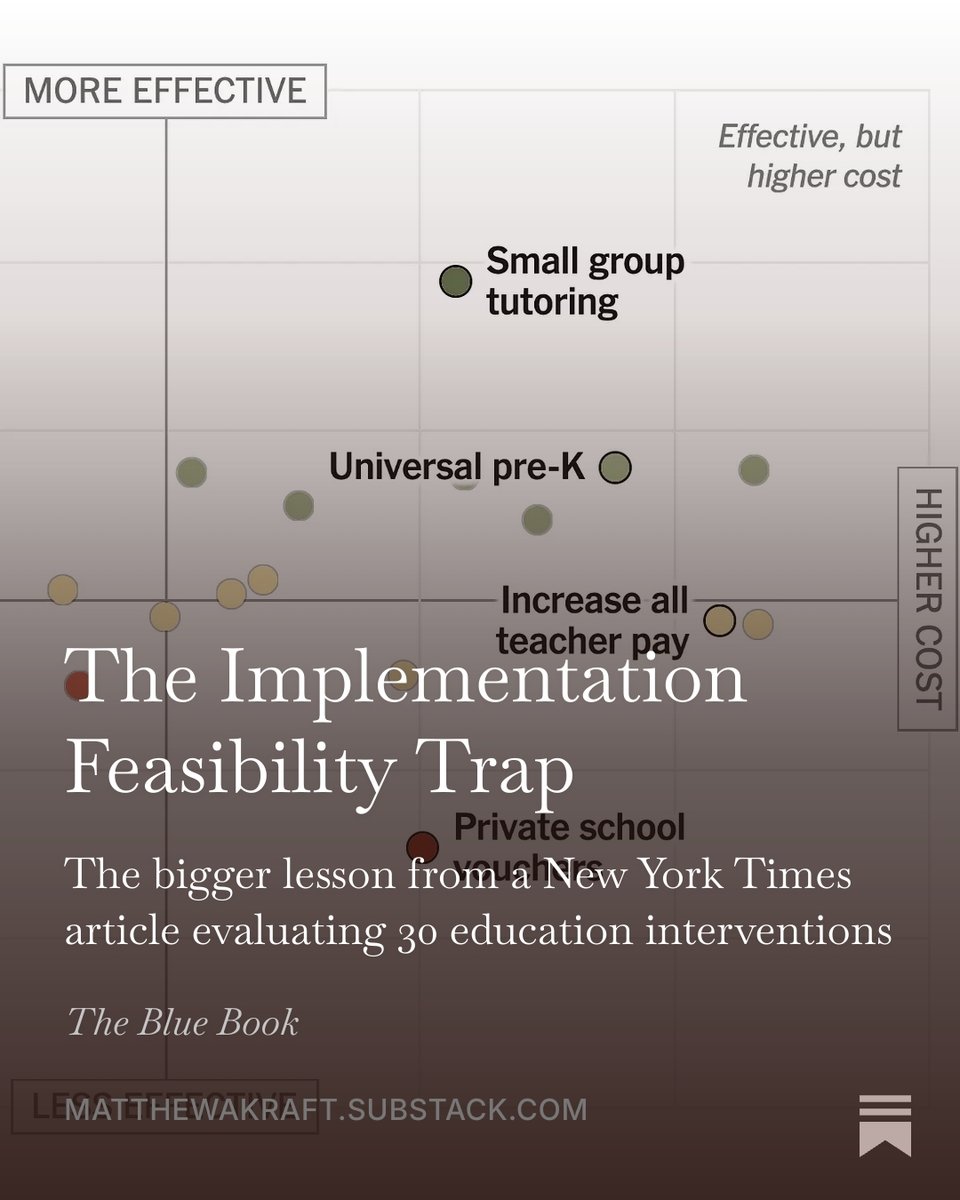
📣 The first official post on my Substack, 📘The Blue Book📘, is up.
I hope you'll read it, share it, and—if you like it—subscribe.
I argue there is a bigger insight from the New York Times article ranking education reforms.
https://t.co/CXhNqhUChz
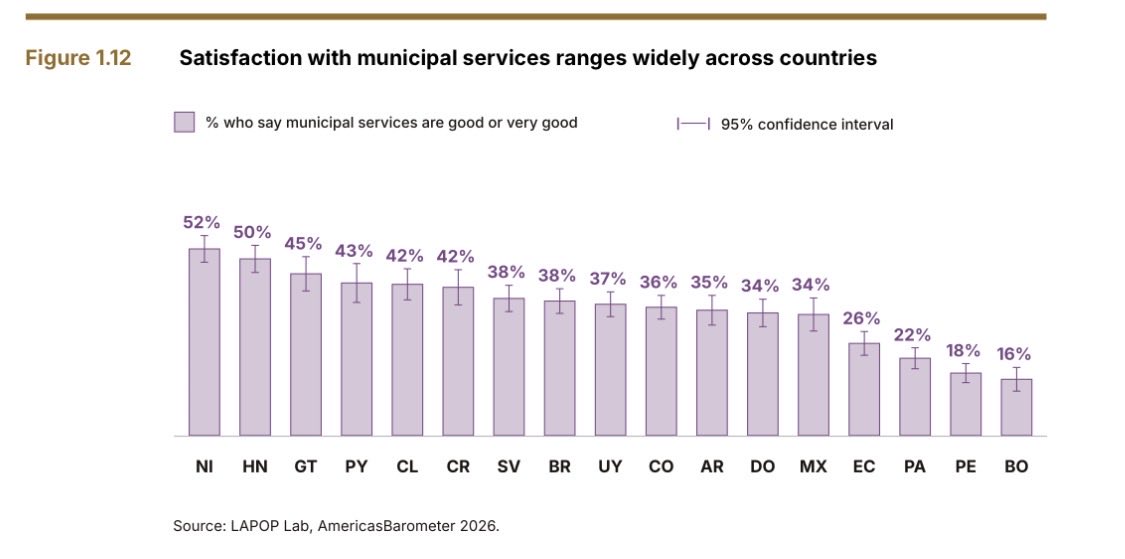
👇🏽👇🏽De cara a las elecciones subnacionales en Perú 🇵🇪, dato importante del informe regional de 2026 de @LAPOP_Lab!
Todo el informe 👉🏽https://t.co/pZfJggWFKQ
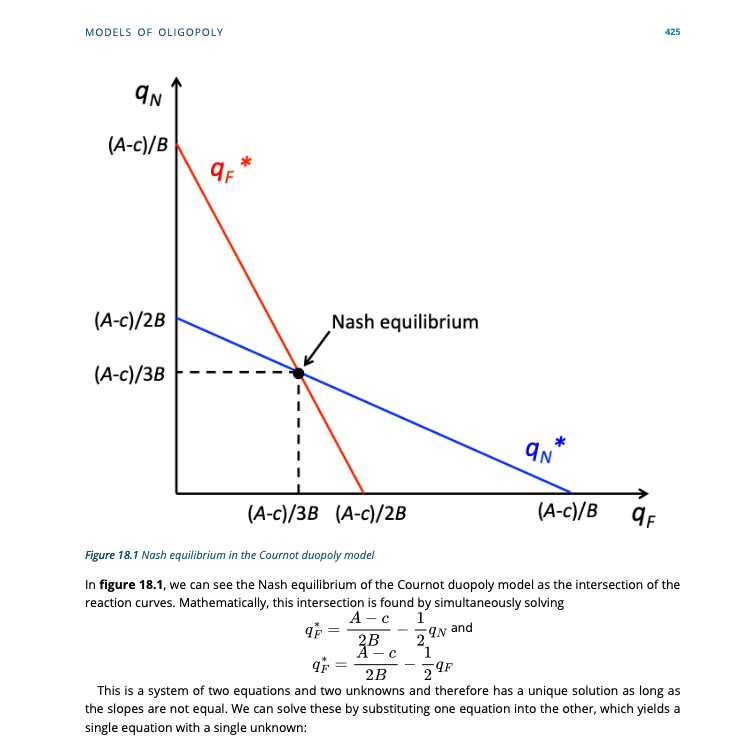
"Intermediate Microeconomics" is a free textbook that provides a mathematical treatment of the main models used in microeconomics.
The book develops consumer theory, preferences and utility, demand, production and cost functions, profit maximization, supply and demand, perfect competition and general equilibrium, before moving to monopoly, oligopoly, pricing strategies, game theory, asymmetric information, decision-making under uncertainty and much more.
I think it's an interesting resource not only for studying economics, but also for seeing how mathematics provides the foundations for economic models. Markets such as perfect competition, monopoly, and oligopoly can be described through precise equations and mathematical relationships that determine how to make decisions, set prices, choose quantities, and interact with competitors.
https://t.co/qpWrwTwyFt
Aşağıdaki “R ile Ekonometriye Giriş” kitabı Stock ve Watson tarafından yazılan “Ekonometriye Giriş” kitabının uygulamalı yardımcı kitabı niteliğinde.
PDF
🔗 https://t.co/m9AI3ipEFj
📢NUEVA PUBLICACIÓN
La #CEPAL advierte que un evento extremo de 𝐄𝐥 𝐍𝐢𝐧̃𝐨 podría causar una pérdida de al menos 2% del PIB regional y sumar 4,8 millones de personas a la pobreza en América Latina y el Caribe🌀🔥⛈️
En su Informe Especial No. 3 la institución recuerda la magnitud histórica del fenómeno en curso e insta a los gobiernos a implementar diez recomendaciones de política prioritarias en energía, agricultura e infraestructura.
Toda la información
⏩ https://t.co/3cTAFMRphH
Accede al documento
📔 https://t.co/ZTrasoXehA
#ElNiño #cambioclimático
Si estudian economía o les interesa la intersección entre Econometría/Inferencia Causal y Machine Learning, este paper de Susan Athey es lectura obligada. Explica qué puede (y qué no) aportar el ML a estas disciplinas
Les dejó el link: https://t.co/QGm35d5Pgg
#CursosFLACSOEcuador
Este curso presenta herramientas para comprender cómo se relacionan la economía real y los mercados financieros, y cómo estos modelos pueden contribuir al análisis y diseño de políticas económicas. Una propuesta que parte de la macroeconomía poskeynesiana y los modelos de flujos y existencias consistentes.
🗣El curso se desarrollará en inglés y español.
🗓 Inscríbete hasta el 29 de septiembre de 2026
🌐 Más información: https://t.co/KjANksb30D
Se habla cada vez más del impacto de la AI sobre el mercado de trabajo. Es + o -?
¿Cómo cambia ese análisis si tenemos en cuenta mercados duales, formal e informal?
En este paper 👇con @fertole78 y JM Rodríguez Repeti proponemos una modelización básica.
De qué depende?🧵
كيفية استخدام برنامج Claude لكتابة البحوث الأكاديمية (Practical Workflows) من الالف الى الياء في رابط واحد مع الاوامر prompts الرابط https://t.co/x1TKp1NSy9
👆👆
Como una navaja suiza, es una herramienta multiuso, "el promedio de las funciones" y "la función del promedio" no son lo mismo , y esa diferencia es literalmente lo que sostiene buena parte de la teoría de: decisión bajo incertidumbre, Econometría, desigualdad y bienestar.