INSTEAD OF WATCHING AN HOUR OF NETFLIX TONIGHT.
This 1-hour Stanford lecture by Joel Peterson will teach you more about negotiation and getting what you want than most people learn in years.
Bookmark it and give it an hour, no matter what.
Andrew Ng just dropped a 3-hour course on how to become an AI Engineer in 2026:
• 00:00 - How to build agentic AI systems
• 04:25 - Future of AI engineering
• 23:38 - AI Prompting full course
• 2:52:17 - Creating an app with AI in 30 minutes
This 3-hour watch could replace 10 AI engineering courses on the internet.
Watch it today, then read how to run a self-improving system in the article below.
INSTEAD OF WATCHING NETFLIX TONIGHT.
Spend 1 hour with this.
Claude AI FULL COURSE that teaches you how to BUILD and AUTOMATE anything.
The people who watch this tonight will wake up tomorrow with a new skill.
Watch it and Bookmark it now
MTN just told Nigerian banks something wild:
“Stop blaming us for SIM-swap fraud. If you want to use our numbers as your customer identity layer, pay us to secure it.”
At first, that sounds ridiculous.
After digging deeper… it actually raises an important infrastructure question.
A thread 🧵
Visa approved for a fully funded Master’s in Italy! 🎉✈️🇮🇹
Undergraduate GPA: 3.6/5.0
Congratulations👏
For opportunities like this, join our next accelerator program via https://t.co/qXIgOEjdS0
🚀 Want to build a career in Cloud Security?
The ICDFA Charity Foundation is offering 50 fully funded scholarships for Cloud Security Engineering.
✅ 12 months training
✅ Hands-on labs
✅ 100% tuition covered
Apply now: https://t.co/tX0SuVlBuS
#CyberSecurity#CloudSecurity
A guy sat at his laptop ready to permanently delete his 15-year-old Gmail account.
He was getting 400 spam emails a day. Fake Best Buy receipts. Phishing links from "Netflix." Cryptic extortion threats.
He hovered his mouse over "Delete Account" and sighed: "I just want peace."
His coworker, a former email deliverability engineer, looked over his shoulder.
"Before you nuke 15 years of contacts and data, let me show you something. Your email isn't broken. It's weaponized. There are 22 ways you've been leaving the door wide open. Google won't tell you this because the data collection feeds their entire ad engine. Give me 14 minutes."
Here's what she showed him:
Certifications increase your chances of getting a job in cybersecurity. Here are 10 FREE ones actually worth your time in 2026.
1.ISC2 Certified in Cybersecurity (CC): backed by the organisation behind CISSP, recognised globally, free including the exam. https://t.co/pc6gcRE190
https://t.co/HATVwJDPfO Cybersecurity Certificate: covers threat detection, SIEM, Linux, and Python. 85% of completers find employment within six months. https://t.co/tFPl31g6QG
3.Fortinet NSE 1, 2 and 3: free courses from one of the world’s leading security vendors. Recognised by employers. https://t.co/vZJUCEBFPi
https://t.co/x7tqNLyAxu Intro to Cybersecurity: free foundational course covering how networks are attacked and defended, with a certificate on completion. https://t.co/UW0j4bPgsv
5.Securiti AI Governance Certification: two hours, completely free, covers AI laws, compliance, and governance frameworks. https://t.co/Tl7mK3sUoC
https://t.co/KHPOTLngsp AI Professional Certificate: AI fundamentals, prompt engineering, and practical AI tools. Free to audit. https://t.co/hM817PV9jq
7.TryHackMe SOC Level 1 Path: the most practical credential for any aspiring SOC analyst. Complete it, earn the badge, attach it to every application. https://t.co/jqYUL166VU
8.CISA Cybersecurity Awareness Training: free training from the US government’s cybersecurity agency with certificates on completion. https://t.co/aqkkDlYvym
9.Alison AI Governance and Ethics: covers AI bias, data protection, and responsible AI deployment. Free with a certificate. https://t.co/CPkCgpWlue
https://t.co/Mff0MvjnFv Cybersecurity Analyst Certificate (free audit): covers endpoint security, incident response, and QRadar SIEM. https://t.co/TsztGSJyX7
The barrier to entry is not money. It never was.
Save this and share it with someone who thinks they cannot afford to learn cybersecurity.
Repost for others to see.
No course will get you a cybersecurity job. Labs will. Here are the 10 you need to practice right now.
1. TryHackMe SOC Level 1 Path: the single best starting point for anyone who wants to work in a SOC. Covers log analysis, SIEM tools, threat detection, and incident response in a fully guided, beginner-friendly format. https://t.co/jqYUL166VU
2. HackTheBox Starting Point: step-by-step guided machines that take you from zero to your first real exploitation. Once you finish Starting Point, move to the easy machines and build from there. https://t.co/xpC1bDl0TO
3. PortSwigger Web Security Academy: the best free resource for learning web application security. Every OWASP Top 10 vulnerability covered with real labs you actually hack, not just read about. Free. https://t.co/25VIlgwBL0
4. Blue Team Labs Online: defensive security labs focused on forensics, threat hunting, SIEM analysis, and incident response. Built specifically for people who want to work on the blue team side. https://t.co/FAhx2Tz78f
5. OWASP WebGoat: a deliberately insecure web application you run locally and attack. One of the best ways to understand how web vulnerabilities actually work from the inside. https://t.co/QaYoLz19dJ
6. VulnHub: free downloadable vulnerable virtual machines you spin up in VirtualBox and practice on locally. No internet required, no subscription, just download and hack. https://t.co/P4YkpsowR2
7. PicoCTF: a free beginner CTF platform built by Carnegie Mellon University. Covers web exploitation, forensics, cryptography, reverse engineering, and binary exploitation through hundreds of challenges. https://t.co/s1wJUOeiWJ
8. OverTheWire Bandit: a wargame that teaches Linux fundamentals, SSH, file permissions, and basic exploitation through progressive challenges. If your Linux skills are weak, start here before anything else. https://t.co/YhlcsO0wNm
9. Immersive Labs: used by enterprise security teams globally for hands-on skills development. Has a free tier with labs covering SOC, malware analysis, cloud security, and threat intelligence. https://t.co/4LAjDmwebr
10.Cyberdefenders: blue team focused labs built around real-world attack scenarios with PCAP files, malware samples, and memory forensics. The closest thing to working a real incident without being on the clock. https://t.co/9PMRoFRF8D
The gap between people who get hired and people who keep applying is not certificates. It is lab hours. Put in the reps.
Save this and share it with someone trying to break into cybersecurity.
Repost for others to see.
Same me yesterday appeared on KwaraTV program “Security Matters” where i shared insights on how companies and individuals can stay safe. This was done after I had a two cybersecurity class. Later I had to resume back to my primary duty; firefighting
Hello Cyber friends, share this video with Cybersecurity beginners who may be interested in joining CyBlack Academy. Registration will begin soon and a new cohort is starting next month. All the best 💪
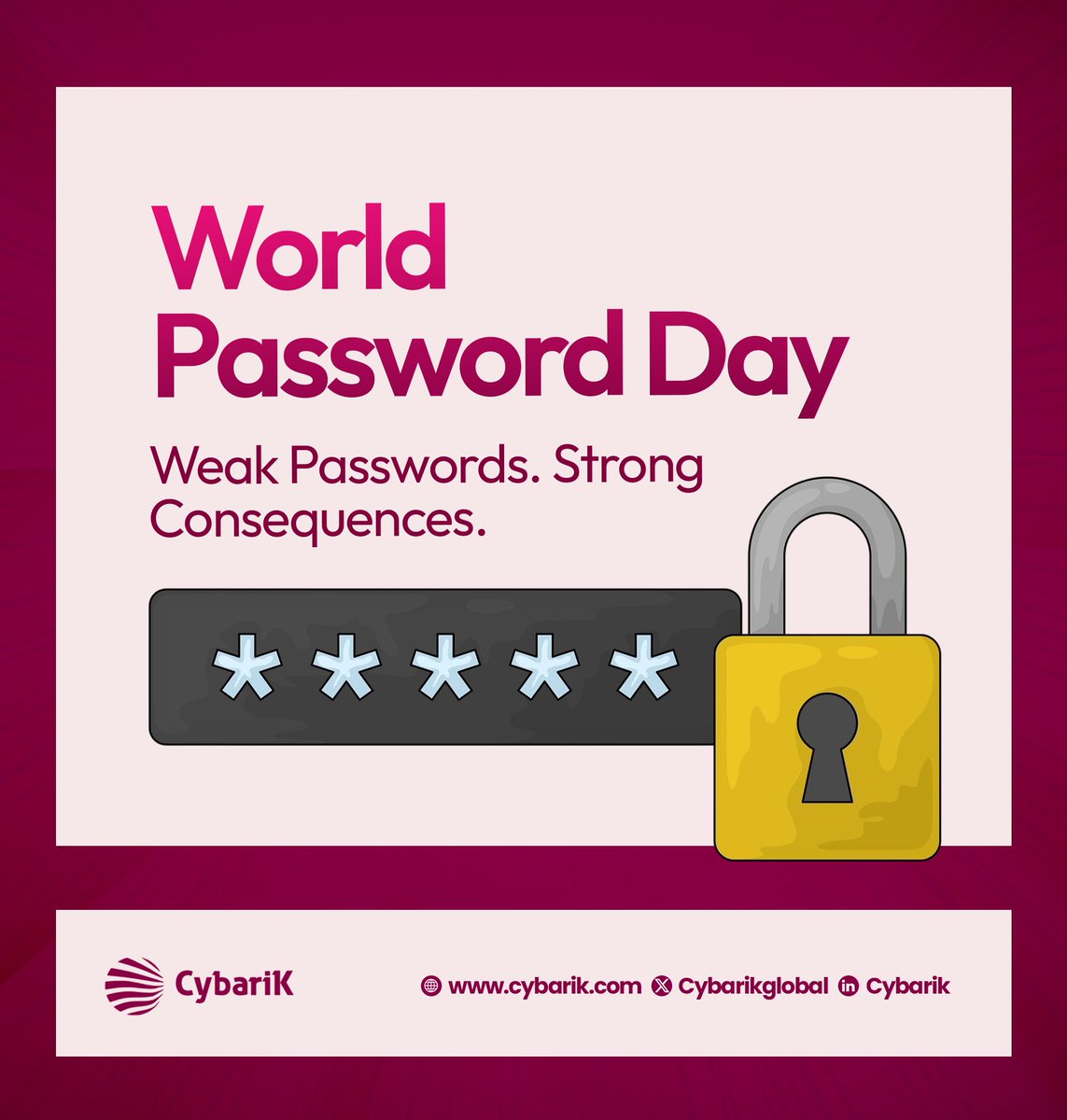
Weak passwords are one of the easiest ways attackers gain access to business systems.
A simple or reused password can expose your organisation to data loss, security breaches,& operational disruption.
Strengthening your password practices is a small but critical step.
1/2
@smartnakamoura Imagine a person who has a different DOB on his BVN, Bank account, WAEC and NIN. How did he managed to open a bank account with all these diff in DOB? Comm banks are more concerned about meeting up targets in quantity.
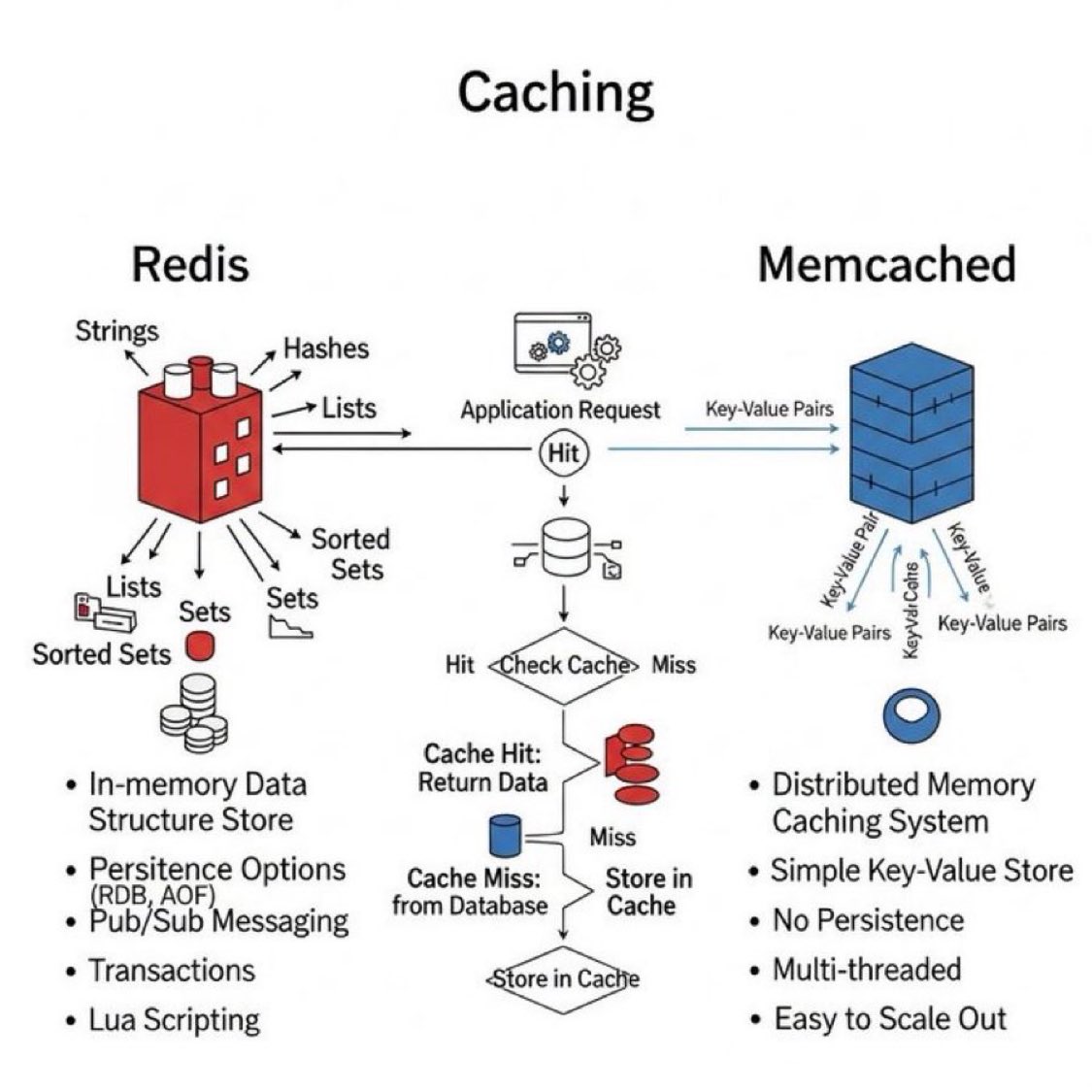
Caching (Redis, Memcached)
What is Caching?
Caching is the process of storing frequently accessed data in a temporary storage (cache) so future requests can be served faster. Instead of querying the database every time, the system retrieves data from the cache, reducing response time and server load.
Why Caching is Important
→ Improves application performance.
→ Reduces load on the database.
→ Enhances scalability and user experience.
→ Useful in real-time applications where speed is critical.
Redis
Redis (Remote Dictionary Server) is an open-source, in-memory data store often used as a cache, database, and message broker.
→ Stores data in key-value pairs.
→ Supports complex data structures like lists, sets, and hashes.
→ Provides persistence options (data can be saved to disk).
→ Commonly used in session storage, leaderboards, and pub/sub systems.
Advantages of Redis
→ Very fast (in-memory).
→ Rich data types and features.
→ Persistence support (RDB, AOF).
→ Suitable for real-time analytics.
Memcached
Memcached is a high-performance, in-memory caching system designed for simplicity and speed.
→ Stores data in key-value pairs.
→ Focuses only on caching (no persistence, fewer data structures).
→ Commonly used for caching database queries, HTML fragments, or session data.
Advantages of Memcached
→ Simple and lightweight.
→ Extremely fast read/write operations.
→ Scales horizontally across multiple servers.
Redis vs Memcached
→ Redis: Feature-rich, supports persistence and advanced data types.
→ Memcached: Lightweight, purely focused on caching.
→ Redis: Best for applications needing caching + extra functionality.
→ Memcached: Best for simple caching with minimal overhead.
Real-World Examples
→ Redis: Storing user sessions in large-scale apps like Twitter.
→ Memcached: Caching product details on e-commerce sites for faster page loads.
CybariK 's GRC Academy registration is ONGOING!
Get hands-on, world-class cybersecurity training + FREE interview prep & lifelong support from the CybariK community.
Register for our MAY 2026 cohort now👇🏾
https://t.co/Ne339SqNCO