"In what way can Ghana make its own specific contribution to the advancement of knowledge about the peoples and cultures of Africa through past history and through contemporary problems?"
--Kwame Nkrumah.
Ghana must introduce mandatory Front-of-Pack Warning Labels on foods high in sugar, salt, and unhealthy fats. These products are fueling rising cases of diabetes, kidney disease, and obesity.
Indeed disability is NOT inability. Persons living with disabilities are students striving for quality education, entrepreneurs seeking opportunities, workers contributing to our economy, and citizens determined to participate fully in society. Their inclusion is not only a matter of social justice; it is essential to Ghana's development and prosperity.
A proud moment for Dr. Julius Garvey as the 92-year-old surgeon receives a Black Stars jersey from President Mahama.
Dr. Julius Garvey’s father, the iconic Marcus Mosiah Garvey invented the Black Star philosophy which Osagyefo Dr. Kwame Nkrumah adopted and reflected in our national flag and the name of our senior national soccer team.
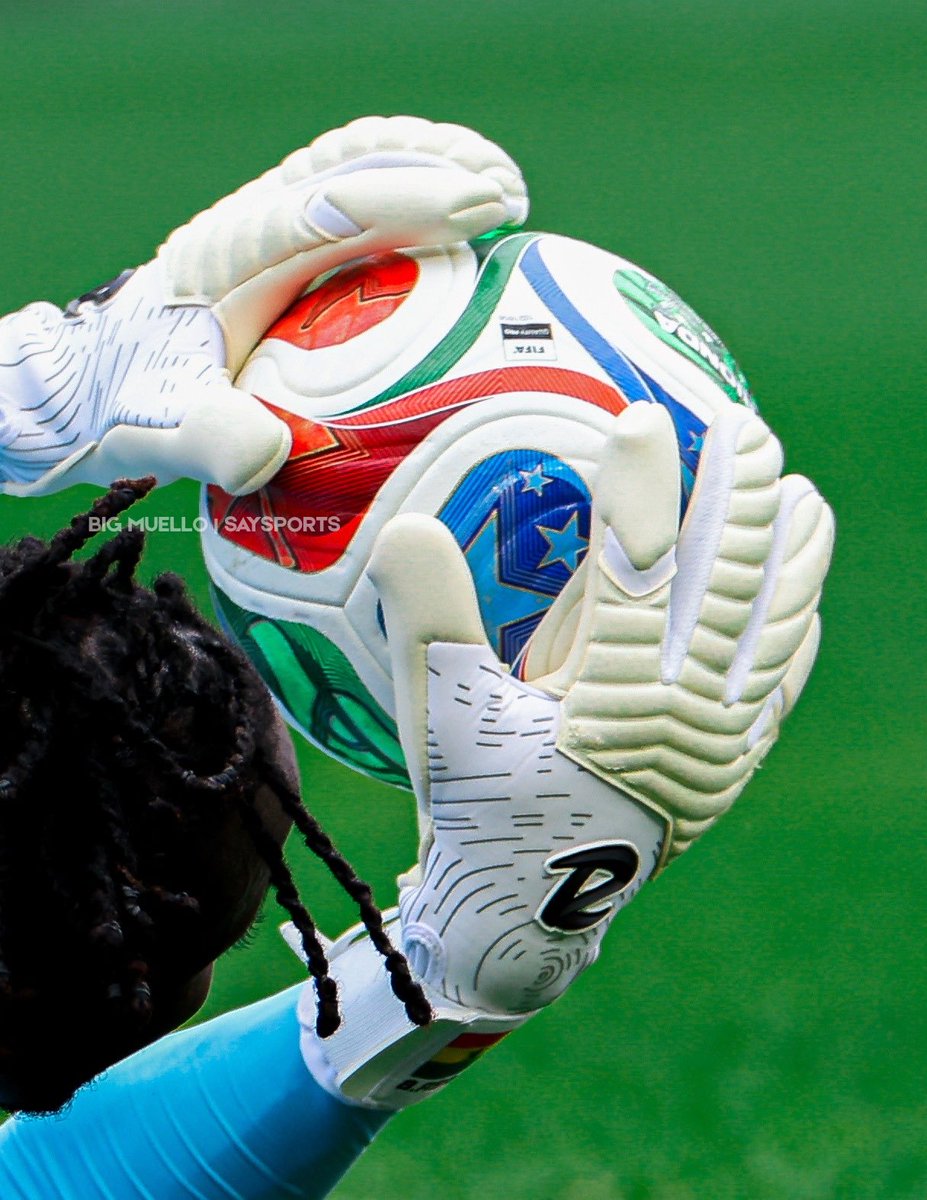
May the Black Stars be victorious today 🇬🇭
In Accra, Ghana, at the Juneteenth commemoration and the High-Level Conference on reparatory justice, I reflected on why this moment must matter to every child of Africa, whether in Bridgetown, Kingston, Accra, Port of Spain, Lagos, New York or Bahia.
We must not allow language, geography, passport, party or generation to divide a people whose story is connected. The debt of history is still being paid in the currency of our children’s future, in development gaps, in climate vulnerability, in the cost of finance, in stolen culture and in opportunities delayed.
Reparatory justice is therefore about repair, yes, but also about the world we now choose to build. One rooted in truth. One rooted in dignity. One that allows Africa and its diaspora to speak with one voice.
One people. One purpose.
Together with my colleagues, we explore critical minerals governance, democratic politics, and history, with Ghana in focus. See: Governing critical mineral transitions: democracy, delay, and the poli… https://t.co/nWnUZMCa3L
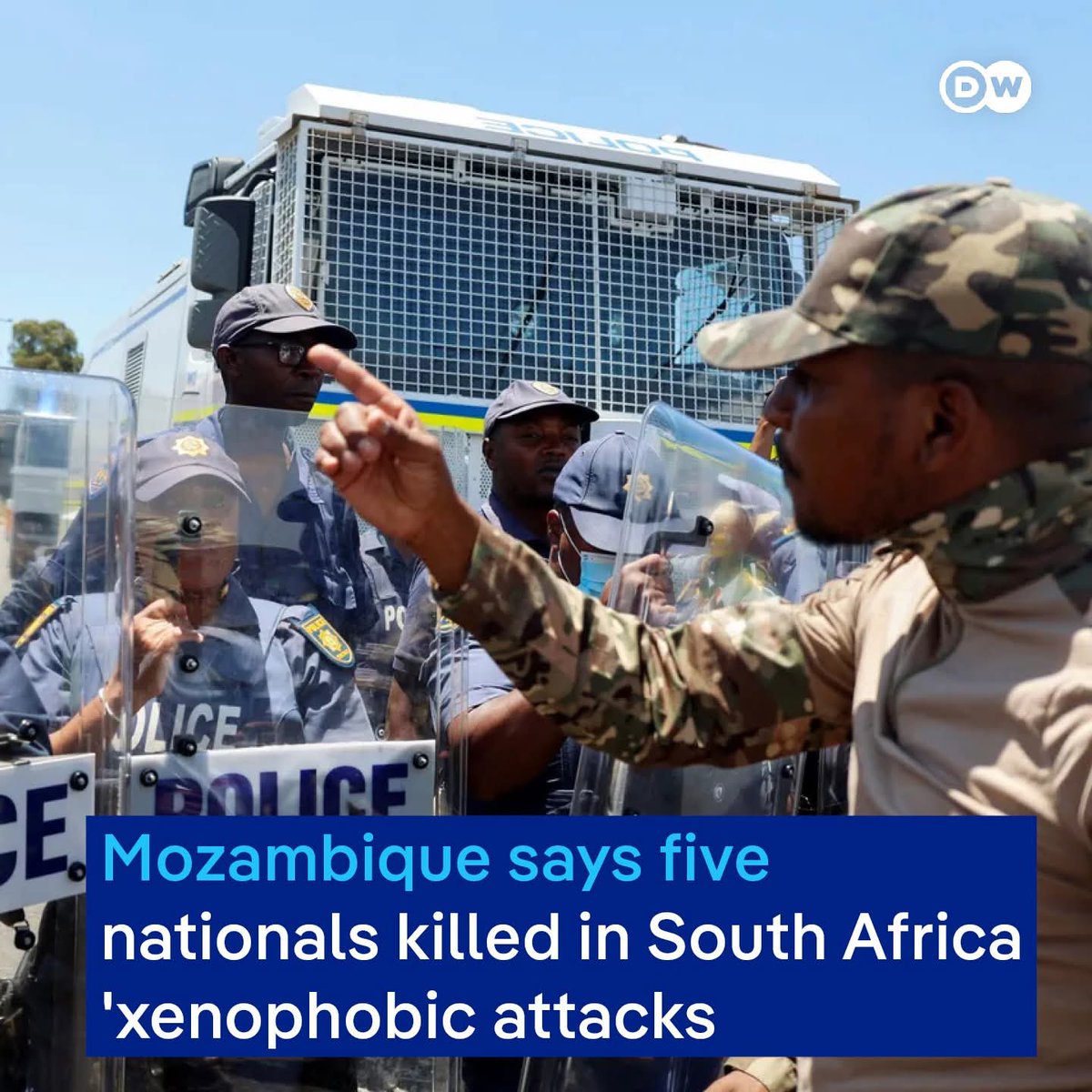
Ghana's swift and responsible intervention should now be better appreciated by the critics who accused us of overreacting and moving in too quickly to save our citizens.
The Mahama Administration does not gamble with the precious lives of Ghanaians.
We convey our deepest and sincerest condolences to the Government and people of Mozambique on the loss of five of their nationals due to the ongoing xenophobic attacks as confirmed by the Mozambican Government.
No African should ever be killed by fellow Africans on African soil.
May these condemnable acts never quench our Pan-African resolve for true African unity, full integration, free movement, common market and significant intra-African trade as Osagyefo Dr. Kwame Nkrumah pioneered and sacrificed greatly for.
Who Abolished Slavery?
You think there is no correlation between how we Africans have been engineered to look down on ourselves and to genuflect before those who oppressed us?
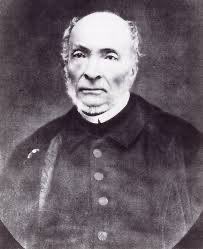
Who abolished slavery? Ask any fourth grader in Togo, and the answer comes without hesitation: Victor Schoelcher. Wake me from a deep sleep with that question, and my subconscious will answer before my eyes are open: Victor Schoelcher. Twenty-five years after leaving primary school, the colonial curriculum still lives in me like a reflex.
That is what was planted, and that is how thoroughly it took root. It is only the adult brain, the one lucky enough to stumble upon other literatures, other histories, other archives, that comes afterward to contest the first answer. But the first answer is always his name.
That is what colonial schools taught. That is what post-colonial schools taught. That is what is still being taught today, by people placed in power precisely to ensure that the curriculum of self-erasure continues undisturbed.
Because in Francophone Africa, the abolition of slavery has one face, and it is this French man. And in twenty years of academic formation on this continent, from primary school through university, including my own years as a history major at the University of Lome, not once, not in a single classroom, not in a single textbook, was the Haitian Revolution mentioned.
Not once were we told that enslaved Black people organized, fought, and defeated the French army, that Haïti became the first Black nation in colonial Americas and the first nation in modern history to defeat a European power that practiced slavery through the resistance of the very people it had enslaved. Twenty years of “schooling”: not one mention of that historical fact. And this is just one example, on just one subject.
Because not once throughout my entire education in Togo was I introduced to a Black mathematician, a Black physicist, a Black inventor, a Black philosopher. Not once. But for those of us who were cursed with France, the French apparently discovered more than 70% of world knowledge and wrote more than 80% of the world’s books, because our curriculum was designed to make us believe that the smartest, most resourceful, most intellectually gifted humans to have ever walked the surface of this earth were French. When the data actually tells you that France contributes approximately 2% of the world’s scientific innovation. Two percent. And we were built, from childhood, to worship that two percent as the totality of human genius. I imagine the same arithmetic applied to British, or Portuguese colonies, just with a different flag. This just one subject. There are decades of damage underneath it, layered and compounding.
Which is why it is genuinely exhausting to wake up every single day and be expected to debate, with patience and good faith, people who were produced by these laboratories of engineered ignorance and who are entirely convinced that what was done to their minds was an education.
The British state has never truly apologised for its role in slavery and colonialism.
Yesterday, I presented a petition calling for an unequivocal apology and an All-Party Parliamentary Commission for Truth and Reparatory Justice to address these grave crimes and their legacy.
I am overjoyed by the adoption by the UN Gerneral Assembly of the resolution declaring the trafficking of enslaved Africans and racialised chattel enslavement of Africans as the gravest crime against humanity.
The process of its realisation, from idea to reality, was made possible by the solidarity of people of good conscience around the world and led by the active coalition of the African Union, CARICOM and other groups.
I cannot think of a better way to honour our forebears on the day of remembrance than to have the majority of the world’s countries affirm that the trafficking and enslavement of nearly 13 million human beings is, indeed, the gravest crime against humanity.
One of those forebears, François-Dominique Toussaint L’Ouverture, who was born into slavery but became one of the architects of Haiti's liberation, the first independent nation in Latin America and the Caribbean, said: “The greatest weapon against oppression is unity.”
We must stand united in seeking the restoration of the humanity and dignity of our forbears who were enslaved and sold.
#RememberingSlavery
Thank you NAACP and the Congressional Black Caucus for your courageous endorsement of Ghana’s historic UN Resolution.
A RESOLUTION LIKE NO OTHER;
A MOMENT LIKE NO OTHER.
Today, before the United Nations, the world will be asked to answer for what history has long tried to outrun.
For centuries, the trafficking and racialised chattel enslavement of Africans have been spoken of in the past tense as though time alone could heal what was never repaired.
But the truth remains:
the consequences are still with us.
Today, Ghana stands before the world not in silence, not in apology, and not in fear, but in truth.
This is not about sympathy.
This is not about ceremony.
This is about accountability.
From the dungeons of Elmina and Cape Coast…
To the millions who passed through the Door of No Return…
To generations still living with the scars of dispossession, injustice and historical erasure…
We are not asking for charity.
We are asserting a right.
As President John Dramani Mahama has rightly said,
“Reparatory justice will not be handed to us. Like political independence, it must be asserted, pursued and secured through determination and unity.” 
This moment is bigger than Ghana.
It is bigger than Africa.
It is a test of humanity’s conscience.
Because a world that does not reckon honestly with its gravest crime risks losing its moral voice forever.
The trafficking and enslavement of Africans was not merely an African tragedy.
It was a human failure.
And the call for reparatory justice is not a cry for revenge, it is a demand for truth, dignity, accountability and healing.
Today, remembrance must become resolve.
Today, history must meet justice.
Today, the world is called to act.
#ReparatoryJustice
#GhanaAtUN
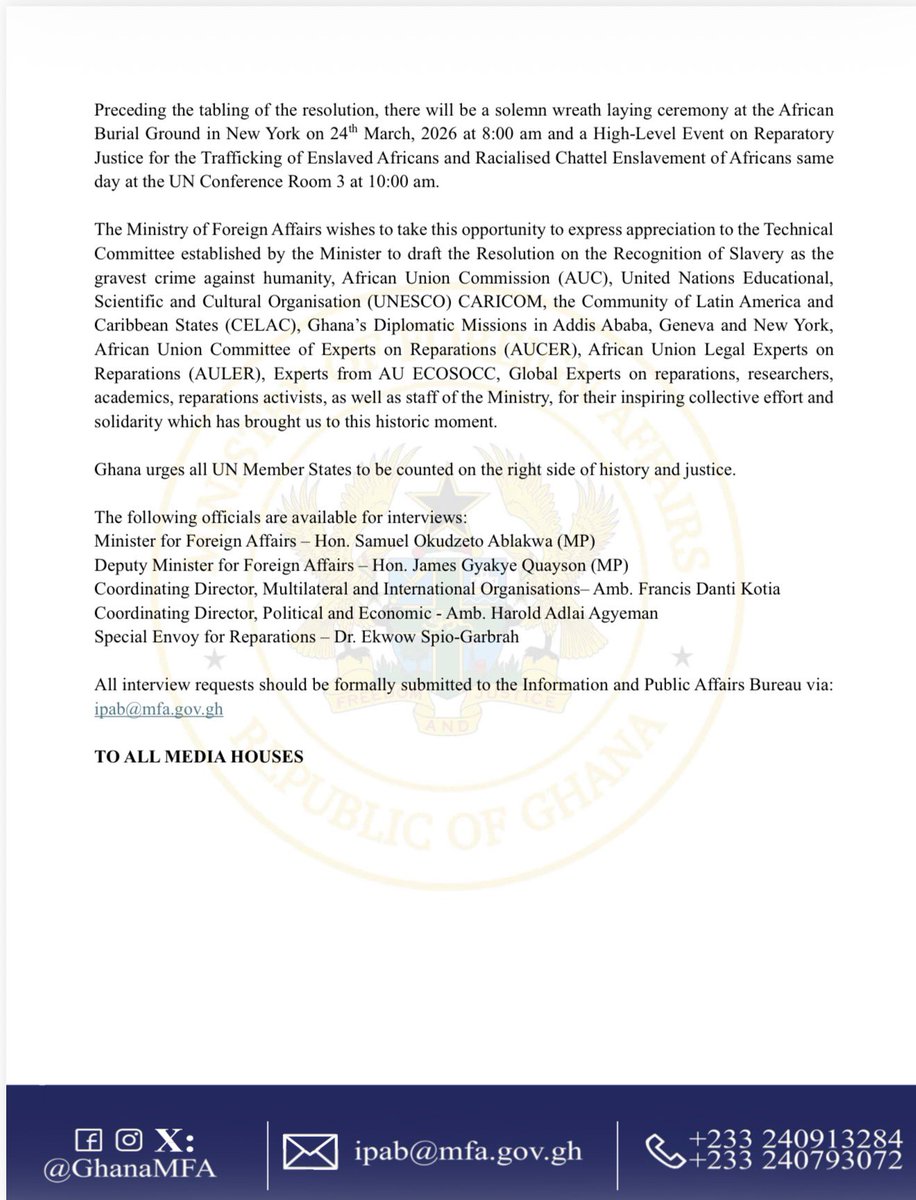
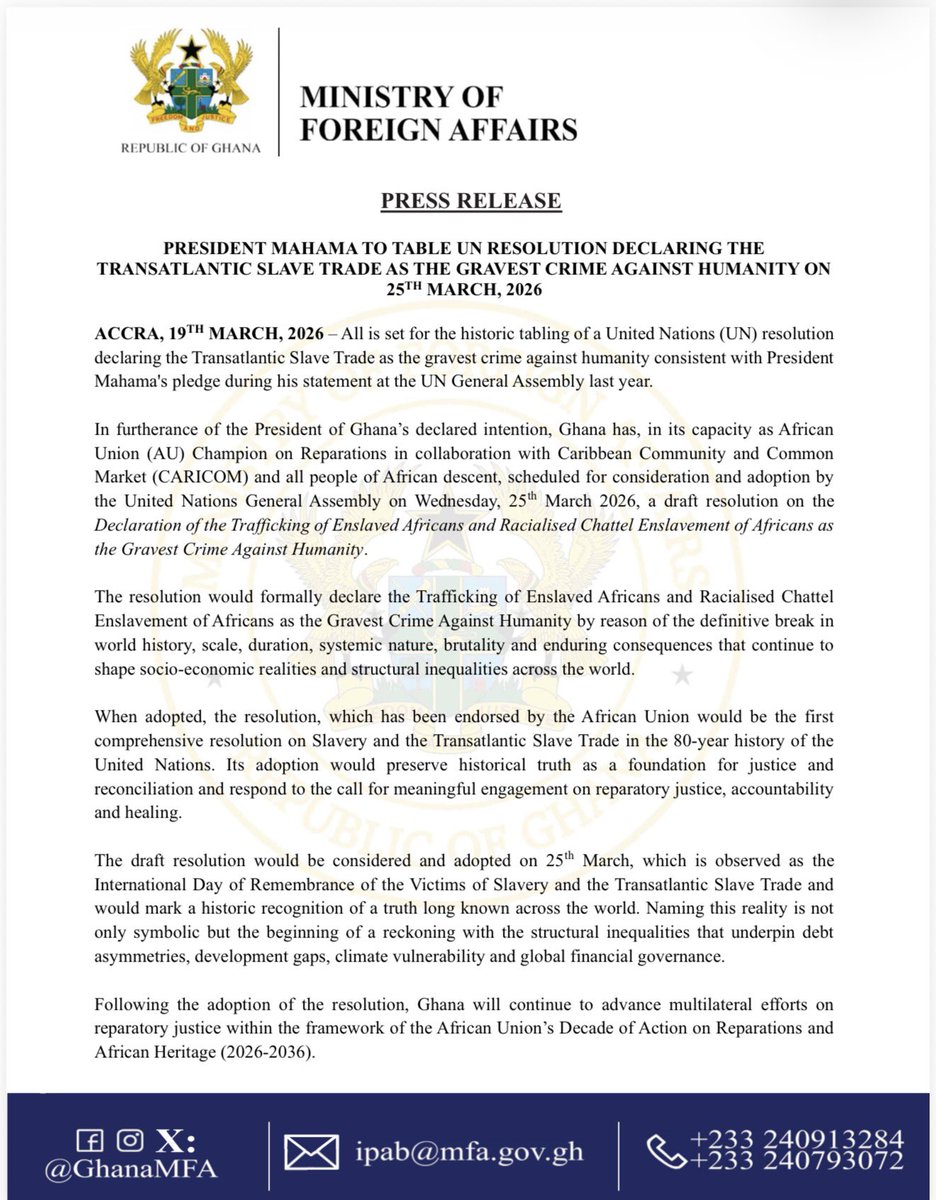
President Mahama is ready to lead Africa and all people of African descent to table a historic UN Resolution declaring the transatlantic slave trade as the gravest crime against humanity on March 25, 2026.
As the country with the highest number of slave forts and castles where over 12million enslaved Africans were trafficked and millions killed, tortured and raped — we have a moral obligation to pursue justice, reparatory restoration and healing.
Ghana urges all UN member states to be on the right side of history and justice.
Seeing the news about Ghanaian peacekeepers coming under attack in Lebanon brought back memories I still carry.
This photo was taken during my UN peacekeeping mission in Northern Mali.
Before we were deployed, we had already heard the stories about Northern Mali.
That mission had gained a reputation for danger.
Over the years it claimed the lives of more than 300 UN peacekeepers, making it one of the deadliest peacekeeping missions in UN history.
So even before arriving, the weight of that reality sat with us.
Within four months of returning from Côte d’Ivoire, where I served as medical officer for my unit, I was deployed again.
In the military, sometimes there is only one answer:
→ Yes sir.
→ No questions asked.
This time I was the medical officer in charge of the Ghana Aviation Unit (Airforce) in Northern Mali.
For one year, Northern Mali (Gao Supercamp) became our world.
There were nights nobody slept.
Not because we weren’t tired.
Because you never knew when the missile detector siren would go off.
The bunker quickly became our second room.
When the alarm sounded and you were too far from your own unit, you ran into the nearest UN camp you could reach.
And sometimes the siren would go off while you were in the middle of treating a patient.
That was my closest experience to a war zone, the kind I had only seen in movies.
But what stayed with me most happened after I returned home.
For months, the sound of an ambulance or police siren could trigger panic attacks.
It took time for my mind to accept that I was no longer there.
That experience taught me something I will never forget.
Peacekeeping missions do not always end when the deployment ends.
Sometimes the deeper wounds are the ones people cannot see.
I share this not to debate the politics of conflict, but to speak to its human cost.
That is why psychological support for peacekeepers matters.
Not as an afterthought.
But as part of caring for the people we send into danger.
The little I experienced left me with one lasting conviction:
Peace is always worth protecting.
Because once you have seen how fragile it is, you understand how costly confrontation can be.
My thoughts are with the Ghanaian troops and with peacekeepers everywhere who stand in difficult places so others can live in safer ones.
Sometimes the hardest battles begin after the mission ends.
If you know someone who has served in a conflict zone or peacekeeping mission, check on them.
Akwaaba! Woezor! Oobakɛ! 🇬🇭
On behalf of Hon. Abla Dzifa Gomashie and Maame Efua Houadjeto, CEO of the Ghana Tourism Authority, we proudly welcome legendary American singer, songwriter and producer Montell Jordan to Ghana.
The global hitmaker behind “This Is How We Do It” is leading a 30-member delegation on a 10-day cultural and heritage experience under the Black Star Experience. From the Kwame Nkrumah Memorial Park to Assin Manso Ancestral Slave River Park, Elmina Castle, Akropong Palace, and Asenema Waterfalls, the journey will connect history, identity, and rediscovery.
With a marriage reunion, naming ceremony, and other immersive cultural moments on the itinerary, this visit goes beyond tourism, it is about reconnection, legacy, and shared heritage.
Montell Jordan is also in Ghana for the Afrozons Sound Off Ghana Independence Edition slated for 8th March, 2026 at the Polo Beach Club.
Ghana is ready to embrace you with rhythm, warmth, and meaning. Welcome home.
#GhanaTourismAuthourity #VisitGhana #ExperienceGhana #MontellJordan #AbeikuSantana #Ghana
Now open: The AfOx Visiting Fellowship Programme is designed to allow exceptional African researchers to build international networks and focus on a project of their choice in collaboration with Oxford-based scholars