Germany sank a British ship that could have been converted into a gunboat and might have been holding weapons, while a British Blockade of their whole country was causing somewhere between 424,000 and 800,000 deaths (not including deaths in Austria, Mount Lebanon, or the Brest-Litovsk states).
We entered the war because Wilson wanted to turn Germany into a clone of the US, not because they sank a British ship that happened to have Americans on it.
@megbasham@Peytons_Place1@dave43law I don’t know if there’s ever a right to revolution but events in the UK really make me question that.
At very least, the King will be abdicating his God-given duties as sovereign if he does not intervene at this point. Even if it costs him his crown he should.
In the verse he quotes, “God is love,” love is a noun. So it certainly can’t be said God is in no sense a noun.
If I’m steelmanning his claim, it sounds like a very clumsy attempt to describe the notion that God is actus purus (pure act). In God, there is no distinction between His being, essence, and actuality (because He isn’t composed of parts; if he was, He’d depend on those parts). Thus, it can be said there’s no distinction between noun and verb, but Talarico makes the mistake of saying the verb is thus the only thing to exist truly, which is incoherent metaphysically and borders on heresy if he understands what he’s saying (which, Talarico isn’t known for orthodoxy).
In the verse he quotes, “God is love,��� love is a noun. So it certainly can’t be said God is in no sense a noun.
If I’m steelmanning his claim, it sounds like a very clumsy attempt to describe the notion that God is actus purus (pure act). In God, there is no distinction between His being, essence, and actuality (because He isn’t composed of parts; if he was, He’d depend on those parts). Thus, it can be said there’s no distinction between noun and verb, but Talarico makes the mistake of saying the verb is thus the only thing to exist truly, which is incoherent metaphysically and borders on heresy if he understands what he’s saying (which, Talarico isn’t known for orthodoxy).
John identifies himself by name in Revelation 1:1. Which, fittingly, he also identifies himself in John 21:24, though not by name. His authorship is also affirmed by Polycarp of Smyrna (who knew him) and Papias of Hieropolis, as well as Polycarp’s student Irenaeus, Clement of Alexandria, Tatian, and Tertullian. So again, all the best historical evidence points to John having written the Gospel bearing his name.
Most scholars do not say Matthew, Mark, Luke, and John did not know Jesus.
Most scholars believe Luke did not know Jesus, including Conservative scholars. Luke appeals to other eyewitnesses in his book. Some scholars believe Mark knew Jesus but most are agnostic to it. Historically, Mark has been seen as a student of Peter.
But most scholars believe John and Matthew did know Jesus. The thing you’re probably trying to get at is that most *Liberal Scholars* don’t believe John and Matthew wrote the books bearing their name. But this is not because the timeline doesn’t make it possible. It’s because of assumptions and suppositions which are taken as fact without proof and which in some cases conflict with existing evidence, such as Mark being the first gospel.
Our best historical evidence, including historical record from people who knew them like Papias of Hieropolis and Polycarp of Smyrna, as well as the “we” statements in Luke-Acts, unlikelihood of these names showing up pseudononymously, accurate representation of First Century details that later Second Century works from different places get wrong (like name frequency), and stylistic continuity between John and later Johannine Epistles, do actually indicate they wrote those works.
The Churches do not admit this point. We have primary source information on who met Jesus. Paul mentions John and Peter as having met Jesus in Galatians. Nobody asserts Luke was an eyewitness, but we are fairly confident in Luke’s authorship of Luke-Acts due to the “we” statements found in Acts (Acts directly references being a sequel to Luke). Luke records multiple eyewitnesses by name, including Matthew, Peter, and John. Polycarp of Smyrna knew John personally and wrote that John was an eyewitness. Polycarp’s student Irenaeus of Lyons also confirms this. Papias of Hierapolis, who identifies John Mark as having written his gospel under the oversight of Peter, was a student of Peter who wrote he knew Jesus. This claim is thus pure supposition without hard evidence to support it.
There is nothing good about protecting incitement to violence, which Piker does frequently, as if it any other peaceful communication of an idea. In fact, tolerating people who call for the streets to “let the streets soak in their red capitalist blood,” and tell their viewers to kill Senators (Tom Cotton and Rick Scott specifically) is actually an abdication of the government’s duty to protect its citizens, and undermines the, “more better speech,” solution by preventing it in the first place.
@jeofroyBezos@TheZapken Yes, France did win a cultural victory over Britain from the time of William the Conqueror to some time after Edward III. Richard I famously didn’t even speak English.
Yeah, that’s a breadth of differences. There are analogs within the US. Regional accents exist. I’m sure you’ve heard of a Southern accent, and may even know a Cajun accent is different, but an Alabama Southern Accent is actually different from a Tennessee Southern Accent. It’s the same elsewhere; a New York accent is different from a New Jersey accent.
Regional dialects exist too. Very famously, the US is split between three different words for soft drinks (Soda, Pop, and Coke). This is not the only example. I grew up calling what many call fireflies “lightning bugs.”
Different customs exist too. People from the northeast interrupt and talk fast. It isn’t a rudeness thing; it’s just how conversations happen up there. In the South, you talk slow and let other people finish, and it comes across as angry or rude if you don’t. In the Midwest, it’s almost an insult if you don’t give someone a thank you card, but it’s just a pleasant surprise to get one in the South.
There is regional variation in dishes too. I grew up with foods people even one state over would’ve never heard of. I actually drank sweet tea out of a bottle as a baby, but some restaurants in other states don’t even serve it. Southern food is obviously dramatically different from what you would call “American food,” but even just within that category there is variation. Cajun food is the obvious standout. But even just state-by-state on BBQ alone there is a tastable difference. Elsewhere, there is a famous rivalry between Chicago style and New York style Pizza. I can’t say if this has to do with raw ingedrients, but I imagine it would taste different if a tomato was grown in midwestern soil vs the black belt of Alabama’s soil.
Architecture is also very different in the US. The Art Deco that characterizes New York is rare in the South and Midwest. Florida style homes would look odd anywhere else. American architecture has been hurt by recent trends in architecture, for sure, but that’s not exactly untrue of Europe; y’all (another regional term) have just been around longer and can cope better (and I give credit where credit is due there).
Again, they aren’t as dramatic as European differences, but that’s what I mean when I say depth rather than bredth.
It may be easy to miss for someone looking at it from the outside, but American states are actually pretty different. Even if you take two very similar places - North Alabama and East Tennessee, for example, which are both firmly Southern, Appalachian, and part of the Tennessee Valley - someone well acquainted would be able to tell the difference. Georgia is also discernibly different from both of them, as is Mississippi. And all four states are more similar than either are to Kentucky or North Carolina, which is more similar than Louisiana or Texas, which is more similar than Oklahoma. And this still dealing just with cultures that would be categorized as “Southern,” when viewed from afar. Shared federal government doesn’t erase this, both because there are still real things decided by the states and because government itself isn’t the sole producer of culture. And differences can exist in depth, not just breadth.
There’s something to be said about people saying “Christ is King,” with ulterior motives in ways that violate the 3rd Commandment. But this is an overreaction that veers straight into severe heterodoxy.
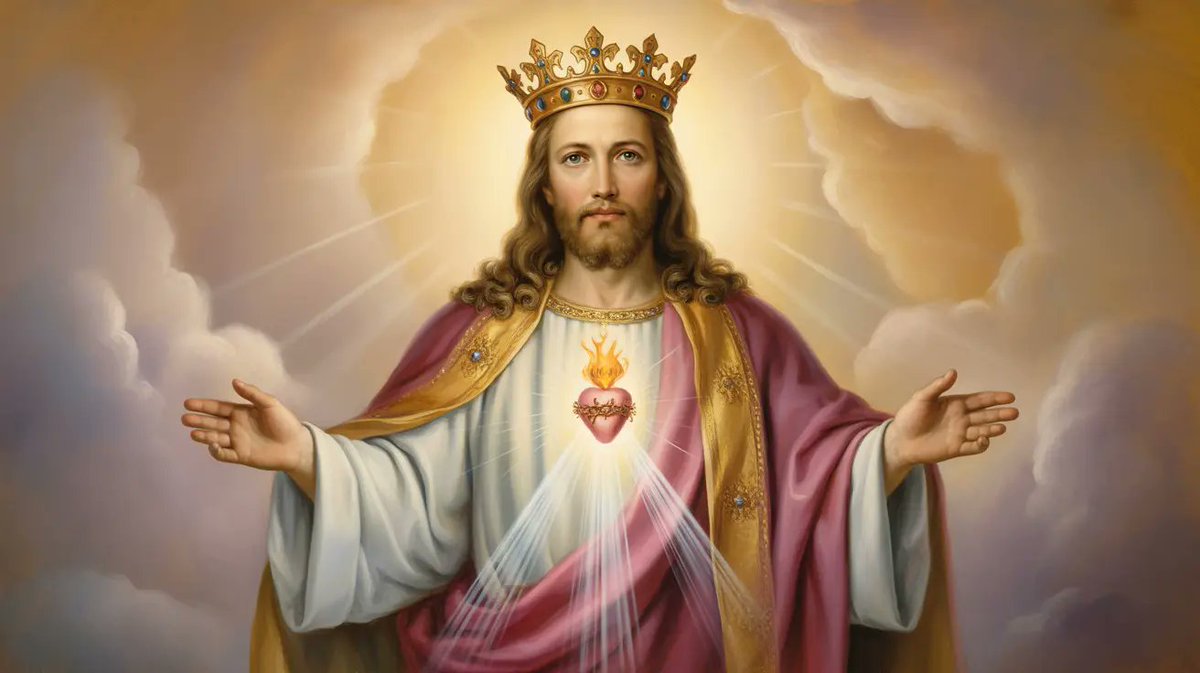
Christ is king. Presently. That’s the meaning of the word “Christ.” Zechariah 9:9 prophesies His triumphal entry into Jerusalem before His crucifixion by calling Him King. He is the fulfillment of the Davidic Covenant, the son and heir of King David. Revelation describes Him as King of King in the present tense, and the Great Comission is established on the basis of the sentence, “All authority in Heaven and on Earth has been given to Me.”
It is good to avoid ethnic hatred for the Jews. But if our endeavors to avoid antisemitism prevent us from saying Christ is king, then they are useless and we actually worship ethnic inclusivity or the Jews themselves.
This whole "Christ Is King!" movement is not biblical, and in fact, is quite Roman Catholic. Jesus Christ is NOT the "King of Christians". He is our Saviour, our Advocate, our Rest, our Life, the Friend that sticks closer than a brother. We have been saved and placed in His Body. Jesus becomes a King at the Second Advent when we return with Him. Stay away from "Christ Is King" cultists.
@1776_ghost@MattWalshBlog Rights being natural and coming from God aren’t mutually exclusive. God made nature. The newborn does participate in society. And an animal can; it just doesn’t have a right to do so. I don’t think you understand my case.