I will no longer be posting to this account until Elon Musk is no longer associated with this app. On my personal account, I received an add that was a porn video that would have EASILY identified by AI.
Given that Musk makes a mockery of God's institution of marriage by impregnating multiple women and leaving these poor children in broken homes, I cannot with good faith use this app. We must protect children, the elderly, and all the vulnerable.
I will no longer be posting to this account until Elon Musk is no longer associated with this app. On my personal account, I received an add that was a porn video that would have EASILY identified by AI.
What are determiners in English?
Determiners are essential building blocks in English grammar, serving as words that introduce or provide context to nouns by clarifying their identity, quantity, or specificity.
Read to learn more: https://t.co/1QYgzNk467
This, that, these, and those
In English, the words “this,” “that,” “these,” and “those” serve as powerful tools to point out specific items or ideas, functioning as both demonstrative pronouns and determiners.
https://t.co/sXxdIqHZjU
Curious about how to ask the right questions in English? Asking questions is a fundamental skill in English that opens doors to understanding and connection. Read more:
https://t.co/nhOvk344yd
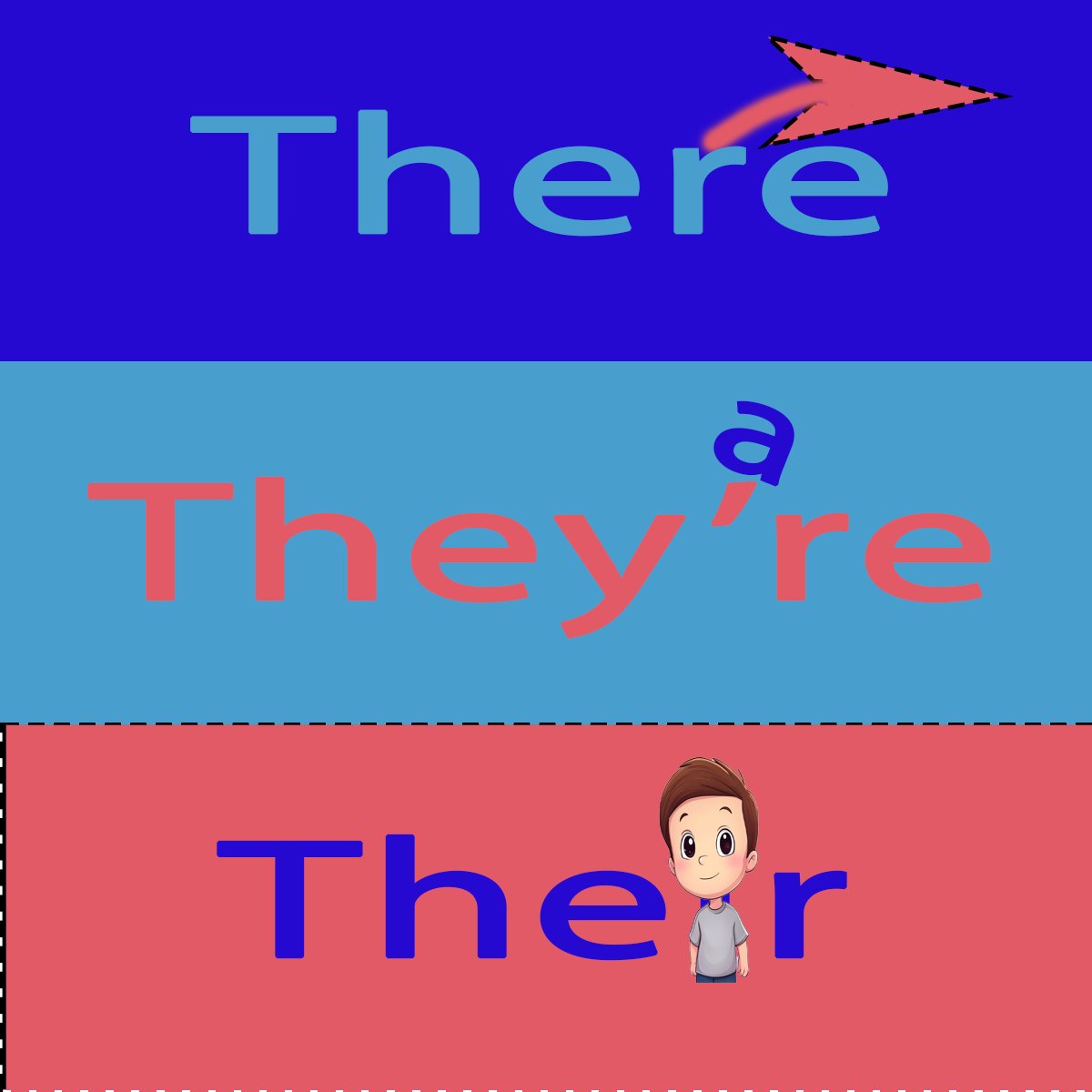
Welcome to a quick and easy guide on mastering the tricky trio of “their,” “there,” and “they’re”! If you’ve ever found yourself second-guessing which one to use in a sentence, you’re not alone—these commonly confused words...Read more
https://t.co/spzToIiOUT
To, too, and two
The two brown bears like to fish too. It seems simple but it’s something that often trips up native speakers as well.
Here’s an explanation of the homophones to, too, and two:
https://t.co/YYoWs0DrlU #learnenglish#esl#englishlesson
Base vs Bass
English has many confusing words. Here’s a clarification on the difference between base and bass:
https://t.co/VXRiBjPOyt #esl#englishtips#LearnEnglish
Commonly confused words in English
Here’s a big list of confusing words in English, alphabetized for your convenience. These words are often confusing either due to similar spellings, pronunciations, or meanings:
https://t.co/yt2lawIn2D #English#EnglishMadeEasy#ESL
Laying vs. Lying
The distinction between “laying” and “lying” often trips people up (causes them to make a mistake) because both words relate to positioning oneself or something else, but they are used differently:
https://t.co/Cy7FaCpOot #ESL#EnglishMadeEasy
Auxiliary verbs vs Helping verbs vs Modal verbs
While these terms are often used interchangeably, there are subtle distinctions among “modal verbs,” “auxiliary verbs,” and “helping verbs.” Here’s how they relate to each other:
https://t.co/y885tYX5AO
Modal verbs in English are a type of auxiliary verb that express modality—concepts like possibility, ability, permission, obligation, or advice.
Learn more about what they are and how to use them.
https://t.co/yLD2NsAlf8
Beside vs Besides
“Beside” and “besides” are often confused because they sound similar, but they have different uses. Learn more about the distinction between beside and besides. (link below) #ESL#ESLtips#English