No coding skills. No dev team.
Just me, Antigravity, and an obsession.
I share every failure, prompt, and win here.
1st App: RecipeClip – Live on the Play Store
I've been working my way down the funnel step by step: first the ad hook, then the landing page, then onboarding.
Now the second iteration of meta ads in France.
I paused everything and redesigned the onboarding from scratch. Here's what happened after:
📈 Activation rate: +417%
Now the final bottleneck is crystal clear: the paywall itself. This is the next and hopefully last frontier.
Found the probable culprits behind my high uninstall rate:
Onboarding flow that overstays its welcome.
Paywall that punches you in the face before you've even seen value.
But here's the twist: I built this for US iPhone users. My actual audience? Android users in Europe.
Different platform. Different expectations. Different market.
Now I need to test if fixing these actually moves the needle.
The "first real client meeting" I was hyped about never happened. Client showed interest, then ghosted. No meeting. No sale.
I could wonder why. But my guess? It's not that he doesn't need it. He just doesn't know how much he needs it yet.
Some people need to feel the pain before they see the solution. Next.
Next week: my first real client meeting for my gig manager app.
A potential first sale. The catch? The client isn't very tech-savvy.
It's making me question if I should simplify the entire app.
For now, I'll go with what I've built. Whatever happens, it'll be a class in user needs.
Vibe coding is a constant loop of "I didn't know that was a thing."
Today I learned about release build bloat. Old files, uncompressed assets, silent weight I never noticed.
Cleaned it up. App size dropped 50%. 🤯
Found the probable culprits behind my high uninstall rate:
Onboarding flow that overstays its welcome.
Paywall that punches you in the face before you've even seen value.
But here's the twist: I built this for US iPhone users. My actual audience? Android users in Europe.
Different platform. Different expectations. Different market.
Now I need to test if fixing these actually moves the needle.
Finally dug into the event data from my recipe app's backend.
Clear pattern: too many users drop off before importing their first recipe. But the ones who do? They stick around.
So the problem is obvious now: onboarding and empty state are the bottlenecks.
Simplifying both is my only priority right now. Get them to that first import, then the app sells itself.
My Meta Ads journey has been a cycle of finding and fixing leaks.
First, the data showed a high skip rate, so I improved the hook. Then, clicks weren't converting to installs, so I optimized the landing page.
Now, the bottleneck is final conversion, which I'm tackling by refining the onboarding. Each solved problem just reveals the next one in line.
Working on the solid ground of data. knowing which direction to go it's a powerful feeling.
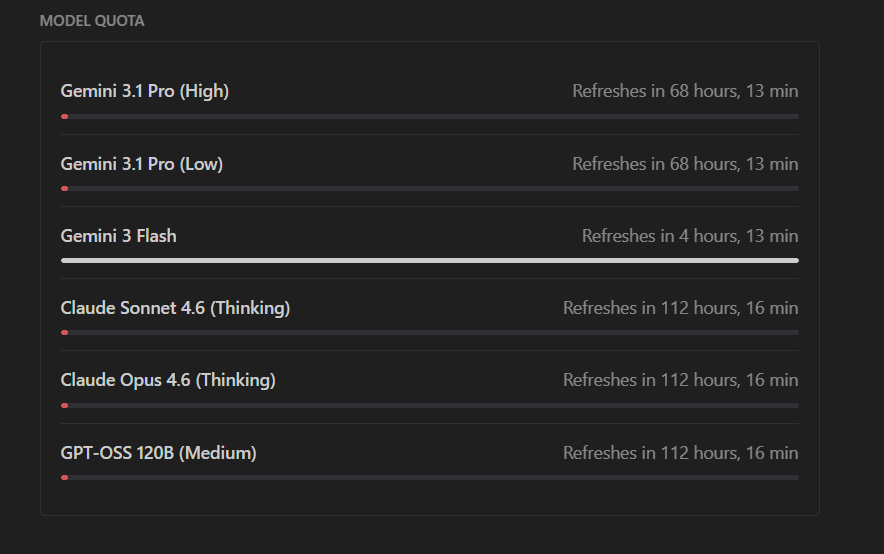
So I hit my Gemini 3.1 quota on Anti-gravity after two prompts. Can't use it anymore.
But the usage indicators? Still showing I have limit available.
What's the point of these indicators if they don't reflect reality? Either show me the truth or don't show them at all.
One day of testing Gemini 3.1 on @antigravity.
Two prompts in, and I'm already hitting Pro quota limits.
I don't care how smart the model is if I can't actually use it. At this point, I'd rather have Gemini 3 back. This is unusable.
Google dropped the ball here.
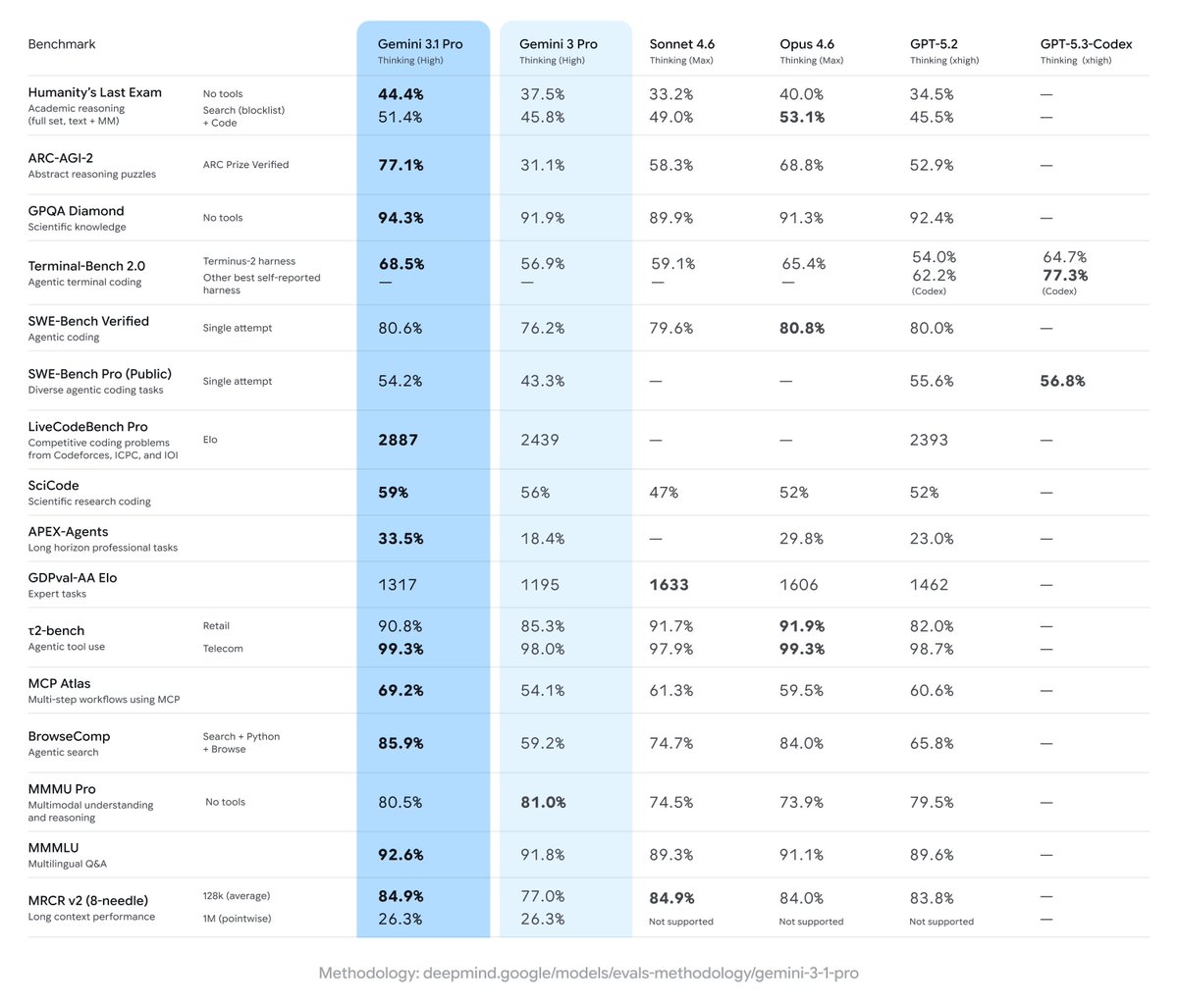
Finally! Anti-gravity was in serious need of an upgrade.
Now with Gemini 3.1, I'm hoping it catches up and fast. The gap was getting uncomfortable.
Fingers crossed this closes it.
My boss saw the app. Now he wants to show it to his bosses.
That changed everything for me.
I'm not just building anymore. I'm polishing every screen, refining the institutional aesthetic, making sure it feels premium. Because when he presents it upstairs, he's not just showing an app—he's talking about me.
This just got personal. In the best way.
Today, I showed the MVP to my boss at the public institution where I work.
His reaction caught me off guard: "I didn't even know it was possible to build something like this."
This app won't make me money directly. But it plants a flag: I exist as a creator, and I can solve problems that others assume require expensive contracts.
That visibility may bring the paying clients.
The institutional app yesterday entered testing phase. Got the green light and sat down with the person who'll actually use it.
I made it clear: this is experimental, expect rough edges.
He nodded, said he understood. Then immediately started loading real data like it was production-ready. And of course, started finding things that break, things that should be different.
The upside? Real stress test with real information. The downside? expectations are way ahead of the experimental label