@redstone_defi is constantly evolving. The protocol drives innovation while maintaining the highest-quality price feeds.
Today, with @edenbdn, we’re sharing an overview of the RedStone ecosystem to help you easily explore where you can find RedStone price feeds. Explore it now:
https://t.co/gr852TjDsf
Thanks to @LeCriptal and @0xSmerfik for their feedbacks.
Last month I wrote about how we can build a positive and safe future for everyone: https://t.co/eoLGVY8yad
Every lab has the responsibility and incentive to move at the pace required to train its models safely, and the ability to take its own actions to ensure that happens.
The reality is:
- People won't want to use agents that are misaligned with them and that don't do what they ask, so labs have a strong natural incentive to make their models more aligned.
There is a lot of debate about slowing progress on capabilities until alignment catches up. My view is that trust and alignment are quickly becoming the most important capabilities that will differentiate agents and models. Any lab that doesn't focus on alignment will fall behind.
- Labs face significant liability if their models cause harm, so they have a strong incentive to prevent this as well.
Meta delayed shipping Muse for several months to focus on safety and security. We didn't call for everyone else to do this before we would. We just did it as part of our day-to-day work because it was clearly the right thing for people and for us. I'm proud of the security foundations we've built.
- Engaging independent evaluators and advisors is industry best practice. MSL already does this today in several areas because it helps produce better work. Other labs can just do this too. In general, it would be helpful for there to be a larger and more diverse ecosystem of evaluators.
- Committing the significant majority of compute towards serving people rather than racing towards recursive self-improvement is one of the best ways to ensure we develop this technology safely. Meta has made this commitment and other labs can do this as well.
I believe the key to building a positive future for everyone is maintaining the right balance of power. This is within our power to do.
Si le rachat de Hugging Face par Nvidia était confirmé, ce serait le plus grand exit entrepreneurial français de l’histoire, un rachat stratégique à multiple extrême (80x le CA), et le passage d’un symbole de l’IA ouverte sous le contrôle du fabricant de puces le plus puissant du monde...
À ~13 milliards de dollars, ça dépasserait largement Business Objects rachetée par SAP en 2007 pour 4,8 Md€, qui fut longtemps le plus grand exit d'une entreprise entrepreneuriale tech créée par des Français.
Ironie de l'histoire, fin 2025, Hugging Face avait refusé un investissement Nvidia de 500 M$ qui l’aurait valorisée 7 Md$, pour ne pas avoir un actionnaire trop dominant.
Créée à New York, je ne me demande même pas si Hugging Face aurait pu avoir un destin comparable si cela avait été en France et non pas aux US.
Hugging Face avait levé un peu moins de 400M$ au total, dernier tour en août 2023 (valo 4,5Mds$) mené par Salesforce Ventures, avec Google, Amazon, Nvidia, Intel, AMD, Qualcomm, IBM, Sound Ventures... Sequoia et Coatue étaient aussi rentrés au tour précédent.
$9 million borrowed against $5 of collateral due to oracle failure.
The whole attack took 8 seconds. Here's what happened over the weekend.
Why oracles are the most critical part of the system?
A blockchain is a closed world. A smart contract cannot check a price on its own. It knows exactly one thing: what its oracle tells it.
Every borrow limit, every liquidation, every collateral check in DeFi reduces to a single number delivered by an oracle. The code then executes with perfect obedience. If the feed says your $5 deposit is worth billions, the protocol will let you borrow against billions.
The scale of this trust is enormous. Oracles secure billions in value across DeFi today. Every dollar of it depends on price feeds being accurate and verifiers doing their job.
The design of the attack.
July 11, 00:51 UTC, according to Bonzo's incident report and onchain data:
1. The attacker funded a wallet with 1 ETH from Tornado Cash.
2. They deposited 250 SAUCE as collateral on Bonzo Lend. Value: a few dollars.
3. They submitted a price update to @SUPRA_Labs on-demand oracle contract, inflating SAUCE's price by roughly 12 orders of magnitude.
-> SAUCE traded near 0.2 HBAR (~$0.014). The fake update carried a value of 1 followed by 30 zeros.
4. The update was signed with a signature made entirely of zeros. A correctly working verifier rejects that instantly. Supra's verifier contract had a flaw in its signature check and accepted it as valid.
5. Eight seconds after the fake price landed onchain, the attacker borrowed 6.63M USDC and 34.5M wrapped HBAR against the near worthless deposit. Roughly $9.05 million.
6. Over $5.25 million was bridged to Ethereum via LayerZero and swapped into ETH within hours.
Read point 4 again. Nobody stole a signing key, that was not an OpSec bridge. The attacker submitted an obviously invalid update and the verifier waved it through.
The consequences.
Bonzo lost roughly $9.05 million in principal, with total abnormal borrowing at $10.06 million before a white hat returned about $1 million.
Bonzo's TVL dropped 77%. Hedera's entire ecosystem TVL fell nearly 40% in 24 hours. HBAR sold off and Korean exchanges Upbit, Bithumb and Coinone issued investor caution notices. Bonzo Lend remains paused while depositors wait for a recovery plan.
One broken signature check in one oracle contract took down the flagship lending market of an entire chain and cut the ecosystem's liquidity nearly in half overnight.
The conclusion.
Bonzo's own lending contracts were not compromised. Hedera's consensus was not compromised. The team did many things right and paused within minutes of the legitimate price returning. None of it mattered, because the protocol inherited the weakest link in its oracle stack.
Oracle security is earned through years of adversarial pressure in production: rigorous signature verification, multi-layer validation, deviation bounds that reject impossible prices, robust nodes setup. RedStone has carried billions in value through multiple market crashes with this discipline over the past 6 years.
If you are building a protocol, the oracle decision is not a line item. It is the decision that determines whether your users' funds survive contact with an adversary.
Your protocol is exactly as strong as the weakest signature check in its stack. Choose accordingly.
Today, @Securitize goes public on NYSE.
A milestone for tokenized finance.
RedStone is proud to be the primary oracle provider powering the data
layer beneath their funds and Securitize price feed for equities.
Tokenize the world.
@JLMelenchon "Demain, vous paierez sans jamais rien posséder." Melanchon qui dit ça, c'est cocasse, tu serais capable de taxer les jeux vidéos si on en possédait trop
@Frenchie_ C'est juste pas les mêmes applications ni marché pour ce type de modèle et ce type de dToF. Tu compares un modèle qui avec une csi RGB te fais une reconstruction 3D (qu'il faut faire tourner par ailleurs) et du hardware qui te renvoie une matrice 54x42px avec NIR et Profondeur.
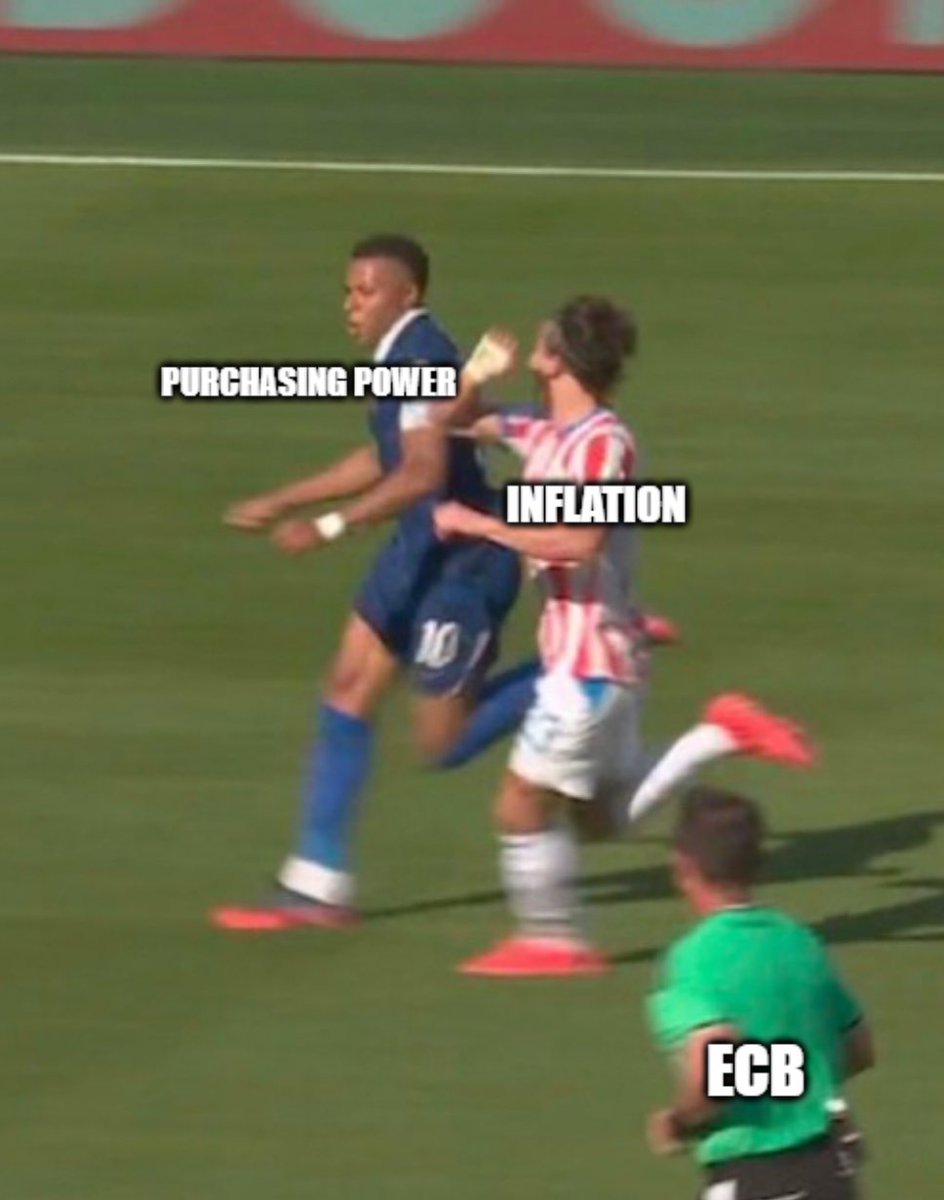
🇪🇺 Le Parlement européen vient de voter une monnaie qu'il sera impossible d'épargner 😬
Cette semaine, la commission ECON a adopté sa position sur l'Euro Numérique : 43 voix pour, 14 contre.
Dans le texte, trois verrous :
📌 Un plafond de détention par personne.
📌 Interdiction de fourniture d'intérêts.
📌 Interdiction aux entreprises de conserver plus de 24h.
En somme : impossible d'épargner.
Pourquoi brider à ce point un projet présenté comme une avancée majeure ?
Parce qu'un euro de banque centrale ne peut pas faire faillite, contrairement à un dépôt chez une banque. S'il était librement accumulable, chacun viderait son compte vers la BCE.
Un plafond à 3 000 € amputerait la rentabilité des banques de 30 points de base, et conduirait à une fuite possible des dépôts jusqu'à 739 milliards d'euros, soit 10 % de l'épargne des ménages. Le BCE se retrouverait ainsi à œuvrer activement contre la stabilité financière qui fait pourtant partie de ses missions.
La vie privée « by design » ? Lagarde a tranché dès 2022 : l'anonymat comme le cash n'est pas une option viable. Il faut pouvoir tracer, suivre, identifier, pour respecter les réglementations financières.
L'Euro Numérique, c'est aussi une concurrence déloyale au privé. Il existe déjà des solutions de paiement EU qui fonctionnent.
Wero, porté par 16 banques, dépasse 50 millions d'utilisateurs début 2026.
Le réseau Cartes Bancaires traite l'essentiel des paiements par carte en France.
L'Euro Numérique, lui, arriverait avec un privilège que ces acteurs n'ont pas : l'acceptation obligatoire par les commerçants, au titre du cours légal.
On demanderait donc aux banques de financer deux infrastructures pour le même usage. Coût annoncé : 1,3 milliard pour la BCE, et 4 à 18 milliards pour le secteur bancaire.
Le rapporteur du texte, Fernando Navarrete (PPE), prévient lui-même que ces milliards risquent de ne servir à rien si une solution privée atteint l'échelle paneuropéenne avant la BCE. Sa préférence va au privé, « moins cher, plus rapide, plus innovant ».
On nous présente pourtant l'euro numérique comme « la monnaie qui nous rend libre ».
La formule est d'Aurore Lalucq.
La même députée qui, sur MiCA, défendait qu'« une réglementation n'a jamais tué un secteur » et a porté une ligne dure contre les acteurs européens.
Quelques années plus tard et à quelques jours de l'échéance du 1er Juillet, 95% des entreprises crypto européennes devraient bientôt disparaître.
La même députée déclarait en 2025 « Les stablecoins sont une attaque contre l'idée même d'institution monétaire ».
Pendant qu'elle lutte contre, les Etats-Unis dollarisent l'Europe avec leurs stablecoins.
Difficile de réclamer la souveraineté après avoir contribué à étouffer ceux qui pouvaient l'assurer.
Une monnaie plafonnée, sans rendement, traçable, et qui fragilise nos seules alternatives européennes. L'Euro Numérique est un projet absurde et dangereux, en plus d'être coûteux et contraire à la souveraineté européenne.
J’ai vu un fun fact :
Si vous aviez investi 1,00 $ sur le marché boursier américain lorsqu’il a ouvert pour la première fois en 1790, aujourd’hui vous seriez mort.