Ultimate Beginners Guide to the Crypto Universe: A 21-Article Series
In the ever-evolving world of blockchain and cryptocurrency, staying updated is crucial. To aid both newcomers and seasoned crypto enthusiasts in their journey, we've meticulously written a 21-article series that dives into the subjects of Blockchain, Crypto and DeFi.
Chapter 1: Blockchain Basics
1: What is Blockchain? - The Digital Ledger Revolution https://t.co/He7FG6jEhJ
2: How Does Blockchain Work? - Nodes, Blocks, and Chains https://t.co/9jGuI9ZvwY
3: Types of Blockchain - Public, Private, and Consortium https://t.co/c1M2U11IMQ
4: Blockchain Security - How Safe is Your Block
https://t.co/jvMMvROzRW
5: Smart Contracts - The Digital Handshake
https://t.co/b1uzHqcRyO
6: Blockchain Use Cases - Beyond Just Bitcoin
https://t.co/M1F6EHPhn1
7: Blockchain's Limitations - It's Not All Rainbows and Unicorns https://t.co/9L9YfOfFL6
Chapter 2: Crypto Essentials
8: What is Cryptocurrency? - More Than Just Digital Dollars
https://t.co/xeHMDsMoJJ
9: How to Buy Cryptocurrency - Your First Steps into the Crypto World https://t.co/2iUfYcytVx
10: Crypto Wallets - Where to Keep Your Digital Treasures https://t.co/SkVkpOXYiU
11: Crypto Exchanges - The Marketplace of the Future https://t.co/PRPzWXDmdQ
12: Altcoins and Tokens - Bitcoin's Extended Family https://t.co/imvHUkZz8O
13: Mining and Staking - How to Earn Crypto
https://t.co/5HiEjtus8N
14: Crypto Taxes - Uncle Sam Wants His Share https://t.co/t2UGv8ssVY
Chapter 3: DeFi Introduction
15: What is DeFi? - Banking Without The Bank
https://t.co/3xpAh65fV1
16: Yield Farming - Harvesting Digital Crops
https://t.co/kBAFnZUhP0
17: Liquidity Pools - Dive In, The Water's Fine!
https://t.co/KNoK4N4SxD
18: Decentralized Exchanges (DEXs) - No Middleman? No Problem!
https://t.co/W87teKlhX9
19: Stablecoins - The Calm in Crypto's Turbulent Seas
https://t.co/Vl1nLmFfl5
20: NFTs - Digital Artistry and Beyond
https://t.co/SCEtf4JPRs
21: Risks and Rewards of DeFi - The Highs and Lows of Being Your Own Bank
https://t.co/qwTveBSXX5
I hope you were able to learn some of the Blockchain, Crypto and DeFi basics reading the above articles. Stay informed and keep learning if you want to continue navigating the world of crypto.
If you liked this, please let me know! Want to read more and stay informed? Give me a follow!
Risks and Rewards of DeFi - The Highs and Lows of Being Your Own Bank
Explaining Blockchain, Crypto, and DeFi 21 of 21
Decentralized Finance, or DeFi, has been making waves in the financial world, promising a democratized financial system where individuals have complete control over their assets. Yet, with this empowerment comes inherent challenges. As we navigate the DeFi seas, it's essential to understand both the alluring treasures and lurking dangers.
The Positives of DeFi
Financial Inclusion: One of the most significant advantages of DeFi is its inclusivity. Traditional banking systems often exclude a vast portion of the global population due to geographical barriers, lack of identification, or minimal financial history. DeFi platforms, on the other hand, operate on a permissionless basis. This means that anyone with an internet connection, regardless of their location or financial status, can access financial services. This democratization potentially bridges the gap between the banked and unbanked, empowering countless individuals worldwide.
Higher Yields: In the traditional financial world, banks offer interest rates that are often below inflation rates, eroding the value of deposits over time. DeFi platforms, driven by algorithms and devoid of the overheads of brick-and-mortar institutions, can offer significantly higher yields on deposits. This environment has given rise to practices like yield farming and liquidity mining, enabling users to optimize returns on their crypto assets.
Transparency: At the heart of DeFi is the blockchain – a (check Week 1 of this series if you didn't already) decentralized ledger that records all transactions. This ensures unparalleled transparency. Every transaction, every contract, and every piece of data is recorded on the blockchain and can be audited by anyone. This open-source nature fosters trust and reduces the chances of hidden fees or malicious activities.
Interoperability: The modular nature of DeFi means that various platforms and protocols can work together seamlessly. This interoperability allows users to chain different services together, creating a customized and efficient financial experience. For instance, a user could take a loan from one platform and then use that loan to yield farm on another, all within a few clicks.
Potential Risks in DeFi
Smart Contract Vulnerabilities: The backbone of DeFi is the smart contract – self-executing contracts with the terms directly written into code. However, like any software, smart contracts can contain bugs. If malicious actors discover these vulnerabilities before they're patched, they can exploit them, leading to significant losses for users. Notable hacks in the past have resulted in millions of dollars being drained from platforms and/or personal user wallets.
Liquidity Risks: DeFi platforms rely on users providing liquidity. However, if too many users decide to withdraw their funds simultaneously or if a platform isn't popular enough, it might not have enough liquidity. This can pose challenges for users trying to withdraw significant amounts, potentially leading to price slippage or even inability to access funds.
Impermanent Loss: Liquidity providers, especially in Automated Market Makers (AMMs), face the risk of impermanent loss. This occurs when the price of tokens inside a liquidity pool diverges in any direction. In such cases, holding onto tokens might have been more profitable than providing liquidity.
Regulatory Uncertainty: The regulatory stance on DeFi remains ambiguous in many jurisdictions. Many countries are still trying to figure out how to classify and regulate these platforms. This evolving regulatory landscape means that platforms and their users could face challenges in the future, from legal disputes to outright bans.
In Conclusion
DeFi offers a revolutionary approach to finance, breaking down barriers and offering unprecedented opportunities. However, it's a world that requires knowledge, caution, and due diligence. As the DeFi landscape continues to evolve, staying informed and updated is crucial for both maximizing opportunities and mitigating risks. As with all financial ventures, it's essential to understand the risks involved and to navigate the DeFi seas with a well-calibrated compass.
This article is the last one in the 21 article series "Introduction to Blockchain, Crypto and DeFi".
Missed our previous articles? Catch up with our recap of the first 2 weeks: https://t.co/AnwiZt9POi
Looking for the last published article (20 of 21)? Check out the story about NFT's here: https://t.co/SCEtf4JPRs
Shoutout to some of the real OGs in the crypto space. If you're diving deep into crypto and DeFi, you won't want to miss insights from these legends. Consider giving them a follow:
@0xTindorr, @0xCrypto_doctor, @CryptoHayes, @0xthade, @jediblocmates, @fitforcrypto_, @ErikVoorhees, @0xFitz, @thesaint_, @andyyy, @0xsurferboy, @ThorHartvigsen, @DAdvisoor, @VitalikButerin, @gandalfcryptto, @WinterSoldierxz, @BlocksNThoughts, @defi_antcrypto, @CryptoKoryo, @2lambro, @cz_binance, @Only1temmy, @21blacky, @CrossChainAlex, @18decimals, @rektdiomedes, @louiscooper_, @Tanaka_L2, @ChadCaff, @crypto_linn, @blocmates, @eli5defi, @arndxt_xo, @hooeem, @CryptoStreamHub, @coincatalysts, @DefiIgnas, @splinter0n, @defi_mochi, @Louround_, @bankless, @daddywarbucks, @RyanSAdams, @trustlessstate, @AlphaCryptOmega, @Flowslikeosmo, @RiddlerDeFi, @CryptoKaduna
Jumped on the @solana AI hype train, did I miss something?
Add it to the list fren... and thanks.
$GRIFFAIN
$VVAIFU
$AI16Z
$DGPU
$ARC
$TRISIG
$COVE
$BROT
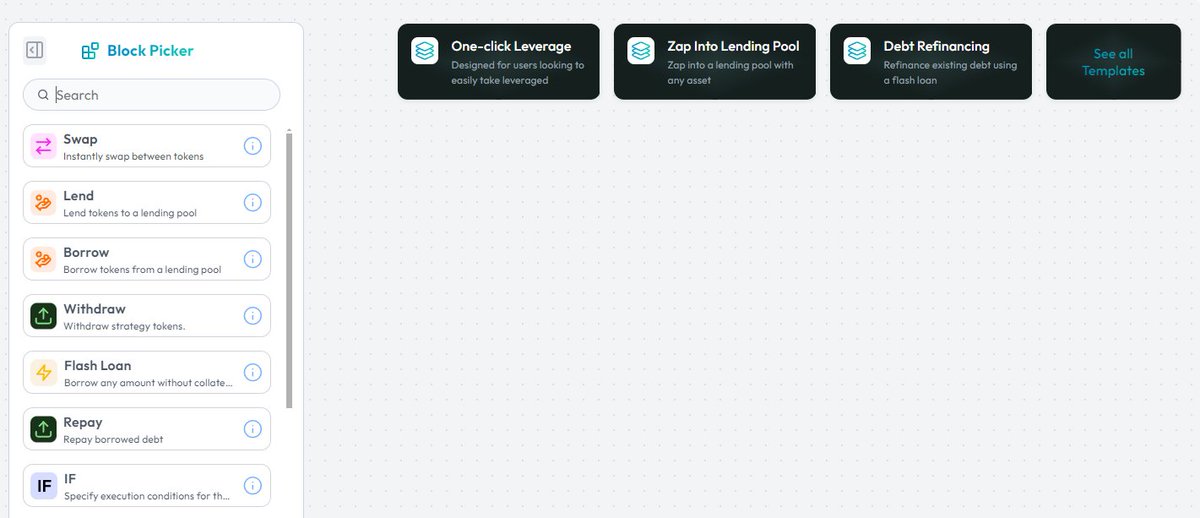
Always wanted to build a protocol or strategy? Now you can, simply using templates or building blocks.
Use @FactorDAO 's Studio (beta), for access use the code: FCTR-4YL1 at https://t.co/rrMpazWMLK
You can't blame a intern for not explaining. 👶🧠
- Stake FCTR, get veFCTR
- Vote on the preferred (or bribed) strategy
- Receive your share of the bribes after the epoch
- Receive your share of platform fees every month
It all starts here: https://t.co/FaAUKkUHax
@FactorDAO@Factor_Intern @Kurapika_DAO
Wut?! I am paid to vote!
HECK YEAH! I'm an influencer now! Gonna catch me some rewards!
And these ARB rewards?! They’re heavier than my deadlift yesterday!
1/
The Ethereum ETFs are set to go live on July 23rd. There are a number of dynamics present with the ETH ETF that have been overlooked by the market & which were not present with the BTC ETF. We take a look at flow predictions, ETHE unwinds & the relative liquidity of ETH:
The fee structure of the ETF ETFs is similar to that of the BTC ETFs. Most providers are waving their fee for a specified period, to help accumulate AUM. As was the case with the BTC ETFs, Grayscale has the maintained their ETHE fee at 2.5%, an order of magnitude larger than other providers. The key difference this time around is the introduction of the Grayscale mini ETH ETF, which previously wasn’t approved for the BTC ETF.
The mini trust is a new ETF product by Grayscale that originally disclosed at 0.25% fee, similar to the other ETF providers. Grayscale’s idea here is to capture a 2.5% fees on lazy ETHE holders, whilst funneling more active and fee sensitive ETHE holders to their new product, instead of having funds siphoned to low fee products such as Blackrock’s ETHA ETF. After the other providers undercut Grayscale’s 25bps fee, Grayscale came back and reduced the mini trust fee to only 15bps, making it the most competitive product. On top of this, they moved 10% of ETHE AUM to the mini trust and gifted ETHE holders this new ETF. This transition was completed at the same basis, meaning it was not a taxable event.
The resultant effect is ETHE outflows will be more muted as compared to GBTC as holders simply transition to the mini trust.
Now we look into flows:
There have been many estimates for the ETF flows, some of which we have highlighted below. Taking the estimates and standardizing them yields an average estimate in the $1bn/month region. Standard Chartered Bank offers the highest estimate with $2bn/month, while JP Morgan is on the low end at $500m/month.
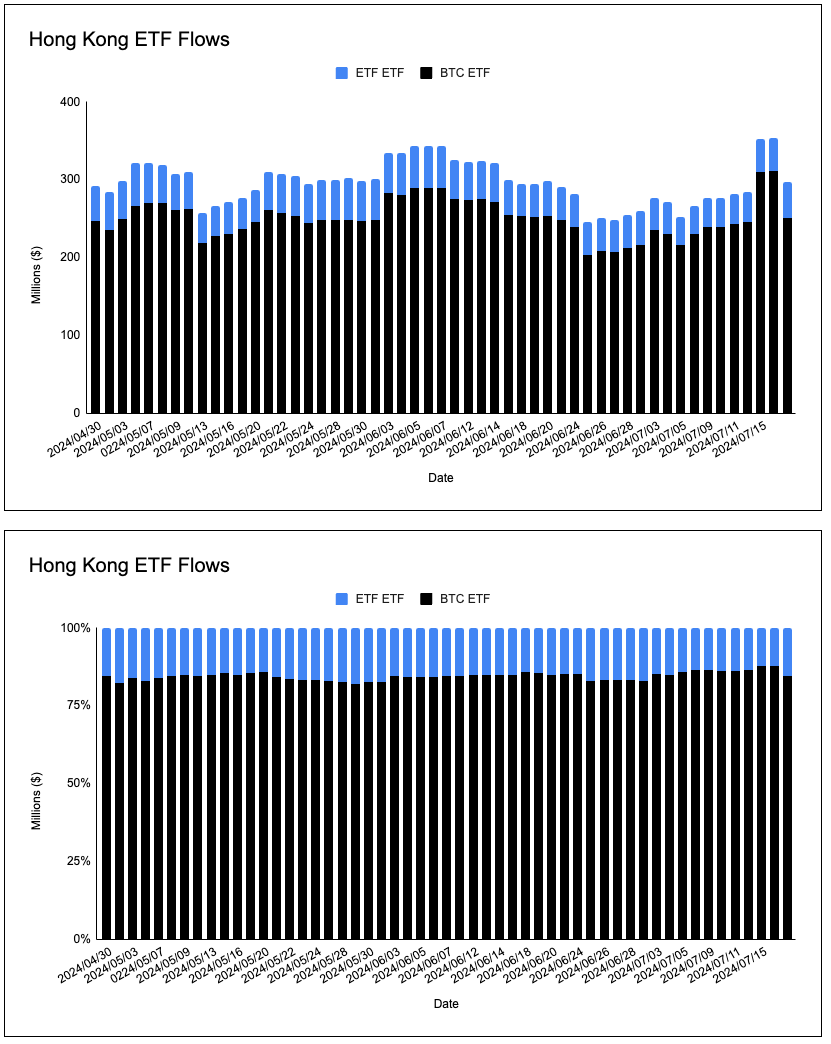
Fortunately, we have the help of Hong Kong and European ETPs as well as the closing of the ETHE discount in order to help estimate flows. If we take a look at the breakdown of AUM in HK ETPs, we arrive at two conclusions:
1. The relative AUM BTC and ETH ETPs are overweight BTC vs. ETH, the relative market cap sits at 75:25, while the AUM sits at a ratio of 85:15.
2. The ratio of BTC v ETH in these ETPs is reasonably constant and in-line with the ratio of BTC market cap to ETH market cap.
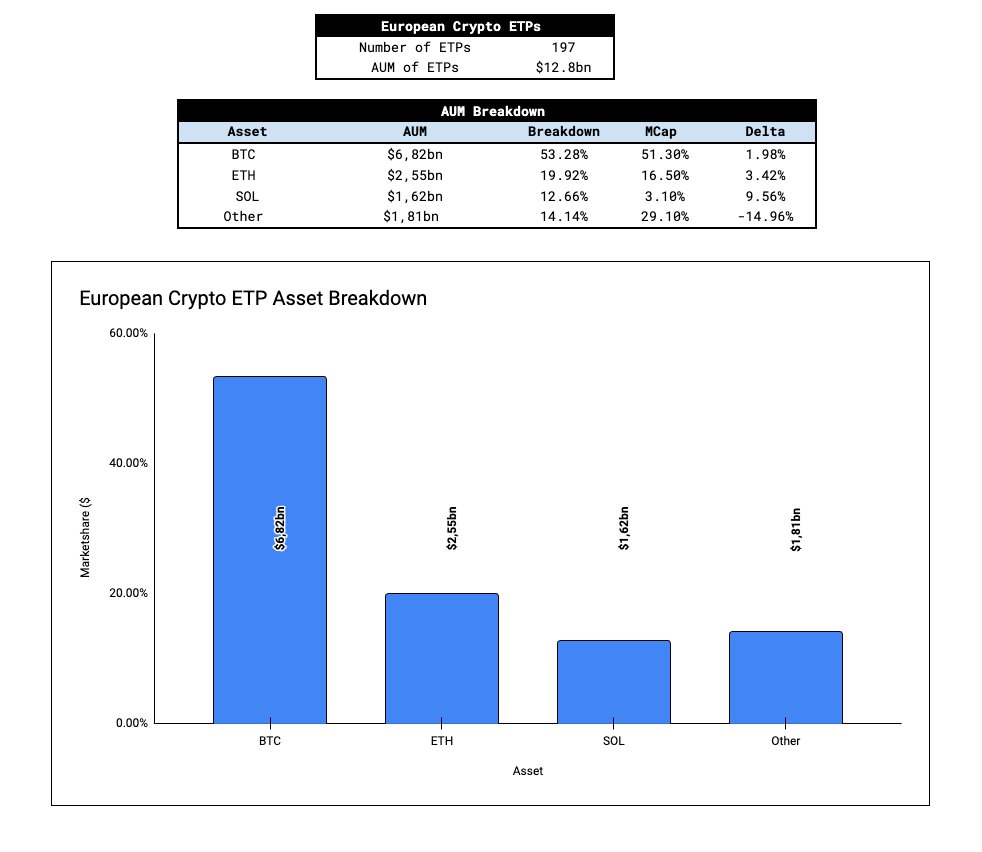
Looking at Europe, we have a larger sample size to look at – 197 crypto ETPs with a cumulative AUM of $12bn. After we boil down the data, we find that breakdown of AUM in European ETPs is broadly in line with the market cap for Bitcoin and Ethereum. Solana is over allocated relative to its market cap, this comes at the expense of ‘Other crypto ETPs’ (Anything not BTC, ETH, or SOL). Setting Solana aside, a pattern is beginning to emerge – the breakdown of AUM globally between BTC and ETH broadly reflects a market cap weighted basket.
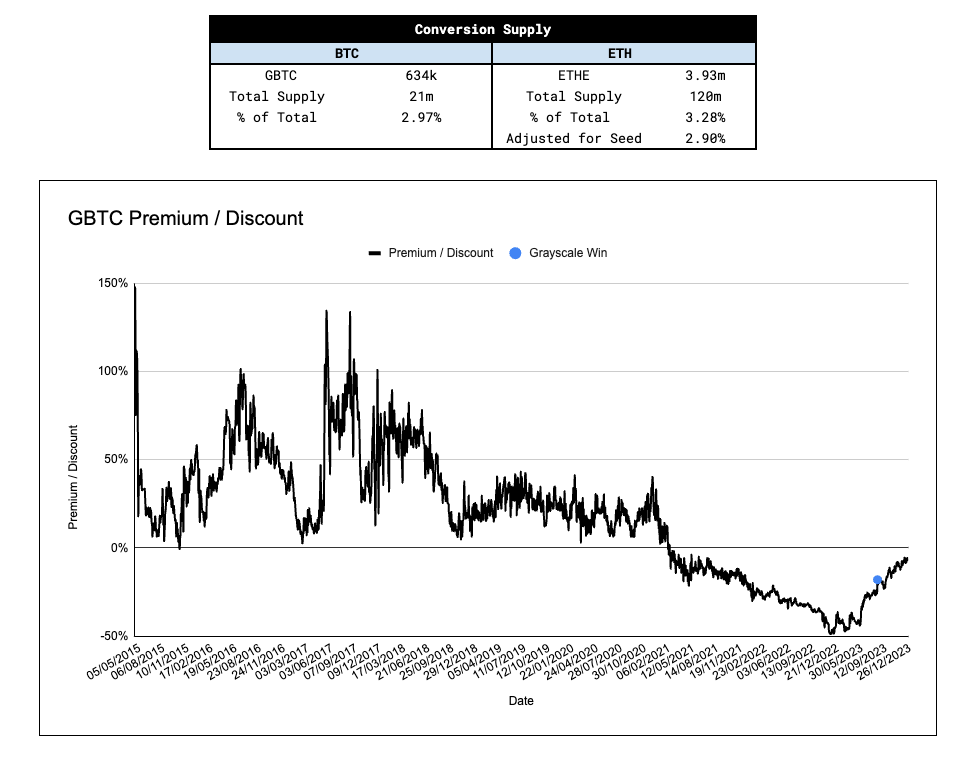
It’s important to consider the potential for ETHE outflows considering the GBTC outflows were the genesis of the ‘sell the news’ narrative. In order to model potential ETHE outflows and its affect on price, it’s useful to look at % of ETH supply in the ETHE vehicle.
Once adjusted for Grayscale mini seed capital (10% of ETHE AUM), the proportions of ETH supply as a function of total supply existing in the ETHE vehicle is similar to that of GBTC at launch. It’s unclear what proportion of GBTC outflows were rotational vs. exit, however if we assume the proportion of rotational flows to exit flows is similar, ETHE outflows have a similar impact on price to GBTC outflows.
Another key piece of information that most are overlooking is the ETHE premium/discount to NAV. ETHE has been trading within 2% of par since May 24th – whereas GBTC first traded within 2% of NAV on Jan 22nd, only 11 days after GBTC converted to an ETF. The approval of the spot BTC ETFs and their effect on GBTC was slowly priced into the market, whereas the ETHE discount to NAV trade has been far more telegraphed with the story already written with GBTC. By the time the ETH ETFs go live, ETHE holders will have had all of 2 months to exit ETHE around par. This is a key variable that will help stem the ETHE outflows, specifically the exit flows.
Continued in the next tweet >
I want all those rewards for myself! (@Factor_Intern can have some 2)
So people, please don't stake your FCTR on @FactorDAO and screw up my % on the 3 incentives they offer!! 😅😂
Factor Bribes: 1/3 of our Incentive Layer 💰
It’s a straightforward way for veFCTR holders to earn more rewards for their influence while Bribers can achieve greater capital efficiency 📈
Still not getting how it works?
Let’s break it down 👇
1/7