Lenormand isn’t “Tarot but French.”
Tarot often maps inner weather.
Lenormand tends to map situations: who, what, what moves next.
I share practical combos & clear spreads for love, work, and choices—without fate guarantees.
Free practice: https://t.co/FJVruIfdwS
A useful Lenormand practice drill changes one card, not the whole story.
Practice case: planning a study group.
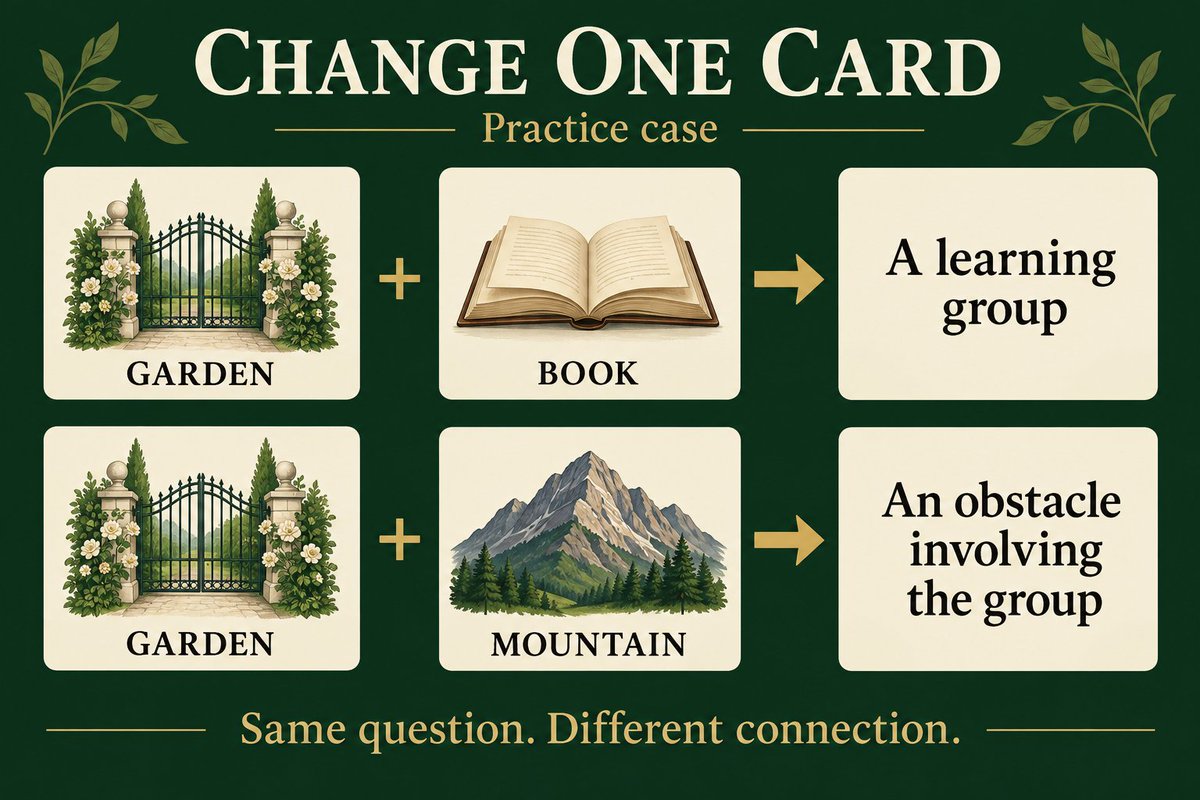
For this exercise, use Garden = group, Book = learning, Mountain = obstacle.
Garden + Book → a learning group.
Garden + Mountain → an obstacle involving the group.
Keep the question fixed: “What needs attention when organizing our study group?” The second card changes what you say about the group. These are working phrases, not predictions.
Which link is harder to explain: Garden + Book or Garden + Mountain?
“What do these cards mean?” is easier to discuss when the original question and card order travel with it.
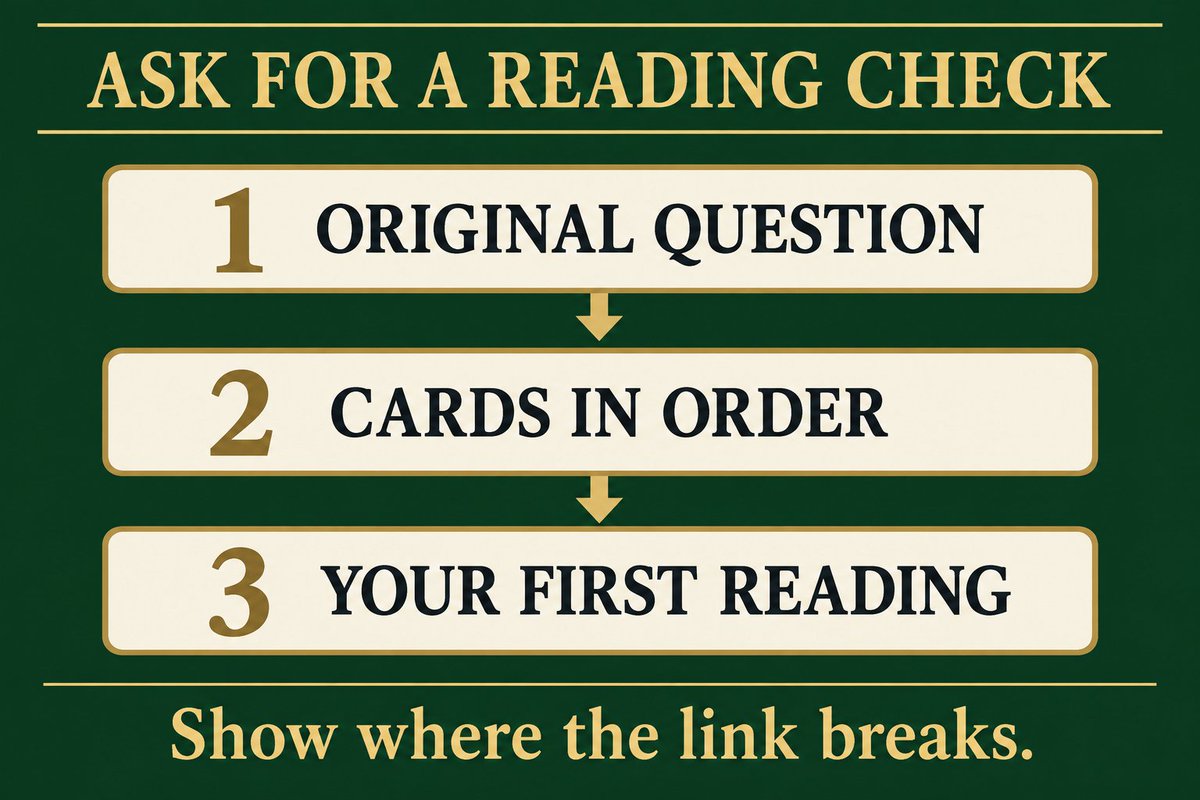
For a Lenormand reading check, share:
1. Your exact question.
2. The cards in order, plus any position labels you chose before drawing.
3. Your first one-sentence reading—even if unfinished—and where you get stuck.
Practice case:
Question: “What needs attention when arranging Saturday's meetup?”
Cards: Dog + Letter.
My attempt: “A friend's message about the plan.”
My sticking point: “Am I adding a meaning that isn't in the cards?”
This lets someone check the connection, not invent a new question for you. Use a low-stakes example and leave out private names or messages. What would your three lines say?
In Lenormand practice, a more detailed story is not automatically a better reading.
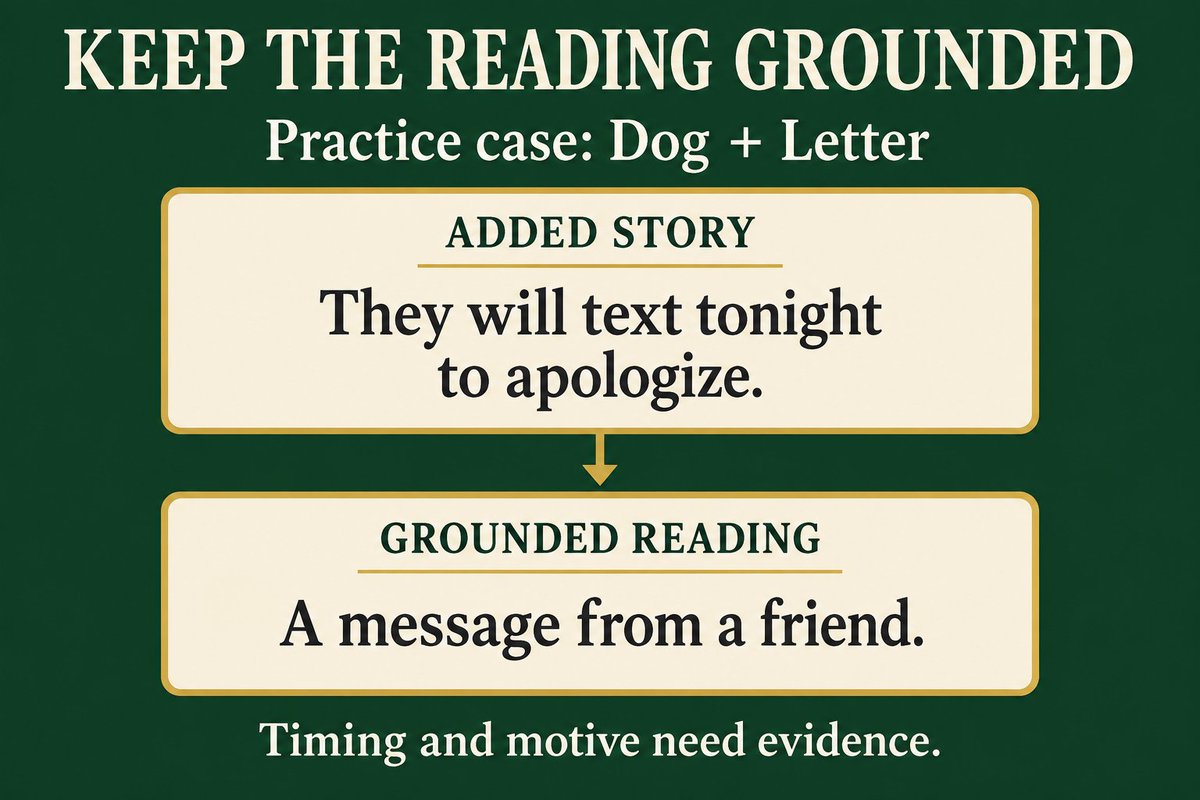
Practice case: you ask about communication while arranging a meetup and draw Dog + Letter.
One possible reading: “A message from a friend.”
Added story: “They will text tonight to apologize.”
“Tonight” adds timing; “to apologize” adds a motive. Neither follows from these two keywords alone. Keep those details separate unless the real conversation gives you evidence—and don't treat the cards as proof that a message will arrive.
Try marking each part of your sentence: card meaning, known context, or added assumption. Which part needs checking?
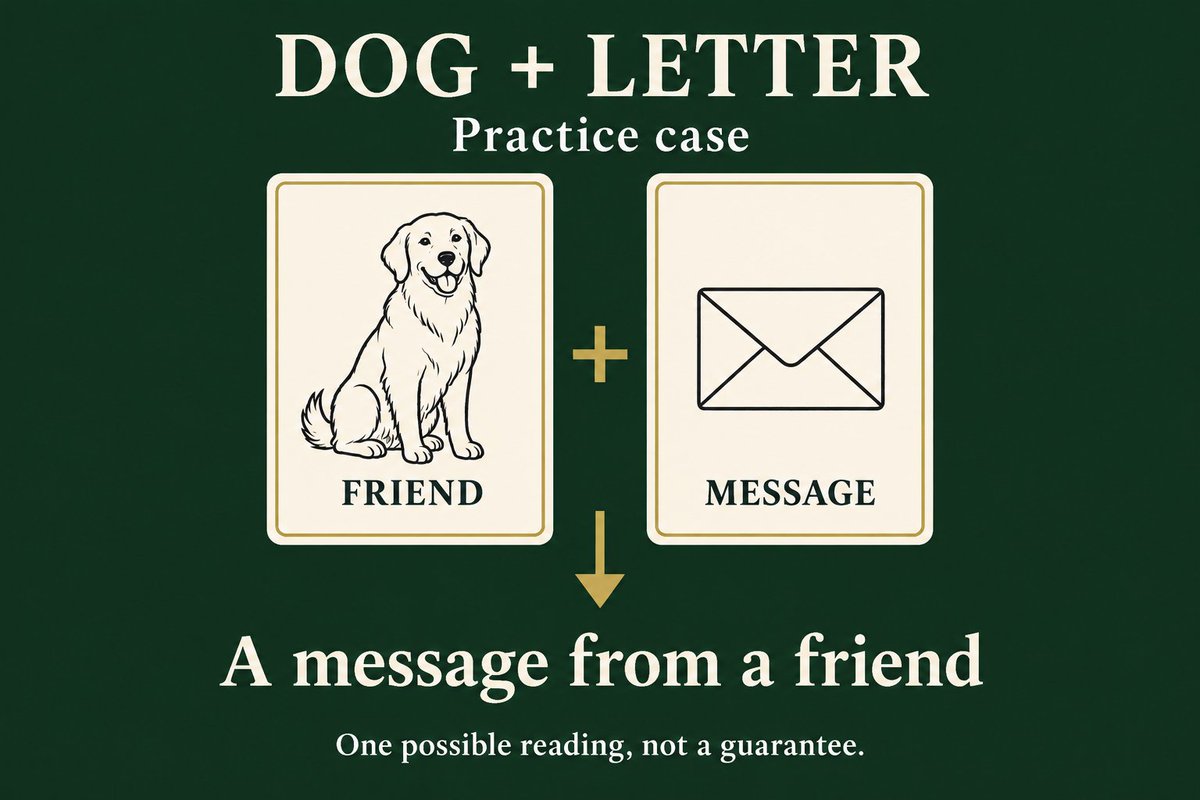
Dog + Letter can become “a message from a friend”—a sentence, not just two keywords.
Practice case: “What communication should I pay attention to while arranging this weekend's meetup?”
Dog: a friend. Letter: a written message.
One possible reading: a friend's message about the plan.
The pair alone does NOT tell us whether the message is welcome, when it will arrive, or whether the meetup will happen. Check the actual conversation before making plans.
What would you need to know before making this reading more specific?
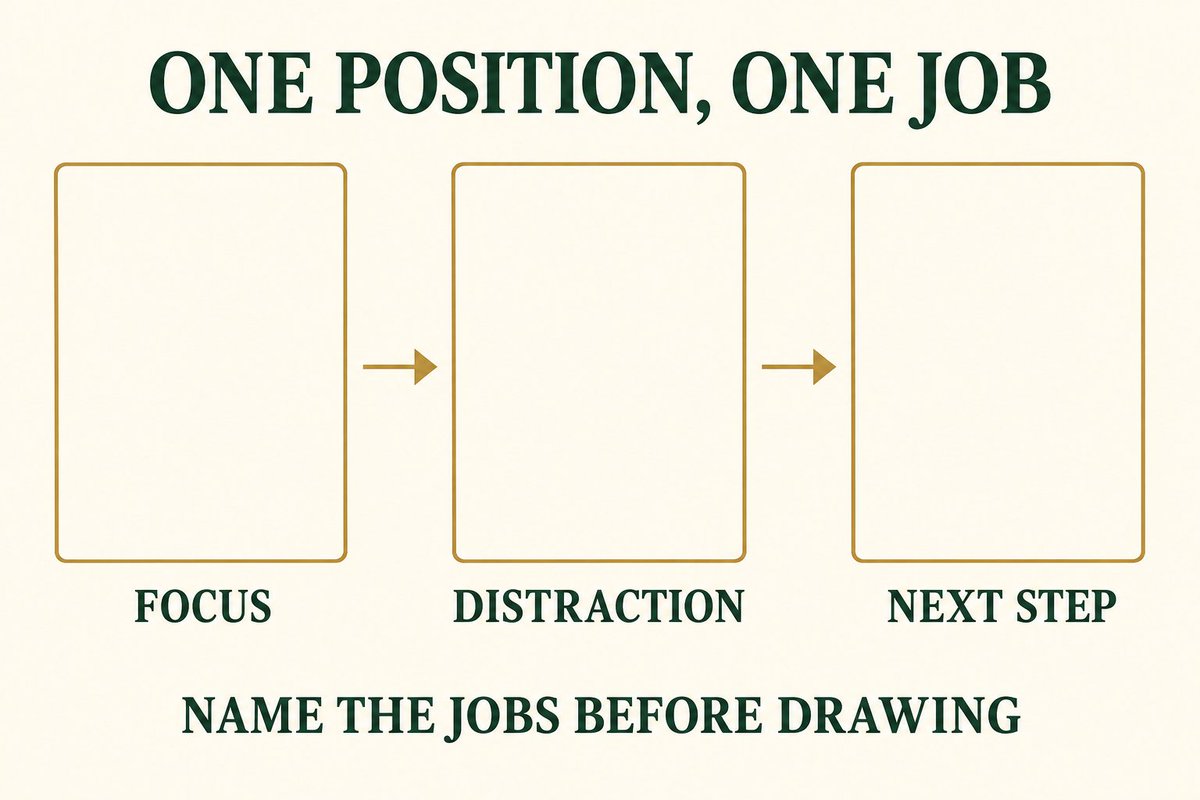
For a position-based Lenormand practice spread, name each position's job before drawing.
Practice case: “What needs attention in my next study session?”
1. Focus
2. Distraction
3. Next step
Read each card in its assigned role, then connect all three into one answer. Keep the labels fixed—even if the cards surprise you.
Which two positions in your usual spread overlap?
A clearer Lenormand question asks what you can clarify—not for a verdict on someone's character.
Practice case: “Can I trust them?” → “What should I clarify before studying together this week?”
Use the cards to suggest questions about timing, roles or expectations; check the answers with the person.
What needs clarifying first?
@K1NGARTEM1S “A win that costs too much” is the plain-English version. In a practice reading, ask what is gained and what is lost, then check whether that fits the question and card position. Was the phrase tied to a particular card?
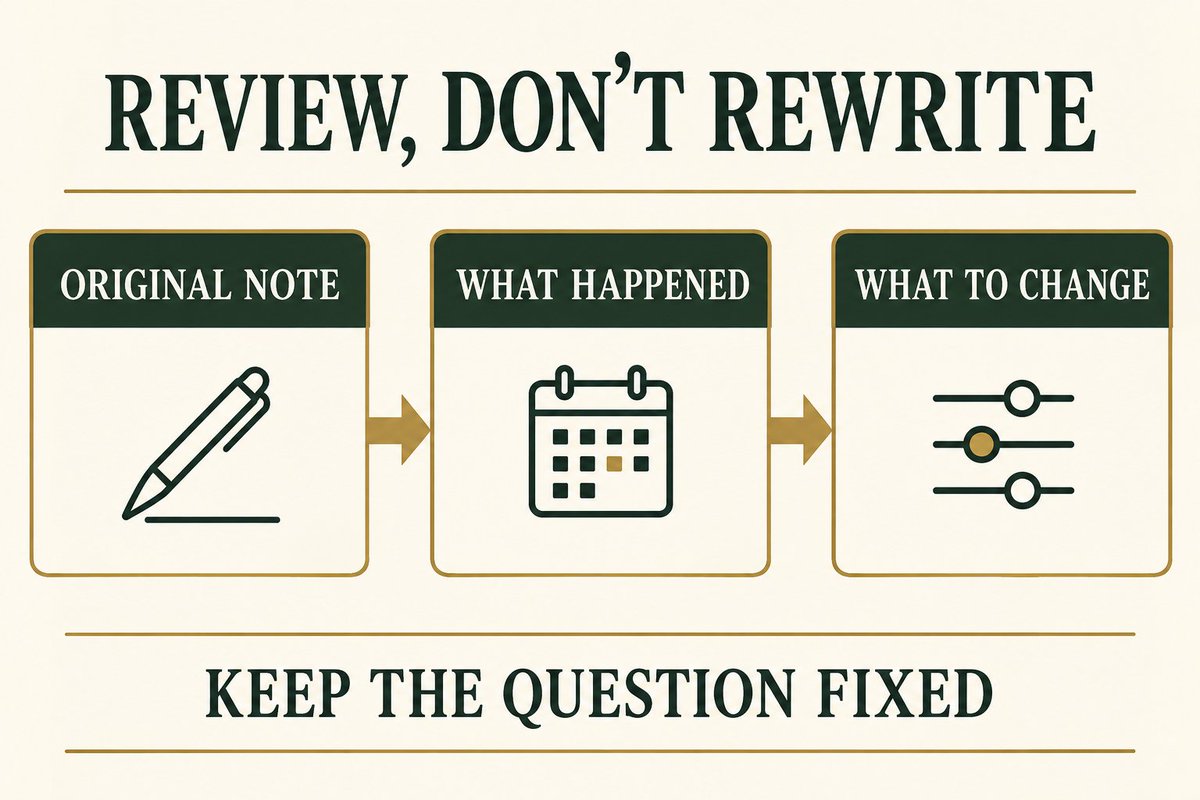
A useful Lenormand review keeps the original interpretation intact.
Practice: save your question, card order and one-sentence reading before the day unfolds. At your chosen review time, add what actually happened separately—including what did NOT fit.
What would you change next time without rewriting the first note?
@PENTACLEZKWEEN Two-card practice is a manageable start: keep one everyday question, draw a pair, and write one sentence that uses both cards. Save it before checking your references. Are you working on individual meanings or linking cards together?
Book + Key can suggest that missing information is what unlocks the problem—not guaranteed success.
Practice case: “What would help my study plan this week?” Read the pair as a prompt to find the concept you haven't understood, then check it in your notes.
What would you look up first?
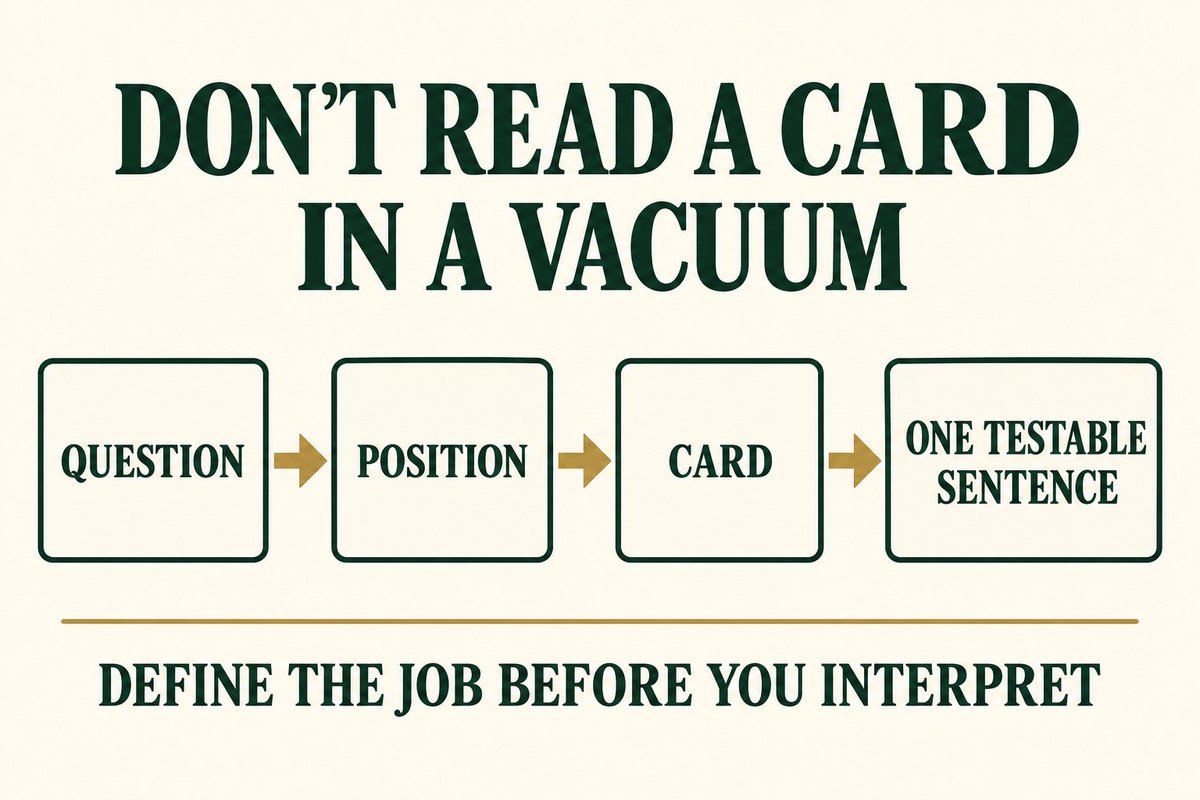
Common Lenormand mistake: giving a card its whole meaning before deciding what it must answer.
Try this order: question → position → card → one testable sentence.
The card supplies the language; the question and position tell you what it is speaking about.
Which position in your last spread needs a clearer job?
@wiccanisms A spread isn't a verdict on your talent. Which card landed in which position? Keep the position's question separate from the card meaning, then translate the pair into something you can practise—not a fixed future label.
Give each Lenormand position a different job.
Practice layout: obstacle / next action. Define 'what gets in the way?' and 'what can I try?' before drawing. Then connect the cards: 'Given this obstacle, I can try…'
Does your sentence answer both positions?
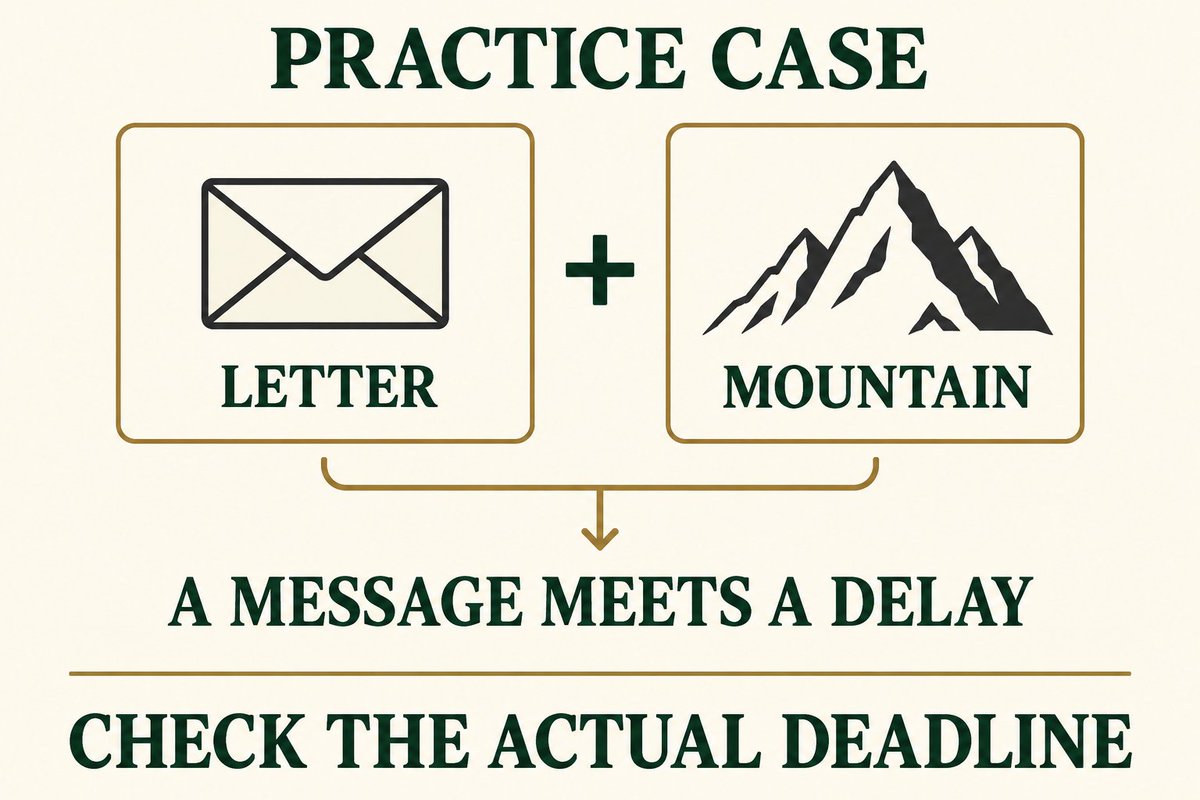
Letter + Mountain: a message meets a delay—not a guaranteed rejection.
Practice case: waiting for a course confirmation this week. Read the pair together, then check the stated reply deadline.
What would help distinguish 'not yet' from 'no'?
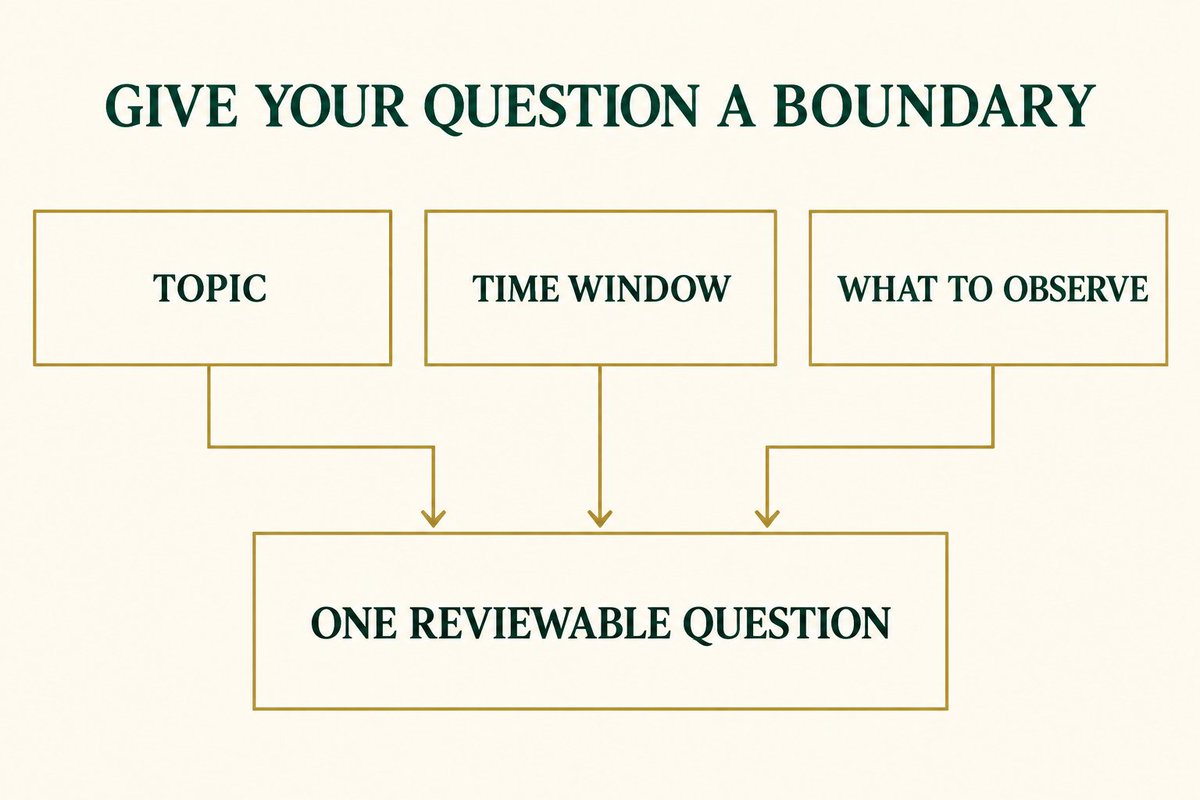
Give your Lenormand question a boundary.
Practice rewrite: 'Will my week be good?' → 'What needs attention in my study plan this week?'
Name what you'll observe, such as sessions completed. Keep the question unchanged when reviewing. What would you make more specific?
@loveeestained A useful practice check: keep the question fixed and write down how the upright cards already express tension or delay. Compare that with what a reversal would add. Which card makes you most tempted to turn to a reversed meaning?
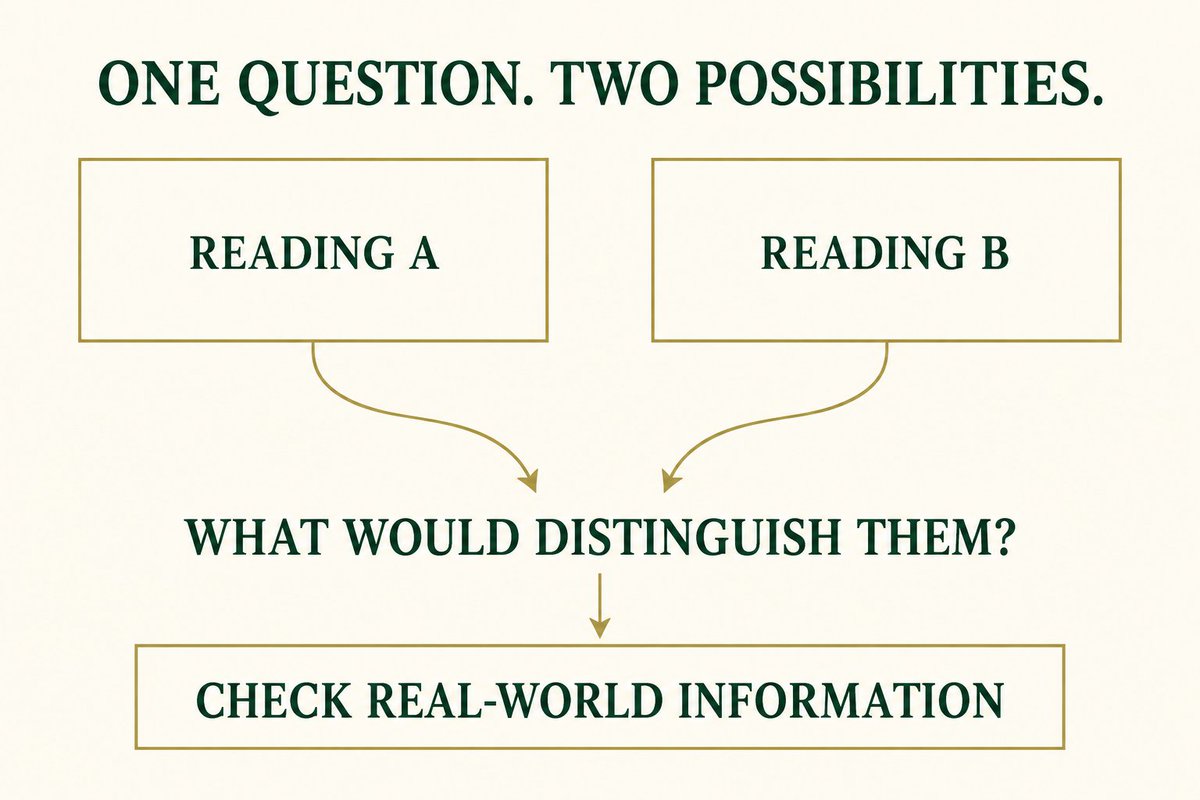
Two Lenormand interpretations can fit the same cards. Don't force certainty.
Keep the question fixed. Write both possibilities, then name one piece of real-world information that would help distinguish them.
What would you check before choosing a reading?
@sl33pyk1tty You could turn each lookup into a small practice note: write your first interpretation, then add one useful detail from the guidebook in a different colour. Revisit that card in your next reading. Which card do you find yourself checking most?
When a Lenormand guide calls a rule 'traditional', ask: which source and date?
Keep two notes: what the source actually says / how you use it today. Label your additions as adaptations.
Which rule would you like to trace back to a source?
@hotchreidpilled Yes—the concept can be present without a reversal, while the neighbouring cards shape how it reads. Which reversed card and upright pair did you compare? With one question held fixed, we can look at what each version adds or loses.