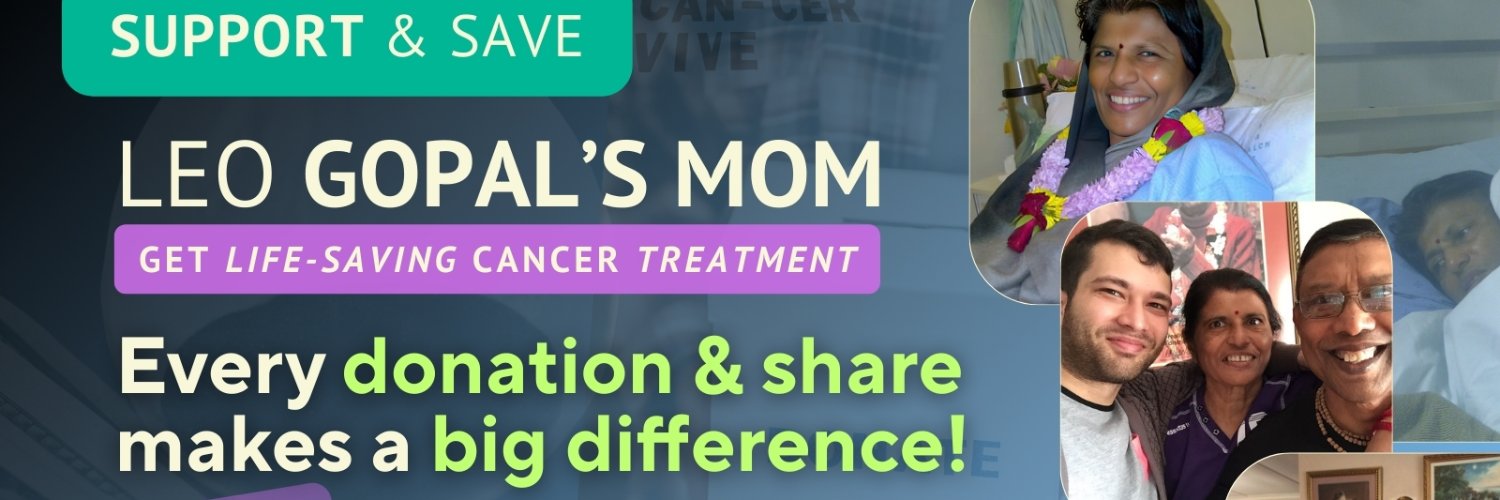
🙏 Friends, Please reshare to support.
Last year the, after being laid off, the #WordPress Community and others banded together to save my mom's treatment and life.
I need your help once again. 🙏
https://t.co/cAMhLR9ms7
12 Lessons from Anna Wintour's journey to becoming Vogue's legendary Editor-in-Chief:
1. A Taste for Saltwater: Anna spent five years at Harper's Bazaar on a skeleton crew of three, handling everything from market visits to layouts. No coffee-fetching—she was thrown straight into the deep end. She treated this grinding apprenticeship as education, not exploitation. Most people would have quit. That's why most people didn't get Anna's education.
2. Unreasonable Standards: Anna returned every borrowed item with tissue paper intact. She'd send steaks back three times for being insufficiently rare, then eat two bites. At Vogue, she instituted "The Look"—daily appearance assessments for every employee. Her "AWOK" system meant nothing, not even a comma, moved without her approval. Excellence is a tyrant you invite in. Once it moves in, mediocrity can't breathe.
3. High Agency: When passed over for fashion editor at Harper’s despite doing the job’s work, Anna didn’t complain or negotiate. She resigned immediately, taking her assistant with her. She moved to New York without a job lined up, betting everything on her vision. The system won’t fix itself for you. When merit meets politics, choose exodus over argument.
4. Burn the Boats: At Viva (a porn-funded fashion magazine), Anna had total creative freedom but zero prestige. Rather than job-hunting for something respectable, she used the disreputable platform to develop her aesthetic without interference. She studied European fashion magazines while working at a magazine sold behind counters. Sometimes the worst address is the best classroom. Embrace opportunities others are too proud to take.
5. Bias Toward Action: Anna's meeting revolution: Walk in. Stand. Ask. Leave. "You get two minutes, the second is a courtesy." Clothing run-throughs that took hours? Anna did them in minutes: "Yes, no, yes, no, yes, no. Good-bye." No explanations. No committees. Just decisions. People avoided her elevator because she'd immediately start issuing orders. Decisive clarity is a muscle. The more you use it, the faster you move.
6. Outthink, Don’t Just Outwork: When her boss at Harper’s wanted advertiser-friendly spreads, Anna would meet photographers in the lobby, select only the best shots, and claim no others existed. She forced him to choose between her vision and the expense of reshoots. She won every time. Don’t fight the system. Architect situations where the system has to choose you.
7. Don't Care What They Think: Putting Madonna on Vogue's cover in 1989 horrified fashion purists. The woman had just released a video burning crosses. Pepsi had pulled her sponsorship. Religious groups wanted boycotts. Anna did it anyway. The issue sold 200,000 extra copies. When everyone agrees something would "never" work, that's precisely when it will. Consensus kills innovation.
8. Positioning Is Leverage: Anna accepted a made-up “Creative Director” role at Vogue, officially Mirabella’s deputy, but in reality Liberman’s protégé. It wasn’t the job she wanted, but it got her in the door. For three years, she learned the operation while appearing to be number two. She’d sit in meetings “shaking her head, obviously disagreeing” with Mirabella, playing a longer game than office politics. When Mirabella was fired, Anna was ready. When you know what you want, the strongest form of positioning is preparation.
9. Be a Talent Collector: Anna championed unknown photographers who became legends, gave Manolo Blahnik his first major endorsement when he was “some madman with boxes of shoes,” and built a three-assistant system that created fashion’s most powerful alumni network. Her proteges run fashion globally. They learned by watching her negotiate with billionaires and shape culture daily. Your legacy isn’t just what you build, it’s who you build with. You can’t buy good company.
10. Overmatch: Anna didn’t just go digital, she forced the entire fashion industry online in 1998, making Vogue_com the platform every designer needed. She didn’t compete with other magazines; she built infrastructure they’d have to use. The Met Gala wasn’t improved; it was weaponized into $12 million of annual cultural dominance where she controls guest lists, seating charts, and cultural relevance itself. Don’t play fair games. Build the game itself, then charge admission.
11. Win by Not Losing: During 2008’s financial crisis, while other Condé Nast magazines bled out, Vogue remained profitable. Anna and her publisher had watched euro-dollar exchange rates, built three scenarios, and executed their plan while others partied. When Bear Stearns collapsed, they were ready. In a crisis, profitable divisions survive. Unprofitable ones get cut. Excellence matters in good times. Profit matters in bad times. Combine the two and you succeed no matter what.
12. Signal Without Static: When Grace Mirabella asked what position Anna wanted at Vogue, Anna’s answer was one word: “Yours.” The meeting ended immediately. She got the job anyway. This was Anna’s gift: surgical clarity. “Yes, no, yes, no, yes, no. Good-bye.” No maybes. No committees. No explanations that invite negotiation. “People work better when feedback is fast, direct and honest,” she said. Her entire system proved it—emails with no greetings, just commands: “Coffee please.” “Get me Tom Ford.” Three words maximum. “She was kind but not always nice,” one colleague observed. Nice people soften rejection with false hope. Kind people say no and let you move on. While competitors drowned in doublespeak, Anna spoke in verdicts. You might hate the answer, but you never had to decode it. Clarity isn’t cruel. It’s the most expensive gift you can give.
🙏 Please watch and repost
this heartfelt video plea I recorded
to save my mum by meeting the funding goal:
Support at: https://t.co/h4uWFLaIuQ
hashtag#SaveLeosMom hashtag#WordPress hashtag#Fundraiser