Chlorophyll and Hemoglobin
The major difference is that plant blood carries a Magnesium (Mg) molecule where our blood contains a Iron (Fe) molecule.
Magnesium is what is responsible for making plant blood green, and iron is what makes our blood red.
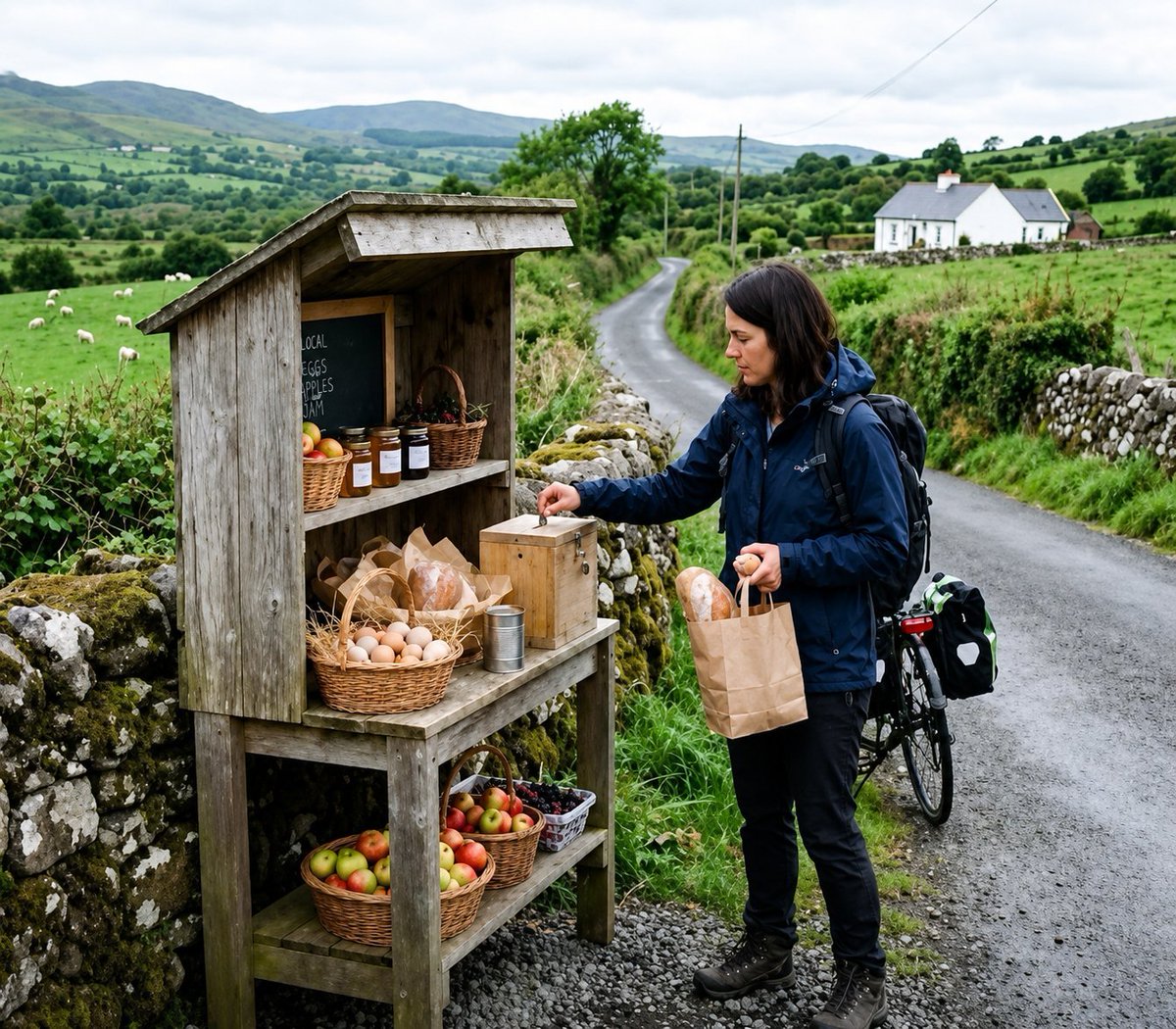
Along quiet rural roads in Ireland, small honesty shelves sit by the stone walls fresh eggs, homemade bread, apples, and jars of jam left out with nothing but a wooden money box.
No one is watching.
No cameras.
No staff.
You take what you need and leave what is fair.
The whole system runs on nothing more than trust between strangers.
These simple stands have become part of the Irish countryside’s quiet rhythm a small daily reminder that honesty still works when people choose to honour it.
This reminds me of something Nick Cave wrote some years ago, who claimed 'woke culture' 'finds its energy in self-righteous belief and the suppression of contrary systems of thought. Regardless of the virtuous intentions of many woke issues, it is its lack of humility and the paternalistic and doctrinal sureness of its claims that repel me.'
He went on to say:
'Wokeness, for all its virtues, is an ideology immune to the slightest suggestion that in a generation’s time their implacable beliefs will appear as outmoded and fallacious as those of their own former generation. This may well be the engine of progress, but history has a habit of embarrassing our treasured beliefs.'
We need more artists like this.
“Las playas de México son públicas. Nadie puede impedir su acceso y el libre tránsito por ellas ni por la zona federal”
Habrá que avisarle a algunos hoteleros mexicanos…
Alguna vez te han negado acceso a una playa o había alguna estructura que te impidiera accesar? En dónde fue y en que circunstancias? #TeLeo
En las paredes de Bonampak, el maestro pintor Och plasmó batallas, rituales de sangre y cosmogónicos con 28 pigmentos (incluido el Azul Maya) capaces de resistir siglos de humedad tropical. Sus tres cámaras narran la historia del rey Chaan Muan II.
Distribuida en tres habitaciones, la narrativa visual funciona como un auténtico axis mundi sincronizado con los ciclos celestes. El primer cuarto sumerge al espectador en los preparativos de una danza ritual hacia el Inframundo entre túnicas fastuosas, músicos ataviados con seres acuáticos y alineaciones solares. El segundo cuarto irrumpe con el dramatismo y la violencia de una batalla decisiva ocurrida en el año 792 d.C., donde el sometimiento de prisioneros se contrapone al movimiento de Venus y la Vía Láctea en el firmamento. Finalmente, el tercer recinto culmina en la cima piramidal con festejos de victoria y ceremonias de autosacrificio, donde plumas de quetzal y gotas de sangre consagran al soberano como el pilar capaz de transitar entre el Cielo, la Tierra y el Xibalbá.
Apreciar el programa pictórico de Bonampak significa presenciar el perfecto ensamblaje entre arquitectura, ciencia astronómica y la más alta expresión plástica del periodo Clásico maya. Estas "voces pintadas" no solo inmortalizaron el triunfo de una dinastía en la selva chiapaneca, sino que legaron a la humanidad una verdadera capilla sixtina mesoamericana que continúa revelando los secretos más profundos de la cosmogonía precolombina.
#CultivamosMemorias
Krishnamurti on Solitude
“It is very important to go out alone, to sit under a tree—not with a book, not with a companion, but by yourself—and observe the falling of a leaf, hear the lapping of the water, the fishermen’s song, watch the flight of a bird, and of your own thoughts as they chase each other across the space of your mind. If you are able to be alone and watch these things, then you will discover extraordinary riches which no government can tax, no human agency can corrupt, and which can never be destroyed.”
Groundbreaking botanical research is challenging the long-held belief in human exceptionalism, suggesting that plants possess forms of spatial awareness, intentionality, and consciousness.
For centuries, humans have regarded plants as passive organisms, but pioneering studies are rewriting this view. According to plant neurobiologist Dr. Stefano Mancuso, plants display sophisticated behaviors that parallel those of conscious animals. In laboratory experiments, plants react to anesthesia in ways strikingly similar to humans and animals — for instance, the Venus flytrap becomes completely unresponsive when anesthetized.
Time-lapse studies further reveal remarkable intelligence in common bean plants, which demonstrate clear spatial awareness by precisely aiming shoots toward supports and even adjusting their growth strategy when they detect another plant has already claimed a support.
These findings indicate that consciousness may not be limited to organisms with brains, but could be a more flexible property emerging in diverse life forms. As trees migrate northward in response to climate change, mirroring animal migration, researchers argue that our understanding of “mind” must expand beyond traditional boundaries.
With over three trillion trees on Earth, acknowledging plant consciousness could transform our ethical frameworks, agricultural practices, and relationship with nature, shifting from viewing plants as mere resources to recognizing them as active, aware participants in our shared ecosystem.
[Yokawa, K., Kagenishi, T., Pavlovič, A., Gall, S., Weiland, M., Mancuso, S., & Baluška, F. (2018). Anaesthetics stop diverse plant organ movements, affect endocytic vesicle recycling and ROS homeostasis, and block action potentials in Venus flytraps. Annals of Botany, 122(5), 747–756. DOI: 10.1093/aob/mcx155]
Have you seen anything more beautiful?!! 🤩😍🙌🏽
A magnetohydrodynamics (MHD) simulation of solar-wknd compression, magnetic reconnection, plasmoid release, particle acceleration, and auroral activity around Earth.
A simple strip of wildflowers can dramatically reduce the need for chemical pesticides. So why aren’t they standard on every farm?
Farmers are increasingly planting colorful wildflower strips within and around their fields because these habitats attract beneficial insects that naturally control crop pests.
Ladybugs are the most familiar example. Both adult ladybugs and their larvae are voracious predators of aphids, small sap-sucking insects that damage crops. A single ladybug can eat dozens of aphids a day, while its larvae can consume hundreds before reaching adulthood.
Yet ladybugs are just the beginning. Wildflower strips also draw in hoverflies, lacewings, parasitic wasps, and predatory beetles, all highly effective natural enemies of common pests such as aphids, whiteflies, thrips, and caterpillars.
This approach is known as conservation biological control. Rather than releasing predators into fields, farmers create permanent habitats that support and boost populations of beneficial insects already present in the landscape.
The flowers supply essential nectar and pollen that many of these insects need as adults. Research shows that access to such resources significantly increases their lifespan, reproductive success, and pest-hunting efficiency.
Some parasitic wasps offer an especially impressive form of control: they lay eggs inside aphids or caterpillars, and their developing larvae consume the pest from the inside out.
Multiple studies confirm that fields with wildflower strips support far higher numbers of beneficial insects and achieve stronger natural pest suppression compared to conventional fields.
Beyond pest control, these strips provide additional benefits: they support pollinators, enhance biodiversity, reduce soil erosion, and create valuable wildlife habitat within agricultural areas.
Scientists are now fine-tuning which flower species work best for different crops and climates, aiming to design the most effective and practical wildflower strips possible.
#ÚLTIMAHORA | Luces rojas en el cielo de San Luis Potosí sorprenden a usuarios de redes.
Un maquinista captó varias luces suspendidas en el cielo mientras se encontraba en una estación. Hasta ahora no existe una explicación oficial sobre su origen.
#SanLuisPotosí#Video#Viral
Madagascar has been isolated for about 88 million years and is home to an abundance of plants and animals found nowhere else on Earth: 90% them are found only there.
It literally looks like another world.
[📹 cityscape_discovery]
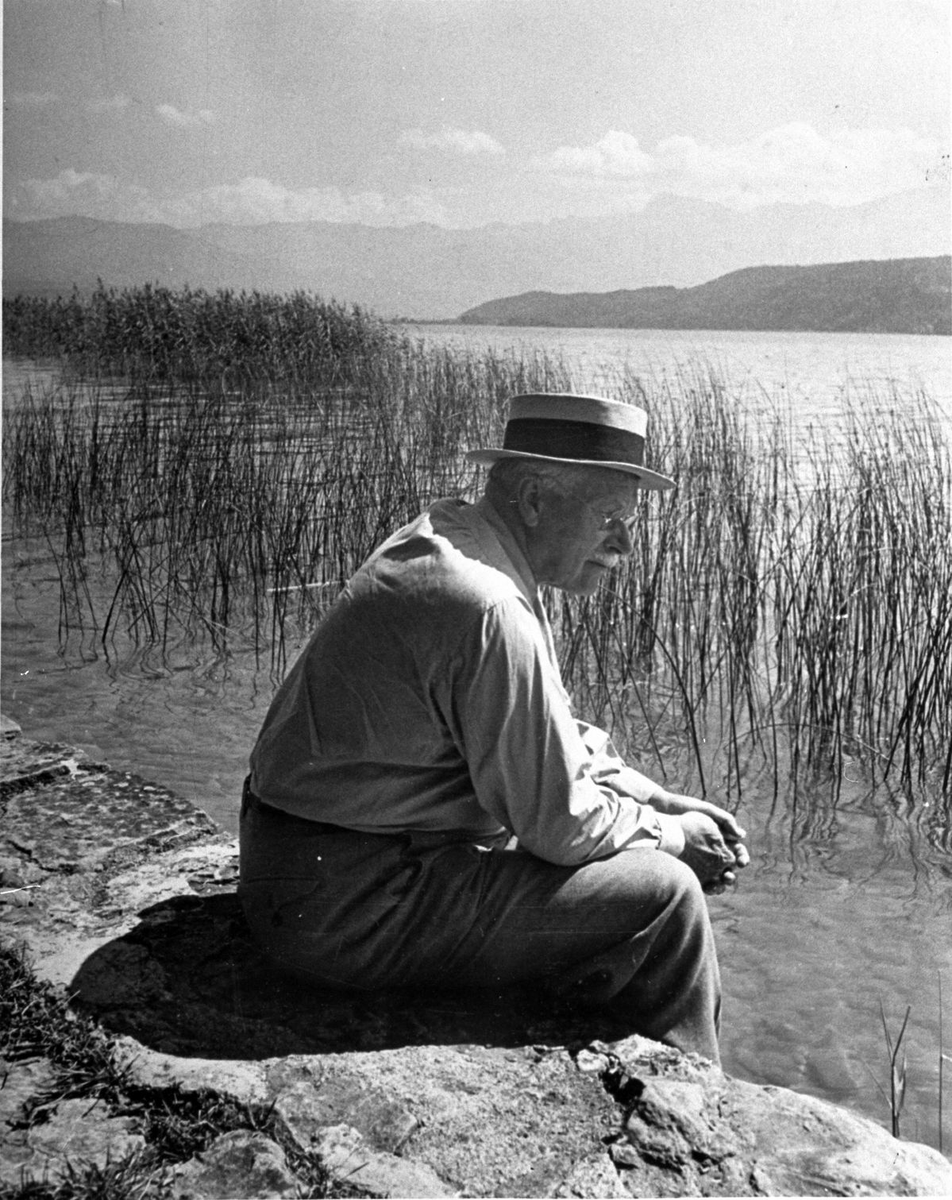
“Unless you learn to face your own shadows, you will keep seeing them in others. Because the world outside of you is only a reflection of the world inside of you.”
— Carl Jung
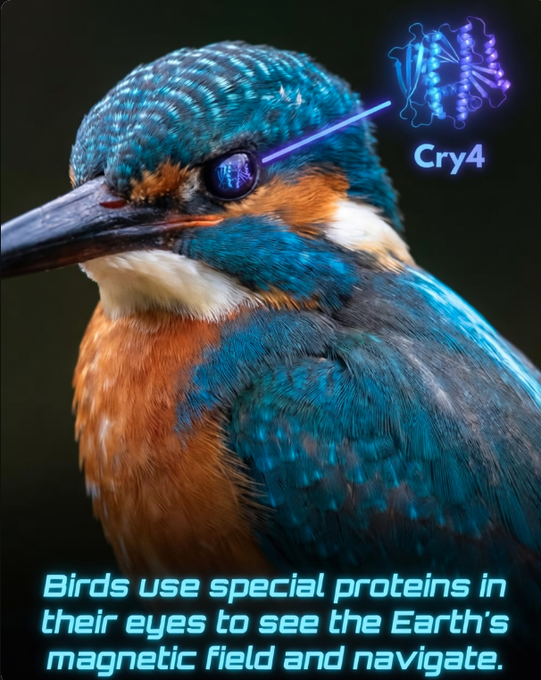
Birds can literally see the Earth’s magnetic field thanks to specialized light-sensitive proteins in their eyes.
Migratory birds possess one of nature’s most remarkable superpowers: the ability to navigate thousands of miles with incredible precision. At the center of this ability is a protein called Cry4 (cryptochrome 4), found in the retinas of their eyes.
When blue light enters the bird’s eye, it triggers a quantum reaction in the Cry4 proteins known as the radical pair mechanism. This ultra-sensitive process responds to the orientation and strength of the Earth’s magnetic field, essentially turning the bird’s visual system into a biological compass.
Scientists believe birds don’t just sense magnetism — they may actually see it. The quantum fluctuations likely appear as subtle visual patterns, shadows, or color gradients overlaid on their normal vision, much like an augmented reality heads-up display.
This extraordinary adaptation allows migratory birds to cross oceans, deserts, and mountain ranges with pinpoint accuracy, relying on the strange rules of quantum mechanics to guide them on their epic journeys.









![Rainmaker1973's tweet photo. Groundbreaking botanical research is challenging the long-held belief in human exceptionalism, suggesting that plants possess forms of spatial awareness, intentionality, and consciousness.
For centuries, humans have regarded plants as passive organisms, but pioneering studies are rewriting this view. According to plant neurobiologist Dr. Stefano Mancuso, plants display sophisticated behaviors that parallel those of conscious animals. In laboratory experiments, plants react to anesthesia in ways strikingly similar to humans and animals — for instance, the Venus flytrap becomes completely unresponsive when anesthetized.
Time-lapse studies further reveal remarkable intelligence in common bean plants, which demonstrate clear spatial awareness by precisely aiming shoots toward supports and even adjusting their growth strategy when they detect another plant has already claimed a support.
These findings indicate that consciousness may not be limited to organisms with brains, but could be a more flexible property emerging in diverse life forms. As trees migrate northward in response to climate change, mirroring animal migration, researchers argue that our understanding of “mind” must expand beyond traditional boundaries.
With over three trillion trees on Earth, acknowledging plant consciousness could transform our ethical frameworks, agricultural practices, and relationship with nature, shifting from viewing plants as mere resources to recognizing them as active, aware participants in our shared ecosystem.
[Yokawa, K., Kagenishi, T., Pavlovič, A., Gall, S., Weiland, M., Mancuso, S., & Baluška, F. (2018). Anaesthetics stop diverse plant organ movements, affect endocytic vesicle recycling and ROS homeostasis, and block action potentials in Venus flytraps. Annals of Botany, 122(5), 747–756. DOI: 10.1093/aob/mcx155]](https://pbs.twimg.com/media/HQULixeXcAAmtMr.jpg)
![Rainmaker1973's tweet photo. Fanal Forest, an ancient laurel forest in the mountains of Madeira, Portugal.
[📸 roksolyana_hilevych] https://t.co/HcAQyHyIXE](https://pbs.twimg.com/media/HQOwccNXcAAYT2u.jpg)