Please find us on other platforms
This was the official Twitter of the LIGO Scientific Collaboration. We detect gravitational waves!
Email: [email protected]
We are happy to share our latest news and discoveries on several platforms. Please come and find us
🦋 https://t.co/oaEGS9i34V
🐘 [email protected]
📷 ligo_virgo
📘 LIGO Scientific Collaboration
#SciComm#GravitationalWaves
@ego_virgo We had previously observed GW190814, GW190917 and GW191219, all of which could have been from a neutron star–black hole binary, but there are uncertainties about each of these
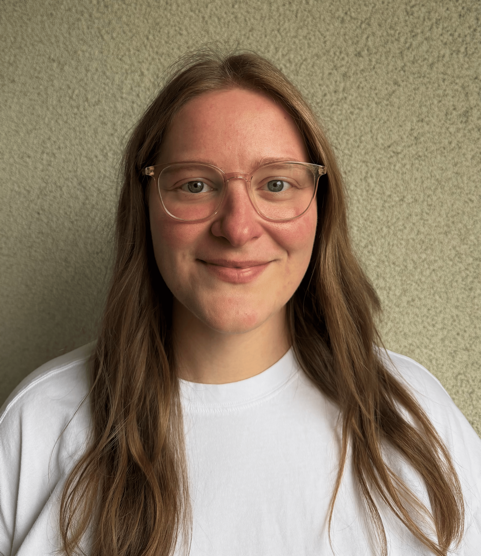
"Taking care of plants is my way to do hands-on science every day and remember that science is actually part of the real world, it doesn't just exist on your computer."
Find out more about Amanda at #HumansOfLIGO: https://t.co/KzPIBwdxG0
The 2025 winner of the LIGO Laboratory Award for Excellence in Detector Characterization & Calibration is Dr. Jane Glanzer in recognizition of critical and timely contributions to both calibration and detector characterization for the fourth observing run
https://t.co/0ey74TuqLi
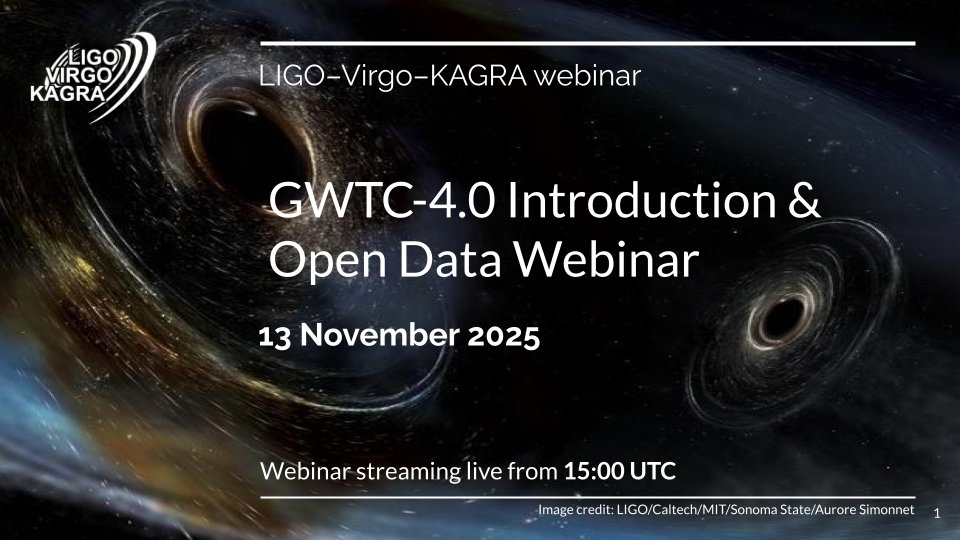
Catch up on our #GWTC4 results with the recording of our webinar introducing our latest gravitational-wave catalog release and the associated data (papers https://t.co/lYWtt3aJ9B and https://t.co/l559Rt3wjt)
https://t.co/0KTZiancy8
#Astrodon#OpenData#GravitationalWaves
Our next webinar will introduce our latest #GWTC4 release and the associated data (papers https://t.co/r8V0KkaqHK and https://t.co/4LnYs1msxh)
Tomorrow at 15:00 UTC, with the recording on YouTube after
Free registration https://t.co/k1caUkbosa
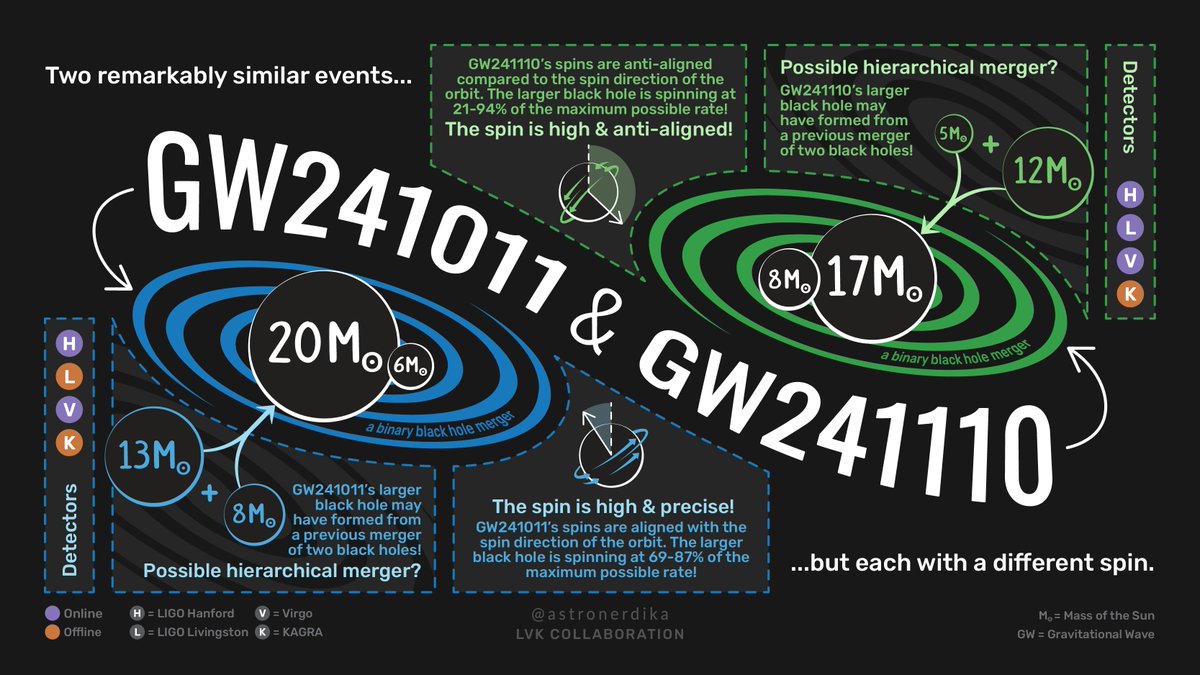
We are pleased to announce our discovery of #GW241011 and #GW241110
Both come from binary black holes where one black hole is larger than the other. The larger black holes have large spin. Could these black holes have formed in a previous merger?
https://t.co/Jlq9NaLr8H
Our recent low-significance candidate #S251112cm has caught some interest. A false alarm or a big discovery��we will keep investigating. Catch up in these two articles
https://t.co/1eJRUUVkWM by @hadriancho
https://t.co/dsKNZ1yD2i by @DrCarpineti
#GravitationalWaves
Sad but pleased to release today our homage to LIGO’s wonderful Rai Weiss, who passed away in September at 92. It is Episode 10 of our @LIGO YouTube video series. In our last interview, he insisted that @NSF “is the hero of LIGO.”
https://t.co/3vVUKHIoxH
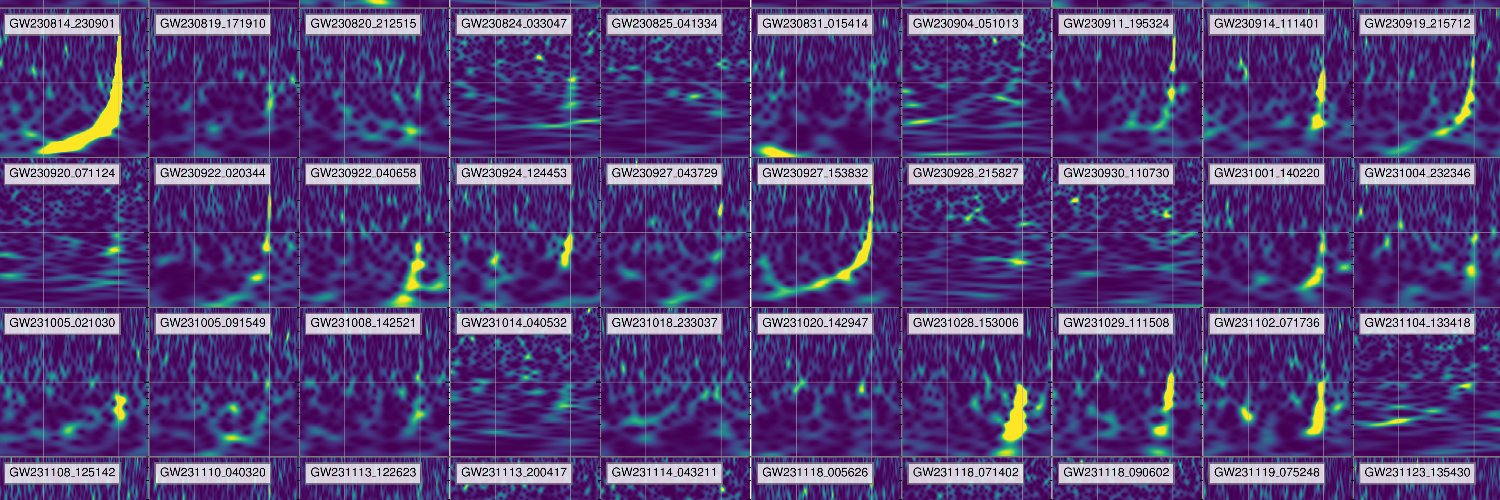
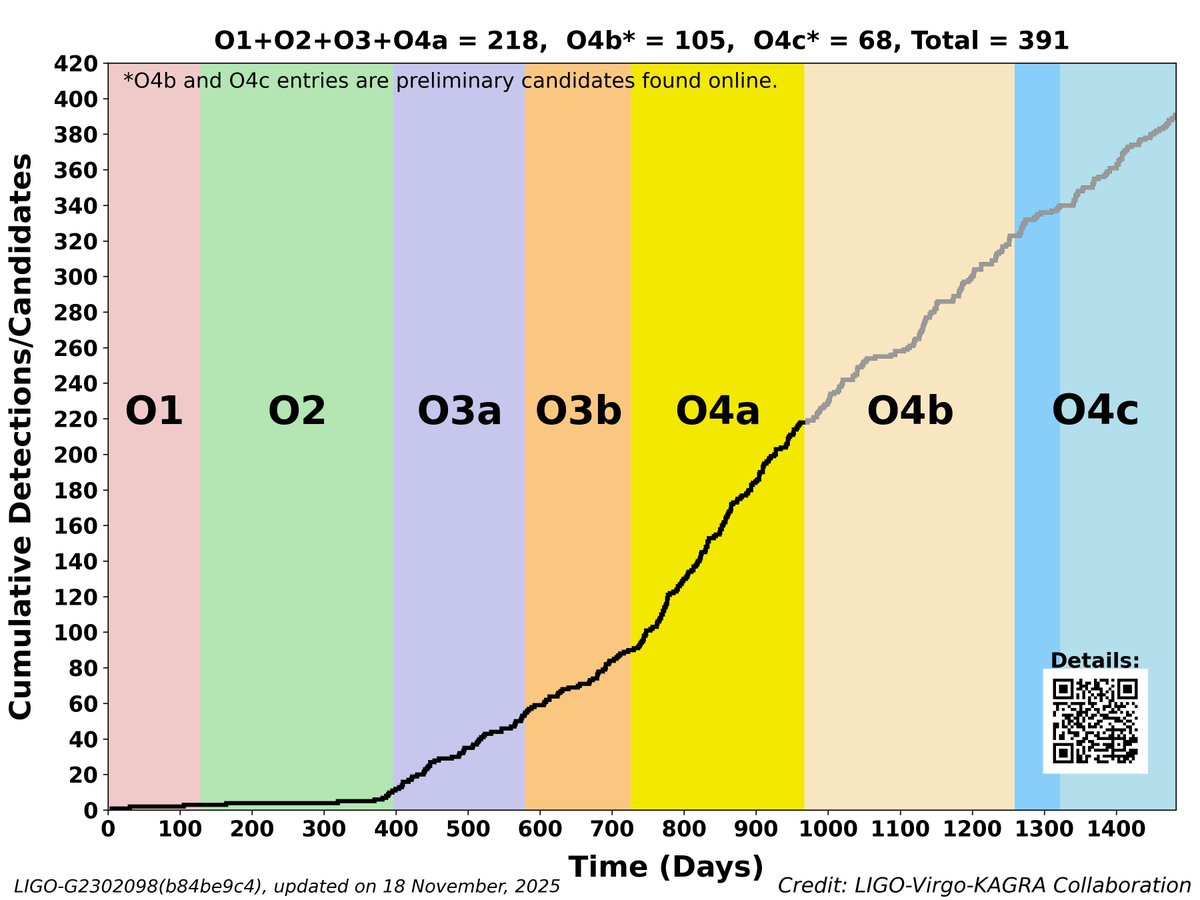
@LIGOLA@LIGOWA@KAGRA_PR@ego_virgo Our fourth observing run (O4) has seen our detectors perform better than ever before. Together with @ego_virgo and @KAGRA_PR we have identified more gravitational-wave candidates than in all previous observing runs combined
#O4IsHere
Our fourth LIGO @ego_virgo@KAGRA_PR observing run has now drawn to a close. We will be busy analysing data for a while to come—watch out for more discovery announcements.
We will be back next year https://t.co/CyWp70H1if
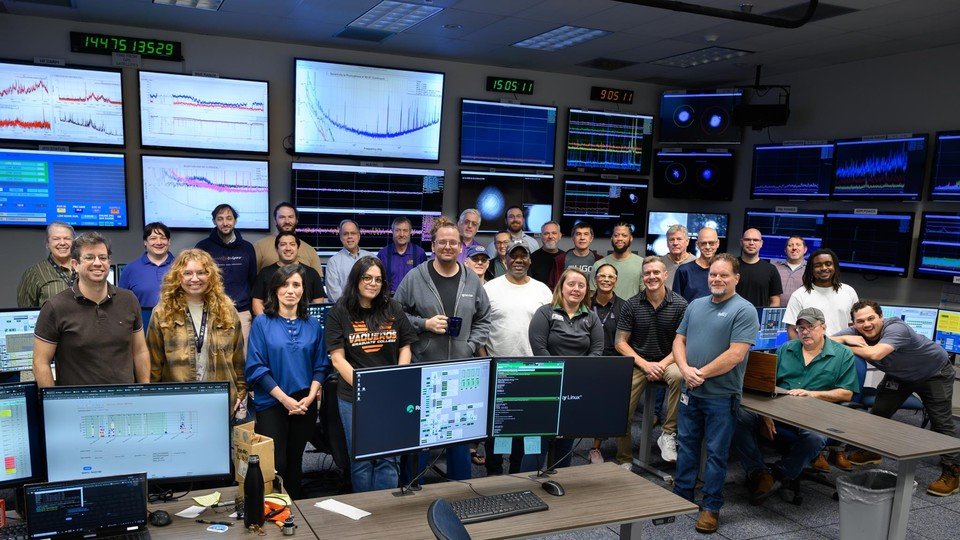
Our Rapid Response Teams celebrate the end of our fourth observing run. Well done everyone!
https://t.co/iI4pnnTdXL
O4 was a success thanks to lots of hard work from across the world.
#O4IsHere
Today marks the end of the fourth observing run of the @LIGO - Virgo - @KAGRA_PR gravitational wave detection network 🎆 It was the longest and richest run ever: 585 days and 250+ significant candidate signals, a huge increase from the 90 events of the three past runs combined🤯
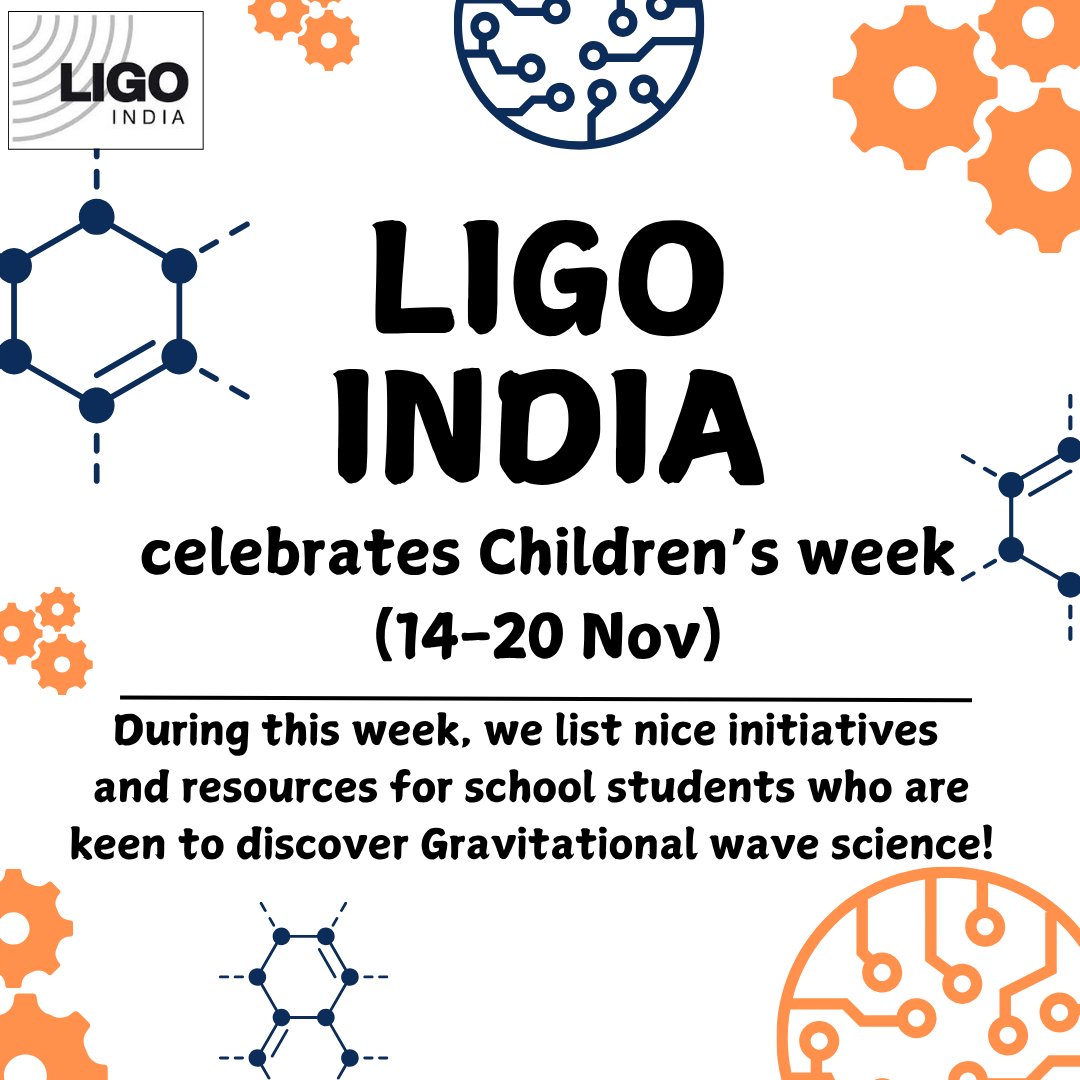
Children's day is celebrated in India on 14 Nov and globally on 20 Nov. Celebrate Children's week with LIGO-India, as we highlight the wonderful initiatives and resources for school students who are keen to discover Gravitational wave science! 🧒👦✨
Our next webinar will introduce our latest #GWTC4 release and the associated data (papers https://t.co/r8V0KkaqHK and https://t.co/4LnYs1msxh)
Tomorrow at 15:00 UTC, with the recording on YouTube after
Free registration https://t.co/k1caUkbosa
How many people work in the Virgo Collaboration, and what are their jobs? 🧐 No one can answer this question better than Gianluca Gemme, @INFN_ researcher and spokesperson of the Virgo Collaboration!
🔭Our fourth observing run is due to end on November 18. However, we now expect to have a 6 month observing run in 2026–27 to begin in the late summer/early fall of 2026, with detectors participating as available
https://t.co/CyWp70H1if