Mars enthusiast inspired by sci-fi, driven by tech, capitalism, democracy, and immortality, dreaming of a thriving, space-faring civilization beyond Earth.
SpaceX Starship Flight 10: A Historic Leap for Humanity’s Future in Space
On August 26, 2025, SpaceX’s Starship Flight 10 etched its name in aerospace history. Launching from Starbase, Texas, the mission marked the first time Starship successfully deployed payloads in orbit — a critical milestone toward building a fully reusable interplanetary transport system.
The Super Heavy booster executed a powerful ascent before making a controlled splashdown in the Gulf of Mexico, proving that the world’s largest rocket can be reused. Meanwhile, the Starship upper stage completed all its objectives: deploying eight Starlink satellite simulators, performing an engine relight in orbit, and returning safely to Earth with a controlled splashdown in the Indian Ocean.
This flight was SpaceX’s most successful Starship mission yet, demonstrating payload deployment, reusability, and orbital reliability. The achievement reinforces Elon Musk’s bold vision of using Starship for lunar missions, Mars colonization, and affordable access to space for humanity.
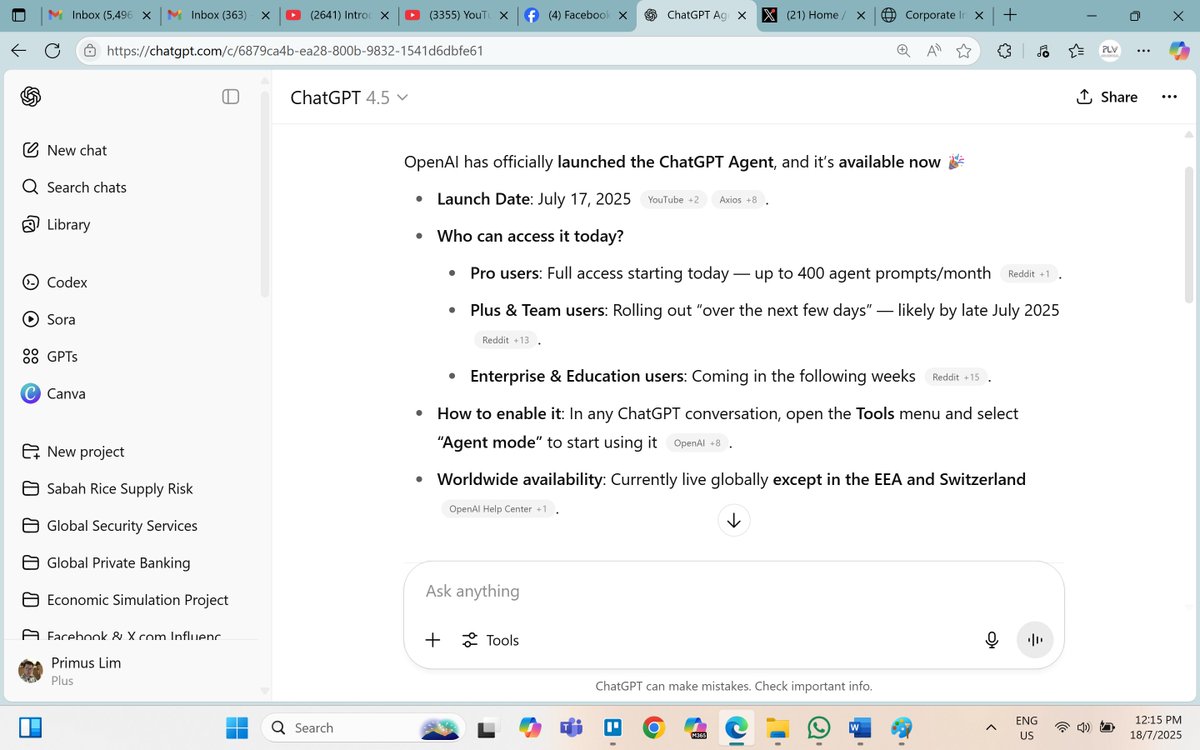
OpenAI has officially launched the ChatGPT Agent, and it’s available now 🎉
Launch Date: July 17, 2025 Reddit+2YouTube+2Tom's Guide+2OpenAI+8Axios+8The Wall Street Journal+8.
Who can access it today?
Pro users: Full access starting today — up to 400 agent prompts/month Reddit+1WIRED+1.
Plus & Team users: Rolling out “over the next few days” — likely by late July 2025 Axios+13Reddit+13TechRadar+13.
Enterprise & Education users: Coming in the following weeks WIRED+15Reddit+15OpenAI+15.
How to enable it: In any ChatGPT conversation, open the Tools menu and select “Agent mode” to start using it Reuters+8OpenAI+8Tom's Guide+8.
Worldwide availability: Currently live globally except in the EEA and Switzerland OpenAI Help Center+1Reddit+1.
🍠 Top Food Alternatives to Rice for Sabah’s Food Security
1. Cassava (Ubi Kayu)
✅ High-calorie, drought-resistant, and grows well in Sabah’s soil
Can be boiled, mashed, or turned into flour.
Used traditionally in rural Sabah and easily reintroduced on a large scale.
Yields more carbohydrates per hectare than rice.
Storage and transport are relatively simple.
✅ Strategic value: Can be grown in inland areas with less irrigation.
2. Sweet Potatoes (Ubi Keledek)
✅ Fast-growing, rich in nutrients (especially vitamin A)
Grows well in hilly terrain.
Requires less water and fewer inputs than paddy.
Ideal for small-scale farmers and home gardens.
✅ Strategic value: Diversifies diet and can reduce pressure on rice consumption.
3. Corn (Jagung)
✅ Staple in many countries and highly versatile
Can be eaten fresh, dried, or turned into flour.
Useful for both human consumption and animal feed.
Can integrate well into crop rotation systems with cassava or legumes.
✅ Strategic value: Malaysia already imports a lot of corn for feed—growing locally helps reduce overall dependency.
4. Sago (Rumbia)
✅ Native to Borneo; part of traditional Sabah/Sarawak diet
Comes from the sago palm, which grows in swampy, marginal land.
Already consumed in small amounts in rural Sabah.
Can be turned into flour for noodles, cakes, and porridge.
✅ Strategic value: Ideal for lowland and swampy areas not suited for rice.
5. Millets and Sorghum
✅ Climate-resilient grains used in India and Africa
High in fiber and protein, often gluten-free.
Suitable for dry climates and low-input farming.
Still unfamiliar to most Malaysians, but growing interest in healthy diets could help adoption.
✅ Strategic value: Can be promoted as part of "functional food" or emergency reserve crops.
6. Bananas & Plantains
✅ Staple food in Africa, and parts of Indonesia and the Philippines
Can be steamed, fried, or turned into flour.
Grows well in Sabah and can be planted year-round.
✅ Strategic value: Easy to cultivate and store for short-term food needs.
🛑 What Not to Rely On Alone:
Wheat – Almost entirely imported, global prices highly volatile.
Imported noodles or bread – Not a real food security substitute in times of crisis.
🌾 Strategy for Sabah:
To reduce dependency on imported rice, Sabah should:
Diversify crops across districts (e.g., cassava in interior, sago in lowlands).
Promote backyard farming of sweet potatoes and bananas.
Support local food processing for flour, chips, and noodles from alternative crops.
Educate communities to reintroduce traditional foods and recipes.
🔥 Sabah Simulation: When War Cuts Off the Rice Supply.
What Happens When China Invades Taiwan? A Warning for Sabahan.
🤖 This is an AI-Powered Simulation: How a China–Taiwan War Triggers a Rice Crisis in Sabah
Generated by AI using geopolitical risk models, food security data, and logistics dependency patterns.
Subtitle:
"A predictive scenario where Sabah faces hunger and political fallout in just 30 days due to war-triggered rice supply chain collapse."
⚠️ Disclaimer:
This simulation is a hypothetical scenario generated using AI and publicly available data. It is intended for educational and strategic planning purposes only. The events described have not occurred. The goal is to highlight vulnerabilities in Sabah’s food supply chain and encourage proactive policymaking. This does not represent any government forecast or classified information.
🗓 DAY 1: WAR BREAKS OUT
China launches a full-scale invasion of Taiwan. The world reacts instantly.
International shipping routes across the South China Sea, including near Sabah, become militarized zones. Insurance premiums for ships skyrocket. Commercial vessels are diverted, delayed, or canceled entirely.
🚢 WEEK 1: RICE SHIPMENTS DISRUPTED
Sabah receives over 70% of its rice via imports, mostly from Peninsular Malaysia and Southeast Asia through shipping lanes that are now compromised.
Ports in Kota Kinabalu, Sandakan, and Tawau report rice shipment delays.
Logistics companies face fuel price hikes and security checks.
Some traders begin hoarding rice, expecting price surges.
Small towns start seeing shelves run low. In Keningau, families rush to buy what they can. Supermarkets implement per-customer limits. Rumors of rice shortage spread like wildfire.
🍚 WEEK 2: PANIC IN THE MARKET
Vietnam and Thailand halt rice exports temporarily due to market panic.
Malaysia tries to divert rice from Peninsular stocks—but priorities shift inward. West Malaysian cities demand their fair share first.
In Sabah:
Local rice is only enough for 2–3 weeks.
There is no strategic rice reserve warehouse in the state.
Prices for a 10kg bag of rice surge from RM25 to RM60 in some districts.
Reports of black-market sales emerge. Schools in rural districts begin rationing lunch meals. Hospitals appeal for government help to feed inpatients.
🧓 WEEK 3: RURAL SABAH FEELS THE WORST
Villages in Nabawan, Pitas, Kota Marudu, and interior Sabah suffer worst.
There are no local food reserves.
Many depend on small groceries that rely on monthly restocks from the city.
Diesel shortages affect transportation to remote areas.
Farmers in Kota Belud and Tambunan try to plant more rice—but the fields are dry. No irrigation, no water pumps, no backup. Yields are 2–3 months away at best.
Sabahans begin eating less. Tinned sardines and instant noodles replace rice. NGOs start distributing emergency food packs. The mood is tense.
⚠️ MONTH 2: SOCIAL AND POLITICAL PRESSURE BUILDS
Sabah leaders blame federal inaction.
Social media explodes with hashtags: #WhereIsTheRice #SabahDeservesBetter
People call out past federal promises to raise Sabah’s Rice Self-Sufficiency to 60% by 2030—nothing happened.
Discussions begin on:
Food sovereignty for Sabah
Emergency land clearing for fast crops
Setting up community rice banks and seed distribution hubs
But without infrastructure, cash, or tractors—it’s too slow.
🧠 POST-SIMULATION LESSONS FOR SABAH
This is not science fiction. It’s a high-risk, high-probability scenario. If global conflict disrupts shipping or food exports, Sabah will be one of the first Malaysian states to suffer.
Why?
Only 25% rice self-sufficiency
No large-scale rice reserve
No modern irrigation system
Weak logistics in rural areas
✅ WHAT SABAH MUST DO NOW
🚧 Build local rice storage and emergency stockpiles in each division
💧 Invest in irrigation in Kota Belud, Tambunan, Papar, and others
🧑🌾 Train youth and fund smart rice farming using drones and hybrid seeds
🌾 Turn idle oil palm land into food crop zones
📦 Mandate every district to keep 30–60 days of food reserves
⚠️ FINAL WARNING
Sabah cannot wait for war to happen to fix this.
When ships stop coming, there is no plan B. We either grow our own food—or go hungry.
🔍 How These Sources Shaped the Simulation
Low SSL baseline (22–25%) sets the scene—Sabah depends on imported rice.
Shipping disruptions simulate realistic geopolitical instability in the South China Sea.
No reserve stocks reflect local governance gaps—Sabah lacks strategic rice reserves.
Price spikes and hoarding are observed trends during past food export bans in the region (e.g., Vietnam, Thailand lockdowns in 2020–21).
Rural transport and supply breakdowns are backed by documented isolation of Sabah’s interior districts and reliance on Peninsular logistics.
✅ Summary
The simulation uses real statistical data and documented vulnerabilities in Sabah’s food system to create a plausible scenario of rice crisis following a geopolitical shock.
SSL ~23% and 75% dependency are grounded in state statements and published research.
Constraints in irrigation, storage, and logistics are well‑documented through government reports and media.
Price surges and black‑market risks mirror past behavior during regional supply scares.
🚨 The Coming Food Crisis in Sabah: When There’s No More Rice on the Shelves 🚨
In 2025, Sabah is still importing over 75% of its rice needs. Only 25% of the rice consumed in the state is grown locally, and this figure has barely improved in the last decade. Meanwhile, the national average rice self-sufficiency level (SSL) is about 65%, with states like Kedah producing far more than they consume.
📌 Source: Ministry of Agriculture and Food Security (MAFS) 2023 SSL Report
So why is Sabah so far behind? The short answer: years of neglect, lack of investment, and weak political will.
While the federal government continues to pour billions into irrigation and infrastructure in the Peninsula, Sabah's paddy fields remain underdeveloped and under-irrigated. According to the Department of Statistics Malaysia (DOSM), less than 20% of Sabah’s paddy land has access to proper irrigation systems, compared to over 70% in Kedah and Perlis.
📌 Source: DOSM 2021 Agriculture Census Report
📌 Source: MADA & KADA Infrastructure Reports
Many farmers in Sabah are still using traditional tools, aging seeds, and outdated planting methods. They struggle with poor access to markets, high logistics costs, and fluctuating prices. Even when rice is grown, transporting it from fields to mills to consumers is costly and inefficient—driving up prices for everyone.
📌 Source: Daily Express, “Sabah Rice Farmers Voice Out Lack of Support” (2022)
And yet, government after government continues to make big promises—like raising Sabah’s SSL to 60% by 2030—but delivers very little on the ground. According to the Auditor-General’s Report, multiple Sabah rice projects over the past decade either failed or stalled due to poor planning, mismanagement, and lack of follow-up.
📌 Source: Auditor-General’s Report 2020 & 2022 on Agricultural Development Projects
With global rice prices rising, climate change threatening imports, and geopolitical risks like the China–Taiwan conflict or Red Sea shipping disruptions, Sabah’s dependency puts it at serious risk of food insecurity. If Malaysia's rice imports are ever cut off, Sabahans will be the first to go hungry.
Meanwhile, Peninsular Malaysia stores its rice reserves locally, and Sabah lacks any meaningful strategic rice stockpile. If the supply chain breaks, it’s every state for itself—and Sabah is unprepared.
So what should be done?
✅ Build irrigation infrastructure in key districts like Kota Belud and Papar
✅ Shift idle land from palm oil to food crops with real incentives
✅ Offer guaranteed pricing and subsidies directly to Sabah paddy farmers
✅ Train a new generation of smart farmers using drones, sensors, and hybrid rice
✅ Establish emergency rice storage hubs in Sabah and Sarawak immediately
Sabah has the land. It has the water. It has the people. What it doesn’t have is the political urgency or budget commitment.
This isn’t just about rice. It’s about Sabah’s right to survive independently, especially during global and national crises.
Let’s stop pretending the current system works.
Let’s stop waiting for empty shelves to take action.
Sabah deserves better—not just promises, but real policies, funding, and accountability.
Sources & References:
📄 Ministry of Agriculture & Food Security Malaysia – Rice SSL Statistics (2023)
📄 Department of Statistics Malaysia – Agriculture Census Report (2021)
📰 Daily Express Sabah – “Sabah Farmers Still Struggle with Low Yields and No Support”, 2022
📄 Auditor-General’s Report Malaysia – Failures in Agricultural Projects, 2020 & 2022
📄 MADA & KADA Official Websites – Irrigation Project Reports
📰 The Star – “Malaysia’s Rice SSL Drops, Sabah Still Heavily Dependent on Imports”, 2023
⚠️ “💸 He Lost RM211,000 on WhatsApp – Don’t Fall for These 5 Investment Scam Tricks”
💔 “I just wanted to invest for my retirement. Now I’ve lost RM211,000.”
This is the true story of a 49-year-old hotel housekeeping manager in Kuantan, who trusted the wrong person on Facebook. Let’s break it down — so you or your loved ones don’t become the next victim.
🧨 Red Flag #1: “Guaranteed High Returns”
📌 What he saw:
A Facebook ad promising monthly returns of 15% with zero risk.
💡 The truth:
No legitimate investment guarantees high fixed returns. Real returns fluctuate. If someone says "100% safe," it's a scam.
📱 Red Flag #2: Contact Only via WhatsApp or Facebook
📌 What he did:
He messaged the “investment agent” on WhatsApp after seeing her Facebook post.
💡 The truth:
Real financial advisors use official business emails, websites, and licensed platforms. If it’s only WhatsApp or Messenger, they don’t want to be traced.
🧾 Red Flag #3: Asked to Transfer to Multiple Personal Accounts
📌 What happened:
He was told to transfer funds in “phases” to several bank accounts under different names.
💡 The truth:
Licensed investment firms will only ask you to transfer money to corporate accounts, not random individuals. This is classic layering — a technique to hide stolen money.
🏷️ Red Flag #4: “Limited-Time Offer” Pressure
📌 What he was told:
“If you don’t transfer today, you’ll miss the 3x bonus return this month.”
💡 The truth:
Scammers create urgency so you don’t have time to think. Real investment opportunities don’t rush you. If someone pressures you, walk away.
❌ Red Flag #5: No License or Credentials
📌 What he forgot to check:
The woman gave no license number, no company registration, and no SC or BNM link.
💡 The truth:
You can verify any legitimate entity with:
📘 Bank Negara Malaysia’s Alert List
📕 Securities Commission License Search
No license? No deal.
✅ What You Can Do Today
🔒 Share this article with friends and family.
🧠 Attend or organize anti-scam awareness talks at your workplace.
🗣️ Teach your elderly relatives how to spot online red flags.
📢 Need help verifying an investment scheme?
Drop me a message — I’ll help you check if it’s legit.
Google AI Prompt 68 page guide.
Google 68-page ultimate prompt engineering guide (Focused on API user)
https://t.co/9LIbCkg5pO
https://t.co/68ZLDStqSI
Goes deep on structure, formatting, config settings, and real examples.
Here’s what it covers:
1. How to get predictable, reliable output using temperature, top-p, and top-k
2. Prompting techniques for APIs, including system prompts, chain-of-thought, and ReAct (i.e., reason and act)
3. How to write prompts that return structured outputs like JSON or specific formats
#AI #promptengineering
🚀 My Ambitious Mars 2036 plan 🇲🇾
We’re sending 40 people to Mars aboard 3 @SpaceX Starships — a bold private initiative led by Mars Society Malaysia.
🌍 Mission Overview:
• Starship 1: 10 paying pioneers + 10 trained crew
• Starship 2: 10 paying pioneers + 10 trained crew
• Starship 3: Cargo, supplies & backup
👨🚀 Total: 40 humans on Mars
Half trained operators. Half civilian explorers.
📅 Training Timeline:
🧠 2025–2026:
• Recruitment & health screening
• Mars adaptation bootcamp
🔧 2027–2029:
• Starship systems & robotics
• Analog Mars missions (deserts, caves, isolation)
🌌 2030–2032:
• EVA & zero-G training
• 6-month Mars simulation
• Global collaboration (NASA, ESA, Mars Society)
🚀 2033–2036:
• Final crew selection
• Starship flight readiness
• Launch prep for 2036 Mars window
🌟 Private. Malaysian-led. Future-focused.
Managed by PLV Advance
#Mars2036 #MalaysiaToMars #SpaceX #Starship #MarsSocietyMalaysia #SpaceExploration
🧠 MIT Study Concerns: Summary
MIT's study cautions that while AI tools improve productivity and grammar, they may:
1. Reduce cognitive engagement ("cognitive offloading")
2. Lower critical thinking due to over-reliance
3. Create emotional dependence
4. Diminish originality in writing
Counter Argument below:
💡 Counterpoints to MIT’s Concerns (Pro-AI Integration View)
1. AI as a Cognitive Enhancer, Not a Replacement
Clarification: AI does not eliminate thinking—it amplifies it by reducing routine burdens, letting users focus on strategic decisions.
Example: In banking, AI handles massive regulatory data scans, allowing compliance officers to spend more time on interpretation and risk assessment.
2. Critical Thinking Is a Design Issue, Not an AI Problem
If AI is used passively, it can hinder thinking. But when used as a debate partner or brainstorming tool, it stimulates critical analysis.
Solution: Educators and trainers must structure prompts that require evaluation, counter-arguments, or ethical analysis, which deepens engagement.
3. Personalization vs. Dependency
The concern about emotional dependence is similar to early internet or calculator criticism.
AI tools can be configured to adaptively challenge users, providing scaffolding—not spoon-feeding.
Proper use policies and AI-limited zones in classrooms or workspaces balance use with independent thinking.
4. Productivity ≠ Laziness
Faster output through AI does not mean lower quality.
Banking use case: AI helps RM (relationship managers) draft reports, but the human still validates and finalizes based on client dynamics.
5. AI Boosts Equity and Inclusion
Many students or staff with language barriers, dyslexia, or cognitive challenges benefit immensely from AI support.
This levels the playing field and promotes educational equity.
6. AI Literacy Is the Real Solution
Instead of blocking AI, teach how to use it responsibly.
Make AI integration part of the critical thinking curriculum, where users compare AI outputs with their own analysis.
Tesla Revenue for 2024 was $97 billion. BYD $107 billion. I dont see much different. Buy why this article makes it like Tesla is doomed. Just does not make sense. I am happy for both companies success. Elon would be happy of BYD success. They are in the same EV business.
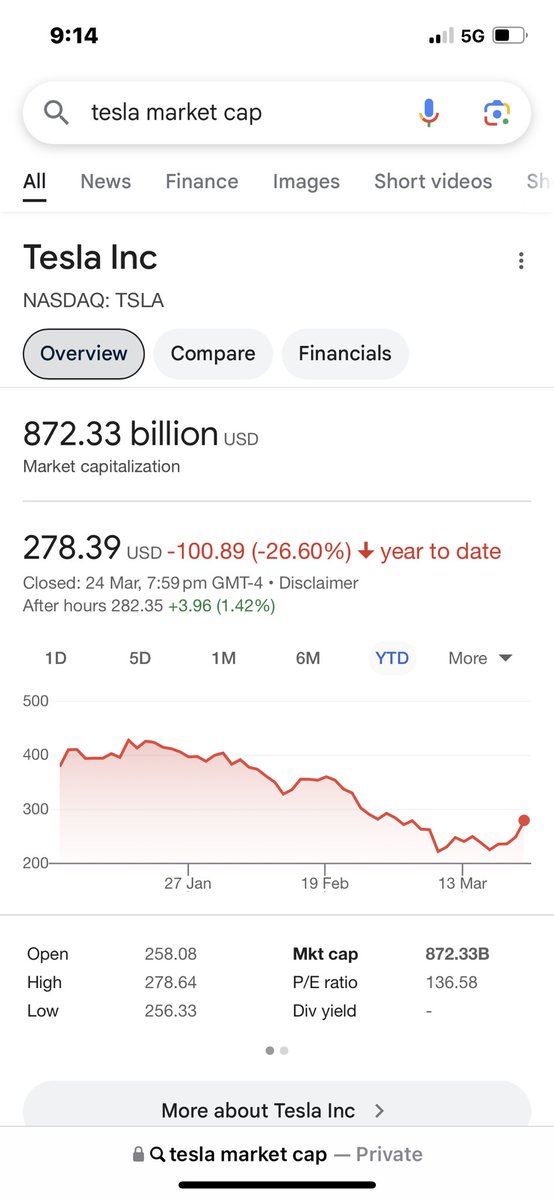
Tesla up today. Market caps bigger then most countries GDP. Elon Musk will be remembered for thousand of years for his contribution to humanity. 99.9999999 percent of human today will just disappear. So why bother all the negativity right Mr.Musk.
Social media is filled with the end of Tesla stories. By just comparing GM and Tesla share markets capitalization, you can see that this is completely untrue. I am so dumbfounded by all the experts.
In the near future, two women billionaires and Miss Lauren walk into a bar.
Priscilla buys the bar, MacKenzie donates it to charity, and Lauren? She just stands there, and somehow all the alien lizards quit their jobs to become bartenders. 😂🍸👽
#MarkZuckerberg#PresidentTrump