Awesome that @JensenHuang is now on X. Great commentary on Openweights. Interesting that $META & $MSFT (owns ~27% OpenAI) is in the list of logos but OpenAI, Anthropic & the two other big public cloud hyperscalers, $AMZN & $GOOGL are not. Seems like battle lines have been drawn.
$SPCX: Thoughts on SpaceX IPO (typos corrected from pre-mkt post)
The company says its total addressable market is the largest “in human history,” at $28.5 Trillion. But this requires SpaceX to be thought of as a vertically integrated AI and connectivity infrastructure platform versus the rocket and satellite company which it is today.
The $28.5 Trillion TAM Breakdown is as follows
AI $26.5T: Enterprise Applications ($22.7T), AI infrastructure ($2.4T), consumer subscriptions ($760B), ads ($600B)
Connectivity $1.6T: StarLink Broadband ($870B) and Starlink Mobile ($740B)
Space $370B: Traditional launch services and space-enabled solutions
Elon Musk is the Thomas Edison of our generation and SpaceX also has no other comparable in the technology industry at this scale. But unfortunately, the SpaceX IPO valuation at ~90x CY25 revenues at a IPO price of $135 is priced as such. $TSLA, another Elon Musk company, is valued at 16x CY25 revenues as a comparison.
For those that think valuation does not matter given this is a long-term play, I would point to the $ARKK innovation ETF as a warning. Since its peak on 2/12/21 during the Meme stock mania through 6/11/26 (yesterday), it is down 51% including dividends.
$TSLA is up 47% during that time but the S&P is up 103% including dividends.
Revenue growth at SpaceX also slowed from 35% y/y in C24 ($14.0B) to 33% in C25 ($18.7B) to 15% ($4.7B) in the most recent quarter while the Net Income losses increased from $4.9B in C25 to $4.3B in just Q1:26. Free Cash Flow losses also increased from $14.0B in CY25 to $9.1B in just Q1:26 driven by capex increasing from $20.7B in CY25 to $10.1B in just Q1:26.
SpaceX says that multi-hundred-billion-dollar capital expenditures over the next five years will be required to build the infrastructure—specifically data centers and AI training capacity— to chase this theoretical market.
The stock market is clearly not responding well to
$GOOGL (down 6% in June month-to-date through 6/11) or $AMZN (down 11% in June mtd through 6/11) raising capital to chase this market or to $ORCL
results where capex guidance was higher than expected (down 18% in June mtd through 6/11 and 9% yesterday). $META’s stock is down 15% since raising capex and operating expenses on their Q1 results on April 29th vs the S&P up 4% through June 11th. Meanwhile, SpaceX will be pivoting their business to compete with the established hyperscalers above as well as enterprise software companies while currently not having a leading AI model.
In addition, I worry that the large sums of money that have already been raised by others in the equity market such as Google is reducing the amount of capital available to everyone else. Money looks infinite right up until it doesn’t. Between SpaceX, then Anthropic this fall followed potentially by OpenAI, there is likely to be $200B in capital raises this year through just these three IPOs. This will put to the test the liquidity available when 30 year treasury yields have reached levels last seen two decades ago.
As for SpaceX’s stock, I expect the stock to trade well initially given it is likely to be added to different indices soon after going public such as the Russell in 5 trading days, MSCI in 10 and Nasdaq100 in 15. This will result in a lot of forced buying by index funds. In addition, some “closet indexers” in the mutual fund community will market weight the name to avoid the tracking error relative to the indices that they are benchmarked against. After the initial 15 trading days, however, I think it gets a lot more dicey. While Elon always seems to deliver on his forecasts, they are rarely in the time frame initially envisioned. When you are doing things hardly anyone thought possible, this is understandable.
Currently the stock is trading at ~$180 in the perpetual futures contracts on Hyperliquid vs the $135 IPO price which already implied ~90x CY26 revenues. I believe the risk vs. reward is very poor at these valuation levels with capex ramping up once you get beyond the initial 15 trading days when it can be added to indices.
Last wk, 1) AI related $MU +10% nxt day on earnings (unlike $AVGO $NVDA which sold off hard), 2) OpenAI raising money at $830B valuation, 3) core CPI surprising at lowest since Mar-2021, put themes driving this mkt for past 3 yrs back on optimistic footing: easy money & AI.
I posted on Wednesday “there were some signs of at least a potential short-term bottom. $JBL was up 2% on a beat & raise qtr, while $MSFT which owns 27% of OpenAI was down only 0.1% despite the continuing bludgeoning of OpenAI related names $ORCL and $SFTBY, both down 4-5%.”
I was fortunate and this indeed turned out to be the case. The S&P/Mag7/GOOGL complex/ OAI complex was +1.7%/+2.8%/+8.8%/+10.0% on Thursday and Friday combined in response I believe to the three catalysts above. Having said that, you could say they were just +0.1%/+1.5%/-0.1%/+2.3% for the entire wk.
Looking forward, the part of the calendar dubbed “the Santa Claus rally” by Yale Hirsch is coming which is the last 5 trading days of the year plus the two trading days of the upcoming year. It is up over 70% of the time with an average return of 1.3%.
To be clear, I try to focus on the market right in front of me and look for high probability opportunities for good risk adjusted returns during which I can add or subtract exposure at hopefully opportune times. Anytime I can have the odds in my favor is a blessing.
From a longer-term viewpoint, as I said on Thursday on the @riskreversal podcast, I expect the market to be choppy in 2026.
On the negative side, it would not surprise me when OAI launches their advertising product to see the $GOOGL complex of stocks get hit early in the year and the OpenAI complex to rally. In addition, some of the ads on $META are also going to switch. It is just math that OAI will take some share given it is going from 0% of the online ad market and has around ~900M weekly users.
It also seems that inflation was not actually this low given that not all the data was collected leaving some components at minimal change in the calculation. But this is what we have to work with and the market is reacting to it, rightly or wrongly. This could mean a higher than expected inflation print a month from now while the trailing PE on the S&P is a high at 26x .
On the positive side to start the year, the Fed moved from Quantitative Tightening to “QE light” in December with the Fed now buying $40B per month in treasuries. In addition due to the OBBB, there should be $100-$150B in consumer tax refunds in Q1 and corporations will get tax benefits related to R&D and capital expenditures.
Looking out further, the new Fed chair appointed by President Trump in May is going to want to cut rates another 50-100 bps at least. Easy money has been a core driver for this market for the past several years and that is not likely to change.
In summary, I am looking forward to spending time with family, watching my favorite Christmas movies and a Santa Claus rally to end the year. But as Charles Darwin would say, I am trying to stay “adaptable to change” as I think about 2026. I expect the year to be choppy but with an upward bias due to the continuation of both easy money and the AI trade though I expect it to be more discerning.
Week Preview
While both $GOOGL & $TSLA results were roughly what I expected, the stock reactions make me wary into results for $MSFT & $META (expect strong earnings for both) on Wed setting an even higher bar for $AAPL & $AMZN on Thursday where the CQ3 guides could be mixed.
So far the immediate reaction of high expectations stocks (especially AI related) to reported earnings has been challenging even if the quarter was strong and estimates went higher. $NFLX declined 5% the next day despite a beat and raise quarter and has declined even further since then despite the S&P hitting a new high every day of last week. Google' stock was up only 1% the next day despite a strong quarter and paid clicks increasing from 2% y/y growth in Q1 to 4% growth in Q2. I thought it would be up at least 5%. $IBM got hit for 8% the next day despite beating quarterly expectations when they maintained the revenue guidance for the year.
And if you outright missed, the punishment was severe as in the case of $ASML which did confirm rev growth for CY26 and was hit for 9% in reaction. $TSLA where expectations were already low declined 8% the next day in reaction to additional estimate cuts.
Outside of tech, $DOV and $HON which are related to the AI infrastructure buildout, both beat and raised but were hit for 2% and 6% respectively in reaction to earnings. In general I have an optimistic view towards industrial stocks related to energy infrastructure and datacenters. Last week, the US administration outlined plans in support of US AI dominance globally which included energy infrastructure and Google raised their capex plans from $75B to $85B driven by the AI inference demand being seen.
Magnificent 7 results this week:
Following strong results by $GOOGL, the bar could be raised even higher by Microsoft and Meta on Wednesday.
$MSFT: I expect solid results and guidance. Microsoft had re-accelerating growth at Azure during the March quarter after 3 prior quarterly disappointments. I believe their reworked deal with the right of first refusal for OpenAI workloads following the Stargate deal has also helped margins & growth going forward. Microsoft’s capex spend should also slow from 83% growth in CY24 ($76B) and be more in-line with their revenue growth for the second half of 2025 which should help their free cash flow. In CY24, the stock dramatically underperformed and was up only 12% as spending ramped and hit FCF while Azure growth dissappointed. They have the benefit of being early to AI given their initial investment in OpenAI was in 2019. Microsoft along with Nvidia are my two favorite Magnificent 7 names currently.
$META: I expect solid Q2 results but am concerned about guidance around expenses and capex related to AI. Meta continues to utilize AI the best to run their business through better ad monetization and video recommendations. They increased capex throughout last year but had revenue forecasts go up as well. However, their recent AI related acqui-hiring is something to monitor on the expense and capex side. Last year, Microsoft’s ramp in capex spending certainly hurt their stock when Azure expectations were getting cut during the second half. And this year, it is hard to tell if Google’s increase in capex was part of the issue with the lower than expected rise in their stock the next day despite revenue forecasts going up and better than expected paid clicks in Q2.
Following strong results by Google last week and hopefully by Microsoft and Meta on Wednesday, the bar could be high for guidance for tariff impacted Apple and Amazon on Thursday.
$AMZN: Despite expecting solid Q2 results, guidance around margins does concern me along with high expectations. The US$ decline is a tailwind to international revenue of ~40% and high margin ad rev continues to ramp for Q2/Q3. I expect a strong Q2 in general and four days of Prime Day versus two last year helping Q3. But tariffs are a headwind for Q4 with ~30%+ of e-commerce products sourced from China and some retail demand being pulled forward. I also worry about expectations moving too high for AWS despite the benefits of their relationship with Anthropic. Google cloud had strong results and I expect a strong Microsoft result for CQ2 after a strong result for CQ1 following three quarters of disappointment.
$AAPL: While I expect solid CQ2 results due to consumers buying early on fears that tariffs will drive iPhone prices higher, the stock is more likely to react to any comments around AI. The US$ decline from an average of $107 in CQ1 is a tailwind to international revenue which is nearly 60% of total revenues. They are woefully behind on AI features but there is increasing hope that they will bite the bullet and acquire someone like Perplexity or do a deal with OpenAI to fix the problem. Their recent WWDC in June was a bust on that front. Unfortunately, a pull forward in demand will ultimately hurt holiday sales in CQ4. Their product margins are also affected the most by the increase in tariffs among the Magnificent 7. Longer-term, 3rd party app store fees are likely hurt by the recent Epic Games ruling. Also Google’s $20B+ default search engine payment will also likely be reduced following the remedies ruling due in August from the anti-trust case. Apple has seen 5% cumulative revenue growth over the past 3 calendar years versus 26% for the S&P500. This is also likely to be the second year in a row they lose smartphone market share. As a result since the end of the Covid driven surge in 2021, the stock has a total return of 23% versus a 41% increase for the S&P and 75% increase for the S&P information technology index. At some point, financial engineering through stock buybacks and dividend increases is not a substitute for good products. In 2026, there could be a large upgrade cycle if they get their AI problems fixed with new foldable phones finally coming.
'HEAVY LIFTING': @realDonaldTrump and European Commission President @VonderLeyen struck a trade deal on Sunday, setting a flat 15% tariff on cars and more. Europe will buy $150 billion in U.S. energy and pump another $600 billion into U.S. investments under the deal.
The Stop FUNDERs Act is a commonsense expansion of RICO statutes to take down well funded and organized rioters who are destroying American cities and attacking our law enforcement officers. These violent activists display pre-printed materials, are armed with weaponry and communications equipment, and use deadly force to attack law enforcement officers, public property, and private businesses. Law enforcement needs these additional tools under RICO to investigate and dismantle the organizations and funding sources which are fueling these destructive riots.
Prior debt downgrades have been followed by S&P drops of 8-10%. In 2023 inflation concerns drove 10yr yields to the highest in a decade. In 2011, there were fears of a renewed EU debt crisis. Today, tariff rollbacks is driving a pickup in the economy & the decline should be less.
Details
Moody’s on Friday downgraded US debt from the highest rating, joining the Fitch downgrade on 8/1/2023 and Standard & Poor’s on 8/5/2011.
In looking at the most recent debt downgrade by Fitch, the S&P500 had just rallied by 28% from 10/12/22 to 7/31/23 driven by the anticipation of the Fed going on hold. This came after the most aggressive rate hikes in 40 years drove the S&P down 25% from peak to trough. On August 1, 2023, the Fitch downgrade from the highest rating drove the S&P down 1.4% on 8/2/23. It ultimately fell 10% from 7/31/23 to its bottom on 10/27/23. The Fed signaling rates staying higher for longer and 10 year yields reaching the highest levels in a decade on inflation concerns were also factors.
The first downgrade of US debt by Standard & Poor's from AAA to AA+ was a shock on August 5, 2011. This followed the doubling of the S&P500 from the lows of the GFC in March of 2009 with a 12% drop from its late April highs by Friday August 5, 2011. Ironically, bonds rallied and 10 year yields actually dropped 24 bps on Monday August 8th given the 6.7% decline in the S&P500 the next day. After a sharp rally of 9% over three weeks, the S&P went down 10% in roughly a month to a new low on 10/3/11. There were also fears of both a renewed Eurozone debt crisis and a double dip recession in the US. The total drop from 4/29/11 to 10/3/11 was 19%. The drop from the downgrade date to 10/3/11 was 8%.
So what is likely to happen this time? Given credit is the lifeblood of the economy and it probably just got more expensive, it is hard to believe there is not some downside for the S&P500 given the sharp rally of 20% from its recent closing April lows. There are also a few overbought technical metrics. Having said that, a downgrade from Standard and Poor’s has been expected for some time. Therefore, I believe the drop in the market on Monday should not be that severe and any follow through should remain contained due to support by underexposed retail investors suffering from FOMO and the prevailing sentiment that every dip is a buying opportunity. Many professional investors that missed this recent rally are suffering from performance anxiety and are also likely to want to increase their net exposure. For example, bulls surpassed bears for the first time in this rally last week according to the AAII survey. This is unusual given the magnitude of this rally and probably means many view themselves as underinvested.
From a fundamental perspective, unlike in 2023 or 2011, the economic environment is improving around this debt downgrade. The recent pushback and reduction in China tariffs as well as in other countries is driving the resumption of trade. This follows the stall in April caused by reciprocal tariffs. I also believe this debt downgrade will accelerate the announcement of any new trade deals by the US administration given their renewed focus on the stock market.
As a result I believe an 8-10% drawdown in the S&P which is the range seen after the downgrades in 2011 and 2023 is unlikely to be seen in the near-term following the current debt downgrade. The pull forward of demand due to fears of tariffs and technology export controls should support economic activity and the equity markets. I believe a new high in the S&P500 is still possible. But this pull forward in demand should also result in less than expected demand over the holidays. A more severe decline in the markets is something I will probably be concerned about then.
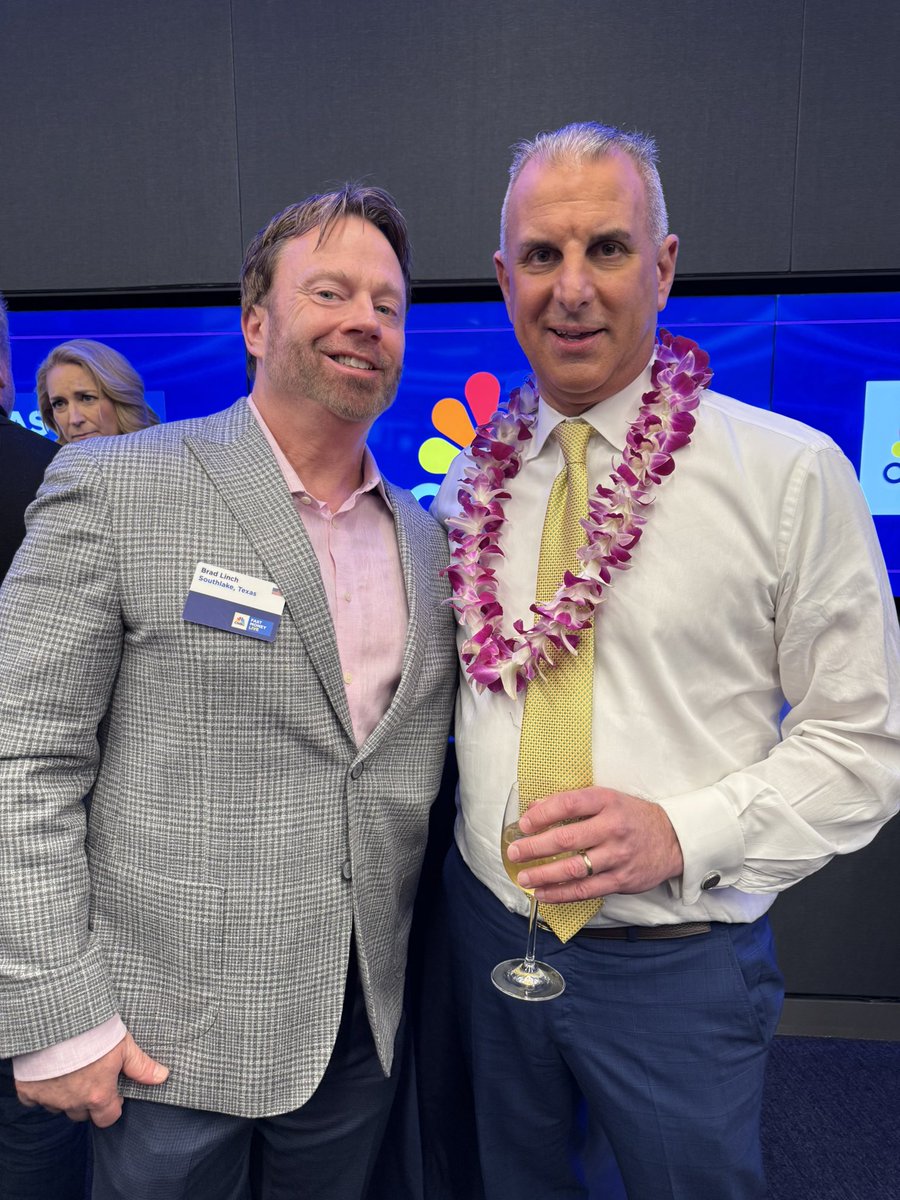
@GuyAdami@CNBCFastMoney Guy, I loved being at the first #fastmoneylive and meeting you and the rest of the team. You all are awesome! I appreciate you all and the opportunity to visit.