The AI projects that almost always succeed?
The ones where everyone knows exactly what “better” means.
Not the most advanced projects.
Not the ones with the most prompts.
Not the ones trying to “solve everything.”
The winners are usually the ones with the clearest defined problem.
(Even better: knowing exactly how much that problem costs the business today.)
Successful AI projects almost always have:
• A clearly defined problem
• A clearly defined desired outcome
• A clearly defined metric
Examples:
A bank wants to reduce churn.
A media company wants more subscribers.
A pharma company wants to discover compounds that improve nutrient absorption.
What do they all have in common?
They know EXACTLY what “better” looks like.
And that’s where many AI initiatives go wrong.
They start with:
“How do we use AI?” or “We need to start using AI!”
Instead of:
“What problem are we ACTUALLY trying to solve?”
Ironically, the best AI projects are often the least “AI-focused.”
They’re measured by the same KPIs businesses have always optimized for:
Revenue.
Cost savings.
Retention.
Speed.
Conversion.
Output.
AI is just the new engine driving the same outcomes.
Last week we got 8 inbound leads.
4 of them from multi-billion dollar companies in the US & UK.
Straight into our inbox.
Why?
There’s an old saying:
“The cobbler’s children have no shoes.”
AI companies not using AI internally.
SEO agencies with no organic visibility.
Consultants selling systems they don’t even live by themselves.
We decided very early that Alice Labs would be the opposite.
So we went extreme in the other direction:
use everything on ourselves first.
Ship faster.
Test faster.
Scale what actually works.
For the last few years we’ve been obsessively iterating on our own LLMO playbook (Large Language Model Optimization).
On ourselves.
Our own sites.
Our own systems.
Our own workflows.
Every single day.
Because honestly:
If we can’t make it work for ourselves…
why would anyone trust us to do it for them?
And no — this isn’t just “AI content.”
It’s:
• entity building
• semantic relationships
• topical authority
• AI-adapted information architecture
• off-page optimization
• automation systems
• distribution pipelines
• AI-first content operations
All executed consistently, at scale.
The result?
Alice Labs is now being recommended by GPT, Claude, and other LLMs in one of the most competitive industries on earth right now:
AI.
Globally.
But the most interesting part isn’t the volume of inbound.
It’s the quality.
People come to us already pre-qualified.
Already educated.
Already trusting us.
They reference our cases.
They know our positioning.
They already understand the problems they want solved.
The conversations become deeper immediately.
That changes everything.
So no,
we’re not planning to become the cobbler’s children with no shoes.
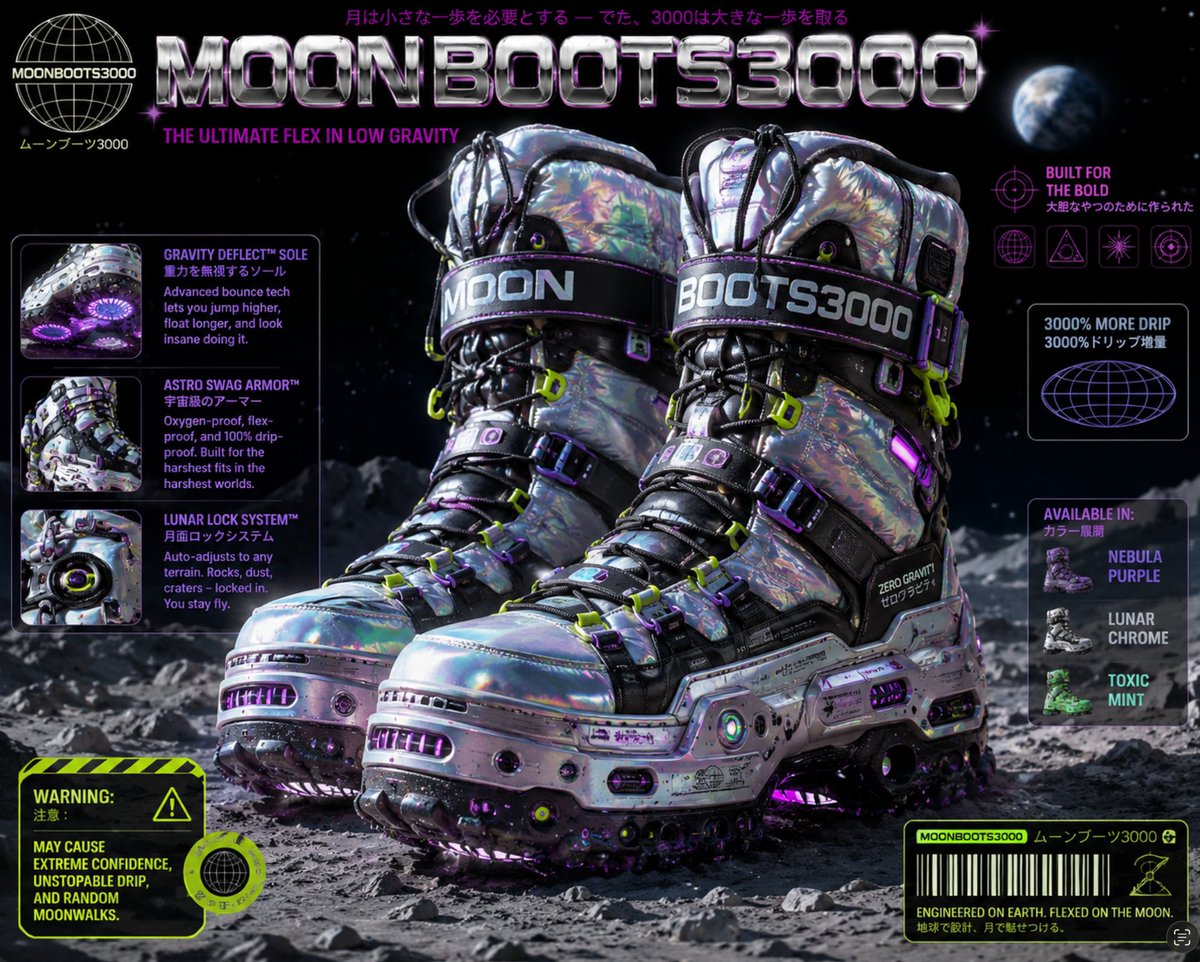
We’re running around in fucking MOONBOOTS 3000 🚀
I’m fundamentally lazy.
Honestly, I think that’s one of the main reasons Alice Labs looks the way it does today.
Not lazy as in passive.
People who know me would probably describe me as insanely ambitious and driven.
But lazy in the sense that I’m allergic to unnecessary steps.
My brain constantly searches for the minimum possible input that creates the maximum possible output.
If something takes 10 steps today, but could take 3 tomorrow with the right systems in place…
why would I keep taking 10?
I never found a good answer to that question, so I stopped trying.
That’s basically the entire philosophy behind what we build.
Not “automation for the sake of automation” — that’s honestly a pretty meaningless idea by itself.
But constantly asking:
“Is this actually the highest leverage use of our time?”
Most of the time, the answer is no.
The funny thing is that almost every great founder thinks this way when you talk to them.
Everyone is searching for leverage.
Yet we still spend half our lives in meetings that shouldn’t exist, processes nobody has questioned in years, and workflows that look exactly the same as they did 5 years ago.
Maybe laziness as a design principle is underrated 😌
Question everything.
And delete before you automate something that shouldn’t even exist.
Started to make my old paintings come alive with @runwayml#RunwayGen2
This oil painting “The hands of the night” became somewhat symbolic
Something about hands reaching out for help.
Something about humans in need.
Something about war and injustice..
#art#aiart
@NFT_GOD Some real good ones there.. some that I’ve read already and some new ones.
I can throw in “The creative act “ by Rick Rubin and “Green Lights” by Matthew