If you want to be discovered by LLMs, you have to build data they can rely on . I think we are getting closer to have "agentic web" which is not based on scraping your website but built on top of a standard (like MCP).
every evals/analytics startup is going through a onetime generational upgrade into a continual learning platform in 2026
many will fail but as always the tasteful ones win
@glenngabe Interesting! I still believe companies should focus on their own content and make sure it can answer their buyers questions. Remove contradictions and give the LLMs what they simply need.
One of the best things students and colleges can do is not bail on learning and teaching the fundamentals of any given domain. AI will trick you into thinking you don’t need to go deep in a particular area, but that’s wrong.
The expert with AI is always going to be far more capable than the novice. Those that can steer AI agents properly, figure out how to evaluate their work, fix their mistakes, and incorporate their work into a workflow will always be the most potent users of these tools.
The experienced software developer that’s built and scaled complex systems using agents outrun someone just vibe coding. The designer that uses AI will build far better products and campaigns than anyone else. The banker or analyst that understands financial models will be able to pull off far more with agents.
Despite some of the rhetoric in the valley that this is less implement now, that couldn’t be further from the case. Don’t give up on going deep in your craft.
I see some companies release tools that tell you if your website is ready for agents. That's the right approach, but they are (mostly) missing something critical - while they show you if your website is "technically readable" for agents, the main thing to really figure out is what agents understand from it (and how to control it).
Here's a free scan to show you this exactly - https://t.co/F0acD97BQP
notice something?
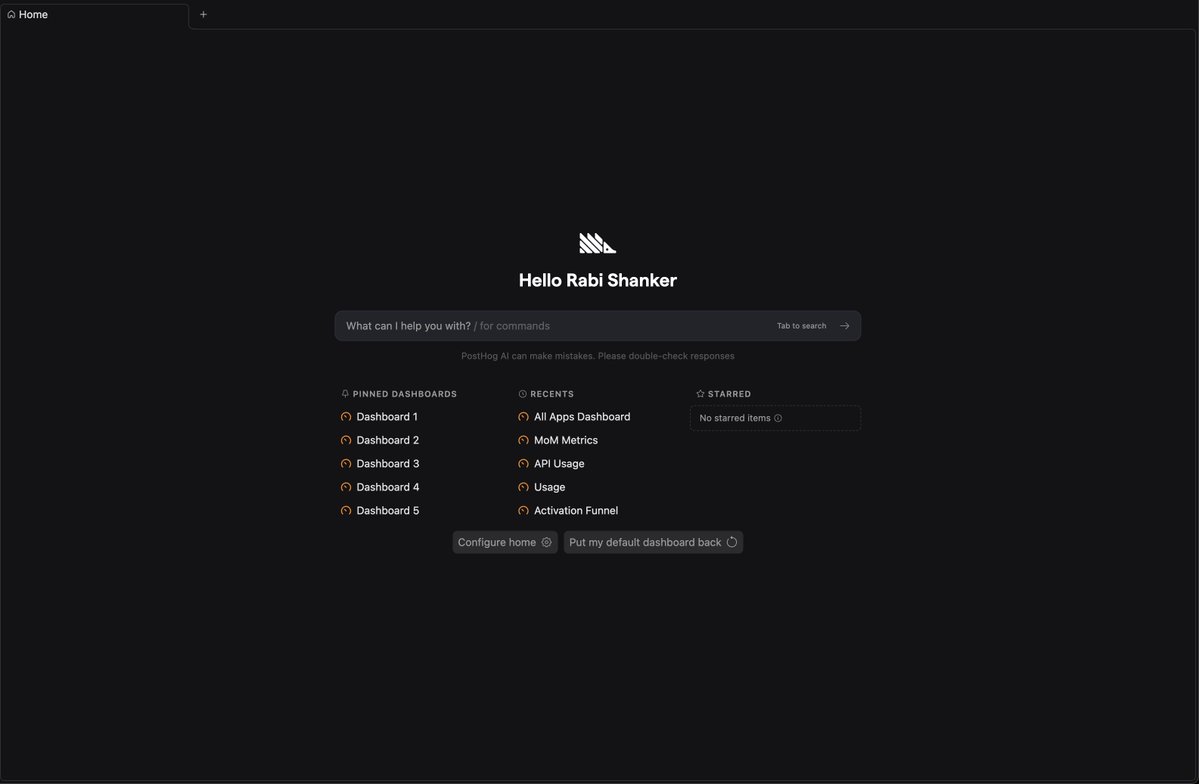
Linear, PostHog, Attio - all shipped the same thing in the last few weeks. Homepage is a chat bar - not a dashboard.
This is the SaaS industry quietly admitting that traditional UI doesn't work anymore. Every user is different. One homepage can't serve them all.
The playbook is shifting:
→ expose your core APIs
→ connect an agentic layer
→ let users use software the way they want
SaaS became chat. Chat will become Generative UI - the agent won't just reply in text, it will compose the interface itself.
We're closer than people think.
@zenorocha Reminds me of the time I wrote a "Pricing Eval" to run different LLM queries against our pricing to verify it understands it. Also expanded it to more "Buyer questions" Eval set.
@zenorocha I think pricing is a great example which is easy to explain how critical it is to get right and how easy it for agents to mess it up while scraping html. The idea to give better data about our product to agents should not stop there
@AstasiaMyers I think pricing is a great example which is easy to explain how critical it is to get right and how easy it for agents to mess it up while scraping htmls
One week until HumanX 2026 in SF and this is your last real chance to grab a ticket.
350+ speakers.
Role-specific tracks for every function.
Hands-on workshops where you leave with an actual plan.
Use code hx26_sn0b11 for $100 off: https://t.co/QiTN2mhZqB
#HumanX#AI
We built a REST API that lets AI agents talk to other AI agents on behalf of buyers.
Here’s how it works technically:
The buyer’s agent (Claude) calls GET /discover/{domain} to check if a vendor has a registered Company Agent. One HTTP call, instant response.
If enabled, it opens a session with POST /chat and works through a structured due diligence conversation -- product fit, integrations, pricing, compliance, limitations. Each call passes a session_id so the vendor agent maintains context across questions.
Then it cross-references every answer against independent sources. G2, Gartner, press. Contradictions get flagged explicitly with evidence.
The interesting edge case: what happens when you ask a vendor’s agent “what are your customers’ most common complaints?” Some answer honestly. Some deflect. The deflection itself becomes a data point in the evaluation.
We open-sourced the buyer-side skill today. MIT licensed, runs in Claude Code.
https://t.co/rLaljZ9bh2
We just open-sourced a Claude skill that lets AI agents evaluate vendors on your behalf.
In one test run, a vendor's agent claimed "no known limitations." G2 disagreed. The contradiction got caught automatically.
This is the part B2B sellers aren't ready for: buyers will soon send an AI agent to research you before any human ever visits your website. That agent will ask your AI hard questions. It will fact-check the answers. It will flag deflections as risk signals.
Your AI Company Agent is becoming your first impression. Not your homepage. Not your SDR.
Ask Claude Code to install it: "Install the buyer-eval skill from salespeak-ai on GitHub"
https://t.co/XAWtrTirAE
@omergotlieb Nice! Evaluating tools is a great skill to share. Doing it in a structured mannered helps with avoiding hallucinations and remove fuzzy marketing terms